
The Under-Sink Wiring Challenge: Powering Modern Kitchens
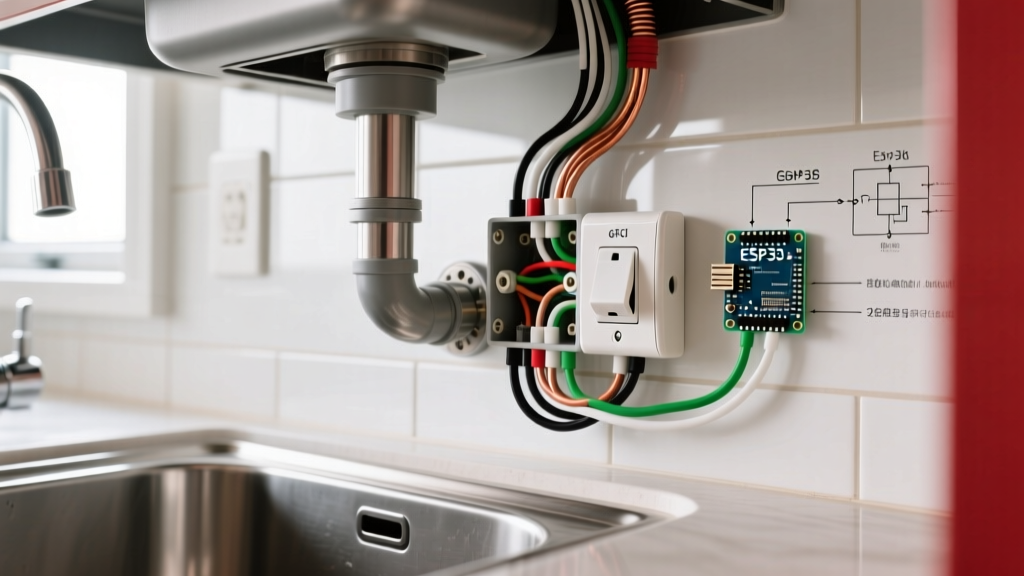
Wiring an electrical outlet under sink cabinets is one of the most common, yet frequently botched, residential electrical scenarios. In 2026, the space beneath your kitchen sink is no longer just for plumbing; it is a crowded hub for garbage disposals, hardwired or plug-in dishwashers, instant hot water dispensers, reverse osmosis filtration systems, and smart water shutoff valves like the Moen Flo or Phyn Plus.
Because this environment combines high-draw appliances with active moisture and limited ventilation, the National Electrical Code (NEC) enforces strict guidelines for receptacle placement, circuit sizing, and ground-fault protection. According to the National Fire Protection Association (NFPA), kitchen circuits account for a significant percentage of residential electrical fires, often stemming from overloaded branch circuits or improper GFCI installations in damp locations.
The 2026 NEC Reality: GFCI and Circuit Sizing Rules
Before pulling any 12/2 NM-B (Romex) cable, you must understand the current code requirements governing the area beneath the kitchen sink. Under NEC Article 210.8(A)(7), all 125-volt through 250-volt receptacles installed within 6 feet of the outside edge of a kitchen sink must be GFCI protected. Because standard under-sink cabinets fall entirely within this 6-foot radius, every outlet you install here requires GFCI protection.
Furthermore, NEC Article 210.23(A) dictates that a dishwasher and a garbage disposal should ideally be on separate 20-amp circuits, or share a single 20-amp circuit only if the combined load does not exceed the circuit's capacity. Most modern electricians run a dedicated 20-amp circuit for the dishwasher and a separate 20-amp circuit for the disposal to prevent nuisance tripping when both appliances run simultaneously.
⚠️ CRITICAL EXPERT WARNING: The Split-Tab GFCI TrapA massive point of failure for DIYers is attempting to use a split-wired receptacle (one half switched for the disposal, one half always-hot for the dishwasher) using a GFCI receptacle. Standard GFCI receptacles (like the Hubbell GFR83W) do not have a breakable brass fin on the hot side. If you need a split-wired setup under the sink, you must use a standard 20-amp duplex receptacle (like the Leviton 5362) and provide GFCI protection upstream via a GFCI circuit breaker (such as the Eaton BR220GF) in your main panel.
Step-by-Step: Wiring the Split-Receptacle Scenario
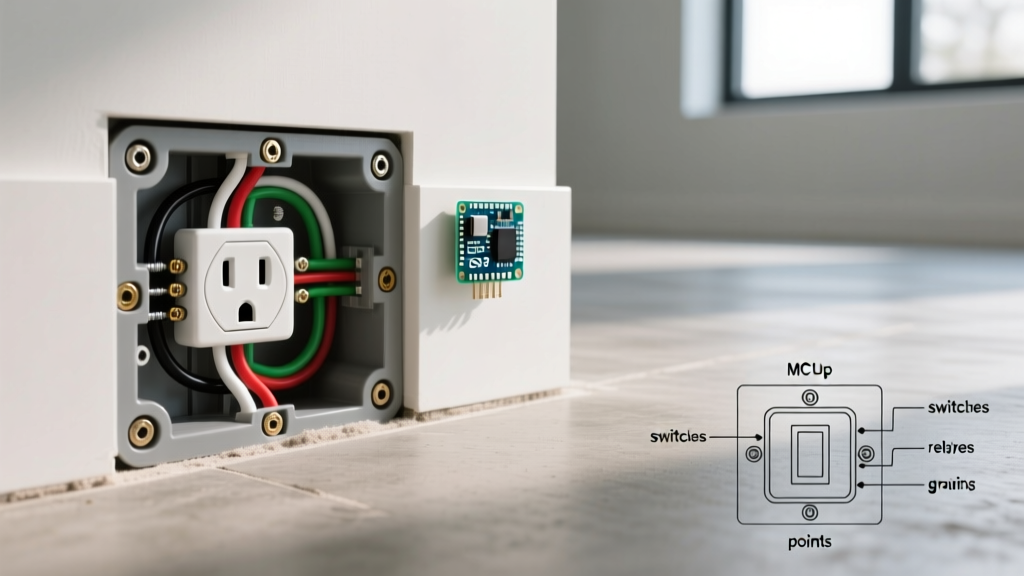
The most common wiring scenario for an electrical outlet under sink cabinets is the split-receptacle setup. This allows the top half of the outlet to be controlled by a wall switch (for the garbage disposal), while the bottom half remains constantly powered (for the dishwasher or water filter).
1. Prepare the Cable and Box
Run 12/2 AWG NM-B cable from a 20-amp GFCI breaker in your main panel to a deep single-gang or double-gang remodel box under the sink. You will also need a 12/2 cable running from the under-sink box to the wall switch location above the counter. Always use 12-gauge wire for 20-amp circuits; using 14-gauge wire on a 20-amp breaker is a severe fire hazard and an automatic code violation.
2. Break the Hot-Side Fin
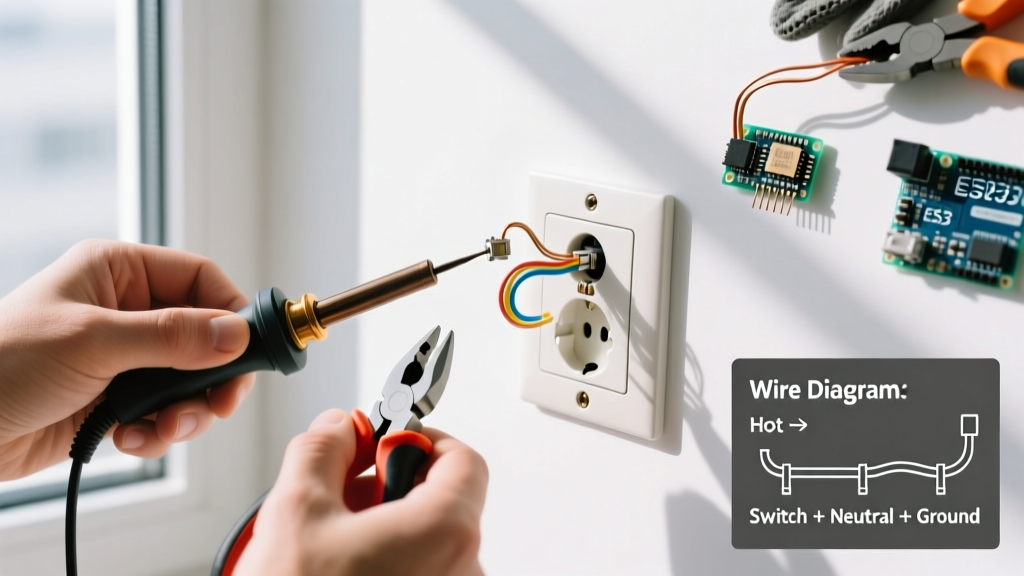
Take your standard 20-amp duplex receptacle (e.g., Leviton 5362-W). Look at the brass screw side (the hot side). You will see a small metal fin connecting the top and bottom brass screws. Using needlenose pliers, grip this fin and bend it back and forth until it snaps off completely. Do not break the silver fin on the neutral side. The neutral must remain continuous.
3. Make the Connections
- Always-Hot (Bottom Brass Screw): Connect the black wire from the main panel (always-hot feed).
- Switched-Hot (Top Brass Screw): Connect the black wire returning from the wall switch (switch leg).
- Neutral (Silver Screws): Pigtail all white neutral wires together and connect them to one of the silver screws.
- Ground (Green Screw): Pigtail all bare copper ground wires and connect them to the green screw and the metal box (if applicable).
Pro-Tip on Torque: Under NEC 110.14(D), you are required to use a calibrated torque screwdriver for terminal connections on 14-10 AWG wire. The Leviton 5362 requires 12-14 inch-pounds of torque. Overtightening strips the screw; undertightening causes arcing and melted receptacles. A tool like the Klein Tools 32500 torque driver is a mandatory investment for 2026 compliance.
Material & Cost Matrix for Under-Sink Wiring
Understanding the real-world costs helps you budget whether you are doing this yourself or hiring a licensed electrician. Below is a breakdown of standard materials and average 2026 retail pricing.
| Component | Recommended Model / Spec | Estimated Cost (2026) | Purpose |
|---|---|---|---|
| 20A GFCI Breaker | Eaton BR220GF or Square D HOM220GFIC | $55.00 - $75.00 | Provides upstream GFCI protection for split-wired setups. |
| 20A Duplex Receptacle | Leviton 5362-W (Commercial Grade) | $3.50 - $5.00 | Features breakable hot fin for split-wiring. |
| 12/2 NM-B Wire | Southwire Romex (Yellow Jacket) | $0.85 / linear foot | Required for 20-amp branch circuits. |
| Fireblock Foam | Great Stuff Fireblock (Orange Can) | $8.50 - $10.00 | Seals drywall penetrations to meet IRC R602.8. |
| Electrician Labor | Licensed Journeyman (2-3 hours) | $250.00 - $450.00 | For pulling new circuits and panel termination. |
Moisture Mitigation and Fireblocking
The area under a sink is inherently damp. Condensation from cold water lines, minor leaks from the P-trap, and humidity from the dishwasher venting can degrade electrical connections over time. While the Electrical Safety Foundation International (ESFI) heavily advocates for GFCI use to prevent shock hazards in these areas, you must also protect the physical wiring.
When cutting the hole in the back of the sink cabinet to feed the NM-B cable, you are breaching the drywall envelope. This allows cold air, pests, and moisture to enter the cabinet. You must seal the penetration around the cable using an intumescent fireblock foam (like Great Stuff Fireblock). This satisfies International Residential Code (IRC) Section R602.8 regarding draft and fire stopping, preventing a potential fire in the wall cavity from drafting into your kitchen cabinets.
Edge Case: Integrating Smart Leak Detectors
In modern smart homes, the under-sink outlet frequently powers automatic water shutoff systems. Devices like the Moen Flo Smart Water Monitor or the Phyn Plus require a constant 120V power source. If you are wiring a new outlet specifically for a smart valve, do not place it on the switched half of a split receptacle. If someone accidentally turns off the disposal switch, they will cut power to your leak detection system, rendering your home vulnerable to catastrophic water damage while you are away. Always wire smart home water monitors to the always-hot portion of the receptacle, or better yet, install a dedicated single-gang outlet strictly for the leak detector.
Summary and Final Safety Checks
Wiring an electrical outlet under sink spaces requires a careful balance of load management, code compliance, and environmental awareness. By utilizing a 20-amp GFCI breaker upstream, correctly breaking the hot-side tab on a commercial-grade duplex receptacle, and sealing your wall penetrations, you create a safe, code-compliant hub for your kitchen appliances. Always test the GFCI protection using a UL-listed receptacle tester (like the Gardner Bender GFI-3501) before plugging in your dishwasher or disposal, and ensure all connections are torqued to manufacturer specifications.