
Robert Kim
IoT developer and ESP32 firmware engineer.
Published work
Showing the latest 60 — browse the full index in the sitemap.
 Components & Prototyping
Fuse Coordination for Contactors: Sizing, Breaking Capacity, and Coil Protection
Learn how to size and coordinate fuses for electromechanical contactors, covering breaking capacity, coil flyback protection, and load-specific decision paths.
 Components & Prototyping
Sizing and Wiring Relay Controls: A Table-Forward Guide for AC/DC Loads
Master relay controls with our table-forward guide. Learn to decode spec sheets, wire coils safely with flyback diodes, and select contacts by load type.
 Components & Prototyping
How to Calculate Electricity Work for Battery and Inverter Sizing
Learn how to calculate electricity work in watt-hours to properly size 12V LiFePO4 batteries and inverters for off-grid and DIY solar projects.
 Tools & Electronics Guides
What Do I Need to Install Solar Panels? A 48V Off-Grid Sizing Guide
Answering what do I need to install solar panels for a 48V off-grid system. Complete sizing math, series vs parallel rules, and component lists.
 Components & Prototyping
How to Make a Custom PCB: Trace Sizing, Migration, and First-Spin Testing
Learn how to make a custom PCB with our decision-forward guide covering trace width vs current, breadboard migration, and first-spin board testing.
 Components & Prototyping
Why High-Voltage DC Transmission Beats AC for Long-Distance Grids
Understand high-voltage DC transmission physics, line loss math, and real-world grid scenarios. Learn why HVDC wins for long-distance bulk power.
 Components & Prototyping
How It Works: LED Circuit Theory, Drivers, and Dimming Math
Master how it works in LED circuits: from p-n junction physics and driver inrush math to trailing-edge dimmer compatibility and thermal derating.
 Components & Prototyping
Practical Electronics Education: Mastering AC Impedance and Load Sizing
Master AC impedance and load sizing in your electronics education. Learn the math, real-world applications, and a decision path for component selection.
 Components & Prototyping
Magnetic Field Science: Core Rules for AC Circuits
Master practical magnetic field science for AC circuits. Learn B-field vs H-field, calculate solenoid flux density, and avoid core saturation mistakes.
 Switches & Outlets
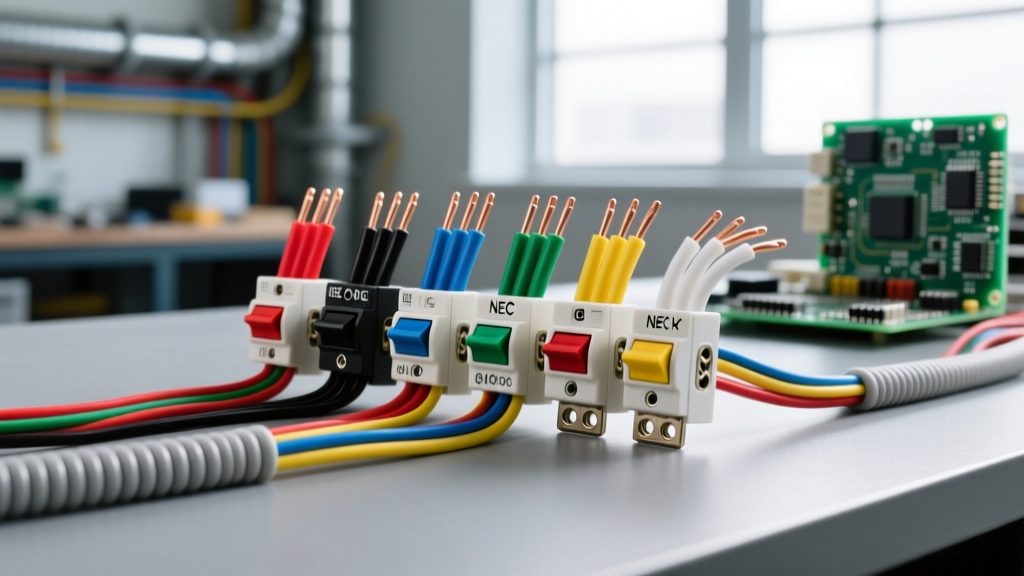
Electric Wire Colour Code Chart: NEC, IEC & Old UK Standards
Quick reference chart for electric wire colour codes across NEC, IEC, and old UK standards. Learn what each color means and how to handle faded wires.
 Components & Prototyping
How to Design a Series Voltage Divider: Real Component Values & Failure Modes
Learn how to design a series voltage divider with real component values, calculate power dissipation, and understand open/short failure modes.
 Components & Prototyping
Ohm's Law Explained Simply: Real-World Circuit Sizing and Debugging
Ohm's law explained simply with real-world numeric examples, wiring decision trees, and the common non-ohmic traps that ruin DIY builds.
 Components & Prototyping
The Practical Meaning of a Schematic Diagram in Electronics
Learn the practical meaning of a schematic diagram, how it differs from wiring diagrams, and how to read one using a real 5V regulator circuit example.
 Projects & Automation
Motor Servo Arduino Selection Guide: Sizing, Wiring, and Control
Learn how to select, size, and wire the right motor servo for Arduino projects. Includes torque calculations, PCA9685 wiring, and failure troubleshooting.
 Projects & Automation
Understanding the Jetson 1 Range: Power and GPIO Limits for the Original Nano
Master the Jetson 1 range for the original Nano. Learn the exact 4.75V-5.25V power limits, 3.3V GPIO thresholds, and how to avoid bricking your board.
 Switches & Outlets
Wiring Schematics Symbols Guide: NEMA, IEC & Field Verification
Quick-reference guide to wiring schematics symbols across NEMA and IEC standards, including common misinterpretations and field verification steps.
 Switches & Outlets
Earthing How-To: Ground Rod Installation and Testing for Home Panels
Exact steps for earthing a home electrical panel, including ground rod sizing, torque specs, and multimeter testing to prevent touch potential hazards.
 Components & Prototyping
What Is a Logic Gate? Practical Circuit Theory and Bench Examples
Learn what a logic gate is with practical bench examples, voltage threshold tables, pull-up resistor calculations, and a real-world floating input failure analysis.
 Components & Prototyping
Understanding the Different Units of Electricity: Volts, Amps, Watts, and Ohms Explained
Master the different units of electricity with our table-forward guide. Learn how volts, amps, watts, and ohms interact in real-world circuits and installations.
 Components & Prototyping
Mastering AC Impedance Formulas with Modern Calculator Tech
Learn how to use modern calculator tech to solve AC impedance formulas. Includes worked examples, symbol tables, and unit tracking for RLC circuits.
 Components & Prototyping
Mastering the √2 on Calculator for AC RMS and Peak Voltage Conversions
Learn how to use the square root of 2 on calculator for AC RMS to peak voltage conversions, including formula derivations, unit tracking, and common mistakes.
 Switches & Outlets
120V Outlet Wiring Guide: Step-by-Step 15A and 20A Receptacle Installation
Complete guide to 120V outlet wiring. Learn exact wire gauges, breaker sizes, terminal color codes, and step-by-step installation for 15A and 20A receptacles.
 Components & Prototyping
How Impedance Matchers Eliminate Signal Reflections and Noise
Learn how impedance matchers eliminate signal reflections, identify dominant noise coupling paths, and verify signal integrity with TDR and scope measurements.
 Components & Prototyping
Schematic Symbols of Electrical Components: ANSI vs IEC Reference Guide
A complete reference chart for schematic symbols of electrical components, comparing ANSI/IEEE and IEC standards with troubleshooting tips for faded prints.
 Components & Prototyping
Series and Parallel Explained: 12V LED Design and Failure Modes
Series and parallel explained via 12V LED array design. Master node topologies, open/short failure modes, resistor sizing, and breadboard testing.
 Projects & Automation
How to Design the Thermal Control Loop for a DIY Robot Cook Machine
Learn the embedded PID theory, SSR wiring, and ESP32 thermal control loop design required to build a precise DIY robot cook machine.
 Components & Prototyping
How to Find Rt in a Parallel Circuit for Real-World Designs
Learn how to find Rt in a parallel circuit with real component values, failure mode analysis, and a step-by-step breadboard testing guide.
 Components & Prototyping
LoRa Network Protocol: SX1262 Wiring, SPI Bus Mechanics, and P2P vs LoRaWAN
Master the LoRa network protocol: SX1262 SPI bus mechanics, physical wiring pitfalls, P2P vs LoRaWAN decisions, and RTL-SDR debugging.
 Components & Prototyping
How to Calculate Wattage Consumption for AC and DC Circuits
Learn how to calculate wattage consumption for AC and DC circuits. Includes core formulas, symbol tables, worked examples, and measurement decision paths.
 Components & Prototyping
The Practical Differentiation Between AC and DC Power in Modern Circuits
Master the differentiation between AC and DC power with real-world numeric examples, circuit impacts, and practical applications for modern electronics.
 Tools & Electronics Guides
Sizing a 48V Solar Bank: Which Chinese Battery Maker Cells to Choose
Compare top Chinese battery maker prismatic cells like EVE and Lishen for 48V DIY solar. Includes sizing math, BMS limits, and a final cell recommendation.
 Components & Prototyping
Electrical Circuit Diagram Design: 12V-to-5V Power Topology Guide
Learn how to design an electrical circuit diagram for 12V-to-5V power. Compare linear vs buck topologies, size real components, and breadboard test.
 Components & Prototyping
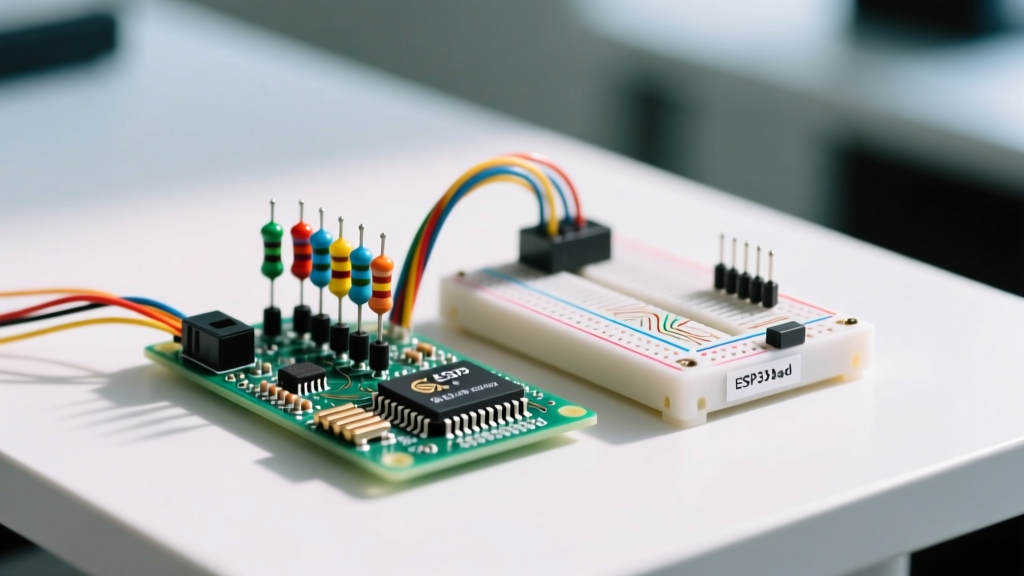
Build an ESP32 Color Resistor Code Reader: Wiring, Code & Debugging
Build an ESP32-based color resistor code reader using a TCS34725 sensor. Includes I2C wiring, C++ code, IEC 60062 theory, and I2C debugging steps.
 Components & Prototyping
Essential Trigonometry Formulas for Triangle Analysis in AC Impedance Circuits
Master trigonometry formulas for triangle analysis in AC circuits. Includes impedance/power triangle derivations, symbol tables, and worked examples.
 Components & Prototyping
How to Build a Simple Logic Gates Circuit Diagram: Discrete AND vs 74HC08
Design a simple logic gates circuit diagram using discrete 1N4148 diodes and a 2N3904 transistor, or compare it against a standard 74HC08 CMOS IC.
 Components & Prototyping
Series Circuit Explained: Topology, Failure Modes, and Design Walkthrough
Learn how a series circuit works, from node topology and failure modes to a step-by-step breadboard design using real component values.
 Switches & Outlets
Resistance Wiring Explained: Voltage Drop, I²R Losses, and Wire Sizing
Understand resistance wiring in branch circuits, how parasitic I²R losses cause voltage drop, and how to calculate wire sizes for long runs.
 Components & Prototyping
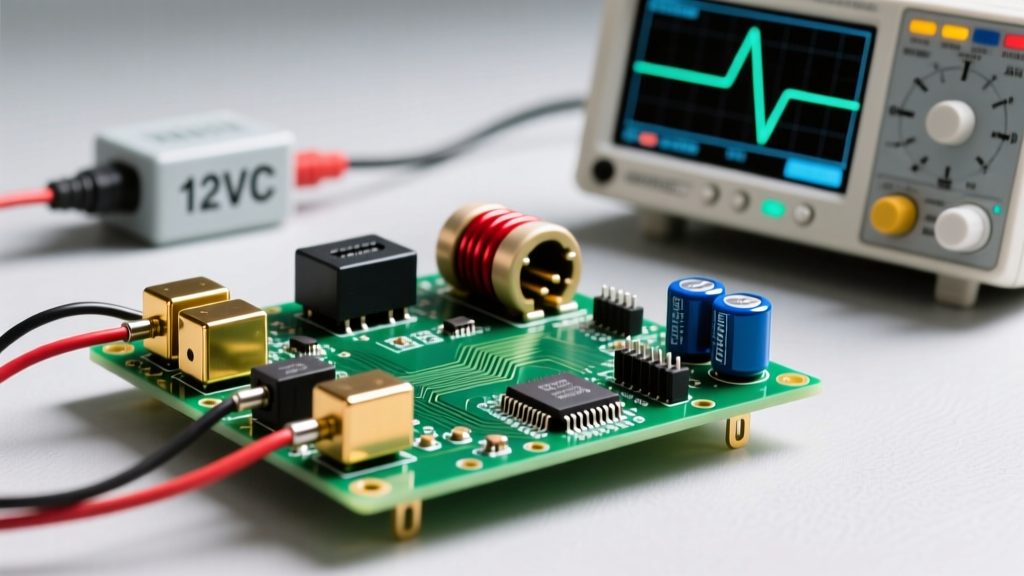
Designing a 12V DC AC Circuit: Push-Pull Inverter Topology & Component Guide
Learn how to design a 12V DC AC circuit using a push-pull inverter topology. Includes real component values, failure modes, and breadboard testing steps.
 Components & Prototyping
Heatsink Rtheta Math and Resistance Temperature Detectors RTDs for Power Electronics
Calculate junction-to-ambient thermal resistance, select extruded heatsinks, and integrate Pt100 resistance temperature detectors RTDs for closed-loop power electronics cooling.
 Switches & Outlets
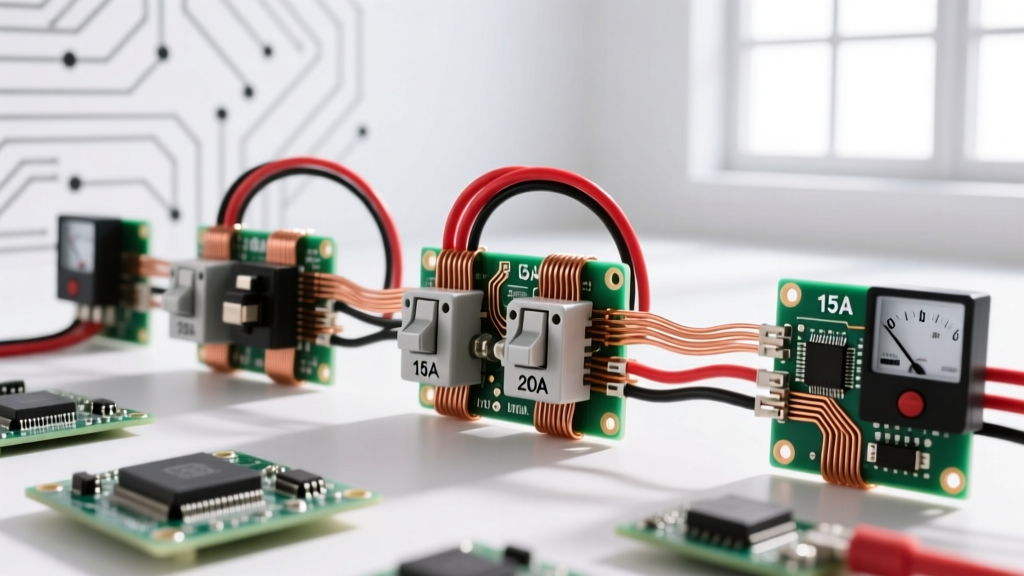
PCB Trace Ampacity Chart: Sizing Copper for 15A and 20A Home Automation Boards
Look up exact PCB trace ampacity values using the IPC-2221 standard. Includes a decision tree and derating guide for 15A and 20A smart home relay boards.
 Switches & Outlets
Inspecting the Earthing Face: Grounding Contacts, Metal Faceplates, and Fault Paths
Learn how the receptacle earthing face and metal faceplates complete the fault path, how to test grounding impedance, and when to call an electrician.
 Components & Prototyping
What Voltage Can Kill Human? The 50V Threshold and Lethal Current Math
Discover what voltage can kill human by exploring the 50V threshold, lethal current math, skin resistance variables, and real-world shock scenarios.
 Projects & Automation
What Does the Word Sensor Mean? DRV5053 Hall Effect Interfacing
Learn what the word sensor means in embedded systems by interfacing the DRV5053 Hall effect transducer with ESP32 and Arduino. Includes raw-to-unit math.
 Components & Prototyping
What Is a Resistor Divider? Circuit Design, Sizing, and Failure Modes
Learn what a resistor divider is, how to calculate real E24 component values for ADC level shifting, and analyze failure modes and topology alternatives.
 Components & Prototyping
Choosing Resistors for Circuits: A Practical Selection and Substitution Guide
Learn how to choose, read, and substitute resistors for circuits. Includes type comparisons, SMD/axial decoding, failure modes, and exact part picks.
 Components & Prototyping
Electricity: How Electrons Actually Move in Real Circuits
Discover how electricity actually works in a circuit. We break down electron drift velocity vs. signal propagation with real numeric examples.
 Projects & Automation
Controlling Servo with Arduino: Motor Selection, Sizing, and Wiring
Master controlling servo with Arduino. Compare motor types, calculate torque loads, wire high-draw digital servos, and pick the exact part number.
 Components & Prototyping
Mastering Current and Resistance Formulas: Derivations, Tables, and Worked Examples
A practical guide to current and resistance formulas, featuring symbol tables, real-world load data, and step-by-step worked examples with unit tracking.
 Components & Prototyping
Transformer Physics Definition: How Magnetic Coupling Changes AC Voltage
Understand the transformer physics definition with a worked numeric example, real-world applications, and answers to common long-tail questions.
 Components & Prototyping
The Induced Definition in Physics: Electromagnetic Induction for Circuit Builders
Master the induced definition in physics with real-world circuit examples, Faraday's Law calculations, and practical flyback diode applications.
 Components & Prototyping
Understanding Direct Current DC: Circuit Theory, Voltage Drop, and Practical Applications
Master direct current (DC) fundamentals. Learn how DC behaves in real circuits, calculate voltage drop, and avoid common wiring mistakes in 12V/24V systems.
 Components & Prototyping
The Complete Boolean Algebra Table: Logic Gates, Identities, and Design Rules
Master digital logic design with our complete boolean algebra table. Covers gate truth tables, identities, floating inputs, and CMOS vs TTL thresholds.
 Components & Prototyping
How to Design PCB Layout for Power and Signal Integrity
Learn how to design PCB layout for custom boards. Covers trace width vs current tables, breadboard migration mistakes, soldering safety, and first-spin testing.
 Components & Prototyping
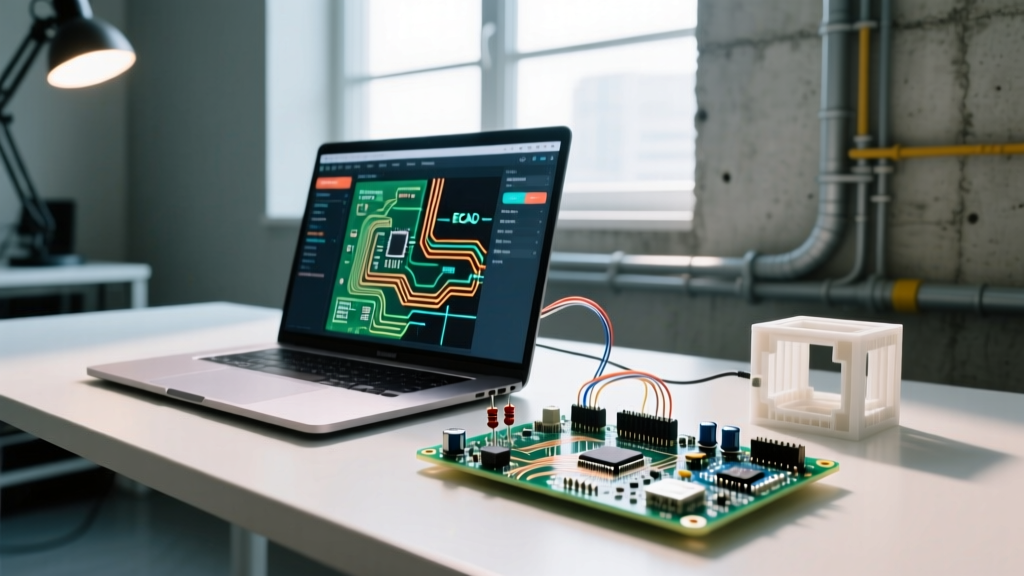
What Is PCB Design Software? ECAD Tools, Trace Sizing, and Prototyping
Learn what PCB design software is, compare top ECAD tools, calculate trace widths for specific currents, and master first-spin board testing.
 Components & Prototyping
The RMS Average Formula: Converting AC Values with Worked Examples
Master the RMS average formula for AC circuits. Includes symbol tables, step-by-step worked problems, rearranged forms, and true-RMS meter pitfalls.
 Components & Prototyping
Electronic Logic Gates: Logic Families, Fan-Out, and Interfacing Guide
Master electronic logic gates with our guide on logic families, voltage thresholds, fan-out calculations, and real-world hardware interfacing.
 Components & Prototyping
How to Calculate Resistor for LED: Circuit Math, Dimmers & Drivers
Learn how to calculate resistor for LED circuits, including Ohm's law math, driver power factor, inrush current, and trailing-edge dimmer compatibility.
 Switches & Outlets
AWG Chart Size Reference: NEC Table 310.16 Ampacity & Wire Sizing
Find the exact AWG chart size for your circuit. Complete NEC Table 310.16 copper ampacities, 60°C vs 75°C columns, derating rules, and sizing decisions.
 Components & Prototyping
The Basic of Electronics: Ohm's Law and Real-World Circuit Failures
Master the basic of electronics through real-world bench scenarios. Learn Ohm's law, component sizing, and why ignoring current limits destroys microcontrollers.
 Components & Prototyping
What Is a Capacitor in Physics? Dielectrics, Markings, and Selection
Understand what a capacitor is in physics, how dielectrics store energy, decode physical markings, and safely substitute types in real circuits.