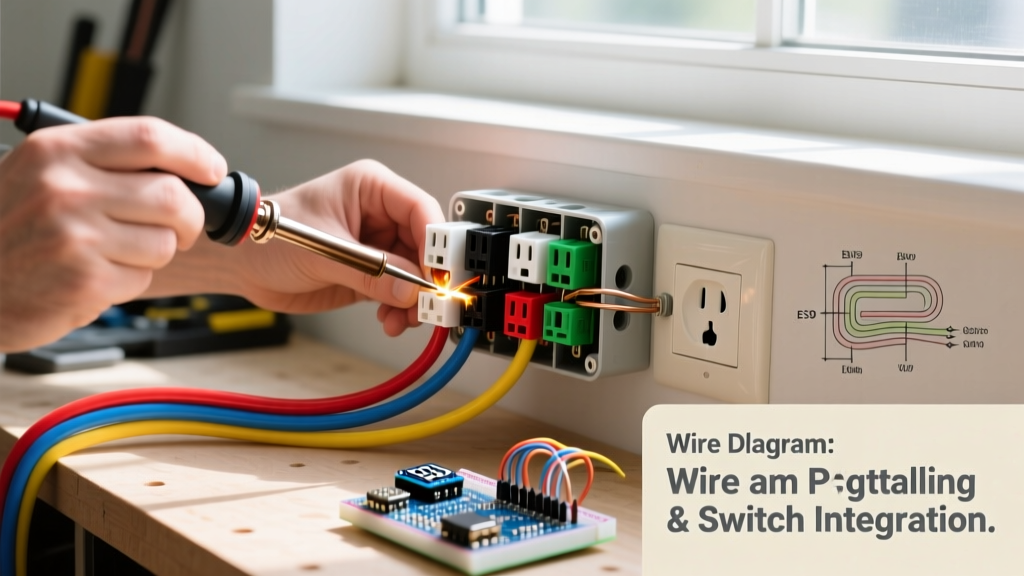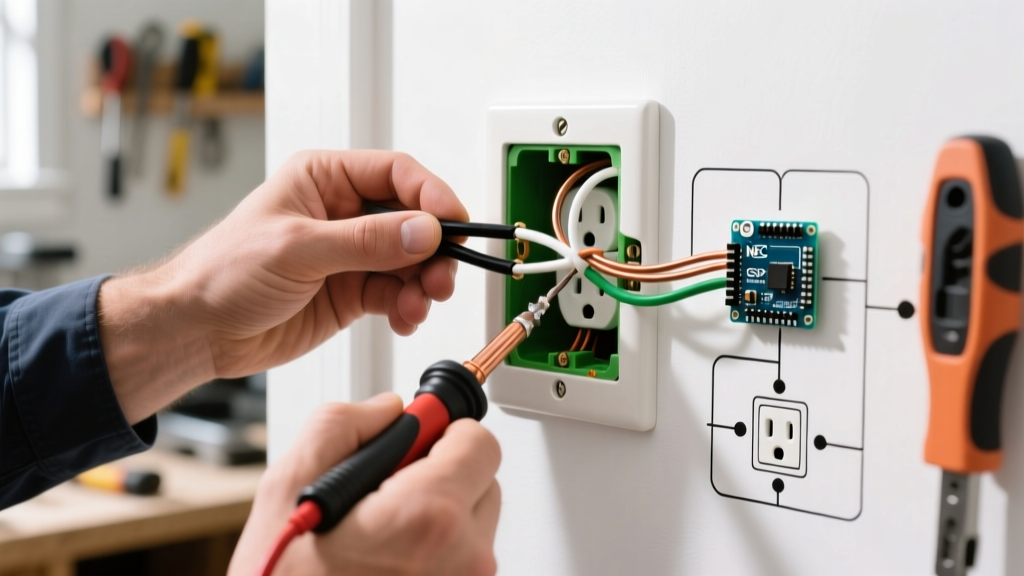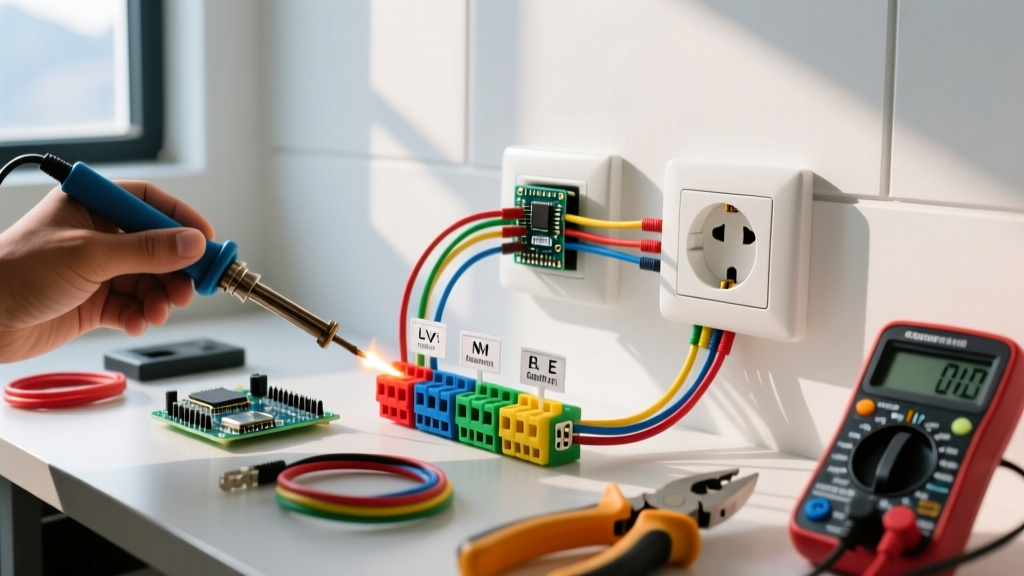

Introduction to Nepal's Electrical Infrastructure
If you are an expatriate, a DIY enthusiast building an international equipment room, or a local homeowner upgrading your property, understanding how to properly wire a Nepal electrical outlet is critical for safety and device compatibility. As of 2026, the Nepal Electricity Authority (NEA) supplies single-phase power at a nominal voltage of 230V and a frequency of 50Hz. However, the physical receptacles used in Nepal differ significantly from the NEMA standards found in North America or the Schuko standards in mainland Europe.
Nepal primarily utilizes the legacy British Standard BS 546 plug types—specifically Type D (5 Amp) and Type M (15 Amp)—alongside ungrounded Type C Europlugs for low-draw appliances. For high-draw appliances like air conditioners, water heaters, and heavy power tools, the Type M outlet is the mandatory standard. This beginner-friendly tutorial will guide you through the exact specifications, tools, and step-by-step procedures required to safely install a 15A Type M Nepal electrical outlet on a modern 230V circuit.
Understanding Nepal Outlet Standards: Type C, D, and M
Before picking up your wire strippers, you must understand the physical and electrical differences between the plug types accepted in Nepal. According to the IEC World Plugs Guide, Nepal's grid supports three primary profiles. While Type C is common for phone chargers, permanent wall installations for general and heavy-duty use rely on Type D and Type M.
| Plug Type | Standard | Current Rating | Pin Diameter (Line/Neutral) | Pin Diameter (Earth) | Common Applications |
|---|---|---|---|---|---|
| Type C | CEE 7/16 | 2.5A | 4.0mm | N/A (Ungrounded) | Phone chargers, LED bulbs, shavers |
| Type D | BS 546 | 5A | 5.08mm | 7.05mm | Table fans, televisions, desktop PCs |
| Type M | BS 546 | 15A | 7.05mm | 8.7mm | AC units, heaters, microwaves, power tools |
Note: While Type D and Type M look similar, their pin spacing and diameters are entirely different. A Type D plug will not fit into a Type M socket, and forcing a Type M plug into a Type D socket will cause catastrophic failure and fire hazards.
Tools and Materials Required
Working with 230V systems requires precision and the right equipment. Do not substitute undersized wires or cheap breakers. Gather the following before beginning:
- Receptacle: 15A Type M Socket (Brands like Legrand, Anchor Roma, or Schneider Electric are widely available and reliable in South Asia).
- Backbox: 35mm deep galvanized steel or heavy-duty PVC backbox (BS 546 terminals are bulky; standard 25mm boxes will not provide enough void space for safe wire bending).
- Wire: 2.5 mm² (approx. 14 AWG) THHN/THWN stranded or solid copper wire. You will need three colors.
- Circuit Breaker: 16A Single Pole MCB (Miniature Circuit Breaker) with a Type C or Type D trip curve (IEC 60898 standard).
- Testing Equipment: CAT III Digital Multimeter (e.g., Fluke 117) and a non-contact voltage tester.
- Hand Tools: Wire strippers (calibrated for 2.5 mm²), Phillips and flathead screwdrivers, torque screwdriver (set to 1.2 Nm), and a utility knife.
Crucial Safety Warning: Wire Color Codes in Nepal
Expert Insight: Nepal is currently in a transitional phase regarding electrical color codes. Older installations (pre-2015) strictly follow the legacy British colors: Red (Phase/Line), Black (Neutral), and Green (Earth). Modern installations aligned with IEC standards use Brown (Phase), Blue (Neutral), and Green/Yellow (Earth). Always test existing wires with a multimeter before assuming their function based on insulation color.
Step-by-Step Installation Tutorial
Step 1: Isolate and Verify the Circuit
Navigate to your main distribution board (DB) and switch off the 16A MCB controlling the circuit you are working on. Lock out the breaker if possible. Use your non-contact voltage tester on the existing outlet wires, followed by a CAT III multimeter test between Phase and Neutral, and Phase and Earth. The reading must be exactly 0.0V. As documented by the Nepal Electricity Authority (NEA), localized grid fluctuations can sometimes induce phantom voltages; ensure your multimeter reads zero before proceeding.
Step 2: Prepare the Backbox and Route Cables
Mount the 35mm deep backbox securely to the masonry or drywall stud. Feed your 2.5 mm² cables through the knockout holes, ensuring you use rubber grommets if using a metal backbox to prevent insulation shearing. Leave approximately 150mm (6 inches) of wire protruding from the box to allow for comfortable termination and looping.
Step 3: Strip and Terminate the Wires
Using your calibrated wire strippers, remove exactly 12mm of insulation from the ends of the Phase, Neutral, and Earth wires. Do not nick the copper strands, as this creates a high-resistance hotspot.
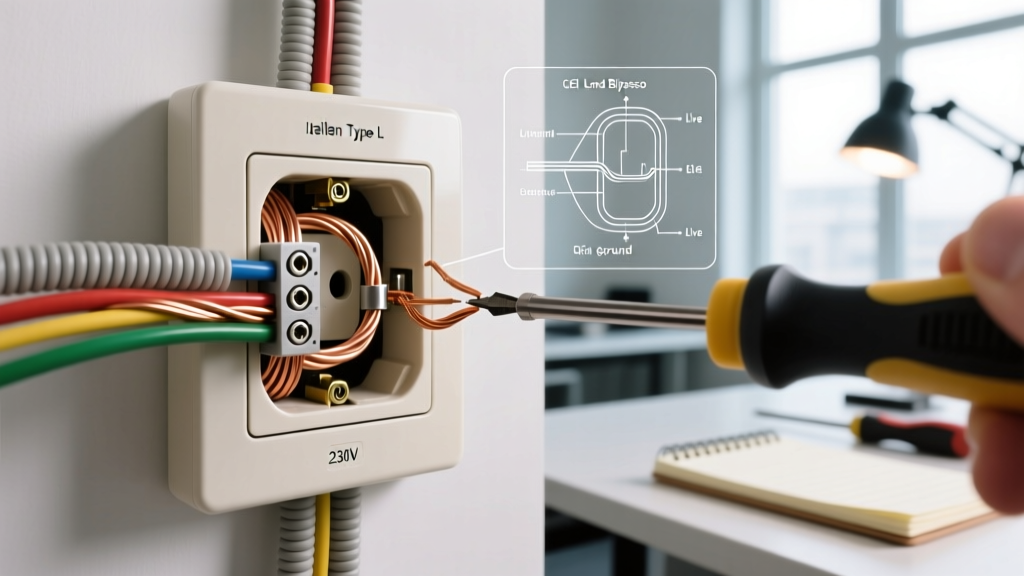
- Earth (Green/Yellow or Green): Connect this to the top, largest terminal on the Type M receptacle. This pin measures 8.7mm in diameter and is the primary safety ground. Ensure the screw is torqued to 1.2 Nm.
- Phase/Line (Brown or Red): Connect to the bottom right terminal (when facing the socket). This is the 'live' side and must be switched by your MCB.
- Neutral (Blue or Black): Connect to the bottom left terminal.
Pro Tip: Give each wire a firm 'tug test' after tightening the terminal screws. A loose neutral on a 230V circuit can cause severe arcing and melt the receptacle faceplate.
Step 4: Mount the Receptacle and Restore Power
Carefully fold the wires into the backbox. The thick 2.5 mm² wires and large BS 546 terminal blocks can be stubborn; use a gentle zig-zag folding pattern to avoid pinching the insulation against the metal box edges. Secure the faceplate using the provided M3.5 machine screws. Restore power at the DB and proceed to testing.
Testing and Troubleshooting Common Edge Cases
Installing the outlet is only half the job; verifying the integrity of the 230V supply is where true electrical expertise lies. Here are common failure modes specific to Nepalese electrical environments and how to troubleshoot them:
1. High Earth Loop Impedance
In hilly regions like Kathmandu or Pokhara, rocky and dry soil often results in poor natural earthing. If your multimeter reads a voltage higher than 2-3V between Neutral and Earth, your earth pit is failing. Solution: You must install a dedicated copper-bonded earth rod (minimum 2.4 meters deep) surrounded by bentonite clay to lower the soil resistivity. Relying on the municipal water pipe for grounding is strictly prohibited and highly dangerous.
2. Reverse Polarity
If a receptacle tester indicates reverse polarity, the Phase and Neutral wires have been swapped at the DB or the outlet. This means the appliance's internal switch will disconnect the neutral wire while the internal components remain energized at 230V, posing a lethal shock hazard. Solution: Isolate power, swap the Brown/Red and Blue/Black wires at the terminal blocks, and re-test.
3. Voltage Sags During Peak Load
According to data from regional grid monitors, voltage in outskirts areas can sag to 190V-200V during winter evenings when heating loads peak. While a Type M outlet is rated for 250V, feeding 15A through undersized 1.5 mm² wires during a voltage sag will cause excessive voltage drop and wire heating. Solution: Always use 2.5 mm² wire for 15A Type M circuits, and ensure the total circuit length from the DB does not exceed 25 meters to keep voltage drop below the recommended 3% threshold.
Final Thoughts on BS 546 Maintenance
The Type D and Type M standards, while physically robust, rely on tight mechanical friction between the plug pins and the socket contacts. Over time, frequent plugging and unplugging of heavy 15A plugs can widen the internal brass contacts, leading to arcing. As a best practice, inspect high-draw Nepal electrical outlets annually for signs of thermal stress (brown scorch marks on the faceplate) and replace the receptacle immediately if the plug feels loose when inserted. For more detailed specifications on international plug profiles, refer to the World Standards Type D & M guide.
By adhering to these precise measurements, wire gauges, and safety protocols, you ensure your 230V installation is not only compliant with local standards but built to withstand the unique environmental and grid challenges of the region.