
Understanding the Taiwan Electric Outlet Landscape
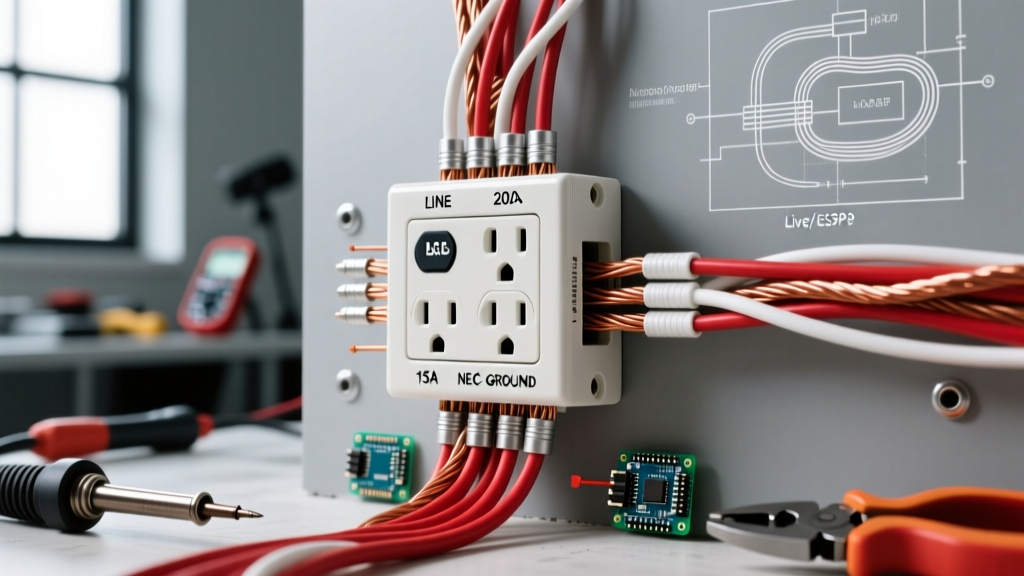
Taiwan's electrical grid operates on a 110V, 60Hz standard, closely mirroring North American voltage parameters but with distinct local wiring codes and metric cable sizing. While modern high-rises and newly constructed homes in Taipei and Kaohsiung are fully equipped with grounded Type B receptacles, a vast majority of older residential buildings (pre-1990s) still rely on ungrounded Type A outlets. Upgrading a Taiwan electric outlet from an ungrounded two-prong configuration to a grounded three-prong NEMA 5-15R equivalent is one of the most critical safety improvements you can make to protect sensitive electronics and prevent shock hazards.
According to the International Electrotechnical Commission (IEC), Taiwan officially recognizes both Type A and Type B plugs. However, the transition from legacy ungrounded circuits to modern grounded systems requires a deep understanding of local reinforced concrete (RC) wall construction, metric wire gauges, and specific Taiwanese breaker panels.
Taiwan Outlet Standards: Type A vs. Type B
Before purchasing replacement parts, it is crucial to understand the physical and electrical differences between the standard receptacles found in Taiwanese homes.
| Feature | Type A (Legacy / Ungrounded) | Type B (Modern / Grounded) |
|---|---|---|
| Pin Configuration | Two flat parallel pins | Two flat pins + round ground pin |
| Voltage / Amperage | 110V / 15A | 110V / 15A or 20A |
| Grounding | None (High shock risk) | Yes (Equipment grounding conductor) |
| Common Era | Pre-1990s buildings | Post-1990s / Modern renovations |
| Physical Standard | NEMA 1-15R equivalent | NEMA 5-15R equivalent |
Sourcing Parts and Tools in Taiwan
Unlike the US where AWG (American Wire Gauge) is used, Taiwan utilizes the metric system for electrical wiring. Standard 15A outlet circuits are wired with 1.6mm diameter solid copper wire, while 20A circuits use 2.0mm diameter wire. When sourcing replacement receptacles, you must ensure the terminal screws can accommodate these specific metric thicknesses.
Recommended Receptacle Brands
- Panasonic (WN1302 / WN1312): The gold standard in Taiwan. The WN1312 is a hospital-grade, heavy-duty Type B receptacle that offers superior terminal grip for 2.0mm wire. (Price: NT$80 - NT$150)
- S&G (Shih Gang): A reliable, cost-effective local brand widely used by Taiwanese electricians for standard residential upgrades. (Price: NT$40 - NT$70)
- Taiwans (Taiwan Electric): Excellent mid-tier option with robust internal brass contacts. (Price: NT$50 - NT$90)
Where to buy: You can find these at large home improvement stores like B&Q (特力屋) or, for better prices and expert advice, visit a local neighborhood hardware and plumbing store, commonly known as a 水電行 (shuǐ diàn háng).
Step-by-Step: Upgrading Type A to Type B
Safety Warning: Always verify power is off using a non-contact voltage tester. Taiwan's electrical panels use NFBs (No-Fuse Breakers / 無熔絲開關). Ensure the main breaker or the specific branch circuit NFB is switched to the OFF position before opening the wall plate.
Step 1: Remove the Legacy Receptacle
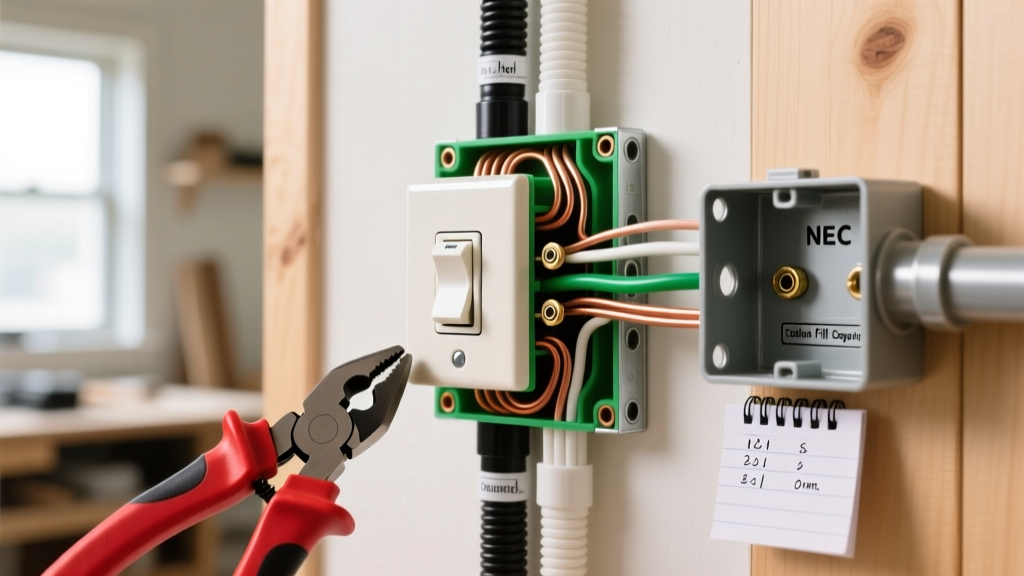
Unscrew the single center screw holding the faceplate. Remove the two mounting screws securing the Type A receptacle to the wall box. Gently pull the outlet out. In older Taiwanese RC (reinforced concrete) walls, you may not find a traditional metal or plastic junction box; instead, the receptacle might be mounted directly to a plastic ring embedded in the concrete.
Step 2: Inspect for a Ground Wire
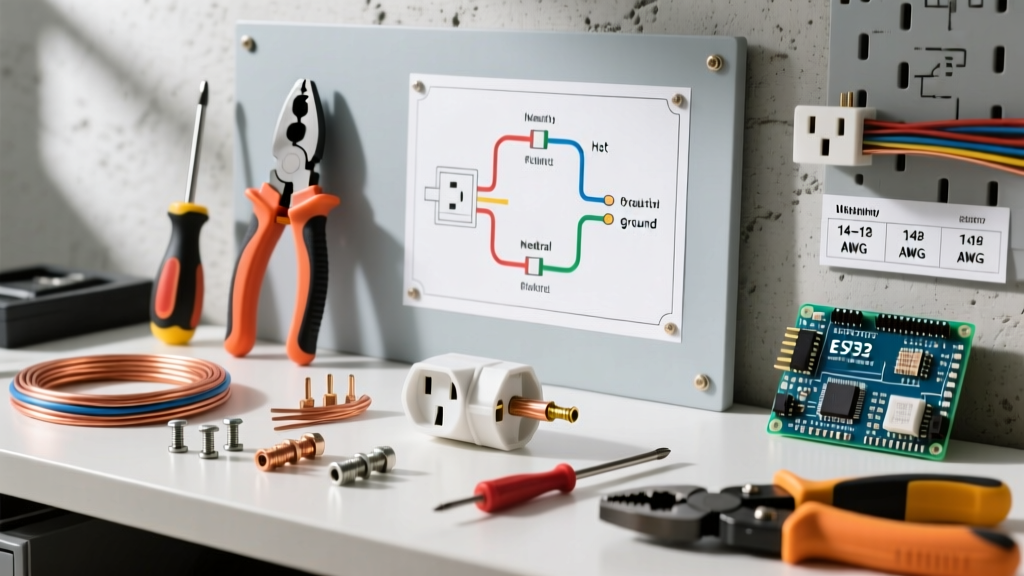
Look deep into the wall cavity. Modern Taiwanese wiring color codes dictate:
- Black or Red: Hot (Line)
- White: Neutral
- Green or Bare Copper: Ground
Step 3: Wire the New Type B Receptacle
- Strip exactly 12mm of insulation from the 1.6mm or 2.0mm solid copper wires using a metric wire stripper.
- Connect the Black (Hot) wire to the brass-colored screw terminal.
- Connect the White (Neutral) wire to the silver-colored screw terminal.
- Connect the Green (Ground) wire to the green grounding screw.
- Ensure no bare copper is exposed outside the terminal, and give each wire a firm tug to verify the mechanical grip.
Step 4: Secure and Test
Push the wires neatly into the wall cavity. Mount the Panasonic or S&G receptacle using the provided M4 mounting screws. Attach the faceplate, restore power at the NFB breaker panel, and test with a standard 110V receptacle tester to confirm correct polarity and grounding.
The 'No Ground Wire' Dilemma: Code-Compliant Workarounds
The most common hurdle when upgrading a Taiwan electric outlet in an older apartment is the absence of an equipment grounding conductor. Pulling a new ground wire through decades-old, dust-clogged PVC conduits embedded in concrete is often impossible without a full renovation.
According to safety principles aligned with the Electrical Safety Foundation International (ESFI) and adapted into local Taiwanese electrical codes, you have two legal and safe options when no ground wire exists:
Option A: Install a GFCI Receptacle (Recommended)
Replace the standard Type B outlet with a GFCI (Ground Fault Circuit Interrupter / 漏電斷路器) receptacle. A GFCI does not create a physical ground, but it monitors the current balance between the hot and neutral wires. If it detects a leakage as small as 4-6mA (indicating current is flowing through a person or water), it trips in milliseconds, preventing lethal shock.
- Labeling: You must apply the 'No Equipment Ground' sticker provided with the GFCI to the faceplate to inform future users that the third prong is not physically grounded.
- Cost: GFCI receptacles in Taiwan (like the Panasonic WN1315) cost between NT$400 and NT$800.
Option B: Leave as Type A (Not Recommended)
Simply replacing the old Type A with a new Type A receptacle is legal but offers no safety upgrade. This is only advisable if the circuit is already protected by a whole-panel GFCI breaker, which is rare in older Taiwanese homes.
Edge Cases and Troubleshooting Matrix
When working on Taiwanese electrical systems, DIYers and expats often encounter unique wiring anomalies. Use this matrix to diagnose common issues during your upgrade.
| Symptom / Observation | Root Cause in Taiwanese Wiring | Expert Solution |
|---|---|---|
| Receptacle tester shows 'Reverse Polarity' | Hot and neutral swapped at the panel or previous splice. Common in DIY fixes by previous tenants. | Swap the black and white wires on the receptacle terminals. Verify at the NFB panel. |
| Voltage reads 110V, but heavy appliances trip the breaker instantly | Shared neutral in a multi-gang box, or undersized 1.6mm wire on a 20A NFB breaker. | Ensure the NFB breaker rating matches the wire (15A for 1.6mm, 20A for 2.0mm). Separate neutrals. |
| Wall plate screws won't catch in the wall | The embedded plastic ring in the RC concrete wall has cracked or stripped. | Use specialized 'expansion anchors' for concrete, or inject epoxy into the cavity to re-seat the mounting ring. |
| 220V AC outlet looks different | Taiwan uses dedicated 220V lines for AC units, often with proprietary 20A/30A 220V receptacles, not standard US NEMA 14-30. | Do not attempt to wire a 110V Type B outlet to a 220V line. Consult a licensed 水電行 electrician for AC circuits. |
Final Thoughts on Safety and Compliance
Upgrading a legacy Taiwan electric outlet to a modern, grounded Type B receptacle is a high-impact project that drastically improves home safety. By respecting local metric wire gauges (1.6mm/2.0mm), utilizing high-quality Japanese or local-spec brands like Panasonic, and correctly applying GFCI technology where ground wires are missing, you ensure your electrical system is both safe and compliant. Always consult a licensed local electrician if you encounter aluminum wiring, degraded PVC insulation, or if you are unsure about the amperage rating of your NFB breaker panel.