
The Rise of Remote Diagnostics: Why Outlet Imagery Matters
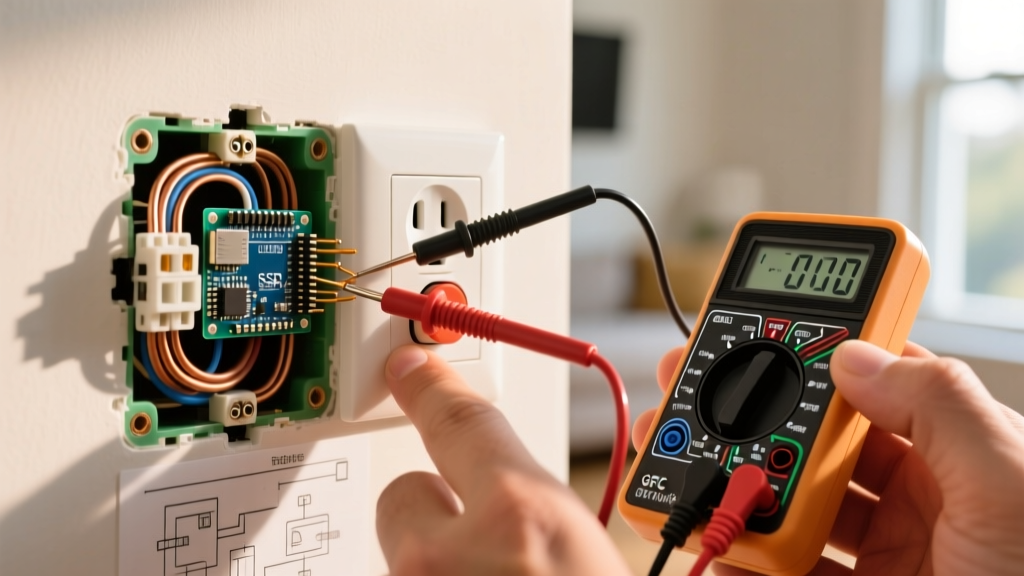
In the modern electrical trade and home inspection industry, analyzing electrical outlet images has become a critical first step in remote diagnostics, pre-purchase evaluations, and DIY troubleshooting. Whether you are an electrician reviewing photos sent by a homeowner, a real estate inspector documenting violations, or a DIYer trying to understand a messy junction box, knowing how to 'read' an image of a receptacle can save time, money, and potentially lives.
Visual evidence often reveals immediate National Electrical Code (NEC) violations that untrained eyes might miss. From missing tamper-resistant shutters to improper wire gauges stuffed into backstab terminals, a high-resolution photograph can tell a detailed story about the safety and compliance of an electrical system. In this guide, we will break down the most common NEC code violations visible in electrical outlet images, providing you with the exact visual cues to look for based on the latest 2023 and upcoming 2026 NEC adoption cycles.
Spotting Wet Location Violations (NEC 210.8)
One of the most frequent and dangerous violations captured in electrical outlet images is the absence of Ground Fault Circuit Interrupter (GFCI) protection in wet or damp locations. Under NEC Article 210.8, GFCI protection is mandatory for all 125-volt through 250-volt receptacles installed in bathrooms, garages, outdoor areas, crawl spaces, basements, and within 6 feet of a kitchen sink.
Identifying GFCI and AFCI Deficiencies in Photos
When reviewing an image of a kitchen or bathroom outlet, look immediately for the 'TEST' and 'RESET' buttons on the face of the receptacle. If you see a standard duplex receptacle (like a basic Leviton T5262) within 6 feet of a sink's edge, you are looking at a direct code violation. Furthermore, modern codes require GFCI protection in basements and crawl spaces. If an image shows a standard outlet in an unfinished basement with exposed concrete walls, it is non-compliant.
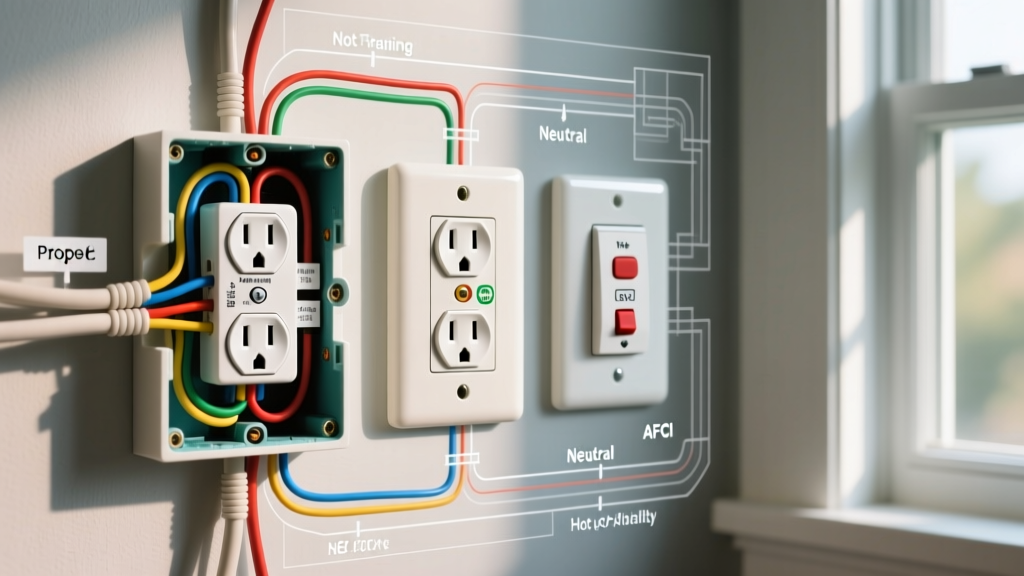
For bedrooms and living areas, Arc Fault Circuit Interrupter (AFCI) protection is required. While AFCI protection is typically handled at the breaker panel, dual-function AFCI/GFCI receptacles (such as the Hubbell GFTR2, retailing around $22 to $28) are sometimes used. If an image shows a standard receptacle in a bedroom where the panel breaker is clearly a standard thermal-magnetic type (lacking an AFCI test button or pigtail), the circuit lacks required arc-fault protection.
Visualizing Receptacle Spacing and Countertop Rules (NEC 210.52)
Spacing violations are highly visible in wide-angle electrical outlet images of kitchens and living rooms. NEC 210.52 dictates the '6/12 rule' for general living areas: no point along the floor line in any wall space can be more than 6 feet from a receptacle, and any wall space 2 feet or wider requires an outlet.
In kitchens, the rules are stricter. Countertop receptacles must be installed so that no point along the wall line is more than 24 inches from an outlet. When analyzing a kitchen image, look for gaps between outlets. If a continuous countertop spans 5 feet and only has one receptacle, it violates the 24-inch maximum spacing rule. Additionally, outlets cannot be placed more than 20 inches above the countertop surface, and they cannot be installed face-up on the countertop itself unless they are specifically listed as pop-up or flush-mount countertop assemblies (like the Docking Drawer 152-1000 series, which costs upwards of $250).
Expert Insight: When evaluating electrical outlet images of kitchen islands, remember that the 2023 NEC removed the requirement for receptacles on island countertops if no other means of providing power exists, but if an outlet is installed, it must still comply with GFCI and height restrictions. Always verify your local jurisdiction's specific adoption year, as some areas are still operating on the 2020 NEC where island outlets were strictly mandatory.
Decoding Wiring Methods: Push-In vs. Screw Terminals
While the face of an outlet rarely reveals how it is wired, images taken with the faceplate removed or showing the side profile of the receptacle can expose severe fire hazards. The most notorious of these is the use of 'backstab' or push-in wire connectors for 12 AWG wire.
Under UL standards and NEC guidelines, push-in terminals on standard 15-amp receptacles are generally rated only for 14 AWG copper wire. If an image shows thick, yellow-jacketed NM-B cable (indicating 12 AWG wire on a 20-amp circuit) with the bare copper wires stabbed into the small holes on the back of a 15-amp receptacle, this is a severe violation. The connection will likely loosen over time due to thermal expansion and contraction, leading to arcing and potential fires. Proper installation requires the wire to be looped clockwise around the brass or silver screw terminals, or the use of screw-clamp plates found on higher-end commercial spec-grade receptacles like the Leviton 5352.
Tamper-Resistant (TR) Identification (NEC 406.12)
Since the 2008 NEC cycle, Tamper-Resistant (TR) receptacles have been required in all dwelling unit areas specified in 210.52. When zooming in on electrical outlet images, look closely at the two vertical slots on the face of the receptacle.
- Compliant: You will see internal plastic shutters blocking the slots. Additionally, the letters 'TR' will be embossed on the face of the receptacle.
- Non-Compliant: You can see straight down into the metal contacts (the brass and silver blades inside). This indicates an older, pre-2008 standard receptacle that poses a severe shock hazard to children inserting foreign objects.
Replacing a non-TR outlet is a low-cost, high-impact fix. A standard TR receptacle like the Eaton TRCR15W costs between $2.50 and $4.00 at most hardware stores, making the failure to upgrade an indefensible code violation during a home inspection.
Visual Matrix: Code-Compliant vs. Non-Compliant Configurations
Use the following comparison chart to quickly assess electrical outlet images against common NEC requirements.
| Visual Cue in Image | Code-Compliant Status | NEC Reference / Notes |
|---|---|---|
| Standard duplex outlet within 6 ft. of a bathroom sink | Non-Compliant | NEC 210.8(A)(1) - Requires GFCI protection. |
| Receptacle face showing 'TR' stamp and internal shutters | Compliant | NEC 406.12 - Tamper-Resistant requirement met. |
| 12 AWG (yellow) wire inserted into backstab push-in holes | Non-Compliant | UL Standard / NEC 110.3(B) - Push-ins rated for 14 AWG only. |
| Two outlets on a 10-foot kitchen countertop | Compliant | NEC 210.52(C) - Meets the 24-inch maximum spacing rule. |
| Painted-over receptacle slots or visible paint buildup | Non-Compliant | NEC 110.12 - Mechanical execution of work; paint compromises contacts. |
Frequently Asked Questions
Can I rely solely on electrical outlet images for a home inspection?
No. While electrical outlet images are excellent for identifying visual code violations (like missing TR stamps, improper spacing, or lack of GFCI buttons), they cannot reveal internal wiring faults such as open neutrals, reverse polarity, or high-resistance connections. A physical inspection using a digital multimeter or a dedicated receptacle tester (like the Klein Tools RT250) is always required to verify the actual electrical state of the circuit.
What is a 'bootleg ground' and how does it look in an image?
A bootleg ground is a deceptive and dangerous wiring trick where a jumper wire is connected between the neutral terminal and the ground screw on a receptacle. This tricks standard plug-in testers into reading a 'correct' ground. In an image with the cover plate removed, you will see a short piece of bare or green wire bridging the silver (neutral) screw and the green (ground) screw. This is a severe NEC violation (NEC 250.148) because if the neutral wire ever disconnects upstream, the metal faceplate and any plugged-in appliance chassis will become energized at 120 volts.
Are smart outlets subject to the same TR and GFCI codes?
Yes. Smart receptacles, such as the Leviton Decora Smart Wi-Fi Outlet (DW15R), must still comply with NEC 406.12 for tamper resistance. Furthermore, if a smart outlet is installed in a location requiring GFCI protection (like a garage or outdoor patio), the smart outlet itself must be a GFCI model, or it must be fed from a GFCI-protected breaker. Standard smart outlets do not provide ground-fault protection on their own.
For more detailed information on residential electrical safety standards and the importance of GFCI technology, refer to the Electrical Safety Foundation International (ESFI). Additionally, the complete text and adoption schedules for the National Electrical Code can be reviewed via the National Fire Protection Association (NFPA). Understanding how to interpret tamper-resistant receptacle requirements is also vital for ensuring child safety in modern homes.