
Decoding the REBT: Spain’s Electrical Bible
When renovating a property or upgrading infrastructure in Spain, understanding the local electrical code is not optional—it is a strict legal and safety requirement. Unlike the US National Electrical Code (NEC) or the UK's BS 7671, Spain governs its low-voltage installations through the REBT (Reglamento Electrotécnico para Baja Tensión), established by Royal Decree 842/2002. For residential wiring, the critical section you must memorize is ITC-BT-25, which dictates exact circuit limits, cable sizing, and mandatory protection devices for domestic interiors.
A standard Spain electrical outlet operates on a 230V, 50Hz single-phase alternating current. However, simply knowing the voltage is insufficient for safe installation. The Spanish code enforces rigorous rules regarding wire color harmonization (IEC 60446), maximum circuit loads, and the mandatory use of differential switches to prevent lethal electric shocks.
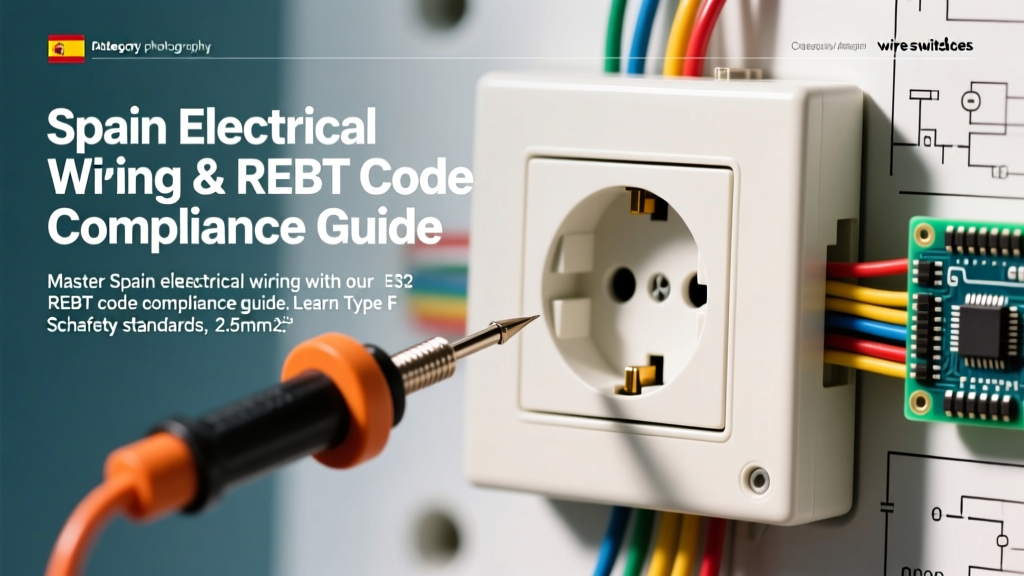
Anatomy of a Spain Electrical Outlet (Type F Schuko)
The standard receptacle in Spain is the Type F (CEE 7/3), universally known as the "Schuko" (from the German Schutzkontakt). According to the World Standards Type F Guide, this outlet is rated for 16 Amps and features two round pins (4.8mm diameter, 19mm length) spaced 19mm apart, alongside two grounding clips on the top and bottom edges of the recess.
Physical Dimensions & Safety Recess
The defining safety feature of the Schuko outlet is its recessed cavity. The socket features a circular recess measuring 43mm in diameter and 19mm deep. This design ensures that a user cannot touch the live pins while the plug is being inserted or removed, as the plug body fully fills the cavity before electrical contact is made. When sourcing outlets, ensure they carry the AENOR certification mark, guaranteeing compliance with UNE 20315 standards.
Circuit Design & Cable Sizing Matrix (ITC-BT-25)
One of the most common mistakes foreign electricians and DIYers make in Spain is applying NEC wire gauge (AWG) logic to European metric cable sizing. Spain uses cross-sectional area measured in square millimeters (mm²). Below is the strict ITC-BT-25 compliance matrix for residential circuits.
| Circuit Type (Spanish Designation) | Wire Gauge (mm²) | MCB Rating (PIA) | Max Load | Max Outlets per Circuit |
|---|---|---|---|---|
| C1 - Lighting (Iluminación) | 1.5 mm² | 10A | 2,300W | 30 light points |
| C2 - General Outlets (Tomas de uso general) | 2.5 mm² | 16A | 3,450W | 20 sockets |
| C3 - Kitchen & Oven (Cocina y horno) | 6.0 mm² | 25A | 5,750W | 1 dedicated outlet |
| C4 - Washer/Dryer/Water Heater | 4.0 mm² | 20A | 4,600W | 3 dedicated sockets |
| C5 - Bathroom & Kitchen Base Outlets | 2.5 mm² | 16A | 3,450W | 6 sockets |
⚠️ CRITICAL CODE NOTE: In Spain, the neutral wire must ALWAYS be Blue, the earth wire Green/Yellow, and the line (phase) wire Brown, Black, or Grey. Using the US standard of White for neutral or Bare Copper for ground is a severe REBT violation and will cause your installation to fail the mandatory inspection.
The Cuadro Eléctrico: Panelboard Compliance
The heart of any Spanish electrical installation is the Cuadro Eléctrico de Mando y Protección (CGMP). To legally wire a Spain electrical outlet, the circuit must be protected by three specific tiers of safety devices located in this panel:
- ICP (Interruptor de Control de Potencia): Historically a physical breaker limiting the home's total contracted power (e.g., 3.45kW or 5.75kW). In 2026, this is mostly integrated digitally into the smart meter (contador inteligente) managed by the utility company, though older panels may still retain the physical switch.
- ID (Interruptor Diferencial): The residual current device (RCD). Spanish code mandates a 30mA sensitivity differential switch to protect against indirect contact and ground faults. For modern homes with inverter-driven appliances (HVAC, EV chargers, induction hobs), you must install a Type A or Type F immunized differential switch, as standard Type AC switches can become "blinded" by smooth DC residual currents.
- PIA (Pequeño Interruptor Automático): The miniature circuit breaker (MCB) protecting individual cables from overcurrent and short circuits. A standard 16A PIA (Curve C) is mandatory for 2.5mm² general outlet circuits.
Step-by-Step: Wiring a Flush-Mounted Simon 27 Outlet
To demonstrate proper technique, we will wire a Simon 27 Play Type F outlet (retail price approximately €5.50 - €7.00), one of the most popular AENOR-certified models in Spain. European installations utilize standard 65mm diameter, 45mm deep flush backboxes embedded in the masonry or drywall.
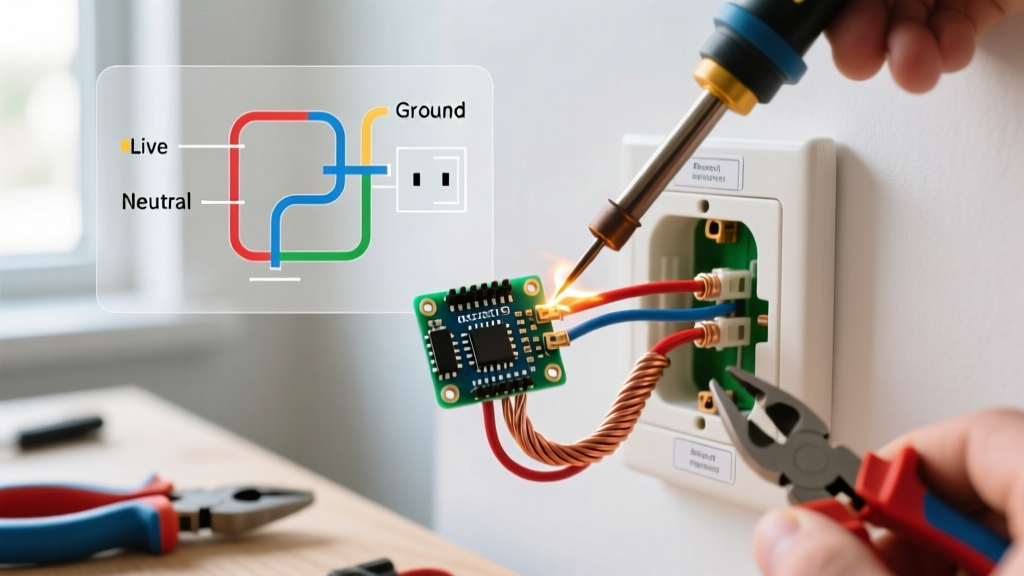
1. Preparation and Stripping
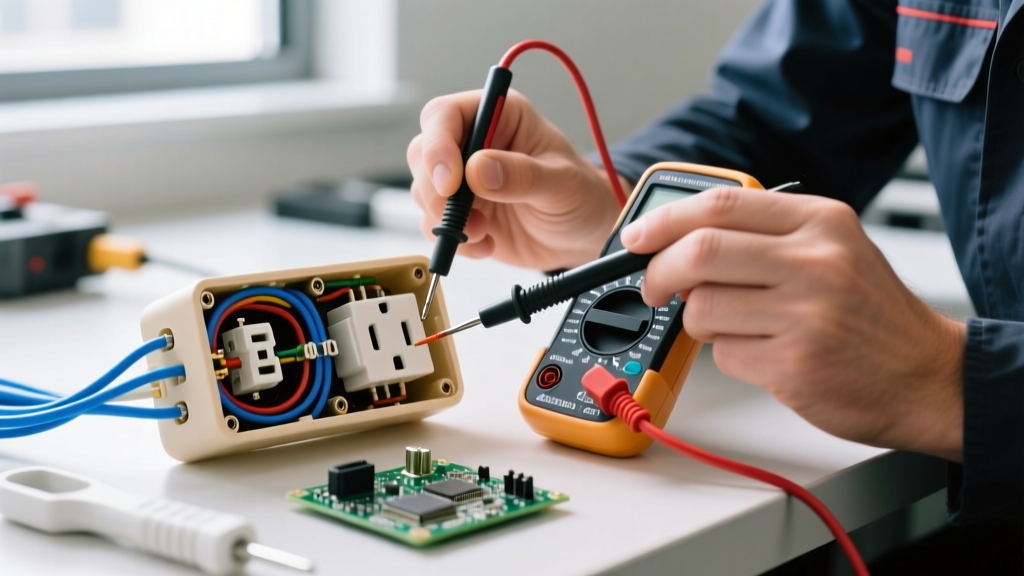
After verifying zero voltage with a CAT III multimeter, strip the outer sheath of the 2.5mm² cable. Strip exactly 12mm of insulation from the individual copper conductors. Stripping too much leaves exposed live copper outside the terminal; stripping too little causes the terminal screw to bite into the insulation, leading to high-resistance arcing.
2. Terminal Connections
The Simon 27 features push-in or screw-cage terminals. If using screw terminals:
- Insert the Brown (Line) wire into the terminal marked L.
- Insert the Blue (Neutral) wire into the terminal marked N.
- Insert the Green/Yellow (Earth) wire into the central terminal marked with the ⏚ symbol. This connects directly to the lateral Schuko grounding clips.
3. Mounting and Alignment
Fold the wires neatly into the backbox using a gentle S-curve to avoid pinching. Secure the outlet's metal mounting claws (or use the M3.5 screw holes for drywall boxes) and tighten until flush. Use a spirit level to ensure the faceplate is perfectly horizontal before snapping on the decorative trim.
Critical Code Violations to Avoid in Spanish Renovations
When auditing older Spanish properties (especially those built before the 1980s), DIYers frequently encounter dangerous legacy wiring. Avoid these common pitfalls:
- The "No Earth" Legacy: Pre-1970s Spanish homes often lack a grounding conductor. Replacing a two-pin outlet with a Type F Schuko without connecting a true earth wire is a lethal hazard. The Schuko clips will provide a false sense of safety. You must pull new 3-core cable back to the panel.
- Daisy-Chaining Kitchen Outlets: ITC-BT-25 strictly prohibits putting high-draw kitchen appliances (dishwashers, microwaves) on a general C2 circuit. The refrigerator, oven, and washing machine must each have dedicated circuits originating directly from the CGMP.
- Ignoring the Boletín Eléctrico: Any significant modification to your outlet circuits requires a CIE (Certificado de Instalación Eléctrica), colloquially known as the Boletín. This document must be issued by a licensed instalador autorizado and registered with the regional industry ministry. Without it, utility companies like Iberdrola or Endesa will refuse to connect or upgrade your smart meter.
Sourcing Certified Components in 2026
Always purchase electrical components from authorized distributors (e.g., Sonepar, Rexel, or local material eléctrico shops). Avoid unbranded outlets from online marketplaces, as they frequently fail the Spanish Ministry of Industry's thermal and mechanical stress tests. Premium brands dominating the Spanish market include Simon, Legrand (Valena Next), Schneider Electric (Odace), and BJC. Expect to pay between €4.00 and €9.00 per outlet mechanism depending on the finish and series.
By strictly adhering to the REBT guidelines, utilizing correct metric cable sizing, and respecting the Schuko safety recess design, you ensure your Spanish electrical installation is not only legally compliant but inherently safe for decades to come.