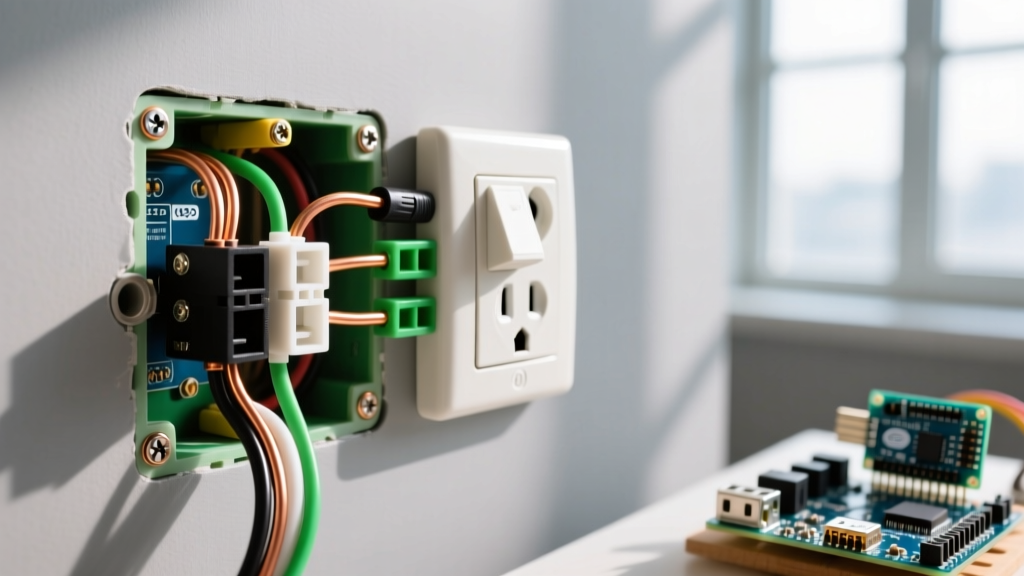

Understanding the Core Question: What Is a GFCI Electrical Outlet?
If you are upgrading your home's electrical system or troubleshooting a tripped receptacle, you have likely asked: what is a GFCI electrical outlet? A Ground Fault Circuit Interrupter (GFCI) is a specialized, fast-acting circuit breaker built directly into a standard-looking wall receptacle. Its sole purpose is to protect human life from fatal electrical shocks by continuously monitoring the balance of electrical current flowing through a circuit.
Unlike a standard breaker in your main panel—which is designed to protect the wiring from overheating due to overloads or short circuits—a GFCI outlet protects people. According to the Electrical Safety Foundation International (ESFI), GFCIs have prevented thousands of electrocutions since their widespread adoption in the 1970s. Today, modern GFCI receptacles are mandatory in moisture-prone areas of residential and commercial buildings.
The Mechanics of Shock Prevention: How a GFCI Works
To truly understand what a GFCI electrical outlet is, you must look inside the device. At the heart of the receptacle is a miniature differential current transformer. In a perfectly functioning circuit, the current flowing out to an appliance via the 'hot' wire exactly matches the current returning via the 'neutral' wire.
If you drop a plugged-in hairdryer into a sink, or if your body provides a path to ground, some of that current diverts away from the neutral wire. The GFCI's internal transformer detects this imbalance. If the leakage current reaches a highly sensitive threshold of 4 to 6 milliamps (mA), the GFCI trips an internal solenoid, severing power in less than 25 milliseconds. This microsecond-level reaction time is faster than the human heart's cardiac cycle, preventing ventricular fibrillation.
GFCI vs. Standard vs. AFCI: A Comparison Matrix
It is common to confuse GFCIs with other protective devices. Here is how they compare in a modern 2026 electrical system:
| Feature | Standard Receptacle | GFCI Receptacle | AFCI Receptacle |
|---|---|---|---|
| Primary Protection | None (Relies on panel breaker) | Human shock prevention (Ground faults) | Fire prevention (Arc faults) |
| Trip Threshold | N/A | 4mA - 6mA leakage | Arc signature detection |
| Reaction Time | N/A | < 25 milliseconds | Milliseconds (upon arc detection) |
| Test/Reset Buttons | No | Yes | Yes |
| Average Cost (2026) | $1.50 - $3.00 | $16.00 - $28.00 | $25.00 - $40.00 |
Essential Tools and Materials for GFCI Installation
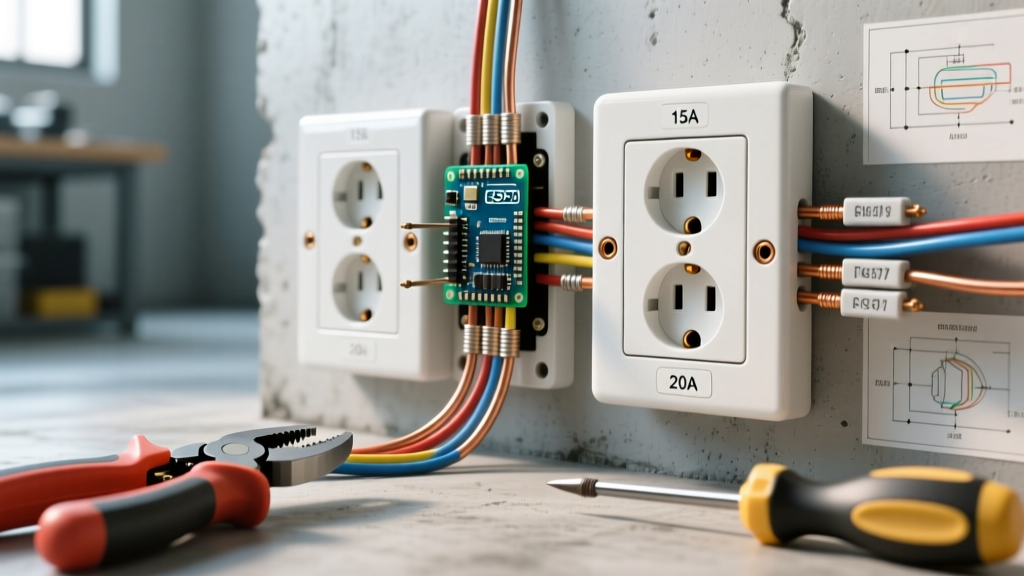
As a tool and material guide, we cannot stress that installing a GFCI requires more than just a screwdriver. Proper termination ensures the device operates safely and meets National Electrical Code (NEC) standards.
Recommended GFCI Receptacles
- Leviton SmartlockPro GFNT2-W (15A): Priced around $18, this is the industry standard for residential use. It features auto-monitoring (self-test) and a slim design that fits easily in crowded junction boxes.
- Eaton GFRF15W (15A Self-Test): Priced around $22, Eaton's model includes an audible alarm if the ground fault protection is compromised or if the line/load wires are reversed.
- Leviton GFNT2-KW (20A): Required for kitchen small-appliance circuits (approx. $21). Ensure you use a 20A GFCI on a 20A circuit with 12 AWG wire.
Required Hand Tools
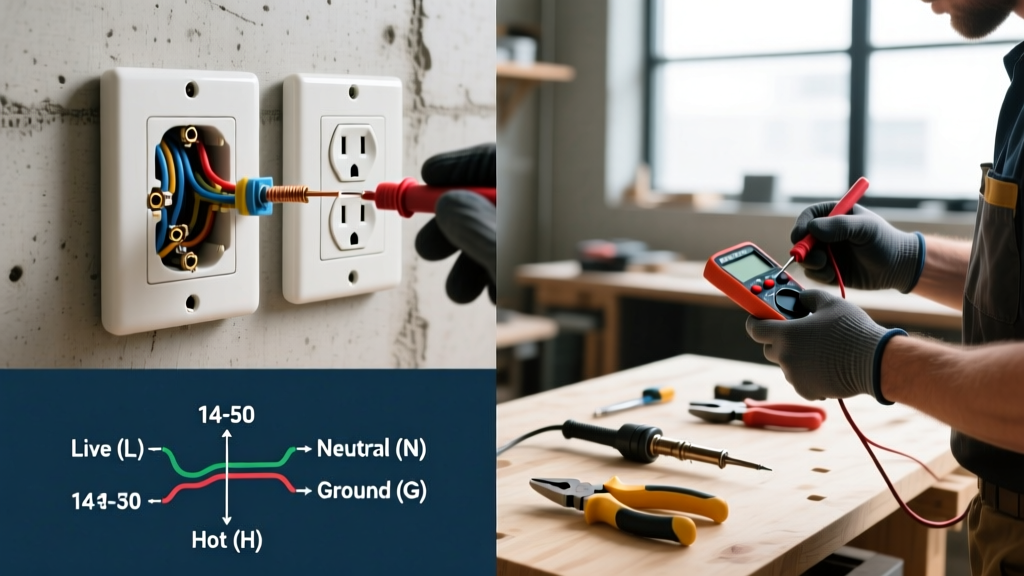
- Non-Contact Voltage Tester (NCVT): Klein Tools NCVT-2 ($25) to verify the circuit is dead before touching any wires.
- Wire Strippers: Klein Tools 11055 ($28) for cleanly stripping 14 AWG and 12 AWG solid copper without nicking the conductor.
- Torque Screwdriver: NEC 110.14(D) requires terminations to be torqued to manufacturer specifications. A basic Wiha torque screwdriver ($85) set to 14 in-lbs is ideal for Leviton/Eaton terminal screws.
- Insulated Screwdrivers: Milwaukee 48-22-2301 set to protect against accidental contact with adjacent live circuits in multi-gang boxes.
NEC Code Requirements: Where Are GFCIs Mandatory?
The National Fire Protection Association (NFPA) updates the NEC every three years. Under recent code cycles (NEC 2023 and local 2026 adoptions), GFCI protection has been vastly expanded. According to NEC Article 210.8, GFCI protection is strictly required for all 15A and 20A, 125V and 250V receptacles installed in the following locations:
- Bathrooms (all receptacles)
- Kitchens (specifically countertops)
- Garages and accessory buildings with floors at or below grade
- Crawlspaces (at or below grade level)
- Unfinished basements
- Outdoors (including balconies, decks, and porches)
- Boathouses and within 6 feet of a sink, wet bar, or washing machine
Expert Note: The U.S. Consumer Product Safety Commission (CPSC) notes that nearly two-thirds of all household electrocutions could be prevented if GFCIs were universally installed in all required wet and damp locations. Never bypass a GFCI requirement to save $20 on materials.
Step-by-Step Wiring Guide: Line vs. Load Terminals
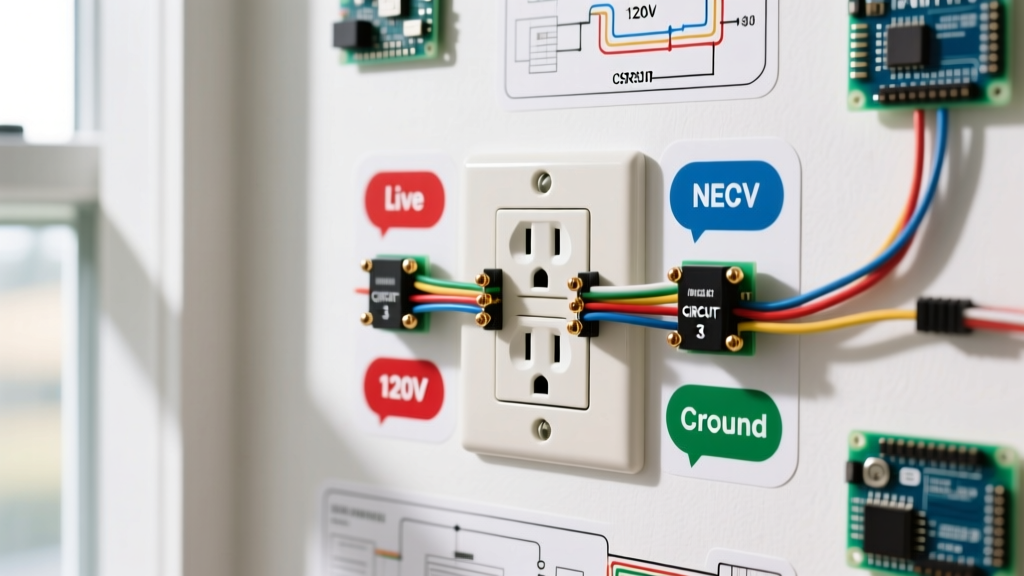
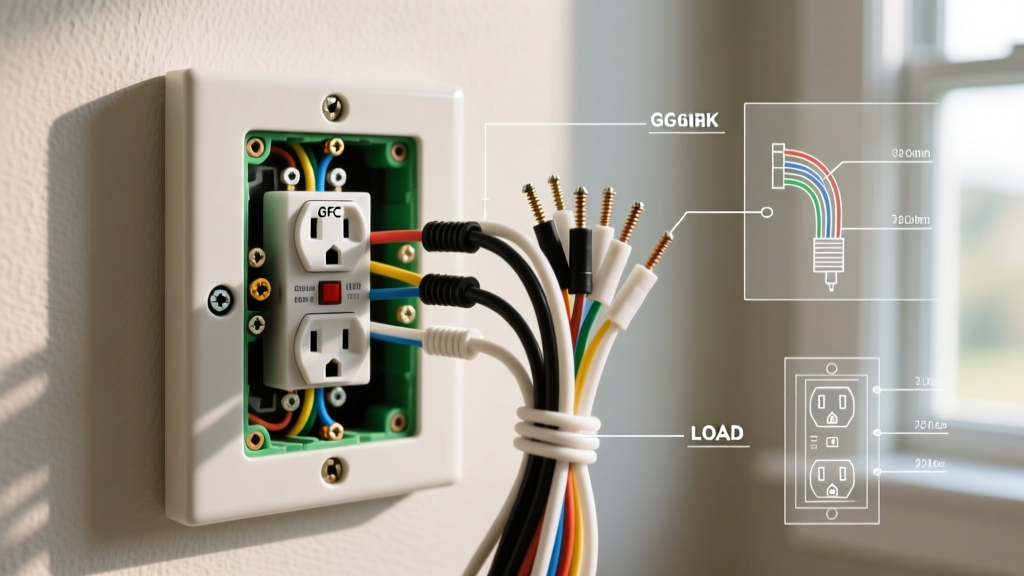
The most common failure mode in DIY GFCI installation is reversing the Line and Load wires. A GFCI receptacle has two distinct sets of brass (hot) and silver (neutral) screws, clearly marked on the back of the device.
1. Identify Line vs. Load
The LINE terminals receive power directly from the main breaker panel. The LOAD terminals send GFCI-protected power downstream to other standard receptacles on the same circuit. If you connect the incoming power to the LOAD terminals, the GFCI will not reset, or worse, it will provide power without shock protection.
2. Prepare the Wires
Strip exactly 3/4 inch of insulation from the 14 AWG or 12 AWG wires. Do not leave exposed copper outside the terminal clamp, which creates a short-circuit hazard in the metal box.
3. Terminate the Connections
- Connect the incoming bare copper ground wire to the green grounding screw on the GFCI. If using a metal junction box, pigtail the ground to the box as well.
- Connect the incoming white (neutral) wire to the silver LINE terminal.
- Connect the incoming black (hot) wire to the brass LINE terminal.
- If protecting downstream outlets, connect the outgoing white wire to the silver LOAD terminal, and the outgoing black wire to the brass LOAD terminal.
- Use your torque screwdriver to tighten the terminal plates to 14 in-lbs (or the specific torque printed on the device's instruction sheet).
4. The Pigtail Alternative
If your junction box contains multiple cables and you only want to protect the single GFCI location (not downstream), connect all hot wires together with a red Ideal 341 wire nut, and all neutrals together with a yellow Ideal 341 wire nut. Then, run single 'pigtails' to the LINE terminals only. Cap off the LOAD terminals with electrical tape.
Troubleshooting and End-of-Life Indicators
Modern GFCI outlets manufactured after 2015 comply with UL 943 standards, which mandate an 'End-of-Life' (EOL) indicator. If the internal surge protection components degrade from repeated lightning strikes or grid surges, the GFCI will permanently trip or flash a red LED, refusing to reset. This is not a malfunction; it is a critical safety feature indicating the device must be replaced immediately.
Why is my new GFCI tripping immediately?
- Shared Neutrals: If the circuit shares a neutral wire with another circuit (a multi-wire branch circuit), the GFCI will detect the returning current on the other circuit as a ground fault and trip. You must use a 2-pole GFCI breaker at the panel instead of a point-of-use receptacle for these setups.
- Capacitive Leakage: Extremely long wire runs (over 250 feet) or powering multiple appliances with heavy EMI filters (like large refrigerators or treadmill motors) can cause harmless but detectable capacitive leakage that exceeds the 6mA threshold.
- Moisture Ingress: Outdoor GFCIs without proper 'In-Use' weatherproof bubble covers will accumulate condensation, causing micro-faults that trip the device.
Final Thoughts on GFCI Safety
Understanding what a GFCI electrical outlet is goes beyond simply recognizing the 'Test' and 'Reset' buttons. It is a精密 (precision) life-saving instrument that requires correct installation, proper torque, and adherence to NEC zoning laws. By selecting high-quality self-testing models from Leviton or Eaton and utilizing the correct stripping and torquing tools, you ensure your home's electrical system remains safe, compliant, and resilient against ground faults for decades to come.