
Understanding the Belize Electrical Grid and Outlet Standards
When tackling electrical projects in Central America, understanding local infrastructure is critical for safety and code compliance. If you are wiring or upgrading a Belize electrical outlet, you are working within a system managed by Belize Electricity Limited (BEL). The standard residential supply is a 120/240V split-phase system operating at 60Hz, which perfectly mirrors the North American standard. However, the physical installations, aging infrastructure in older districts, and unique environmental factors like coastal salt air require specialized wiring strategies.
Belize primarily utilizes two types of NEMA (National Electrical Manufacturers Association) receptacles. While modern construction in areas like San Pedro and Placencia strictly enforces grounded circuits, many older homes in Belize City and rural villages in the Cayo District still rely on ungrounded legacy setups.
Type A vs. Type B Outlets: A Technical Comparison
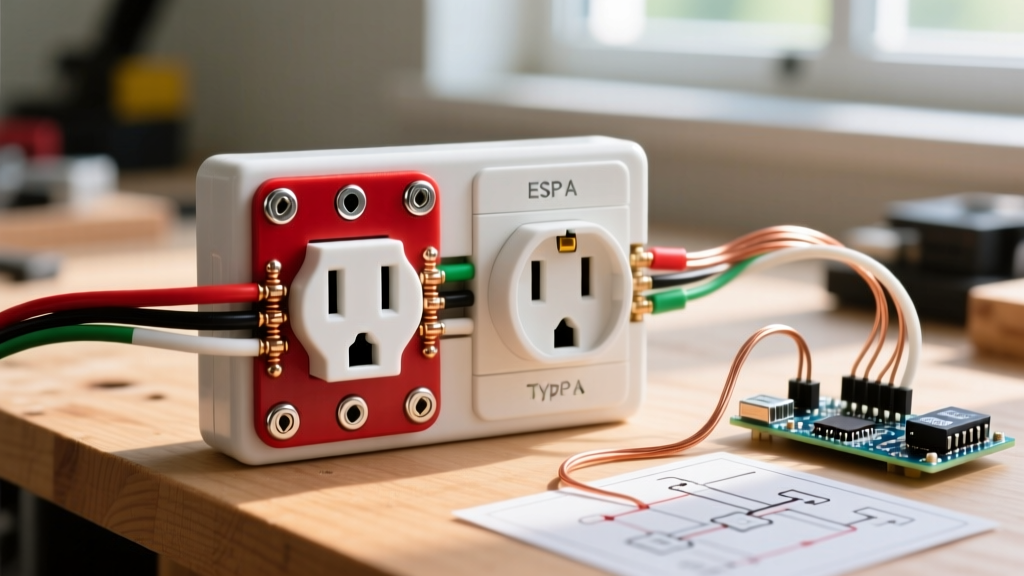
According to international electrical standards, Belize relies exclusively on Type A and Type B configurations. Here is how they break down from an installer's perspective:
| Feature | Type A (NEMA 1-15R) | Type B (NEMA 5-15R) |
|---|---|---|
| Pin Configuration | Two flat parallel pins (Ungrounded) | Two flat pins + round grounding pin |
| Voltage / Amperage | 125V / 15A | 125V / 15A |
| Grounding | No | Yes |
| Common Locations in Belize | Pre-1990s builds, rural off-grid cabins | Modern residential, commercial, resorts |
| NEC / BEL Code Status | Legacy only (Not permitted for new branch circuits) | Required for all new 15A/120V branch circuits |
Installer Note: While Type A outlets are still legally sold in local hardware stores for replacement purposes, the National Electrical Code (NEC), which Belize adapts for its national building standards, strictly prohibits installing ungrounded receptacles on new or extended branch circuits. Always upgrade to Type B when opening a wall cavity.
Common Wiring Scenario 1: Upgrading Ungrounded Type A to Grounded Type B
A frequent scenario for electricians and advanced DIYers in Belize is retrofitting older properties. You will often open a junction box to find a two-wire system (one hot, one neutral, no ground) connected to a Type A receptacle. Upgrading this to a safe, grounded Type B Belize electrical outlet requires specific methodologies.
Method A: Pulling a New Ground Wire
If the existing wiring is routed through PVC conduit (common in Belizean masonry block construction), you can pull a new ground wire.
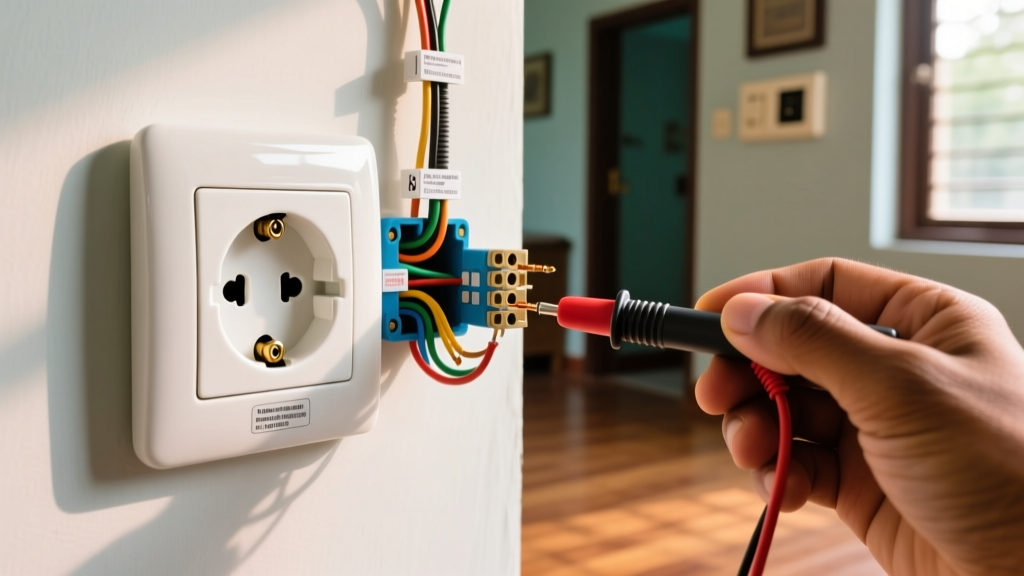
- Turn off the breaker: Verify zero voltage at the receptacle using a Fluke 117 True-RMS multimeter.
- Access the conduit: Open the nearest junction box or the main BEL distribution panel.
- Pull the ground: Use a fiberglass fish tape to pull a 12 AWG or 14 AWG green THHN stranded copper wire from the panel's ground bus bar directly to the outlet's junction box.
- Terminate: Connect the new ground wire to the green grounding screw on a spec-grade Leviton 5262-W (15A) or 5362-W (20A) duplex receptacle.
Method B: Installing a GFCI Receptacle (No Ground Available)
In solid masonry walls where conduit is blocked or nonexistent, pulling a new ground wire is impossible. The NEC-compliant workaround is installing a Ground Fault Circuit Interrupter (GFCI).
- Install a 15A GFCI receptacle (e.g., Leviton 8599-W).
- Connect the existing hot to the 'LINE - Brass' terminal and the neutral to the 'LINE - Silver' terminal.
- Leave the green grounding screw empty.
- Apply the included 'GFCI Protected / No Equipment Ground' sticker to the faceplate. This provides shock protection via the GFCI's internal toroidal coil, even without a physical ground path.
Common Wiring Scenario 2: Managing Voltage Drop in Rural Districts
In rural areas like the Mountain Pine Ridge or distant stretches of the Hummingbird Highway, properties are often situated far from the nearest BEL step-down transformer. Long wire runs result in voltage drop, which can cause motors in air conditioners and refrigerators to overheat and fail.
Calculating and Mitigating Voltage Drop
The NEC recommends a maximum voltage drop of 3% for branch circuits and 5% for the combined feeder and branch circuit. At a nominal 120V, a 3% drop means you cannot lose more than 3.6V.
The Formula: VD = (2 x L x I x R) / 1000
- L = One-way length of the wire in feet
- I = Current (Amps) of the load
- R = Resistance per 1000 ft of wire (from NEC Chapter 9, Table 8)
Real-World Example: You are wiring an outdoor receptacle for a water pump 150 feet from the main panel. The pump draws 12 Amps. You plan to use standard 14 AWG copper wire (Resistance = 3.14 ohms/1000ft).
VD = (2 x 150 x 12 x 3.14) / 1000 = 11.3 Volts
An 11.3V drop on a 120V circuit is a 9.4% drop—far exceeding the safe 3% limit. The pump will run hot and the breaker may trip.
The Solution: Upsizing the Conductor
To fix this, you must upsize the wire. By switching to 10 AWG copper wire (Resistance = 1.24 ohms/1000ft):
VD = (2 x 150 x 12 x 1.24) / 1000 = 4.46 Volts
A 4.46V drop is 3.7%. To get strictly under 3%, you would need to run 8 AWG copper or use a 240V circuit with a step-down transformer at the point of use. Always default to oversized THHN/THWN-2 conductors in long rural Belizean runs.
Environmental Edge Cases: Coastal Corrosion
Wiring an outlet in Ambergris Caye or Hopkins Village presents a unique challenge: extreme salt-air corrosion. Standard steel mounting straps and zinc-plated terminal screws will rust and fail within 2 to 3 years in these environments, leading to high-resistance connections and potential arc faults.
Material Selection for Coastal Belize
- Receptacles: Use 'Spec Grade' or 'Hospital Grade' receptacles featuring nickel-plated brass terminals and corrosion-resistant mounting straps. The Hubbell HBL5262 series is highly recommended for coastal deployments.
- Wall Plates: Avoid standard metal or cheap plastic plates that become brittle in UV/salt exposure. Use nylon wall plates (e.g., Leviton Midway Nylon) which resist chemical and environmental degradation.
- Boxes: Never use standard galvanized steel boxes in coastal exterior walls. Use heavy-duty PVC junction boxes or cast aluminum boxes with epoxy coatings.
Protecting Against BEL Grid Surges and Brownouts
The Belizean power grid, while vastly improved over the last decade, still experiences transient surges from lightning strikes during the rainy season and occasional brownouts during peak tourist months (December to April). Standard outlet wiring does not protect sensitive electronics from these events.
Implementing Point-of-Use and Whole-Home Protection
- Whole-Home Surge Protection: Install a Type 2 Surge Protective Device (SPD) like the Eaton CHSPT2ULTRA directly at the main BEL meter base or the primary distribution panel. This clamps massive voltage spikes before they enter the home's branch wiring.
- Point-of-Use Outlets: For home offices or entertainment centers, wire the Belize electrical outlet to feed a high-quality surge suppressor (e.g., Tripp Lite ISOBAR series). Do not rely on cheap $10 power strips, which often use inadequate MOVs (Metal Oxide Varistors) that degrade after a single moderate surge.
Frequently Asked Questions
Can I use US-purchased outlets in Belize?
Yes. Because Belize uses the exact same NEMA 1-15 and NEMA 5-15 standards as the United States and Canada, any UL-listed receptacle purchased from a US hardware store will physically and electrically work in Belize. However, ensure the amperage rating matches your circuit breaker (15A or 20A).
What wire gauge is standard for Belizean homes?
Modern residential construction in Belize typically uses 12 AWG THHN copper wire for standard 20A receptacle circuits and 14 AWG for 15A lighting circuits, pulled through 1/2-inch or 3/4-inch PVC conduit embedded in concrete block walls.
Do I need a permit to replace an outlet in Belize?
Like-for-like replacement of a damaged receptacle generally does not require a BEL inspection. However, if you are extending a circuit, adding a new outlet box, or upgrading a main panel, you must have the work inspected and approved by a licensed Belizean electrical contractor to maintain your insurance and utility compliance.