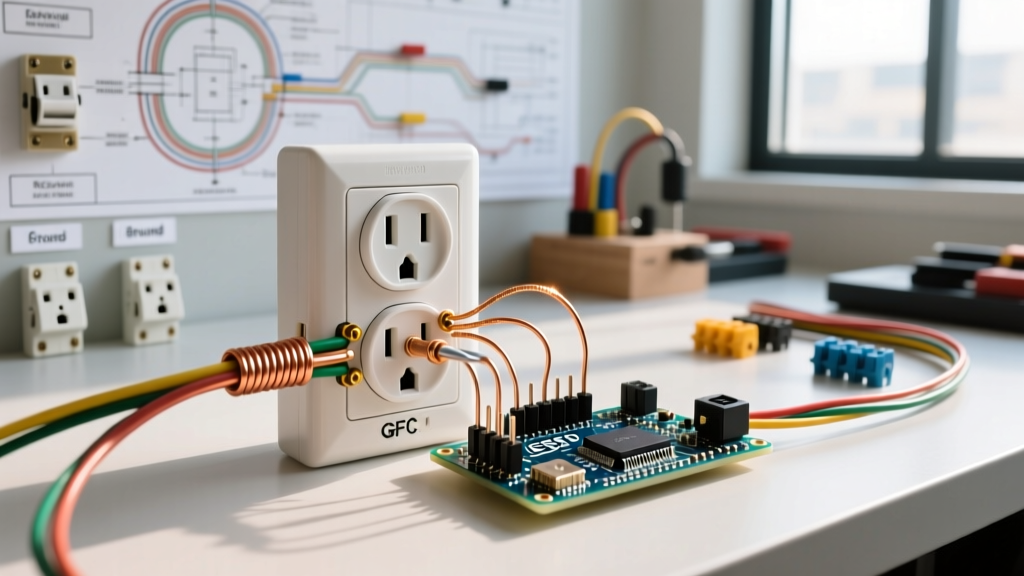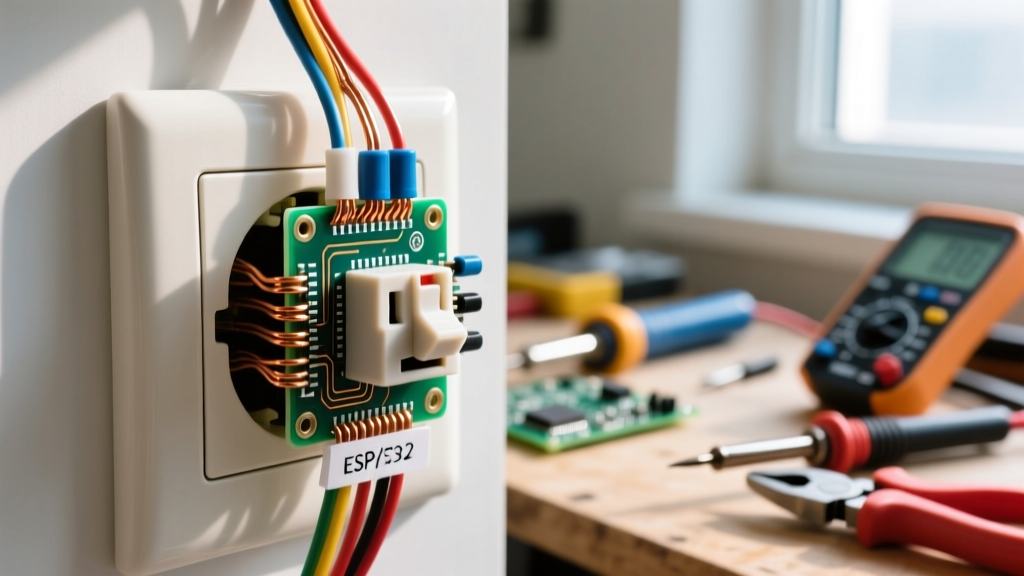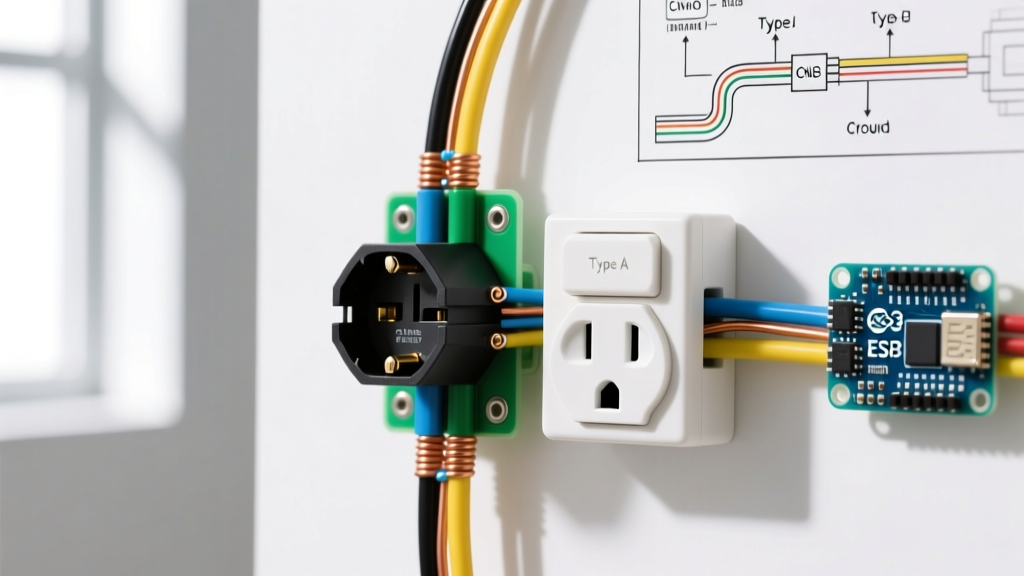

The Core Architecture of Taiwan's 110V Grid
Taiwan's electrical infrastructure operates on a 110V, 60Hz alternating current (AC) system, closely mirroring North American standards. However, installing or replacing a Taiwan electrical outlet plug requires strict adherence to local Chinese National Standards (CNS) and an understanding of regional wiring nuances. Whether you are upgrading a residential unit in Taipei or wiring a commercial space in Kaohsiung, understanding the exact wiring diagrams, local component brands, and safety codes is critical for a compliant and safe installation.
Quick Grid Specifications for Taiwan:
- Voltage: 110V ± 5% (Standard single-phase)
- Frequency: 60Hz
- Plug Types: Type A (NEMA 1-15, ungrounded) and Type B (NEMA 5-15, grounded)
- Governing Body: Bureau of Standards, Metrology and Inspection (BSMI)
Receptacle Types: Type A vs. Type B in Taiwan
According to the IEC World Plugs database, Taiwan primarily utilizes Type A and Type B configurations. While Type A (two flat parallel pins) is still found in older lighting circuits and low-draw appliance loops, modern electrical codes heavily mandate Type B (two flat pins plus a round grounding pin) for all general-purpose 15A and 20A receptacles.
The physical dimensions of these outlets conform to NEMA WD 6 dimensional standards. In the local Taiwanese market, the most ubiquitous receptacle model is the Panasonic WN1318 (a 15A 125V duplex receptacle) and the heavy-duty WN1319. These models are designed to accept both 2.0mm (approx. 14 AWG) and 3.5mm (approx. 12 AWG) solid copper wires, which are the standard gauges manufactured by local suppliers like Taihan Electric Wire and Walsin Lihwa.
Taiwan CNS vs. North America NEC Wire Color Codes
One of the most common failure points for expatriate electricians or DIYers working in Taiwan is assuming the wire color codes perfectly match the US National Electrical Code (NEC). While heavily influenced by North American standards, Taiwan's CNS 3190 and CNS 14896 standards have specific distinctions, particularly in older installations and 220V split-phase setups.
| Function | US NEC Standard | Taiwan CNS Standard (Modern) | Legacy Taiwan (Pre-1990s) |
|---|---|---|---|
| Hot / Line (110V) | Black | Black (or Red for 2nd phase) | Black / Red |
| Neutral | White / Gray | White | White / Light Blue |
| Ground (Earth) | Green / Bare Copper | Green | Green / Bare (Often Missing) |
Note: In Taiwan, 220V single-phase appliances (like air conditioners) use two hot lines (Red and Black) and a Ground (Green). There is no neutral wire in a standard 220V Taiwanese appliance circuit, unlike US 240V/120V split-phase systems.
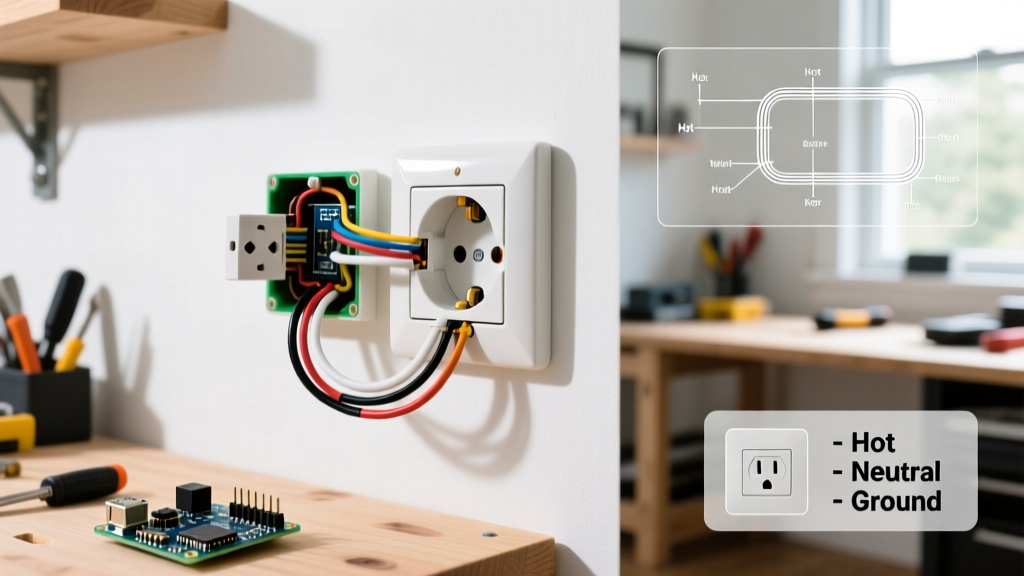
Step-by-Step Wiring Diagram: Type B (NEMA 5-15R) Outlet
Below is the precise wiring procedure for installing a standard Panasonic WN1318 duplex receptacle on a 110V, 15-amp circuit.
1. Required Tools and Materials
- Receptacle: Panasonic WN1318 (BSMI certified)
- Wire: 2.0mm or 3.5mm THW solid copper wire
- Strippers: Calibrated to 2.0mm/3.5mm to avoid nicking the copper core
- Torque Screwdriver: Calibrated to 1.0 N·m
- Tester: Fluke 117 True-RMS Multimeter or local IDEAL receptacle tester
2. Wire Preparation and Stripping
For side-wiring (looping the wire around the terminal screw), strip exactly 18mm of insulation. For back-wiring (inserting into the rear clamp terminals on newer Panasonic models), strip exactly 14mm. Never use the 'back-stab' push-in holes found on cheap, non-BSMI-certified imports; they are notorious for causing high-resistance arcing failures in Taiwan's humid climate.
3. The Wiring Execution Flow
- Ground (Green): Connect to the green terminal screw at the bottom of the receptacle. Loop clockwise so the screw tightens the loop closed.
- Neutral (White): Connect to the silver terminal screw. This aligns with the wider slot on the receptacle face.
- Hot / Line (Black): Connect to the brass terminal screw. This aligns with the narrower slot on the receptacle face.
- Tightening: Apply exactly 0.8 to 1.2 N·m of torque to the terminal screws. Under-torquing leads to thermal expansion loosening over time, while over-torquing can shear the brass screw head.
Edge Cases: Older Taipei Apartments and Grounding Deficits
A massive challenge when wiring a Taiwan electrical outlet plug in buildings constructed before 1995 is the absence of a true earth ground at the receptacle level. Older conduit systems were often used as the ground path, which is highly unreliable and violates modern BSMI electrical safety regulations.
The Safe Retrofit Solution
If you cannot pull a new 2.0mm green ground wire back to the main distribution board (配電箱), you must not bootleg the ground by jumping the neutral to the ground screw. This creates a severe shock hazard if the neutral wire breaks upstream. Instead, install an Earth Leakage Circuit Breaker (ELCB / 漏電斷路器) at the breaker panel for that specific circuit. An ELCB will trip within 30 milliseconds if it detects a current imbalance of 30mA, providing life-saving protection even without a physical ground wire at the receptacle.
Frequently Asked Questions
Can I use a US-bought receptacle in Taiwan?
Physically, yes. A US NEMA 5-15R receptacle will fit standard Taiwanese wall plates and accept Taiwanese plugs. However, US receptacles may not carry BSMI certification, which is legally required for commercial installations and can void home insurance claims in the event of an electrical fire. Always source BSMI-stamped Panasonic or International Electric models locally.
Why does my 110V outlet read 117V on my multimeter?
Taiwan's grid voltage has been steadily creeping up over the last decade to reduce transmission losses. It is entirely normal to see 115V to 118V at the receptacle in modern Taipei districts. All standard 110V/120V appliances and receptacles are rated to handle up to 125V safely.
What is the standard height for outlet installation in Taiwan?
Unlike the US, where outlets are typically placed 12 to 16 inches from the floor, Taiwanese interior design and electrical practices usually place general-purpose receptacles much lower, often 30cm (approx. 12 inches) from the finished floor, or integrated directly into baseboard trunking systems in modern commercial offices.