
The Hidden Complexity of Outlet Screws
When wiring a standard 15-amp or 20-amp receptacle, beginners often assume all screws on the device are interchangeable or that any screw from a household junk drawer will suffice. This is a dangerous misconception. If you are asking what size screw for electrical outlet components you need, the answer depends entirely on the screw's specific function: terminating current-carrying wires, grounding the circuit, mounting the yoke to the electrical box, or securing the decorative cover plate.
Using the wrong thread pitch, diameter, or head type can strip the tapped holes in the metal yoke, damage copper conductors, or create high-resistance connections that lead to arcing and electrical fires. According to the National Fire Protection Association (NFPA), loose electrical connections are a leading cause of residential electrical fires. This guide breaks down the exact specifications, thread standards, and critical safety rules you need to know for every screw on a standard NEMA 5-15R or 5-20R receptacle.
Quick Reference: Electrical Outlet Screw Size Chart
Standard North American receptacles (such as those manufactured by Leviton, Eaton, and Hubbell) utilize Unified National Coarse (UNC) thread standards. Below is the definitive cheat sheet for outlet screw sizes.
| Screw Function | Imperial Size | Thread Pitch (TPI) | Head Type | Primary Application |
|---|---|---|---|---|
| Terminal (Hot/Neutral) | #10 | 32 TPI (UNC) | Slotted / Phillips / Combo | Securing 14 AWG or 12 AWG copper wires |
| Grounding Terminal | #10 | 32 TPI (UNC) | Slotted / Green Hex | Securing bare/green ground wire |
| Mounting Strap (Yoke) | #6 | 32 TPI (UNC) | Slotted / Phillips | Securing receptacle to the electrical box |
| Cover Plate | #6 | 32 TPI (UNC) | Slotted (Flathead) | Securing plastic/metal wall plate |
Terminal Screws vs. Mounting Screws: A Critical Distinction
The most common point of confusion for DIYers is the difference between the larger brass/silver terminal screws and the smaller mounting screws. While both are essential, they serve entirely different mechanical and electrical purposes.
Terminal Screws (Hot, Neutral, and Ground)
The brass (hot) and silver (neutral) screws on the sides of the receptacle are #10-32 UNC. These screws are designed to handle the mechanical torque required to clamp down on 14 AWG or 12 AWG solid copper wire. The #10 diameter provides the necessary shear strength to withstand roughly 12 to 14 inch-pounds of torque without snapping. The grounding screw is also #10-32, and per OSHA electrical safety guidelines and NEC Article 250.148, it must be clearly identified (usually by a green color or a specific grounding symbol stamped into the metal yoke).
The "Hardware Store" Trap: Why You Cannot Replace Terminal Screws
Here is a crucial piece of expert information that most generic tutorials miss: You cannot safely replace a lost or stripped terminal screw with a standard #10-32 machine screw from a hardware store.
Expert Warning: A standard hardware store machine screw has a flat bottom and lacks the specialized shoulder and captive saddle/washer found on factory-installed terminal screws. If you use a generic machine screw to clamp a 12 AWG wire, the sharp edge of the screw can slice into the copper, or the wire can slip out from under the flat head, creating a severe fire hazard. If a terminal screw is lost or its threads are stripped, you must replace the entire receptacle. Standard 15-amp receptacles cost less than $2.00; do not risk your home's safety to save a dollar.
Cover Plate and Mounting Strap Screws
Unlike terminal screws, mounting and cover plate screws do not carry electrical current. Their sole purpose is mechanical support and aesthetic alignment.
Mounting Strap Screws (#6-32)
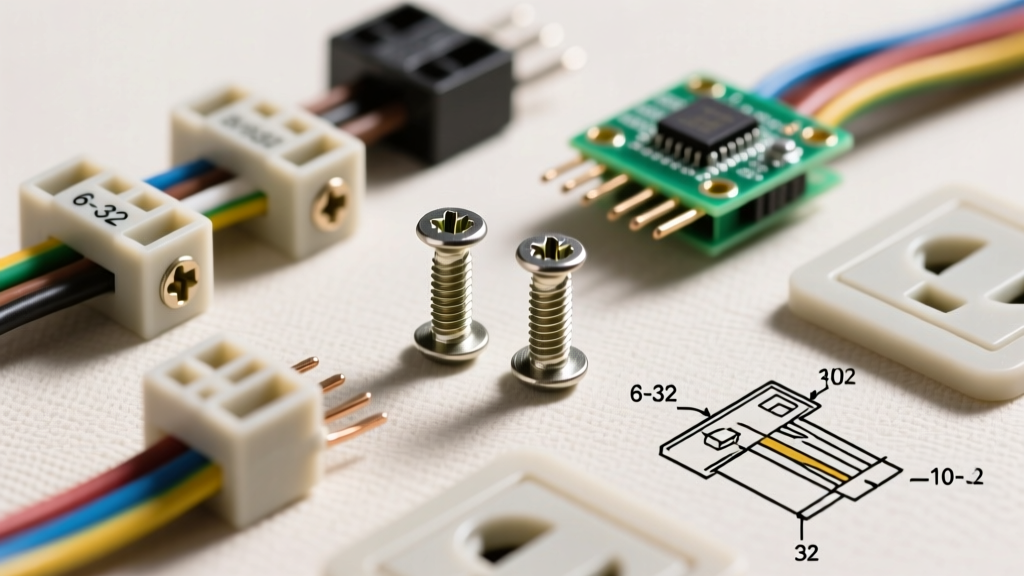
The screws that pass through the top and bottom tabs (the yoke or strap) of the receptacle and thread into the electrical box are #6-32 UNC. Standard metal and plastic electrical boxes come pre-tapped with #6-32 threads. These screws are typically 1 inch in length. If you are installing a receptacle in a thick material like wood paneling or tile, you may need to purchase 1.5-inch #6-32 mounting screws to ensure the yoke is pulled flush against the wall surface without bottoming out.
Cover Plate Screws (#6-32)
The center screw (for a single-gang plate) or top/bottom screws (for multi-gang plates) are also #6-32 UNC, but they feature a flathead (slotted) design so they sit flush with the surface of the cover plate. The standard length for a cover plate screw is 1/2 inch.
Pro-Tip for Thick Walls: If you are using a tile wall, a mud-ring extender, or a decorative "goof ring," a standard 1/2-inch screw will not reach the receptacle's threaded hole. You will need to purchase 1-inch or 1.5-inch #6-32 slotted cover plate screws, often sold in the electrical aisle as "outlet extender screws."
Common Beginner Mistakes to Avoid
When working with outlet screws, avoiding these common errors will save you from stripped threads and failed inspections:
- Using Drywall or Sheet Metal Screws: Drywall screws have a very coarse, aggressive thread pitch. If you force a drywall screw into a #6-32 tapped hole on an electrical box or receptacle yoke, it will permanently destroy the threads, rendering the box or device useless.
- Over-Torquing Terminal Screws: Brass and silver terminal screws are relatively soft. Cranking them with a heavy-duty impact driver or applying excessive hand force will snap the screw head off, ruining the receptacle. Use a standard #2 Phillips or medium flathead screwdriver and tighten until the wire is firmly seated and the screw offers solid resistance.
- Mixing Up 6-32 and 8-32 Screws: While 8-32 screws are common in IT and network racks, they are rarely used in standard residential electrical boxes. Forcing an 8-32 screw into a 6-32 hole will strip the threads instantly.
- Ignoring the Grounding Screw Requirement: According to the U.S. Consumer Product Safety Commission (CPSC), proper grounding is vital for tripping breakers during a fault. Never omit the green #10-32 grounding screw on metal boxes or self-grounding receptacles.
Step-by-Step: Safely Replacing Missing Cover and Mounting Screws
If you have lost a cover plate or mounting screw during installation, follow this safe replacement protocol:
- Identify the Missing Screw Type: Determine if it is a mounting screw (goes through the yoke tab) or a cover screw (goes through the plastic faceplate).
- Select the Correct Replacement: Purchase a pack of #6-32 UNC machine screws. Ensure the head type matches (usually slotted for covers, Phillips/slotted combo for mounting).
- Cut to Length (If Necessary): If you only have 1-inch screws but need a 1/2-inch cover screw, you can use a pair of lineman's pliers to snip the tip of the screw. Note: Cutting a screw removes the chamfered tip, making it harder to start. File the edge slightly if it refuses to thread.
- Thread by Hand First: Always start the screw by hand, turning counter-clockwise until you feel a slight "click" (the threads aligning), then turn clockwise. This prevents cross-threading the delicate #6-32 yoke holes.
- Tighten Snugly: Tighten until the plate is flush against the wall. Do not overtighten, as this can crack plastic cover plates or warp the metal yoke, causing the receptacle to bind.
Frequently Asked Questions
Can I use a metric screw for an electrical outlet?
No. North American electrical devices are manufactured to Imperial (UNC) standards. A metric M3 or M4 screw has a completely different thread pitch and will either not thread at all or cross-thread and destroy the #6-32 or #10-32 tapped holes.
Why are some terminal screws green and others brass or silver?
This is a strict NEC color-code requirement. Brass is for the "hot" (black/red) wire, silver is for the "neutral" (white) wire, and green is exclusively for the equipment grounding conductor. This visual cue prevents dangerous reverse-polarity wiring.
What size screw do I need for a GFCI outlet cover?
GFCI receptacles use the exact same #6-32 UNC slotted screws for their cover plates as standard outlets. However, because GFCI bodies are bulkier, ensure you are using the specific rectangular GFCI cover plate that matches the screw hole alignment of your specific brand (Leviton and Eaton hole placements can vary slightly).