
Navigating the Maldives Electrical Outlet Ecosystem in 2026
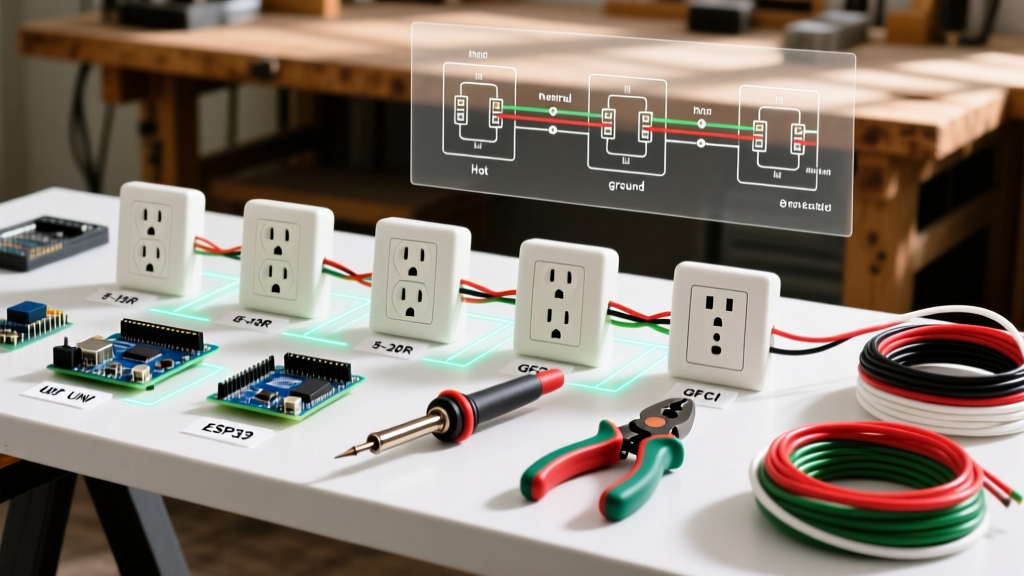
The Maldives has evolved far beyond a traditional resort destination. By 2026, it is a thriving hub for remote tech workers, marine biologists, and expatriate engineers living on both luxury private islands and local residential atolls. However, powering high-draw electronics, servers, or specialized equipment requires a precise understanding of the Maldives electrical outlet infrastructure. Relying on cheap, molded travel adapters is a fire hazard when dealing with continuous 10A+ loads. This guide breaks down the exact wiring scenarios, voltage parameters, and safety protocols required to safely interface with the local grid.
Baseline Grid Specifications & Plug Types
Before stripping wires or sizing transformers, you must understand the baseline parameters of the State Electric Company Limited (STELCO) grid and private resort microgrids. According to the International Electrotechnical Commission (IEC), the Maldives standardized on the British-style Type G plug, though legacy systems persist.
| Parameter | Specification | Wiring Implications |
|---|---|---|
| Nominal Voltage | 230V AC | Requires 250V rated insulation minimum; US 120V appliances will instantly fail without a step-down transformer. |
| Frequency | 50Hz | US 60Hz motors (e.g., clocks, compressors) will run 17% slower and overheat if not VFD-controlled. |
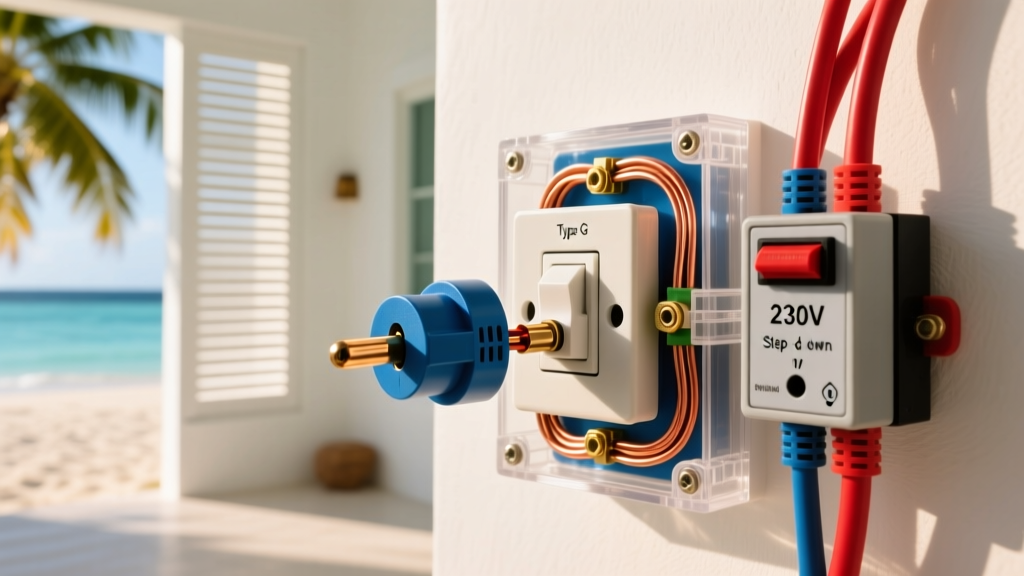
| Primary Plug Type | Type G (BS 1363) | Requires fused plugs; unfused Europlugs (Type C) are non-compliant for high-draw devices. |
| Legacy Plug Types | Type D, Type K | Found in older local islands or European-built resorts; requires hardwired pigtails for safety. |
Scenario A: Wiring a Heavy-Duty Type G Pigtail for High-Draw Loads
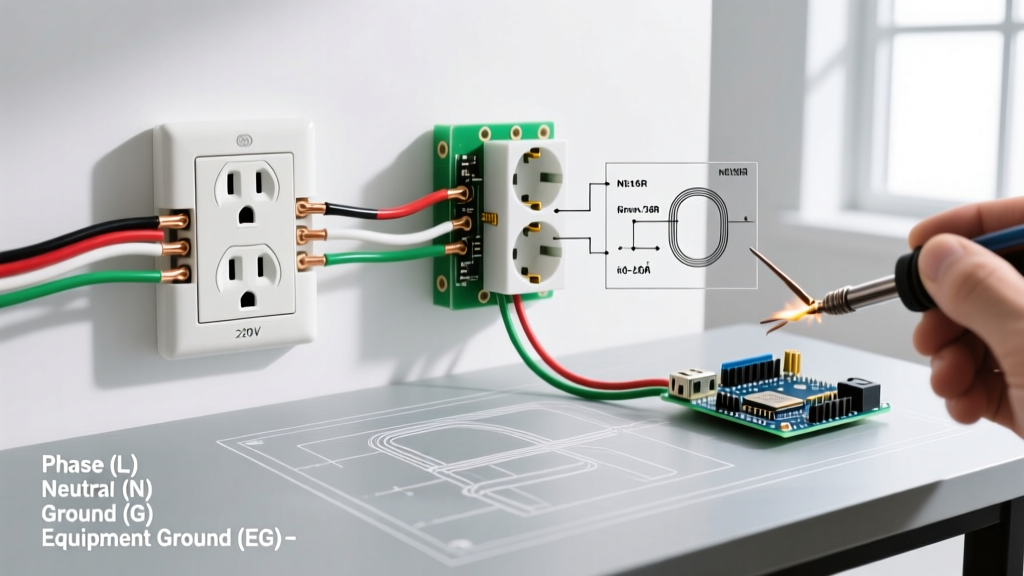
Most commercial travel adapters use 18 AWG wire and lack proper internal fusing. When running a 2000W gaming PC, a crypto-mining rig, or heavy power tools, these adapters will melt. The correct approach is wiring a custom heavy-duty pigtail using the BS 1363 standard.
Materials Required
- Cable: H05VV-F 3G2.5mm² (flexible PVC, 3-core, 2.5 square millimeter copper). This handles up to 16A safely.
- Plug: Rewirable BS 1363 Type G plug with brass pins.
- Fuse: 13A BS 1362 ceramic or high-rupture-capacity (HRC) glass fuse.
- Cord Grip: Internal bar with dual securing screws.
Step-by-Step Wiring Procedure
- Strip the Sheath: Remove 40mm of the outer PVC sheath. Do not nick the inner core insulation.
- Prepare the Cores: Strip exactly 15mm of insulation from the Brown (Live), Blue (Neutral), and Green/Yellow (Earth) wires. Twist the copper strands tightly to prevent fraying.
- Earth Connection (Top Pin): The Green/Yellow wire must be the longest core. If the cord grip fails, the earth wire must be the last to disconnect. Secure it into the top terminal.
- Live Connection (Bottom Right): Insert the Brown wire into the terminal adjacent to the fuse holder. Ensure no bare copper is visible outside the terminal block.
- Neutral Connection (Bottom Left): Insert the Blue wire into the remaining terminal.
- Install the Fuse: Slot the 13A BS 1362 fuse into the carrier. As noted by Electrical Safety First, the fuse protects the flexible cable, not the appliance. If your device draws under 700W, downgrade to a 3A fuse.
- Secure the Cord Grip: Clamp the outer PVC sheath (not the inner colored wires) under the cord grip bar to provide mechanical strain relief.
Scenario B: Sizing and Wiring 230V to 110V Step-Down Transformers
US expats and researchers frequently bring 120V equipment to the Maldives. Plugging a 120V device into a 230V Maldives electrical outlet will cause catastrophic component failure. You must wire a step-down transformer, but sizing it incorrectly is a common pitfall.
The Inrush Current Multiplier
Resistive loads (heaters, incandescent bulbs) are simple: a 1000W heater needs a 1250VA transformer (Wattage × 1.25 safety buffer). However, inductive loads (refrigerators, air conditioners, power supply capacitors) experience massive inrush currents upon startup.
Expert Rule of Thumb: For motor-driven appliances or heavy switching power supplies, multiply the continuous running wattage by 3x to 5x to size the transformer. A 500W US refrigerator compressor requires a minimum 2000VA step-down transformer to prevent voltage sag and breaker tripping during the startup cycle.
Hardwiring vs. Plug-In
For transformers exceeding 1500VA, do not use a standard 13A wall plug. Hardwire the transformer's primary side directly into a dedicated 16A or 20A miniature circuit breaker (MCB) in your local distribution board, using 4.0mm² copper cabling to prevent voltage drop over long cable runs typical in expansive resort villas.
Scenario C: Surge Protection on Outer Atoll Microgrids
While the capital city of Malé has a relatively stable grid, outer atolls rely heavily on localized diesel generators managed by STELCO or private resort operators. Generator load-shedding and capacitor bank switching cause severe voltage transients and frequency sags.
Wiring a Type 2 Surge Protective Device (SPD)
To protect sensitive networking gear or laboratory equipment, wire a Type 2 SPD at the sub-panel level.
- Placement: Install the SPD immediately after the main Residual Current Device (RCD) but before the branch MCBs.
- Wiring Gauge: Use a minimum of 6.0mm² (10 AWG) copper wire for the SPD connections to the live busbar and the earth bar. High surge currents will melt 2.5mm² wire in milliseconds.
- Earth Bonding: Ensure the earth electrode resistance is below 5 ohms. In sandy, coral-based soil typical of the Maldives, standard copper earth rods corrode rapidly. Use marine-grade stainless steel or copper-bonded earth rods driven at least 2.4 meters deep, and treat the surrounding soil with conductive bentonite clay to maintain low impedance.
Troubleshooting Edge Cases in Overwater Bungalows
Wiring in overwater structures presents unique electrochemical challenges. Saltwater intrusion and high humidity accelerate galvanic corrosion.
Reverse Polarity & Earth Loop Issues
If your RCD trips randomly when plugging in a laptop charger, you may be experiencing an earth loop or neutral-earth fault caused by corroded terminal blocks. Use a digital multimeter to verify the voltage between Neutral and Earth; it should read less than 2V. If it reads higher, the neutral busbar in the local distribution board is likely compromised by salt spray and requires immediate cleaning and treatment with dielectric grease.
Summary Checklist for Safe Integration
- Verify Voltage: Always test the Maldives electrical outlet with a multimeter before plugging in 120V gear.
- Ditch Cheap Adapters: Wire custom BS 1363 pigtails for any load exceeding 10A.
- Size Transformers for Inrush: Apply the 3x-5x multiplier for motorized 110V appliances.
- Protect Against Transients: Install Type 2 SPDs on generator-fed outer atoll circuits.