
The Critical Role of NEC Compliance in Pool Pump Wiring
Installing an electrical outlet for pool pump motors is not a standard exterior receptacle job. Pool environments combine high-draw inductive loads with extreme moisture, UV exposure, and corrosive chemicals. Under the National Electrical Code (NEC) Article 680, swimming pool wiring is governed by strict safety parameters designed to prevent fatal electrocution and equipment failure. According to the NFPA 70 (NEC), any outlet supplying a 15-amp or 20-amp, single-phase, 125-volt or 240-volt pool pump motor must be protected by a Ground Fault Circuit Interrupter (GFCI).
This guide bypasses generic DIY advice to provide a professional-grade tool and material matrix for 2026 installations. Whether you are wiring a 120V Hayward Super Pump or a 240V Pentair IntelliFlo VSF variable-speed drive, using the correct weather-resistant components and stranded conductors is non-negotiable.
Essential Materials Matrix: What You Actually Need
Hardware store bins are full of standard outdoor receptacles that will fail within a single season when exposed to pool chlorine vapor and direct sunlight. Below is the exact bill of materials (BOM) required for a code-compliant, long-lasting installation.
| Component Category | Recommended Spec / Model | Estimated Cost (2026) | Technical Purpose & NEC Justification |
|---|---|---|---|
| GFCI Receptacle | Leviton 2091-W2T (20A WR/TR) or Hubbell GFTR20W | $38.00 - $45.00 | Weather-Resistant (WR) thermoplastics resist UV degradation; Tamper-Resistant (TR) shutters meet NEC 406.12. |
| In-Use Enclosure | TayMac MX8500 Extra-Duty Non-Metallic Cover | $24.00 - $29.00 | Provides 6.5 inches of depth for rigid conduit fittings while allowing the pump plug to remain connected. |
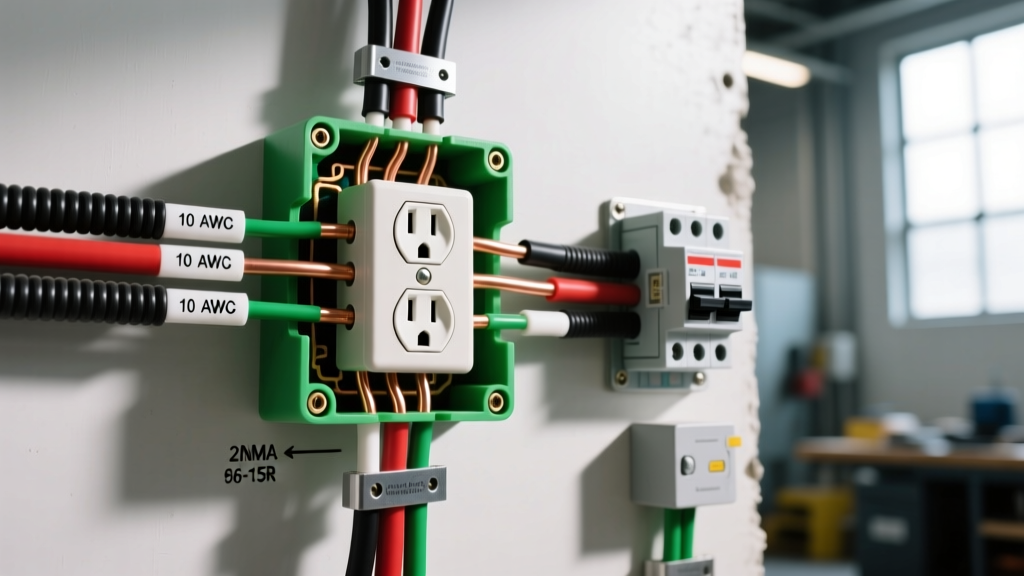
| Conductor Wire | 10 AWG or 12 AWG THWN-2 (Stranded, Copper) | $0.55 - $0.75 / ft | THWN-2 is dual-rated for wet locations inside conduit. Stranded wire resists vibration fatigue at the pump terminals. |
| Conduit (Near Pool) | 1/2" Schedule 80 PVC (Within 5 ft of pool edge) | $2.10 / ft | NEC 680.10 mandates Schedule 80 PVC within 5 feet of the pool edge to prevent physical damage from landscaping equipment. |
| Conduit (Remote) | 1/2" Schedule 40 PVC (Beyond 5 ft) | $0.90 / ft | Standard underground or above-ground protection for the remainder of the run back to the service panel. |
| Terminal Tool | Wiemann Torque Screwdriver (VDE Insulated) | $85.00 - $120.00 | Required to torque GFCI terminal screws to manufacturer specs (typically 14 in-lbs) to prevent resistive heating. |
Selecting the Right Electrical Outlet for Pool Pump Applications
Why Weather-Resistant (WR) and Tamper-Resistant (TR) Matter
Standard GFCI receptacles utilize brass contacts and standard nylon faces. In a pool equipment pad environment, airborne chlorine and saltwater aerosols will rapidly oxidize standard brass, leading to high-resistance connections, voltage drop, and eventual thermal failure. Furthermore, UV radiation makes standard nylon brittle within 18 months.
When sourcing your electrical outlet for pool pump wiring, you must look for the "WR" stamp on the device. WR-rated receptacles (like the Leviton 2091-W2T) feature nickel-plated brass contacts for superior corrosion resistance and specialized thermoplastic faces that withstand prolonged UV exposure without cracking. The "TR" (Tamper-Resistant) designation is equally critical; the internal shutters prevent debris, insects, and moisture from bridging the line and neutral slots when the cover is briefly open.
Extra-Duty In-Use Covers: The TayMac MX8500 Advantage
NEC 406.9(B)(1) requires that receptacles in damp or wet locations be enclosed in a cover that is weatherproof whether or not the attachment plug cap is inserted. For pool pumps, the plug is essentially permanently inserted. Standard flat bubble covers will not accommodate the depth of a pump plug combined with the rigid THWN-2 wire bends. The TayMac MX8500 provides an expansive interior cavity and a robust gasket seal that prevents wind-driven rain and sprinkler overspray from infiltrating the GFCI mechanism.
Conduit and Wire Sizing: Preventing Voltage Drop and Corrosion
The THWN-2 vs. THHN Distinction
Many DIYers purchase THHN wire because it is widely available. However, THHN is only rated for dry and damp locations. The interior of exterior PVC conduit is classified as a wet location by the NEC due to inevitable condensation cycles. You must use THWN-2 (Thermoplastic Heat and Water-resistant Nylon-coated). Most modern wire is dual-rated as THHN/THWN-2, but you must verify the printing on the jacket. Using wire not rated for wet locations will result in insulation breakdown and catastrophic ground faults.
Stranded vs. Solid Core Conductors
Always use stranded copper wire for pool pump circuits. Pool pumps generate significant harmonic vibration during startup and operation. Solid core wire subjected to continuous micro-vibrations at the terminal lugs will eventually work-hardened, snap, or loosen, creating an arc fault. Stranded wire flexes and absorbs this vibration. Furthermore, pulling stranded wire through multiple 90-degree PVC conduit sweeps is exponentially easier and reduces the risk of damaging the wire insulation against the conduit walls.
Voltage Drop Considerations for Variable Speed Pumps
Modern variable speed pumps (VSPs) contain sensitive solid-state inverters. If the wire run from the breaker panel to the electrical outlet for the pool pump exceeds 75 feet, voltage drop can cause the VSP logic board to fault out or overheat.
- Runs under 50 feet: 12 AWG copper is sufficient for a 20A, 240V circuit.
- Runs 50 to 100 feet: Upgrade to 10 AWG copper to maintain voltage drop below the recommended 3% threshold.
- Runs over 100 feet: Calculate exact voltage drop using the formula: VD = (2 x L x I x R) / 1000, and consider stepping up to 8 AWG or installing a sub-panel closer to the equipment pad.
Step-by-Step Installation Nuances and Failure Modes
CRITICAL SAFETY CALLOUT: Never rely solely on the GFCI test button for life-safety verification. After installation, use a UL-listed GFCI receptacle tester with a solenoid trip mechanism to verify that the ground fault protection is actively severing the circuit under a simulated fault condition. The U.S. Consumer Product Safety Commission (CPSC) strongly recommends monthly testing of all outdoor GFCI devices.
1. Conduit Routing and Schedule 80 Transitions
When trenching or routing conduit to the pump pad, you must transition to Schedule 80 PVC for the final 5 feet approaching the pool edge, as well as any vertical risers emerging from the ground near the equipment pad where they could be struck by a weed whacker or foot traffic. Use PVC solvent cement specifically formulated for Schedule 80, ensuring no chemical residue drips inside the conduit, which could later degrade the THWN-2 wire insulation.
2. Wire Pulling and Lubrication
Never dry-pull THWN-2 wire through PVC conduit. The friction can microscopically tear the nylon outer jacket, compromising its water resistance. Use a UL-listed, non-petroleum-based wire pulling lubricant (such as Polywater J). Petroleum-based lubricants will chemically attack the PVC conduit and the wire insulation over time.
3. Torque Specifications on GFCI Terminals
The most common cause of premature GFCI failure in high-amperage pool pump applications is loose terminal connections. A loose connection creates electrical resistance, which generates heat. This heat trips the GFCI's internal thermal cutoff or melts the receptacle face. Use a calibrated torque screwdriver set to the manufacturer's specification (usually 14 in-lbs for Leviton 20A devices) when terminating the line, load, and ground wires.
Troubleshooting Nuisance Trips in GFCI Pool Pump Outlets
If your newly installed electrical outlet for the pool pump keeps tripping, do not immediately assume the GFCI is defective. Investigate these three common edge cases:
- Capacitor Startup Surge: Older single-speed pumps with large start capacitors can generate transient leakage currents during the first 200 milliseconds of startup. If the GFCI is overly sensitive or aging, it will interpret this as a ground fault. Ensure you are using a high-quality, commercial-grade GFCI (like Hubbell or Leviton) rather than a budget residential model.
- Moisture Ingress via Conduit: If the conduit was not properly sealed at the panel and the receptacle box, temperature fluctuations will cause the conduit to "breathe," sucking humid air inside. This condensation pools at the lowest point—often inside the GFCI enclosure. Install a small weep hole at the bottom of the conduit run and use duct seal compound where the conduit enters the panel.
- Downstream Neutral-to-Ground Faults: If you are daisy-chaining other equipment (like a pool light transformer) off the LOAD terminals of the pump GFCI, any crossed neutral or ground wire downstream will cause the main pump GFCI to trip. For pool equipment, it is best practice to use the LINE terminals only, or install a dedicated GFCI breaker in the main panel and use a standard (non-GFCI) WR receptacle at the pad to prevent double-GFCI nuisance tripping.
Final Thoughts on Equipment Pad Longevity
Building a safe, durable electrical outlet for pool pump systems requires an investment in specialized materials. By specifying THWN-2 stranded conductors, WR/TR receptacles, Schedule 80 PVC in high-traffic zones, and adhering to strict torque specifications, you eliminate the vast majority of field failures. Always consult the latest local amendments to NEC Article 680, as municipalities frequently update bonding and equipotential grounding requirements for pool equipment pads.