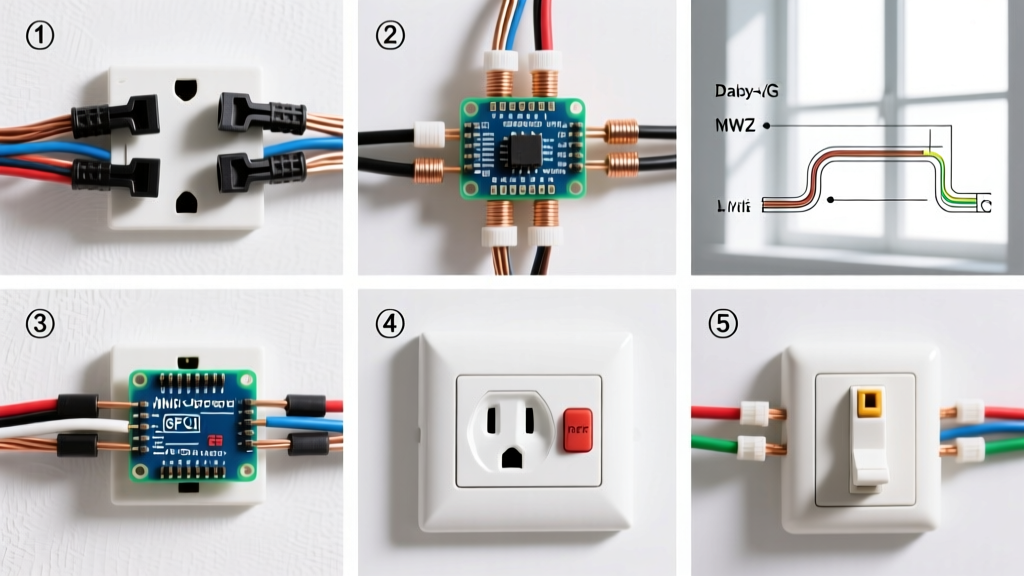

Decoding the "210 Electrical Outlet" Terminology
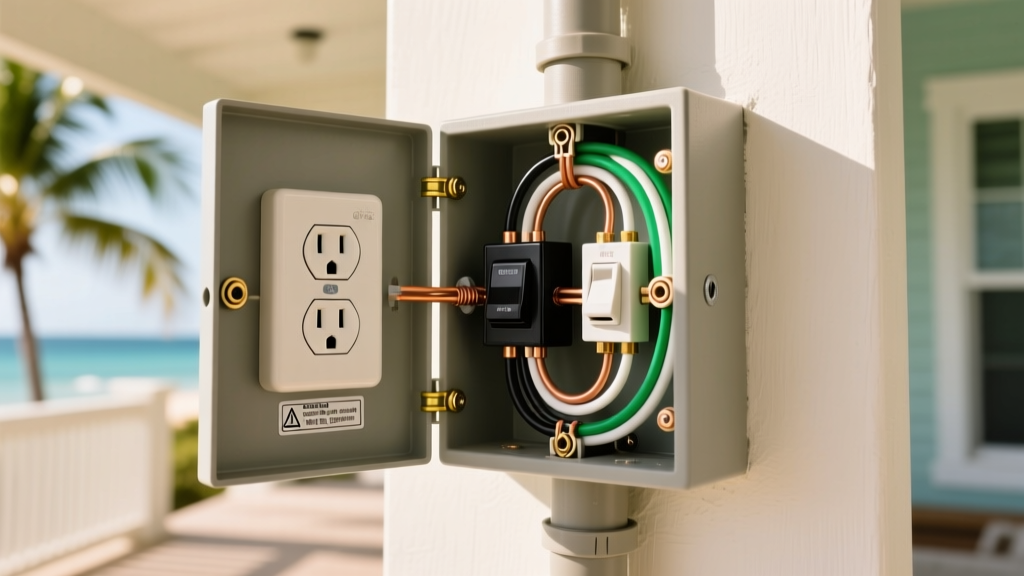
When electricians, inspectors, and advanced DIYers search for a 210 electrical outlet, they are rarely referring to a 210-volt receptacle. Instead, this term is a direct reference to NEC Article 210 (Branch Circuits), which dictates the strict installation, spacing, and protection requirements for standard 120V/15A and 120V/20A receptacles in residential and commercial dwellings. Occasionally, the search intent overlaps with 208V/240V heavy-duty outlets (like NEMA 6-20 or 14-30 configurations), but true code compliance hinges on understanding Article 210.
In this comprehensive inspection and testing guide, we will break down exactly how to verify that your receptacles meet the rigorous demands of the National Electrical Code (NEC), focusing on spacing, grounding, polarity, and life-saving GFCI/AFCI protections. Whether you are performing a pre-purchase home inspection, troubleshooting a tripping breaker, or verifying your own rough-in work, this guide provides the actionable specifics you need.
Expert Insight: The NEC is updated every three years. While the 2023 NEC introduced expanded AFCI requirements, the foundational spacing and GFCI rules in Article 210 remain the bedrock of residential electrical safety. Always verify your local jurisdiction's adopted code cycle, as some municipalities are still enforcing the 2017 or 2020 editions in 2026.
Essential Diagnostic Tools for Article 210 Testing
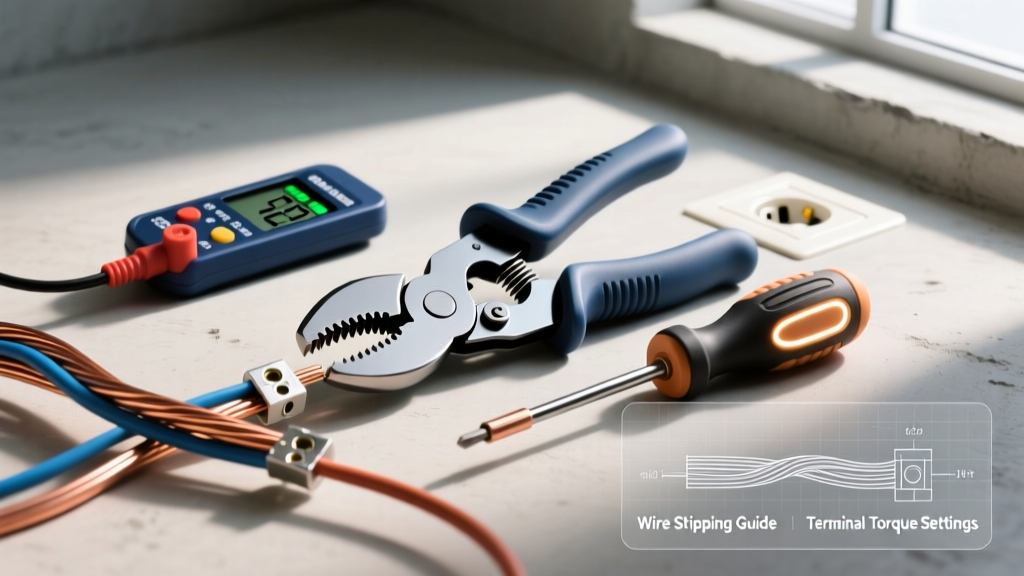
You cannot accurately inspect a 210 electrical outlet with a simple $10 plug-in tester. Modern code compliance requires verifying ground impedance, GFCI trip thresholds, and precise voltage under load. Below is the professional tool matrix required for a thorough inspection.
| Tool Category | Recommended Model | Est. Price (2026) | Primary Inspection Use |
|---|---|---|---|
| GFCI/AFCI Tester | Klein Tools RT250 | $55 - $65 | Verifies GFCI trip times, AFCI functionality, and standard wiring faults. |
| Digital Multimeter | Fluke 117 True-RMS | $160 - $180 | Measures exact voltage drop, checks for phantom voltages, and tests continuity. |
| Non-Contact Voltage | Fluke 2AC VoltAlert | $25 - $30 | Initial safety check to ensure the circuit is de-energized before physical inspection. |
| Receptacle Tension Tester | Ideal Industries 61-090 | $40 - $50 | Measures the physical grip tension of the outlet contacts to prevent arcing. |
Visual Inspection: Spacing and Placement Rules (NEC 210.52)
Before plugging in any electronic testers, a physical inspection of the outlet placement is mandatory. NEC 210.52 outlines the exact spacing requirements to prevent the use of extension cords, which are a leading cause of residential fires.
The 6-Foot and 12-Foot Rule
In any habitable room (living rooms, bedrooms, hallways), no point along the floor line of any wall space can be more than 6 feet from a receptacle. Furthermore, any wall space wider than 24 inches must have its own dedicated outlet. This effectively means outlets must be spaced no more than 12 feet apart on a continuous wall.
Countertop and Kitchen Requirements
Kitchen inspections require stricter scrutiny. Under NEC 210.52(C), receptacles must be installed so that no point along the countertop wall line is more than 24 inches from an outlet. Additionally, any countertop wider than 12 inches requires a receptacle. Crucially, small-appliance branch circuits (SABCs) serving these outlets must be 20-amp and cannot serve lighting or other rooms.
Tamper-Resistant (TR) Verification
Since 2008, NEC 210.12 has mandated Tamper-Resistant (TR) receptacles in all dwelling unit areas. Visually inspect the outlet slots. You should see internal plastic shutters. Attempt to insert a single key or paperclip into one slot; if the shutter yields without equal pressure on both slots simultaneously, the TR mechanism is broken and the outlet must be replaced.
Electronic Testing: Polarity, Grounding, and Voltage
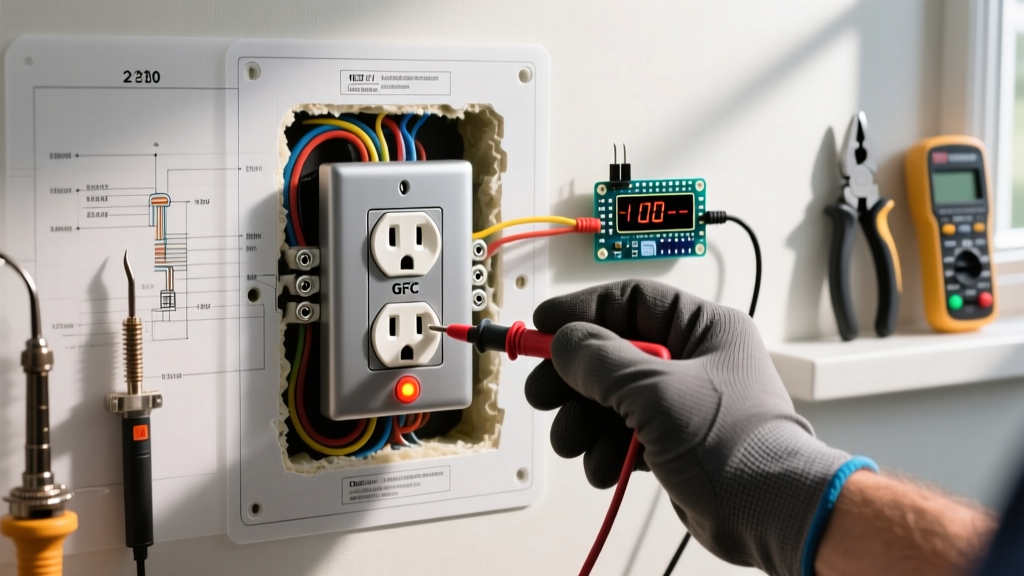
Once visual placement is verified, move to electronic testing. A properly wired 210 electrical outlet must deliver stable voltage and a verified, low-impedance ground path.
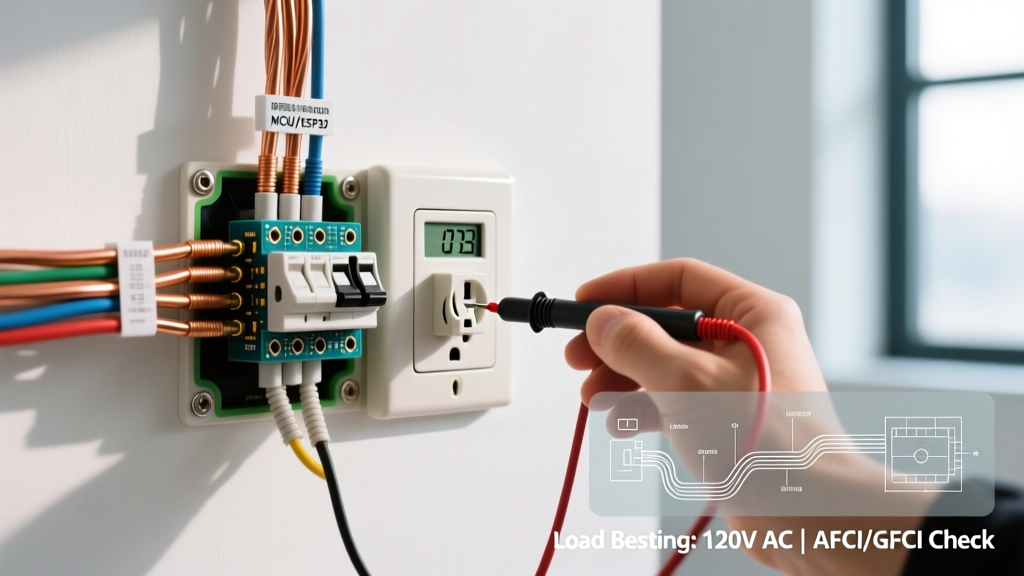
- Line-to-Neutral Voltage: Insert your multimeter probes into the hot (shorter slot) and neutral (longer slot). You should read between 114V and 126V. Anything outside this range indicates a utility issue, severe voltage drop, or a loose neutral connection at the panel.
- Line-to-Ground Voltage: Measure from the hot slot to the ground hole. This reading should be virtually identical to your Line-to-Neutral reading (within 1-2 volts). A significantly lower reading indicates a high-resistance ground path or a "bootleg" ground.
- Neutral-to-Ground Voltage: Measure between the neutral slot and ground hole. In a healthy circuit under load, you may see a slight voltage drop (typically 0.5V to 2.0V). If you read 0.0V while the circuit is under heavy load, the neutral and ground may be illegally bonded downstream of the main panel.
For deeper analysis on branch circuit requirements and grounding protocols, refer to the National Fire Protection Association's NEC guidelines, which provide the foundational safety standards for these measurements.
GFCI and AFCI Validation (NEC 210.8 & 210.12)
Ground Fault Circuit Interrupter (GFCI) and Arc Fault Circuit Interrupter (AFCI) protections are the most critical life-safety components of modern branch circuits. Testing them requires more than just pressing the "Test" button on the receptacle face.
GFCI Trip Threshold Testing
NEC 210.8 requires GFCI protection in kitchens, bathrooms, garages, outdoors, crawlspaces, and laundry areas. Using a specialized tester like the Klein Tools RT250, you must verify the trip threshold, not just the mechanical test button. A compliant GFCI must trip when it detects a ground fault leakage of 4mA to 6mA. Furthermore, the trip time must be less than 25 milliseconds to prevent ventricular fibrillation. If your tester displays a trip time of 40ms or higher, the internal solenoid is degrading, and immediate replacement is required.
AFCI Branch Circuit Validation
Under NEC 210.12, nearly all 120V, 15A and 20A branch circuits supplying living areas must have AFCI protection. This is typically handled at the breaker panel via a Combination-Type AFCI breaker. To test, use the AFCI test function on your advanced receptacle tester. This injects a specific high-frequency arcing signature into the line. If the breaker does not trip, you may have a miswired shared neutral (common in Multi-Wire Branch Circuits) or a damaged AFCI breaker.
Common Failure Modes and Edge Cases
During hundreds of inspections, specific failure modes appear repeatedly in older and improperly renovated homes. Watch for these edge cases when testing a 210 electrical outlet:
- The "Bootleg" Ground: Unscrupulous sellers or amateur DIYers will sometimes jumper the neutral terminal to the ground screw on a 2-prong outlet to trick standard 3-prong testers into showing a "Correct" reading. How to catch it: Use your multimeter to measure Neutral-to-Ground voltage while running a high-draw device (like a hairdryer) on the circuit. If the N-G voltage jumps significantly, or if you remove the outlet cover and see a wire connecting the silver and green screws, it is a dangerous bootleg ground.
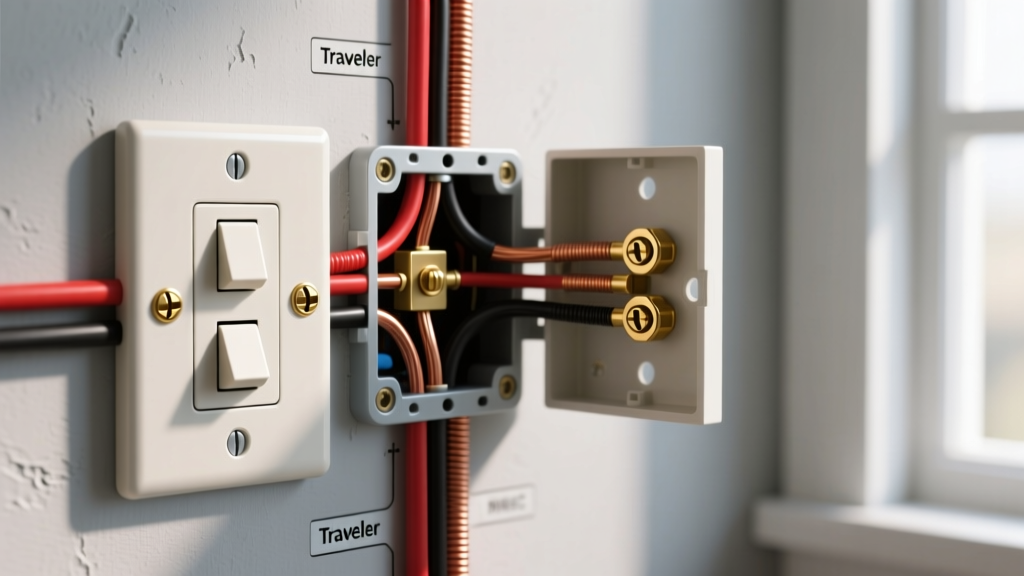
- Backstabbed Push-In Connections: Many outlets are wired using the quick-push holes on the back of the device rather than the side terminal screws. Over time, thermal cycling causes the internal spring contacts to loosen, leading to high resistance, arcing, and melted plastic. Always pull the outlet from the box during a deep inspection to verify side-wiring or proper screw-loop terminations.
- Reversed Line/Load on GFCIs: If a GFCI outlet powers downstream receptacles but the "Test" button fails to cut power to those downstream outlets, the Line and Load wires are likely reversed. The GFCI will still protect itself, but it leaves downstream devices unprotected while giving a false sense of security.
- Worn Contact Tension: If plugs fall out of the outlet easily, the internal brass contacts have lost their tension. This creates micro-arcing when high-wattage appliances (like space heaters or vacuums) are used, which is a primary ignition source for electrical fires. Replace any receptacle that fails a physical tension test.
Summary Checklist for the Inspector
To ensure total compliance and safety when evaluating a 210 electrical outlet, follow this final sequence:
- Verify physical placement against NEC 210.52 spacing rules.
- Confirm Tamper-Resistant (TR) shutters are functional.
- Test Line-Neutral, Line-Ground, and Neutral-Ground voltages with a True-RMS multimeter.
- Inject a 6mA fault to verify GFCI trip times are under 25ms.
- Trigger the AFCI breaker via the receptacle tester's arc-fault simulation.
- Remove the cover plate to inspect for backstabbed wires, bootleg grounds, and proper box fill.
By adhering to these rigorous testing protocols, you ensure that the branch circuits in your home or project are not only functional but inherently safe, protecting both the property and its occupants from electrical hazards. For further reading on advanced receptacle testing techniques, consult resources like the Fluke electrical testing knowledge base and your local authority having jurisdiction (AHJ).