
Understanding the Commercial Electric Outlet
Wiring a commercial electric outlet is fundamentally different from installing a standard residential receptacle. While residential outlets typically handle 15 amps and are mounted in drywall using plastic boxes, a commercial electric outlet is engineered for heavy-duty, continuous use. These installations demand 20-amp circuits, 12 AWG or 10 AWG conductors, and are almost exclusively housed in heavy-gauge steel junction boxes fed by EMT (Electrical Metallic Tubing) conduit or MC (Metal-Clad) cable.
For beginners transitioning into commercial electrical work, understanding the rigorous standards set by the NFPA 70 National Electrical Code (NEC) is non-negotiable. Commercial environments—such as retail storefronts, warehouses, and office spaces—subject receptacles to physical abuse, high thermal loads, and frequent plug cycling. Using residential-grade hardware in these spaces is not just a code violation; it is a severe fire hazard.
⚠️ CRITICAL SAFETY WARNING: Commercial panels often operate at 277/480V three-phase. Even if you are wiring a standard 125V single-phase receptacle, the panel environment is lethal. Always verify the absence of voltage with a Category III or IV multimeter before touching any conductor. Adhere strictly to OSHA Electrical Safety Guidelines regarding Lockout/Tagout (LOTO) procedures.Tools and Materials Checklist (2026 Pricing)
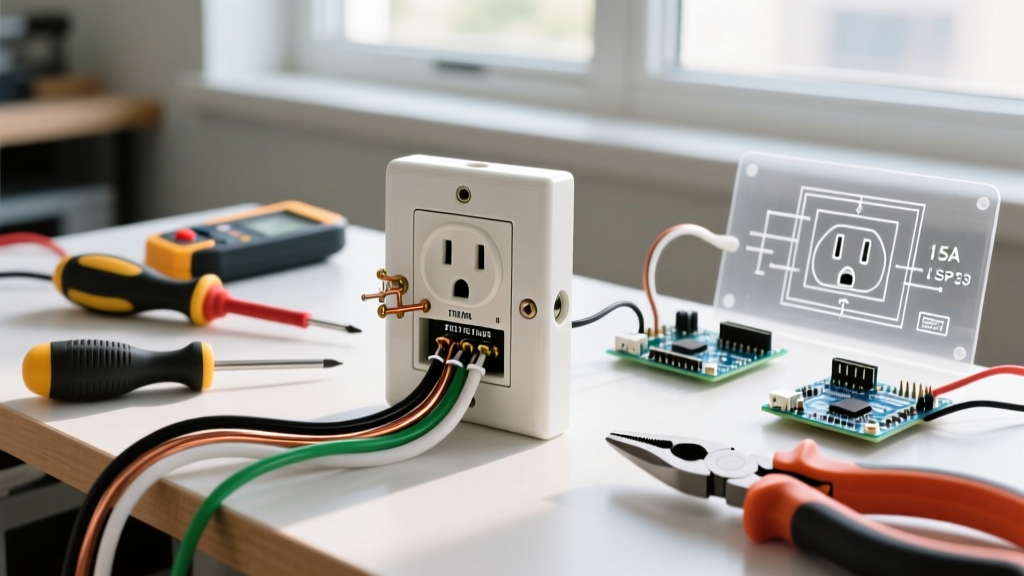
To execute a code-compliant installation, you must source spec-grade or industrial-grade components. Do not use builder-grade receptacles found in big-box home improvement stores. Below is the required bill of materials for a standard 20A, 125V commercial duplex receptacle installation.
| Component | Recommended Model / Spec | Est. Cost (2026) | Purpose & NEC Reference |
|---|---|---|---|
| Receptacle | Hubbell HBL5262 (20A 125V Spec Grade) | $14.50 - $18.00 | Heavy-duty nylon face, brass contacts (NEC 406.4) |
| Conductor Wire | 12 AWG THHN/THWN-2 (Stranded or Solid) | $0.18 / ft | Required for 20A circuits (NEC 310.16) |
| Wire Connectors | WAGO 221 Lever Nuts (3-Port) | $0.45 / ea | Superior vibration resistance over twist-on caps |
| Torque Screwdriver | CDI Torq-O-Rangle or Wiha Insulated | $85.00 - $120.00 | Mandatory for termination verification (NEC 110.14(D)) |
| Conduit / Cable | 1/2-inch EMT or 12/2 MC Cable | $2.50 / ft | Physical protection for commercial spaces (NEC 300.4) |
NEMA Configurations: Identifying Your Outlet Type
Before stripping a single wire, you must verify the NEMA (National Electrical Manufacturers Association) configuration of your commercial electric outlet. The physical blade configuration prevents accidental cross-plugging of incompatible voltages.
- NEMA 5-15R: 15A, 125V. Standard residential. Rarely permitted as the primary receptacle in new commercial builds.
- NEMA 5-20R: 20A, 125V. The undisputed standard for commercial general-purpose receptacles. Features a T-shaped neutral slot to accept both 15A and 20A plugs.
- NEMA 6-20R: 20A, 250V. Used for commercial HVAC units, heavy machinery, and commercial kitchen equipment. No neutral wire; requires two hot phases and a ground.
- NEMA L5-20R: 20A, 125V Twist-Lock. Used in environments where vibration could shake a standard plug loose, such as manufacturing floors or outdoor event power drops.
Step-by-Step Installation Workflow
This tutorial focuses on the most common scenario: wiring a NEMA 5-20R Hubbell spec-grade receptacle in a commercial steel junction box fed by 12 AWG THHN wires in EMT conduit.
-
Step 1: Box Preparation and Conduit Entry
Commercial steel boxes have sharp knockout edges. If you are pulling THHN wire through EMT conduit into the box, ensure all conduit fittings are tightly secured with a locknut. If using MC (Metal-Clad) cable, you must install an anti-short bushing (the red plastic 'redhead') inside the cable clamp to prevent the metal armor from slicing into the wire insulation over time, a direct violation of NEC 320.40.
-
Step 2: Wire Stripping and Measurement
Commercial receptacles feature deep, robust terminal plates. Strip exactly 3/4-inch of insulation from your 12 AWG conductors. Stripping too little leaves exposed copper outside the terminal plate (a shock hazard), while stripping too much leaves bare wire exposed past the screw terminal.
-
Step 3: Pigtailing and Neutral Continuity
In commercial wiring, never daisy-chain the neutral wire through the receptacle's silver terminal screws to feed downstream devices. According to NEC 300.13(B), if the circuit is a Multi-Wire Branch Circuit (MWBC), removing the receptacle must not interrupt the neutral continuity of the other phase. Best practice for all commercial work is to use a WAGO 221 lever nut to pigtail the incoming neutral, the downstream neutral, and a 6-inch pigtail leading to the receptacle.
-
Step 4: Termination and Torque Verification
Loop the bare copper ground and the white neutral pigtail clockwise around their respective green and silver screws. The clockwise loop ensures that tightening the screw pulls the wire loop tighter rather than pushing it out. Connect the black hot wire to the brass screw.
The E-E-A-T Crucial Step: Under NEC 110.14(D), you must use a calibrated torque screwdriver to tighten the terminal screws to the manufacturer's exact specification. For the Hubbell HBL5262, the required torque is 14 in-lbs. Under-torquing causes arcing and thermal failure; over-torquing strips the brass threads. -
Step 5: Box Bonding and Device Mounting
Ensure the bare copper ground wire is also bonded to the steel junction box using a green 10-32 grounding screw. The metal box itself must act as an equipment grounding conductor (EGC) pathway. Fold the wires neatly into the back of the box using a 'Z' fold technique, and secure the receptacle yoke to the box using the provided 6-32 machine screws.
Edge Cases: Isolated Ground (IG) Receptacles
In commercial environments housing sensitive IT servers, medical equipment, or audio/visual studios, you will encounter an orange-faced receptacle with a small orange triangle on the yoke. This is an Isolated Ground (IG) outlet, such as the Hubbell HBL5262IG.
Expert Insight: An IG receptacle is designed to bypass the metal conduit and steel box grounding path, which can carry electromagnetic interference (EMI) and 'dirty' ground currents from heavy machinery. The green terminal on an IG receptacle must be connected to a dedicated, insulated green (or green with yellow stripe) 12 AWG wire that runs all the way back to the main panel's ground bus, completely isolated from the metal box and conduit.
Troubleshooting Common Commercial Installation Failures
Even with meticulous planning, beginners often encounter specific failure modes during commercial outlet installations. Here is how to diagnose them:
- Breaker Trips Immediately Upon Energization: You likely have a shared neutral (MWBC) issue. If the two hot legs are on the same phase instead of opposite phases, the neutral wire will carry the sum of both loads (e.g., 40A on a 20A wire), causing immediate thermal overload or breaker trip. Verify phase separation with a multimeter (should read 208V or 240V between the two hot legs).
- Receptacle Face Cracking: If you are using standard nylon receptacles in a warehouse where forklifts or heavy carts might impact the wall, upgrade to a Leviton industrial-grade receptacle with a thermoplastic elastomer (TPE) face, or install a heavy-duty cast aluminum weatherproof cover with a recessed faceplate.
- Voltage Drop Under Load: If a commercial vacuum or power tool causes the lights to dim when plugged in, your circuit run may exceed 100 feet. NEC recommends a maximum 3% voltage drop for branch circuits. You must upsize the conductors from 12 AWG to 10 AWG to compensate for the distance.
Final Inspection and Code Compliance
Before requesting your municipal electrical inspection, perform a final self-audit. Verify that all conductors are secured within 12 inches of the box (NEC 300.11), that the torque marks on your screwdriver align with the Hubbell spec sheet, and that your GFCI protection is in place if the commercial outlet is located within 6 feet of a sink, wet location, or rooftop HVAC service area (NEC 210.8). Mastering the commercial electric outlet is a milestone in any electrician's career, bridging the gap between basic residential wiring and complex industrial power distribution.