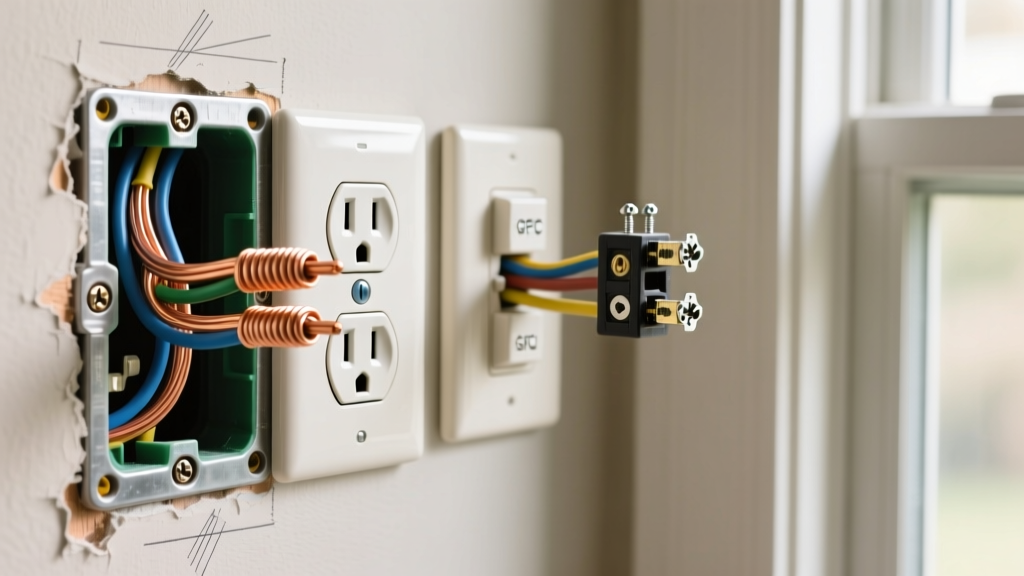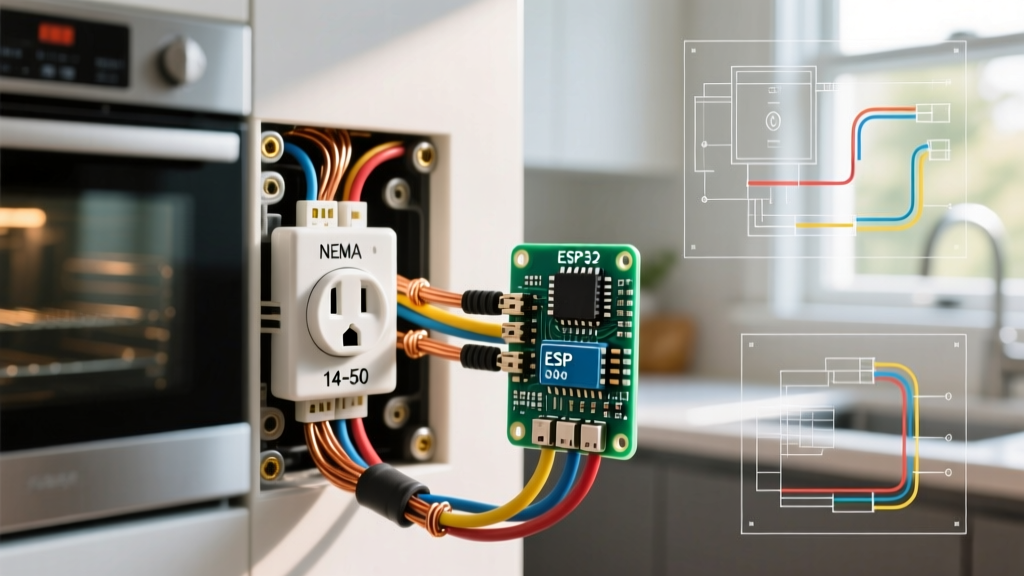

The Critical Role of Polarity in Modern Electrical Systems
In the realm of residential and commercial electrical maintenance, verifying polarized electrical plug wiring is a foundational safety protocol. While modern smart-home diagnostic panels can monitor circuit-level anomalies, they cannot detect physical degradation, reversed polarity, or internal terminal failures at the plug level. As of 2026, with the proliferation of sensitive solid-state electronics and high-draw smart appliances, ensuring the precise wiring of NEMA 1-15P and NEMA 5-15P polarized plugs is more critical than ever. Reversed polarity or compromised insulation can lead to catastrophic equipment failure, electrical fires, or severe shock hazards. This comprehensive inspection and testing guide provides electricians and advanced DIYers with the exact methodologies, tool requirements, and diagnostic thresholds needed to validate polarized plug integrity.
Anatomy of NEMA Polarized Plugs: 1-15P vs. 5-15P
Before initiating any testing protocol, it is vital to understand the physical and electrical distinctions between the two most common polarized plug configurations in North America. Polarity is enforced mechanically by the National Electrical Manufacturers Association (NEMA) through asymmetric blade designs.
| Specification | NEMA 1-15P (Ungrounded) | NEMA 5-15P (Grounded) |
|---|---|---|
| Voltage / Amperage | 125V / 15A | 125V / 15A |
| Hot Blade Width | 1/4" (6.35mm) | 1/4" (6.35mm) |
| Neutral Blade Width | 5/16" (7.94mm) | 5/16" (7.94mm) |
| Ground Pin | None | 3/16" (4.76mm) diameter |
| Primary Use Case | Double-insulated, low-draw devices | Standard appliances, tools, and electronics |
The wider neutral blade (5/16") ensures the plug can only be inserted into a receptacle in one orientation, guaranteeing that the internal switch or fuse of the connected appliance interrupts the ungrounded (hot) conductor rather than the grounded (neutral) conductor.
Essential Diagnostic Tools for 2026
Accurate testing requires precision instrumentation. Relying solely on visual checks or cheap neon testers is insufficient for modern electrical standards.
- True-RMS Digital Multimeter: The Fluke 117 ($220-$250) or Klein Tools MM400 ($45-$60) provides the necessary accuracy for measuring sub-2V voltage drops and high-impedance continuity.
- Receptacle and Plug Analyzer: The Klein Tools RT250 ($35) features a GFCI test button and clear LED matrices for rapid polarity verification.
- Insulation Resistance Tester (Megger): For industrial or commercial cord sets, the Fluke 1507 ($550+) is required to test dielectric breakdown at 500V DC.
- Torque Screwdriver: A calibrated tool like the Klein Tools 61060 ($120) is mandatory for verifying terminal screw tension to UL 498 standards.
Phase 1: Visual and Mechanical Inspection Protocol
Before applying power, a rigorous mechanical inspection must be conducted. Unplug the device and visually examine the plug housing and blades.
1. Blade Oxidation and Arc Tracking
Inspect the brass hot and neutral blades for pitting, black carbon deposits, or blue heat discoloration. Carbon tracking indicates arcing caused by a loose internal connection or a degraded receptacle. If the plug blades show heat bluing, the internal terminal screws have likely loosened, increasing resistance and generating localized temperatures exceeding 105°C (221°F).
2. Strain Relief and Cord Grip Integrity
The cord grip (strain relief) must securely clamp the outer jacket of the flexible cord, not just the internal individual wire insulation. Pull the cord firmly away from the plug housing. If the outer jacket shifts more than 1/16", the strain relief has failed. This mechanical failure transfers physical stress directly to the hot and neutral terminal screws, eventually causing them to back out and create a high-resistance fault.
3. Internal Terminal Torque Verification
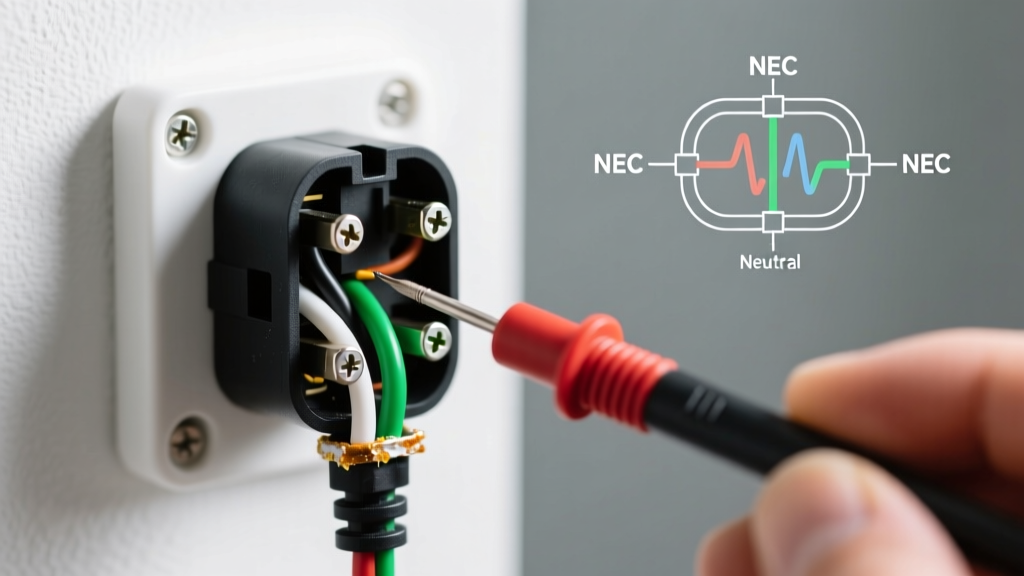
If the plug is a replacement type (rewireable), open the housing. Verify that the black (hot) wire is terminated on the brass screw, the white (neutral) wire is on the silver screw, and the bare/green (ground) wire is on the green screw. Using your torque screwdriver, verify the terminal screws are tightened to 7 to 9 inch-pounds. Under-torqued screws cause thermal runaway; over-torqued screws can shear the copper strands, reducing the effective wire gauge.
Phase 2: Live Electrical Testing Procedures
Once the mechanical inspection is cleared, plug the device into a known-good, properly wired receptacle to perform live voltage testing.
Hot-to-Neutral and Hot-to-Ground Voltage
Set your True-RMS multimeter to VAC. Insert the probes into the plug's wire entry points (if accessible via a breakout box) or measure at the receptacle face while the plug is under load.
- Hot-to-Neutral: Should read between 118V and 122V.
- Hot-to-Ground: Should read identically to Hot-to-Neutral (within 0.1V).
The Neutral-to-Ground Voltage Test (Critical Load Indicator)
Measure the voltage between the neutral blade and the ground pin while the appliance is drawing its maximum rated current. According to NFPA 70 (NEC) guidelines and power quality standards, Neutral-to-Ground voltage should ideally be 0V. However, due to the voltage drop across the neutral conductor's inherent resistance under load, a reading of 0.5V to 2.0V is considered normal. If your multimeter reads greater than 2.0V, it indicates a high-impedance fault. This could be caused by an undersized neutral wire, a loose neutral bus bar connection at the main panel, or shared-neutral harmonic distortion in commercial environments.
Phase 3: De-Energized Continuity and Fault Detection
Unplug the device and ensure the appliance's internal power switch is turned ON. This phase detects hidden wiring faults that live testing might miss.
Detecting the "Bootleg Ground" Hazard
In older homes or poorly repaired equipment, a previous technician may have installed a jumper wire between the neutral terminal and the ground terminal inside the plug to trick standard receptacle testers into showing a "correct" reading. This is a lethal hazard known as a bootleg ground. If the neutral wire breaks upstream, the appliance chassis will become energized at 120V.
Testing Procedure:
- Set your multimeter to the Ohms (Ω) or Continuity setting.
- Place one probe on the wider Neutral blade and the other probe on the round Ground pin.
- Expected Result: The meter should read "OL" (Open Loop) or infinite resistance.
- Fault Result: If the meter reads less than 1.0 Ω (or beeps for continuity), a bootleg ground jumper is present inside the plug. The plug must be immediately cut off and replaced.
Troubleshooting Matrix: Common Polarized Plug Faults
Use this diagnostic matrix to quickly identify and resolve common issues encountered during polarized electrical plug wiring inspections.
| Observed Symptom | Probable Root Cause | Corrective Action |
|---|---|---|
| Appliance chassis shocks user; N-G voltage is 120V. | Reversed polarity (Hot and Neutral swapped) or open neutral. | Rewire plug: Black to Brass, White to Silver. Check panel neutral bus. |
| Plug face feels hot to touch; localized melting. | Terminal screws under-torqued (<7 in-lbs); stranded wire splayed. | Trim damaged wire, re-terminate, torque to 8 in-lbs. Replace plug housing. |
| RT250 tester shows "Open Ground" on NEMA 5-15P. | Ground wire disconnected from green terminal; broken ground pin. | Verify ground wire continuity. Replace plug if ground pin is physically bent/broken. |
| Intermittent power loss when cord is wiggled. | Strain relief failure; internal copper strands fractured at terminal. | Cut back cord by 2 inches to reach fresh copper. Re-terminate and secure jacket. |
NEC Compliance and Safety Standards
Adherence to the National Electrical Code is non-negotiable for commercial and industrial inspections. OSHA regulations strictly mandate that flexible cords and attachment plugs be visually inspected before each shift for external defects such as pinched insulation, exposed ground wires, or deformed blades. Furthermore, the Consumer Product Safety Commission (CPSC) frequently issues recalls for aftermarket replacement plugs that fail to meet UL 498 dimensional tolerances, which can cause the plug to fall out of the receptacle under its own weight, exposing live prongs. Always verify that replacement polarized plugs bear a legitimate UL or ETL listing mark molded directly into the housing, rather than applied as a removable sticker.
Frequently Asked Questions
Can I file down the wide neutral blade to fit an old, non-polarized outlet?
Absolutely not. Filing the neutral blade defeats the mechanical polarization safety feature. This allows the plug to be inserted backwards, meaning the appliance's internal switch will only disconnect the neutral return path while the internal components remain energized at 120V, posing a severe shock hazard during maintenance or bulb replacement. The correct solution is to replace the outdated non-polarized receptacle with a modern polarized or GFCI-protected receptacle.
Why does my True-RMS multimeter read 40V between Neutral and Ground when unplugged?
This is typically "ghost voltage" caused by capacitive coupling from adjacent hot wires running in the same conduit or cable bundle. True-RMS meters have high input impedance (typically 10 Megohms), making them sensitive to these induced phantom voltages. To verify if it is ghost voltage, switch your meter to a low-impedance (LoZ) setting if available, or place a 10k-ohm load resistor across the probes. If the voltage drops to near 0V, it was harmless capacitive coupling.
Is it safe to use a 3-prong to 2-prong cheater adapter on a polarized plug?
Using a cheater adapter (grounding adapter) is only permissible if you physically connect the adapter's green grounding pigtail or U-shaped tab to the center screw of a verified, properly grounded metal receptacle cover plate. However, in 2026, electrical inspectors heavily discourage their use. The preferred, code-compliant solution is to install a GFCI receptacle, which provides personnel protection against ground faults even in the absence of an equipment grounding conductor, as permitted by NEC Article 406.4(D).