
Beyond the Breaker: Why Your Outlet is Dead
When an electrical outlet not working causes disruption to your home or workspace, the immediate instinct is often to blame a bad appliance or a simple tripped breaker. However, from the perspective of the National Electrical Code (NEC) and professional electrical inspectors, a dead receptacle is frequently a symptom of a deeper code violation, a safety mechanism functioning exactly as designed, or a degradation of components installed outside of modern torque specifications. In 2026, with the widespread enforcement of the 2023 NEC and early municipal adoptions of upcoming codes, troubleshooting a dead outlet requires an understanding of modern safety mandates. This guide explores the root causes of receptacle failure through the lens of code compliance, providing actionable diagnostics for DIYers and professionals alike.
1. Code-Mandated Protections: GFCI and AFCI Tripping
The single most common reason for a dead outlet in modern homes is the activation of Ground-Fault Circuit Interrupter (GFCI) or Arc-Fault Circuit Interrupter (AFCI) protections. Under NEC Article 210.8, GFCI protection is mandated for all 125-volt through 250-volt receptacles in damp or wet locations, including kitchens, bathrooms, garages, and exteriors. Furthermore, NEC Article 210.12 requires AFCI protection in nearly all living areas to prevent electrical fires caused by arcing.
GFCI Nuisance Trips vs. Genuine Faults
A GFCI receptacle, such as the Leviton SmartlockPro R926-W8, monitors the current differential between the hot and neutral conductors. If the imbalance exceeds 4 to 6 milliamps, the internal solenoid trips, cutting power. If your outlet is dead, first check for upstream GFCI devices. A tripped GFCI in a master bathroom can kill power to a downstream exterior outlet or garage receptacle wired on the same branch circuit.
- Genuine Fault: Moisture ingress in an exterior receptacle cover, or a failing appliance with degraded internal insulation leaking current to ground.
- Nuisance Trip: Accumulated dust or humidity inside the GFCI mechanism itself, or long cable runs causing capacitive leakage that aggregates to the 5mA trip threshold.
Inspector's Note: Replacing a frequently tripping GFCI with a standard receptacle is a severe NEC violation that removes life-saving shock protection and will immediately fail a home inspection.
2. The Death of the Backstab: Thermal Expansion and Torque Failures
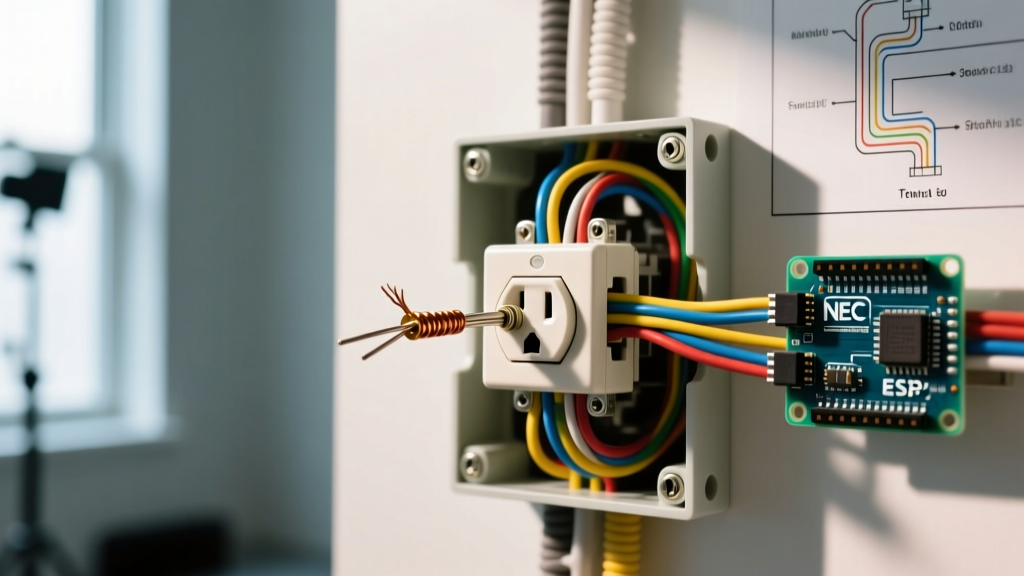
Historically, electricians and DIYers utilized the push-in 'backstab' connectors on the rear of standard 15A and 20A duplex receptacles. These spring-loaded connections are notorious for failing over time due to thermal expansion and contraction, leading to high-resistance connections, arcing, and eventually, a completely dead outlet.
NEC 110.14(D) and Torque Specifications
To combat loose connections, the NEC introduced strict requirements for termination torque. NEC 110.14(D) mandates that conductors must be tightened to the torque values specified by the manufacturer's installation instructions. If a wire is under-torqued, it loosens under load; if over-torqued, the screw strips or the conductor is crushed, leading to eventual failure.
| Receptacle Type & Model | Wire Gauge | Required Torque (in-lbs) | Recommended Tool |
|---|---|---|---|
| Leviton Decora 5262 (15A) | 14 AWG Solid Copper | 12 in-lbs | Wiha 320P Torque Screwdriver |
| Leviton Decora 5262 (15A) | 12 AWG Solid Copper | 14 in-lbs | Wiha 320P Torque Screwdriver |
| Hubbell HBL5362 (20A) | 12 AWG Solid Copper | 14 in-lbs | Klein Tools 32500 Multi-Bit Stubby |
| Standard Commercial Grade | 10 AWG (if permitted) | 15-20 in-lbs | Calibrated Dial Torque Wrench |
Always verify the specific torque sticker on the back of the receptacle yoke, as specifications vary slightly between manufacturers like Eaton, Hubbell, and Leviton.
3. Tamper-Resistant (TR) Shutter Jams
NEC 406.12 mandates that all non-locking type 15A and 20A, 125V and 250V receptacles installed in specific areas must be Tamper-Resistant (TR). These receptacles feature internal spring-loaded shutters that only open when equal pressure is applied to both the hot and neutral slots simultaneously.
A frequent, non-electrical cause for an outlet 'not working' is a jammed TR shutter. This often occurs in homes with young children who have forced objects into the slots, or in environments with high particulate matter (like workshops or garages) where sawdust or drywall dust accumulates inside the shutter mechanism. If a plug cannot be fully inserted, the circuit remains open. Code-compliant fix: Use compressed air to clear the debris. If the shutter mechanism is permanently deformed or jammed, the receptacle must be replaced with a new UL-listed TR receptacle. Never bypass the shutters or replace it with an older, non-TR model.
4. Multi-Wire Branch Circuits (MWBC) and Shared Neutral Disasters
In older homes or budget-conscious commercial build-outs, outlets are frequently wired on Multi-Wire Branch Circuits (MWBC). An MWBC uses a single 3-wire cable (e.g., 12/3 Romex with black, red, and white wires) to supply two separate 120V circuits that share a single neutral wire. Under NEC 210.4, these circuits must have a simultaneous disconnect mechanism (a handle tie or a double-pole breaker) as per NEC 240.15(B)(1).
The Disconnected Neutral Hazard
If an upstream junction box or receptacle in an MWBC chain fails, or if a DIYer improperly replaces a receptacle without pigtailing the neutral, the shared neutral is severed. This doesn't just cause the outlet to stop working; it forces the two 120V circuits into a series 240V circuit. Appliances plugged into the downstream outlets will receive anywhere from 0V to 240V depending on their relative resistance, instantly destroying electronics and creating a severe fire hazard. If you open a dead receptacle and find a red, black, and white wire, you are dealing with an MWBC. Stop immediately, verify the handle ties in the panel, and ensure all neutrals are securely pigtailed.
5. Step-by-Step Diagnostic Protocol
Before removing the receptacle cover, follow this systematic diagnostic flow to isolate the failure point safely and efficiently.
- Non-Contact Voltage Test: Use a Fluke T6-1000 or Klein Tools NCVT-3 to check for voltage at the receptacle slots. If dead, proceed to step 2.
- Upstream GFCI Sweep: Use a Klein Tools RT250 GFCI receptacle tester on all nearby bathrooms, kitchens, and exterior walls to ensure an upstream device hasn't tripped.
- Panel Verification: Check the main electrical panel. Look for AFCI/GFCI dual-function breakers (like the Square D HOM120CAFIC) which feature a distinct diagnostic LED or push-button test mechanism indicating a fault trip rather than a standard overload trip.
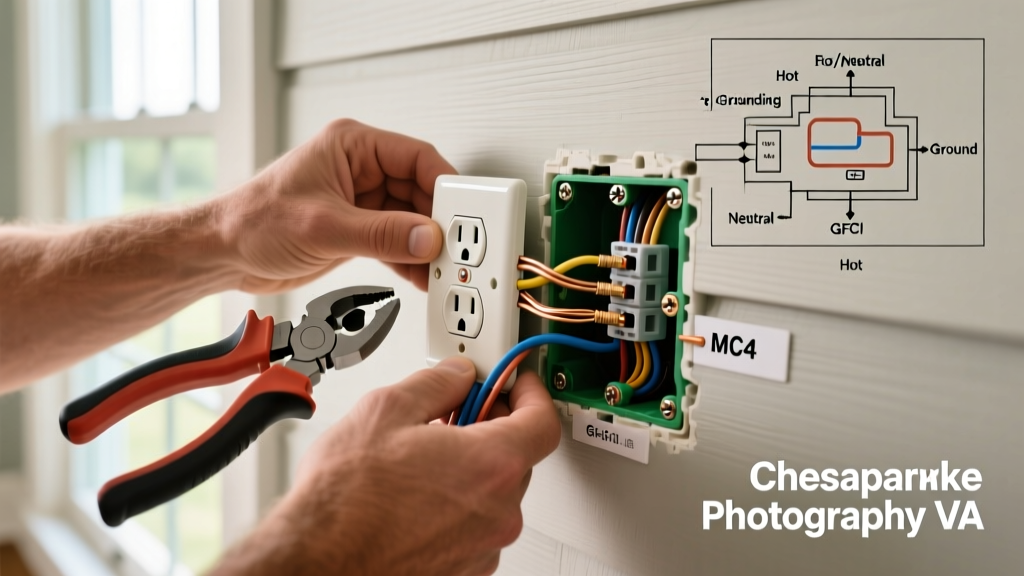
- Visual Yoke Inspection: Turn off the breaker, remove the cover plate, and pull the receptacle from the box. Look for melted plastic, scorched wire insulation, or push-in backstab connectors that have backed out.
- Pigtail and Torque: If the wires are intact but loose, cut back to fresh copper, strip to 5/8 inch, form a proper J-hook for the side terminal screws, and torque to manufacturer specifications.
When to Call a Licensed Electrician in 2026
While replacing a standard receptacle and correcting backstabbed connections are well within the capabilities of an experienced DIYer, certain scenarios require a licensed professional. If your diagnostic tests reveal an open neutral on an MWBC, melted wires inside the electrical panel, or if you discover aluminum branch circuit wiring (which requires specialized CO/ALR receptacles or Alumiconn pigtails), hire an electrician.
As of early 2026, the national average for an electrical diagnostic service call ranges from $150 to $250, with hourly labor rates between $95 and $145 depending on your metropolitan area. Investing in professional diagnostics ensures that the repair not only restores power but also brings the circuit into compliance with current NEC safety standards, protecting your home from arc faults and ground faults that outdated or improperly wired receptacles simply cannot mitigate.
Authoritative References
For further reading on electrical safety standards and code requirements, consult the following resources: