
Diagnosing Unique Wiring Faults in Central Florida Homes
Performing a successful electrical outlet installation in Orlando, FL, requires more than just following standard wiring diagrams. Central Florida's unique environmental factors—extreme summer humidity, frequent lightning strikes, and a diverse housing stock ranging from new builds in Lake Nona to 1960s ranch homes in Azalea Park—introduce specific failure modes that generic DIY guides often miss. When an outlet fails to function, trips immediately, or shows signs of thermal stress, the root cause is frequently tied to these localized conditions.
As of 2026, Florida enforces the 8th Edition of the Florida Building Code, which integrates the latest NEC standards with strict local amendments regarding moisture protection and surge mitigation. Troubleshooting a faulty receptacle in Orange or Seminole County means looking beyond loose wires and investigating humidity-induced leakage, aluminum branch circuit degradation, and voltage drops caused by heavy HVAC loads.
The Orlando Outlet Diagnostic Matrix
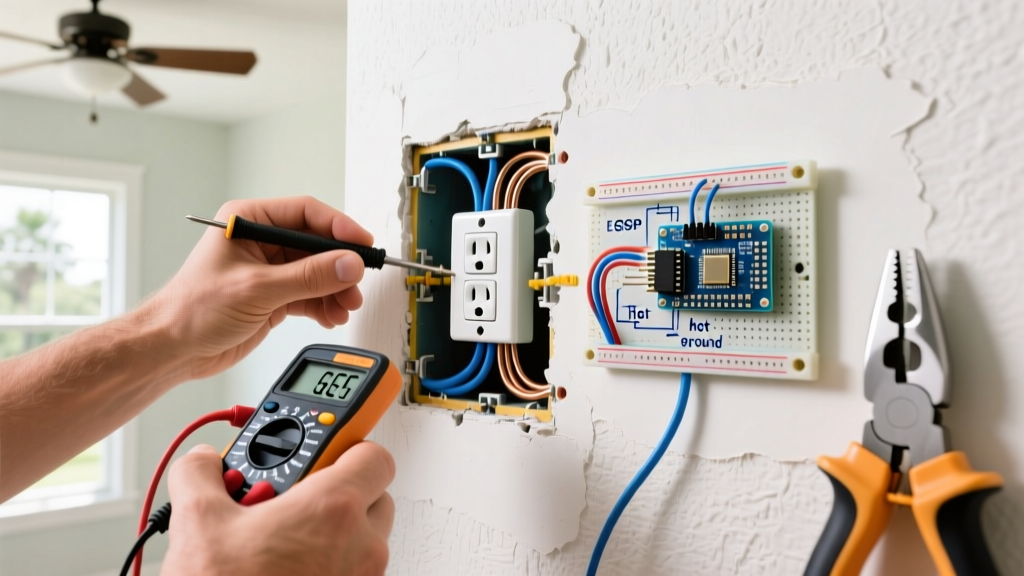
Before tearing into the drywall or replacing a breaker, use a digital multimeter (such as the Fluke 117) and a dedicated receptacle tester to isolate the fault. Below is a diagnostic matrix tailored to common issues found in Central Florida residential installations.
| Symptom | Probable Localized Cause | Multimeter / Tester Reading | Corrective Action |
|---|---|---|---|
| GFCI trips randomly during summer afternoons | High ambient humidity causing micro-leakage on exterior or garage terminals | Leakage > 5mA; Tester shows 'Ground Fault' | Seal weatherproof box with silicone; upgrade to humidity-rated GFCI (e.g., Leviton GFNT2) |
| Receptacle faceplate feels warm to touch | Loose backstab connection expanding under high AC startup loads | Voltage drop > 5% under load; Thermal anomaly on FLIR camera | Move wires to side screw terminals; torque to 14 in-lbs |
| AFCI breaker trips immediately upon plugging in device | Neutral-to-ground fault downstream, common in older Winter Park homes with shared neutrals | Breaker LED blinks 2 times (Square D) or shows 'Neutral Fault' | Separate neutral and ground buses; verify no downstream neutral-ground contact |
| Outlet reads 0V, but breaker is ON | Push-in connector failure or severed wire from previous termite tenting damage | 0V Line-to-Neutral; 120V Line-to-Ground | Trace circuit; replace wire nuts with Wago 221 lever connectors |
Troubleshooting GFCI and AFCI Nuisance Tripping
Florida's high water table and intense afternoon thunderstorms make Ground Fault Circuit Interrupter (GFCI) and Arc Fault Circuit Interrupter (AFCI) protection mandatory in almost every room of a modern Orlando home. However, nuisance tripping is the number one complaint following a new electrical outlet installation in Orlando, FL.
Humidity-Induced GFCI Leakage
Standard indoor-rated GFCIs installed in semi-conditioned spaces (like attached garages or lanais) often trip when relative humidity spikes above 85%. The moisture creates a microscopic conductive path between the line terminals and the grounded metal box. To troubleshoot, disconnect the load wires. If the GFCI holds with only the line wires connected, the fault is downstream or environmental. For exterior installations, always use in-use weatherproof covers (like the TayMac MM540C) and apply a bead of outdoor-rated silicone around the mounting flange to prevent driven rain intrusion.
AFCI Neutral-Ground Proximity Faults
If you are upgrading a bedroom outlet and the new AFCI breaker (e.g., Eaton BR2030AF) refuses to stay closed, you likely have a neutral-to-ground fault. In older Orlando homes, DIYers often mistakenly bond the neutral and ground at the receptacle or allow a stripped neutral wire to brush against the grounded metal box. AFCIs monitor the current balance between the hot and neutral; any current leaking to ground (even 30mA) is interpreted as an arc fault. Use a megohmmeter to test the insulation resistance between the neutral bus and the ground bus with the hot disconnected. Readings below 2 megohms indicate a compromised wire jacket or improper bonding.
Expert Warning: Never replace an AFCI or GFCI breaker with a standard thermal-magnetic breaker to 'solve' a tripping issue. This violates the Florida Building Code and removes critical fire and shock protection. Always diagnose the downstream fault.
The Aluminum Wiring Hazard in 1960s-1970s Homes
Neighborhoods like College Park, Colonialtown, and parts of Altamonte Springs saw massive development between 1965 and 1973, a period when copper prices skyrocketed and builders used aluminum branch circuit wiring. If your electrical outlet installation in Orlando, FL, involves a home from this era, you must treat the wiring with extreme caution.
Aluminum wire expands and contracts at a different rate than copper and oxidizes rapidly when exposed to air, leading to high-resistance connections that can melt receptacle terminals. The Consumer Product Safety Commission (CPSC) explicitly warns against simply pigtailing aluminum to copper using standard wire nuts, as the connection will eventually fail.
Proper Al-to-Cu Pigtailing Methods
If you must connect a modern copper-pigtailed receptacle to existing aluminum wiring, you have two code-compliant options:
- AlumiConn Connectors: These lug-style connectors use set screws and an antioxidant compound to permanently separate the aluminum and copper wires. They are the most practical DIY-friendly solution and fit inside standard deep junction boxes.
- COPALUM Crimps: This is a specialized cold-weld crimping system that requires a certified electrician and proprietary tooling. It is the gold standard for permanent aluminum wire remediation.
Never use standard purple wire nuts (Ideal 33-171) for permanent receptacle connections in living spaces; while UL-listed for repairs, they are prone to failure under the continuous thermal cycling of Florida's heavy appliance loads.
Thermal Stress and Torque Specifications
Central Florida homes run their air conditioning systems for 8 to 10 months out of the year. This continuous, high-amperage draw causes voltage fluctuations and thermal expansion in branch circuits. A common failure mode after a new outlet installation is terminal overheating due to under-torqued screws.
In 2026, NEC 110.14(D) strictly requires the use of calibrated torque tools for all electrical connections. Hand-tightening a receptacle screw with a standard screwdriver is no longer acceptable and will fail an inspection in Orange County. For a standard 15A or 20A commercial-grade receptacle (like the Leviton T5999), the manufacturer specifies a torque of 14 to 16 inch-pounds for 14 AWG and 12 AWG solid copper wire. Use an insulated torque screwdriver, such as the Klein Tools 32554, to ensure the wire is clamped securely without stripping the brass terminal threads.
Using Thermal Imaging for Diagnostics
If you suspect an outlet is failing under load, use a compact thermal imager like the FLIR C5. Run a high-draw appliance (like a space heater or window AC unit) on the circuit for 15 minutes. Scan the receptacle faceplate. A temperature differential greater than 15°F (8°C) between the hot terminal and the neutral terminal indicates a high-resistance connection that requires immediate replacement.
Orlando Permitting and When to Call a Pro
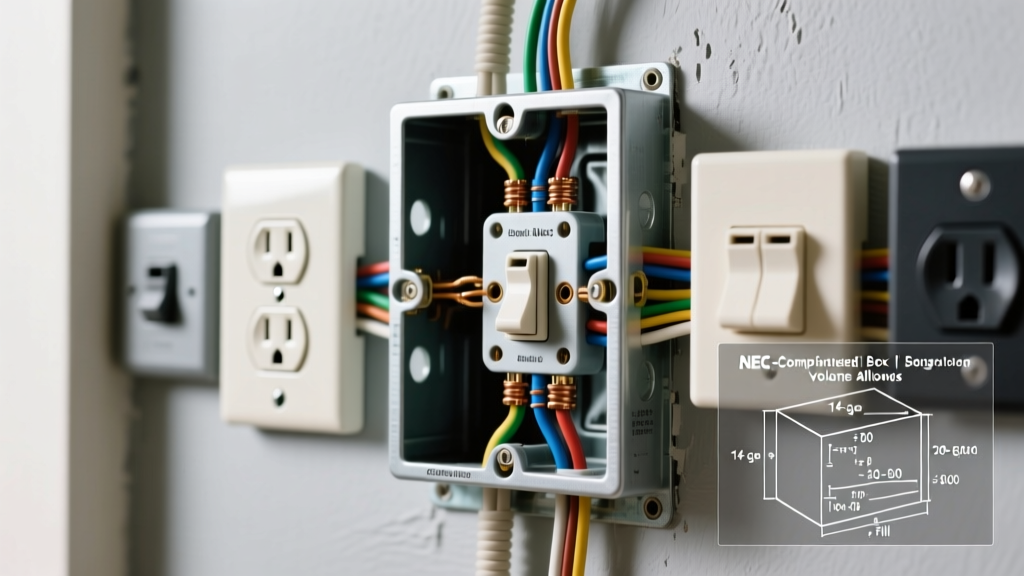
While replacing an existing receptacle with a like-for-like model generally does not require a permit in Orange County, new electrical outlet installations, circuit extensions, or panel upgrades absolutely do. The National Electrical Code (NFPA 70) and local Florida amendments dictate strict box-fill calculations, AFCI/GFCI placement, and tamper-resistant (TR) requirements.
As of 2026, licensed electricians in the Orlando metro area charge between $125 and $185 per hour, with minor installation permits costing roughly $75 to $115 through the local building safety division. If your troubleshooting reveals melted wire insulation, a buzzing breaker panel, or ungrounded 2-prong wiring in a wet area, stop your DIY work immediately. According to the Electrical Safety Foundation International (ESFI), improper DIY electrical work is a leading cause of residential fires.
Frequently Asked Questions (FAQ)
Can a lightning strike damage my newly installed outlet?
Yes. Central Florida is the lightning capital of the United States. A nearby strike can induce a massive electromagnetic surge that bypasses standard surge protectors and melts the internal MOVs (Metal Oxide Varistors) or delicate electronics inside GFCI/AFCI receptacles. If an outlet dies immediately after a storm, replace it and consider installing a whole-home Type 2 Surge Protective Device (SPD) at your main panel.
Why does my new outlet spark when I plug in my laptop?
A small blue spark when plugging in a device with a large power supply (like a laptop or TV) is usually inrush current charging the device's internal capacitors. However, if the spark is large, orange, or accompanied by a popping sound, the receptacle's internal brass contacts are worn or loose. Replace the receptacle with a commercial-spec grade model featuring tighter grip contacts.
Do I need a weather-resistant (WR) outlet for my covered porch?
Yes. Even if the porch is covered, the Florida Building Code requires all outdoor 15A and 20A receptacles to be listed as Weather-Resistant (WR). These receptacles feature nickel-plated brass terminals and UV-resistant thermoplastic faces that prevent corrosion and brittleness in Central Florida's harsh sun and humidity.