
Understanding the Paris Electrical Outlet: Beyond the Aesthetics
Wiring a Paris electrical outlet requires more than just a screwdriver and a voltage tester; it demands a strict adherence to the French national electrical standard, NF C 15-100. Whether you are renovating a classic Haussmann apartment in the 8th arrondissement or upgrading a mid-century build in the 15th, the physical and regulatory landscape of French electrical work is distinctly different from North American (NEC) or British (BS 7671) systems.
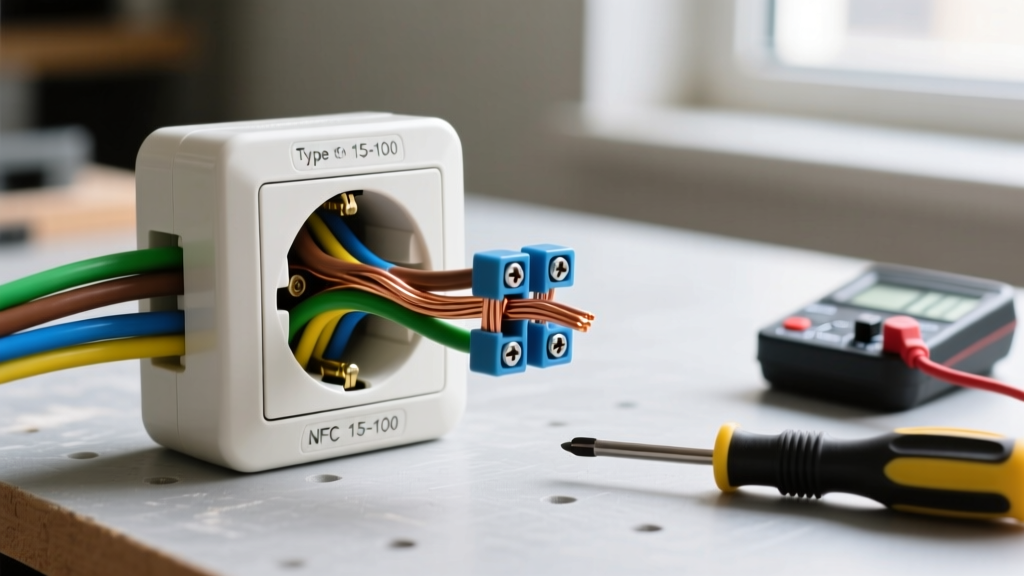
At the heart of this system is the Type E electrical outlet (CEE 7/5). Unlike the recessed grounding clips found in German Schuko sockets, the Paris electrical outlet features a protruding male earth pin. This unique design choice dictates everything from the plugs you can use to the exact way the receptacle must be wired into the wall. In this comprehensive guide, we will break down the anatomy of the Type E socket, decode French wire color standards, and walk through a real-world retrofit scenario common in older Parisian buildings.
The Anatomy of the Type E Socket (CEE 7/5)
The standard Paris electrical outlet operates at 230V / 50Hz and is rated for 16 Amps. The defining characteristic of the French Type E socket is the male earth (ground) pin that projects outward from the face of the receptacle.
- Live (Phase): Right-hand pin (when facing the socket with the earth pin at the top).
- Neutral: Left-hand pin.
- Earth: The protruding top pin, which mates with a female hole in the plug.
Expert Insight: A common and dangerous mistake made by expats and amateur DIYers is purchasing German "Schuko" (Type F) sockets for a French installation. A Schuko socket lacks the protruding earth pin. If you plug a standard French appliance cord (which relies on the female earth hole) into a Schuko socket, the appliance will not be grounded, creating a severe shock hazard. Always ensure you are buying CEE 7/5 Type E sockets, or hybrid sockets designed explicitly for the French market, from brands like Legrand or Schneider Electric.
NF C 15-100 Wire Color Codes & Circuit Sizing
Forget everything you know about US NEC color codes. France follows the IEC (International Electrotechnical Commission) harmonized color codes. Misidentifying a wire in a Parisian junction box can lead to catastrophic failure or lethal shock.
French vs. North American Wire Colors
| Function | French / IEC Color | US / NEC Color | French Terminal Marking |
|---|---|---|---|
| Phase (Live) | Brown (or Red/Black in legacy) | Black or Red | L or P |
| Neutral | Blue | White or Gray | N |
| Earth (Ground) | Green-Yellow Stripe | Green or Bare Copper | ⏚ (Earth Symbol) |
Wire Gauge and Breaker Limits (Crucial NF C 15-100 Rules)
France uses metric cross-sectional area (mm²) rather than AWG. The NF C 15-100 standard strictly dictates the maximum number of sockets per circuit based on the wire gauge and the circuit breaker rating.
- 1.5 mm² Wire: Must be protected by a 16A maximum circuit breaker. You are limited to a maximum of 5 sockets (or 8 if they are in a single duplex/triplex gang box, though 5 is the standard safe rule).
- 2.5 mm² Wire: Must be protected by a 20A maximum circuit breaker. You are allowed up to 8 sockets per circuit.
Note: Kitchen appliances (oven, dishwasher, washing machine) require dedicated 20A circuits with 2.5 mm² wire and cannot be daisy-chained with standard living room receptacles.
Common Scenario: Retrofitting a Haussmann Apartment
Paris is famous for its Haussmannian architecture, characterized by thick plaster and lath walls (plâtre et lattis), ornate moldings, and solid masonry. Chasing walls (cutting deep grooves to hide wires) is often prohibitively expensive, structurally risky, or forbidden by building syndics (HOAs).
The Scenario: You are replacing a 1960s ungrounded 2-pin socket in a Haussmann living room with a modern, grounded Legrand Mosaïc Type E outlet. However, there is no earth wire in the existing wall cavity.
The "Fake Ground" Trap
In the US, the NEC allows you to replace an ungrounded receptacle with a GFCI outlet and label it "No Equipment Ground." This loophole does not exist in France. Under NF C 15-100, it is strictly illegal to install a Type E grounded socket if there is no physical earth wire connected to the main panel's grounding busbar. If you install a Type E socket and leave the earth terminal empty, you are creating a false sense of security.
The Solution: You must either run a new 2.5 mm² green-yellow earth wire back to the Tableau Électrique (main panel), or utilize surface-mounted PVC trunking (baguettes électriques) to route a new, fully compliant 3-wire cable (Phase, Neutral, Earth) from the nearest grounded junction box.
Step-by-Step: Wiring the Paris Electrical Outlet
Assuming you have a compliant, grounded 2.5 mm² circuit ready, here is how to terminate a modern Paris electrical outlet (e.g., Schneider Electric Ovalis or Legrand Céliane).
- Isolate the Power: Turn off the specific 20A disjoncteur (breaker) at the main panel, then shut off the Disjoncteur Général (main AGCP breaker) for absolute safety. Verify with a CAT III multimeter.
- Prepare the Wires: Strip exactly 12mm to 14mm of insulation from the 2.5 mm² solid copper wires. Do not nick the copper conductor, as this creates a weak point that can snap inside the terminal.
- Connect the Earth First: Insert the Green-Yellow wire into the top terminal (marked with the ⏚ symbol). In a Type E socket, this terminal physically connects to the protruding male pin. Tighten the screw to 1.2 Nm.
- Connect Neutral and Phase: Insert the Blue wire into the Neutral (N) terminal and the Brown wire into the Phase (L) terminal. While French AC is alternating and technically non-polarized at the appliance level, NF C 15-100 best practices and modern smart-home modules (like Legrand Netatmo) require strict adherence to Phase on the right, Neutral on the left.
- Mount the Chassis: Secure the metal or plastic mounting frame to the standard European 68mm round flush box using the provided M3.5 screws. Ensure the frame is perfectly level using a spirit level; crooked sockets are a hallmark of amateur Parisian renovations.
- Snap on the Faceplate: Align the Type E faceplate and press firmly until the clips engage.
The 30mA Differential Switch: Your Ultimate Safety Net
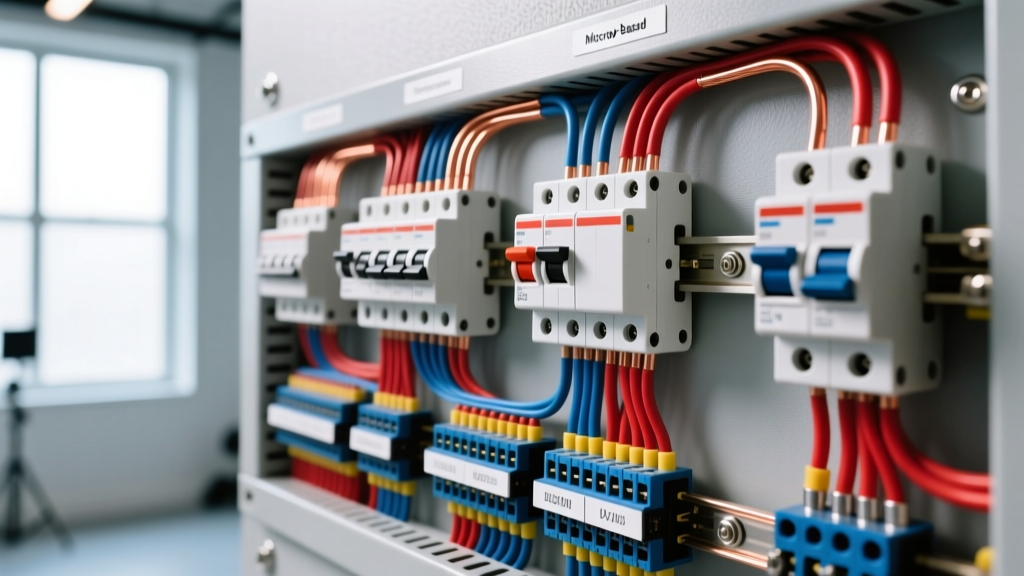
CRITICAL SAFETY REQUIREMENT: According to the latest amendments of NF C 15-100, every single Paris electrical outlet circuit must be protected by a 30mA Interrupteur Différentiel (Residual Current Device / RCD) at the main panel. Standard circuit breakers only protect the wires from melting; the 30mA RCD protects human life by cutting power in milliseconds if it detects current leaking to ground (e.g., through a person's body).
As of 2026, upgrading a legacy Parisian fuse box to a modern panel with Type AC and Type A differential switches costs between €1,200 and €2,500, depending on the size of the apartment. Type A switches are now mandatory for circuits feeding washing machines, dishwashers, and EV chargers, as they can detect pulsating DC fault currents that older Type AC switches miss.
Troubleshooting Common Type E Outlet Failures
Even with perfect installation, Paris electrical outlets can experience specific failure modes:
- Bent Earth Pin: The protruding male earth pin is vulnerable. If heavy furniture is pushed against a plugged-in cord, the pin can bend. Fix: Do not attempt to bend it back; the internal brass connection may be compromised. Replace the socket mechanism (approx. €8 for a standard Legrand Mosaïc module).
- Shutter Mechanism Jamming: Modern NF C 15-100 sockets feature integrated child-proof shutters that only open when both Phase and Neutral pins are inserted simultaneously with equal pressure. If a shutter jams, it is usually due to plaster dust from the renovation. Fix: Use compressed air to clear the debris; never force a plug or use a screwdriver to pry the shutter open.
- Reverse Polarity in Smart Plugs: If you are using smart energy-monitoring plugs, they may fail to read voltage correctly if the Phase and Neutral were swapped at the wall. Always verify polarity with a dedicated French Type E socket tester before deploying smart home ecosystems.
Final Thoughts on Parisian Electrical Work
Working with a Paris electrical outlet is a masterclass in precision and regulatory compliance. The NF C 15-100 standard is unforgiving, but it results in one of the safest electrical grids in the world. Always respect the metric wire gauges, never fake an earth connection, and ensure your main panel's differential switches are up to date. For official documentation regarding real estate electrical diagnostics and safety compliance in France, refer to the French Public Service Electrical Diagnostic Guide. For global plug and socket standards, the IEC World Plugs Guide remains the definitive technical reference.