
Why Is My Electrical Outlet Not Working (No Breaker Tripped)?
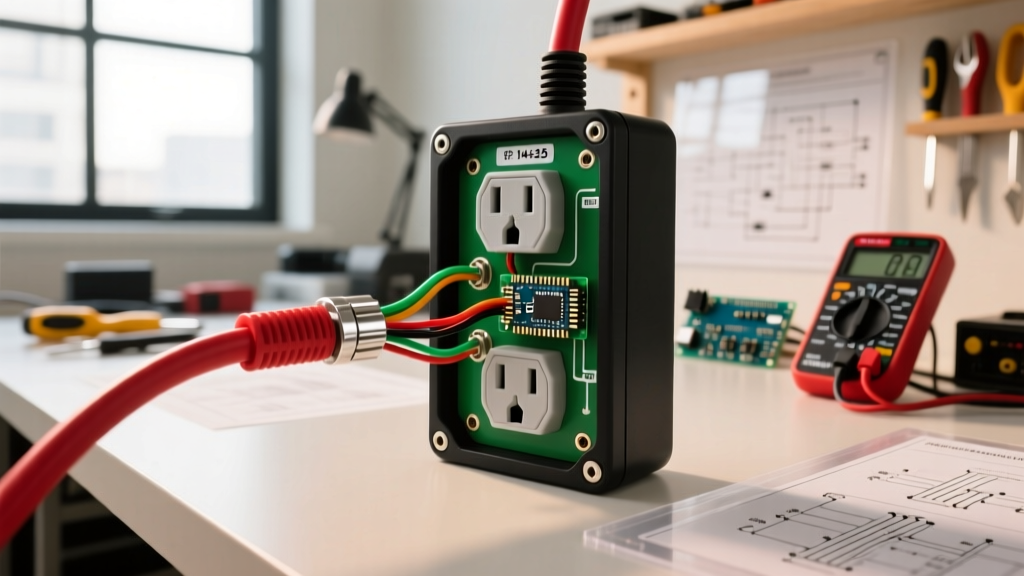
Walking into a room, plugging in a lamp or vacuum, and realizing the electrical outlet is not working—yet the main breaker panel shows no tripped switches—is one of the most common residential electrical mysteries. As a homeowner or DIYer, your first instinct might be to assume a bad breaker or a total grid failure. However, from a National Electrical Code (NEC) perspective, a dead receptacle with an intact breaker usually points to localized safety mechanisms, upstream code-mandated devices, or specific wiring violations that have silently failed.
In this comprehensive code-requirement explainer, we will dissect the exact NEC articles that dictate why your outlet has lost power without tripping the main overcurrent protection device. We will cover hidden GFCI/AFCI dependencies, mechanical failures in Tamper-Resistant (TR) shutters, and the thermal degradation of push-in backwire connections.
1. The 'Hidden' Upstream GFCI (NEC Article 210.8)
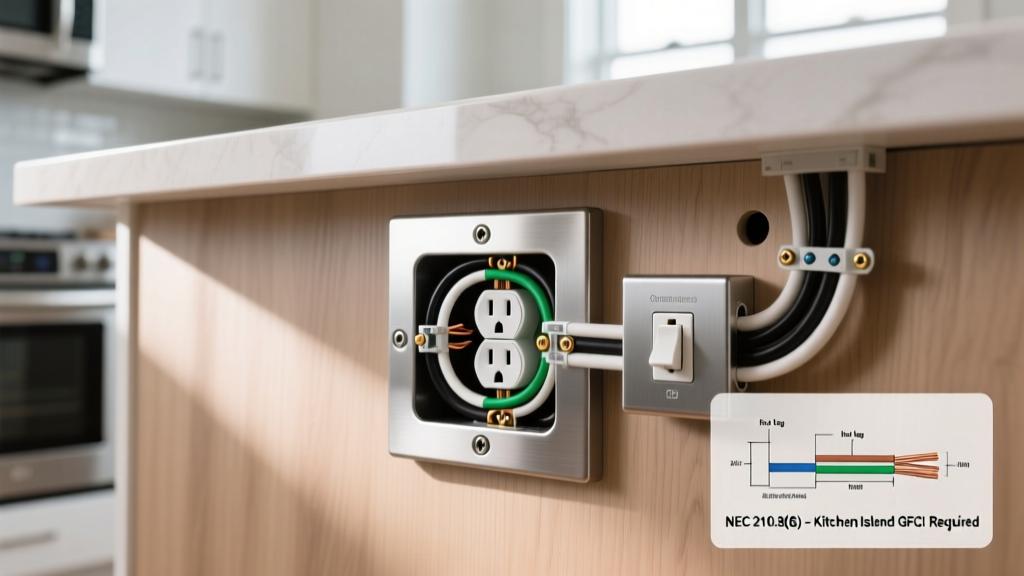
The most frequent culprit for a dead standard outlet is a tripped Ground Fault Circuit Interrupter (GFCI) located elsewhere in the home. Under NEC Article 210.8, GFCI protection is strictly mandated for all 125-volt, single-phase, 15- and 20-ampere receptacles installed in wet and damp locations, including bathrooms, garages, kitchens, crawl spaces, and outdoors.
The Downstream Wiring Effect
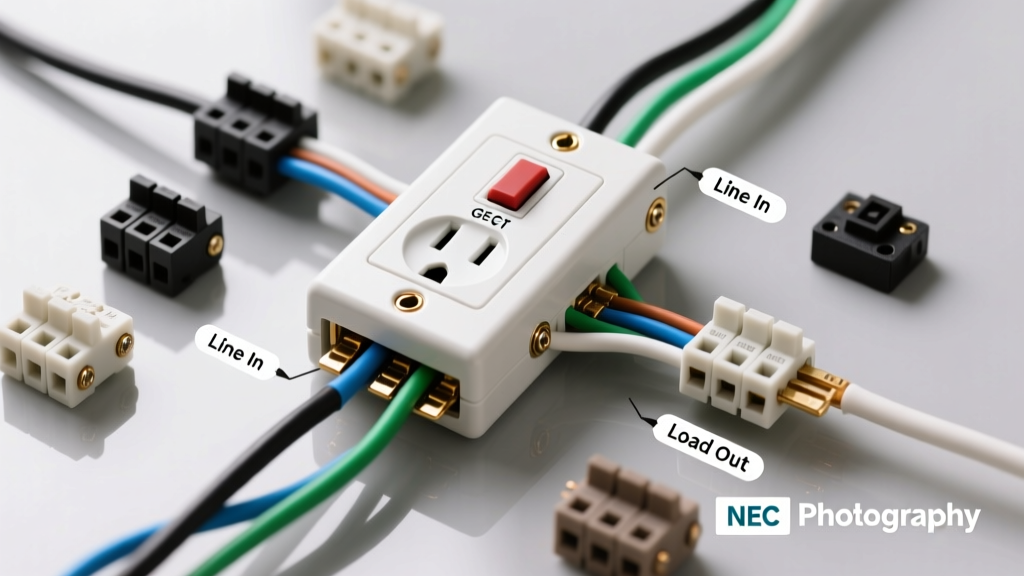
Electricians frequently use the 'LOAD' terminals on a single GFCI receptacle (such as the Leviton GFSW1-W, approx. $22) to protect multiple standard downstream outlets on the same circuit. If a GFCI in your master bathroom trips due to a minor ground fault or moisture ingress, every standard receptacle wired to its LOAD terminals—potentially including outlets in an adjacent hallway or bedroom—will instantly lose power. Because the fault current was typically under 5 milliamps, the main 15A or 20A breaker in your panel will not trip.
Expert Troubleshooting Tip: Do not just check the room with the dead outlet. Map your circuits and test every GFCI in the home using a dedicated tester like the Klein Tools RT250 ($35), which features a built-in GFCI test button that forces a ground fault to verify the upstream device's functionality.
2. Tamper-Resistant (TR) Shutter Jams (NEC Article 406.12)
Since the 2008 NEC cycle, and reinforced in the 2023 and upcoming 2026 editions, NEC Article 406.12 requires all 15A and 20A, 125V and 250V non-locking receptacles in dwelling units to be Tamper-Resistant (TR). These receptacles feature internal spring-loaded plastic shutters that block foreign objects from entering the hot and neutral slots.
Mechanical Failure vs. Electrical Failure
When an electrical outlet is not working and no breaker is tripped, the issue may be purely mechanical. Over time, dust, drywall debris, or paint overspray can infiltrate the TR shutters. When you attempt to insert a plug, one shutter opens while the other remains jammed, preventing the plug blades from making contact with the internal brass terminals. The outlet has live voltage, but no physical connection is made.
- The Diagnostic Test: Use a non-contact voltage tester (NCVT) like the Fluke 2AC VoltAlert ($28). Hold it against the face of the receptacle. If the tester beeps and glows red, the outlet is energized. The failure is mechanical (TR shutter jam), not electrical.
- The Code-Compliant Fix: Do not attempt to pry the shutters open with a screwdriver, as this violates the UL listing of the device. Replace the receptacle with a new TR-rated model (e.g., Leviton Decora R52-05320-WMP, approx. $3.50).
3. Push-In Backwire Failures (NEC Article 110.14)
NEC Article 110.14 governs electrical connections, requiring them to be mechanically secure and electrically sound. For decades, builders utilized the 'push-in' or 'backstab' holes on the rear of cheap builder-grade receptacles. These holes rely on a tiny internal brass spring to grip the stripped copper wire.
Thermal Cycling and Silent Disconnects
Push-in connections are only code-compliant for 14 AWG solid copper wire. However, as current flows through the circuit (especially near the 80% continuous load limit, or 12 amps on a 15-amp circuit), the receptacle heats up. When the load is removed, it cools. This constant thermal expansion and contraction causes the internal spring to lose tension over 10 to 15 years. Eventually, the hot (black) or neutral (white) wire silently pulls away from the spring contact. The circuit is now open, the outlet is dead, but because there is no short circuit or ground fault, the breaker remains perfectly reset.
Diagnostic Matrix: Dead Outlet Scenarios & NEC Codes
| Symptom / Observation | Probable Cause | Relevant NEC Code | Required Action |
|---|---|---|---|
| NCVT shows voltage, but plug won't insert fully | Jammed TR Shutters | 406.12 (Tamper-Resistant) | Replace receptacle with new TR model |
| NCVT shows no voltage; bathroom GFCI is tripped | Upstream GFCI Load Disconnect | 210.8 (GFCI Protection) | Reset upstream GFCI; trace load wiring |
| Receptacle face is warm; intermittent power | Backstab Spring Failure | 110.14 (Electrical Connections) | Move wires to side screw terminals (shepherd hook) |
| Outlet dead; adjacent room lights flicker when tested | Shared Neutral Disconnect (MWBC) | 300.13(B) / 210.4 (Multi-Wire) | Pigtail neutrals in junction box; check handle ties |
4. The Shared Neutral Hazard: Multi-Wire Branch Circuits
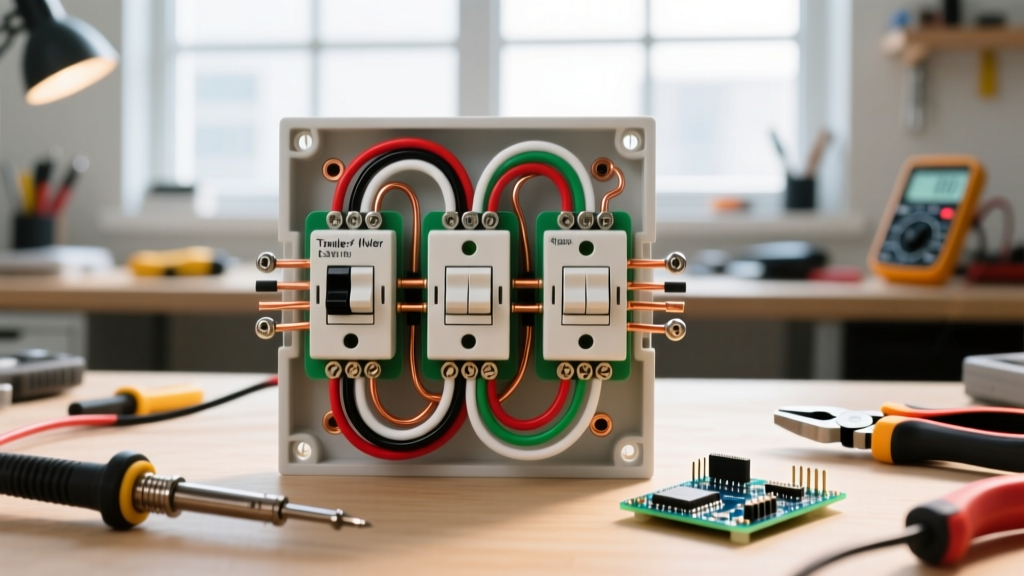
If you live in a home built between the 1970s and early 2000s, your kitchen or living room may be wired with a Multi-Wire Branch Circuit (MWBC). An MWBC uses two hot wires (on opposite phases) and one shared neutral wire to power multiple outlets, effectively saving copper.
Under NEC Article 300.13(B), the continuity of the grounded (neutral) conductor in an MWBC must not depend on device connections, such as receptacles. The neutral must be 'pigtailed' (spliced together with a wire nut and a short jumper wire to the receptacle). If a previous homeowner or sloppy electrician daisy-chained the neutral through the receptacle's silver terminal screws, and that receptacle is removed or the screw loosens, the downstream outlets lose their neutral return path. The outlet will read 'dead' on a standard plug tester, and the breaker will not trip because the hot wire is still intact. Fixing this requires opening the junction box or upstream outlet and installing proper wire-nut pigtails.
Step-by-Step Code-Compliant Troubleshooting Flow
Before calling an electrician (which typically costs $150 to $250 for a standard diagnostic service call), follow this systematic, safety-first diagnostic flow:
- Verify Panel Status: Physically toggle the suspected breaker to the OFF position and back to ON. Sometimes a tripped breaker rests in the 'middle' position and visually appears untripped.
- Test Upstream GFCIs: Locate every GFCI in the home (including the garage, exterior walls, and bathrooms). Press the 'TEST' and 'RESET' buttons on each.
- Perform NCVT Scan: Use a Fluke 2AC or Klein NCVT-3 to scan the dead receptacle's face. If it beeps, suspect a mechanical TR shutter failure or a broken plug prong.
- Use a Solenoid Tester or Multimeter: Insert a digital multimeter (like the Fluke 117, $170) set to AC Voltage into the hot (smaller slot) and neutral (larger slot). A reading of 115V-125V confirms power is present but the load isn't connecting. A reading of 0V confirms an open circuit (likely a backstab failure upstream).
- Kill Power and Inspect: Turn off the breaker, verify 0V with your meter, remove the receptacle yoke, and inspect the wiring. If you see wires pushed into the back holes, remove them, strip back 3/4 inch of insulation, and secure them under the side terminal screws using a clockwise shepherd-hook loop.
When to Call a Licensed Electrician (Code Red Flags)
While backstabbed wires and tripped GFCIs are common, certain symptoms indicate severe code violations that pose an immediate arc-fault or fire hazard. Halt DIY troubleshooting and contact a licensed professional if you observe:
- Burn Marks or Melted Yokes: Indicates high-resistance arcing. NEC 406.4 requires replacement of any receptacle that is physically damaged.
- Aluminum Wiring (Pre-1974): If you see dull gray wire instead of copper, do not attach it to standard brass terminals. NEC 310.106 and 110.14 require specific CO/ALR rated devices or Alumiconn pigtailing to prevent galvanic corrosion and thermal expansion fires.
- Frequent AFCI Nuisance Tripping: If resetting an upstream AFCI breaker only to have it trip again immediately indicates a parallel or series arc fault in the wall cavity, often caused by a crushed cable or a nail through the Romex sheath.
Frequently Asked Questions
Can a bad outlet cause other outlets to stop working?
Yes. In standard residential wiring, outlets are often daisy-chained. If the hot or neutral wire disconnects from the terminal screws (or backstab holes) of Outlet A, Outlet B and C downstream will lose power, even if the breaker is fine.
Why does my outlet tester say 'Open Neutral'?
An 'Open Neutral' reading means the white wire has disconnected somewhere between the outlet and the panel. This is highly dangerous on Multi-Wire Branch Circuits, as it can cause 240V to be pushed across 120V appliances, instantly destroying electronics.