
Understanding the Italian 230V Infrastructure
Navigating the electrical infrastructure of Italy requires a fundamental shift in mindset for anyone accustomed to North American or UK wiring standards. The Italian electrical system operates at a nominal 230V (±10%) and 50Hz. However, the true complexity lies in the physical receptacle standards and the stringent national wiring codes. Whether you are an expatriate renovating a villa in Tuscany, a facility manager maintaining commercial properties in Milan, or an electronics hobbyist integrating imported hardware, understanding the nuances of the italian electrical outlet ecosystem is critical for safety and compliance.
Unlike the US National Electrical Code (NEC), Italy's low-voltage installations are governed by the CEI 64-8 standard, published by the Comitato Elettrotecnico Italiano (CEI). This standard dictates everything from cable sizing and routing to the mandatory implementation of residual current devices (RCDs). In this comprehensive guide, we will dissect the physical outlet types, decode the CEI color codes, and provide a step-by-step framework for wiring a modern, code-compliant Italian receptacle.
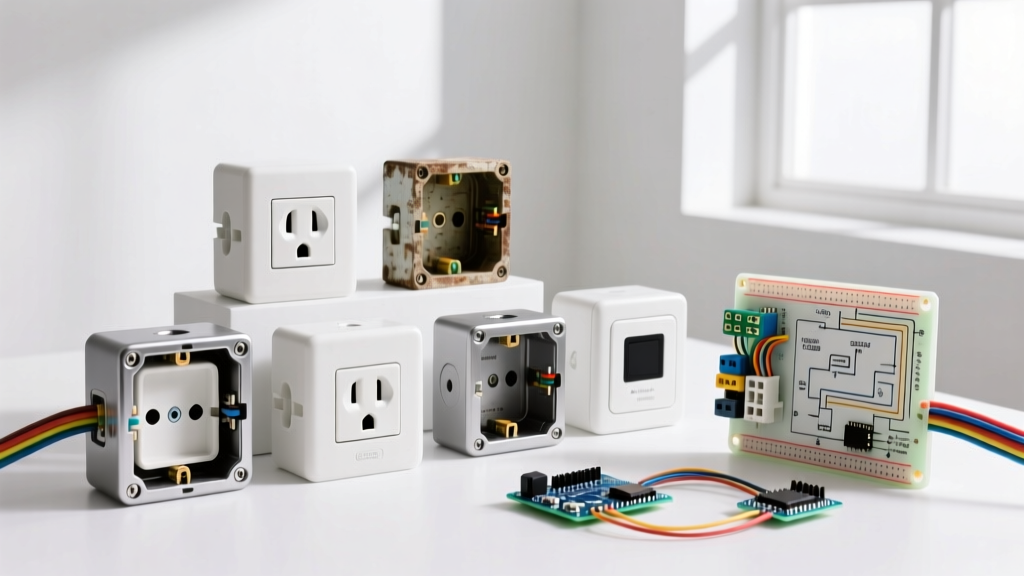
Decoding Italian Receptacle Types: Type L, Bipasso, and Schuko
One of the most common failure modes in DIY Italian electrical projects is forcing a plug into an incompatible socket, leading to arcing, melted faceplates, and severe fire hazards. Historically, Italy utilized two distinct variations of the Type L plug, alongside the pan-European Schuko standard.
| Outlet Type | CEI Standard | Pin Diameter | Pin Spacing (Center-to-Center) | Max Load |
|---|---|---|---|---|
| 10A (Small Type L) | CEI 23-16/VII | 4.0 mm | 19.0 mm | 2300W |
| 16A (Large Type L) | CEI 23-16/VII | 4.8 mm | 26.0 mm | 3680W |
| Bipasso (Dual-Size) | CEI 23-50 | Accepts 4.0mm & 4.8mm | Hybrid Spacing | 3680W |
| Schuko (Type F) | CEI 23-50 | 4.8 mm (Side Earth) | 19.0 mm | 3680W |
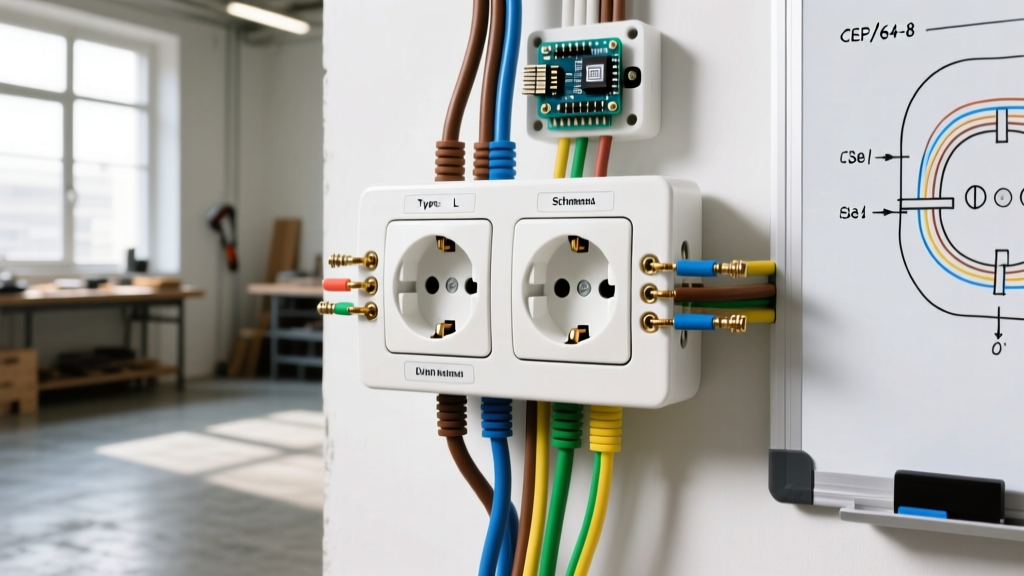
According to World Standards, the modern solution to Italy's fragmented plug history is the Bipasso outlet, which features a patented internal shutter mechanism that accepts both 10A and 16A Type L plugs. Furthermore, modern Italian installations frequently utilize a hybrid faceplate that combines a Bipasso socket with a Schuko (Type F) socket, often referred to locally as a presa bivalente or Schuko-Italiana.
CEI 64-8 Code Compliance: The 'Italian NEC'
Wiring an italian electrical outlet is not just about connecting wires; it is about adhering to the life-safety mandates of the CEI 64-8. As of the latest 2026 revisions, the following safety architectures are strictly enforced in residential and commercial renovations:
1. The 'Salvavita' (30mA RCD Mandate)
Every circuit supplying standard 10A/16A receptacles must be protected by a 30mA Residual Current Device (RCD), colloquially known in Italy as the Salvavita. This device monitors the differential between the phase and neutral currents. If a leakage to earth exceeding 30mA is detected (indicating a human is being shocked or insulation has failed), the RCD trips within 40 milliseconds. Type A RCDs are now the minimum requirement to handle pulsating DC leakage from modern inverter-driven appliances like washing machines and HVAC systems.
2. Overcurrent and Short-Circuit Protection (MCB)
The RCD does not protect against overloads. Therefore, a Magnetic-Thermal Circuit Breaker (Interruttore Magnetotermico) must be installed in series. For standard Bipasso/Schuko outlet circuits wired with 2.5mm² copper cable, a 16A C-Curve MCB is the code-compliant standard.
3. Equipotential Bonding and Earth Ground
The CEI strictly prohibits the installation of Class I appliances (those requiring an earth ground) on circuits lacking a continuous protective earth (PE) conductor. In older Italian homes built before the 1990s, it is common to find outlets wired with only Phase and Neutral. Upgrading these circuits to include a 2.5mm² Yellow/Green earth wire is a mandatory code requirement before installing modern Schuko or Bipasso receptacles.
Step-by-Step Wiring an Italian Bipasso Outlet
Italian flush-mount boxes (scatole da incasso) differ vastly from US square or octagonal boxes. The standard Italian wall box is rectangular, typically the 503 (3-module) or 504 (4-module) size. Below is the professional procedure for wiring a 3-module Bticino Bipasso outlet in a 503 box.
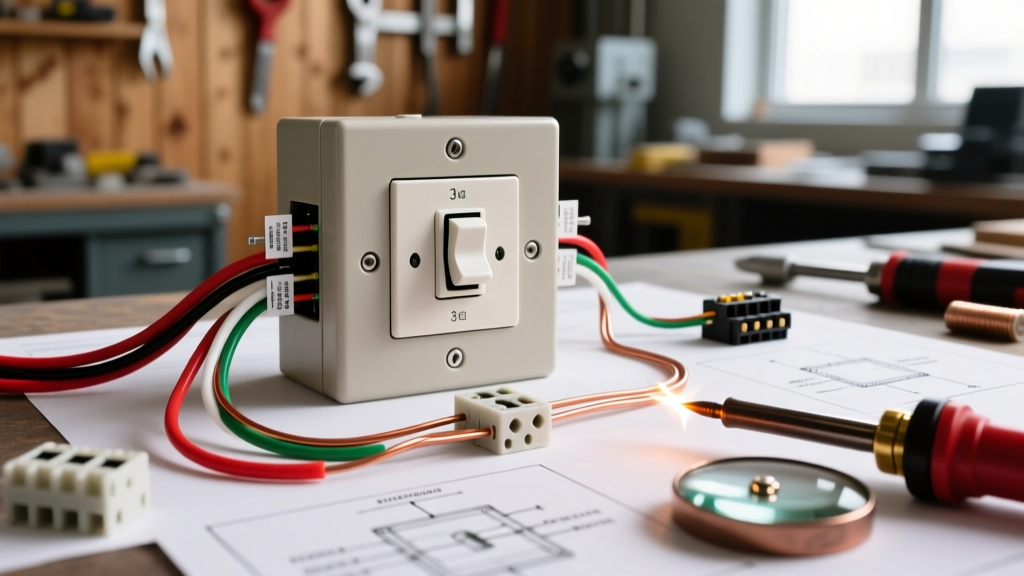
Step 1: Verify CEI 64-8 Wire Color Codes
Unlike North American wiring (Black/White/Green), Italy follows the IEC 60446 / CEI 64-8 harmonized color codes. Misidentifying these can result in catastrophic failure or lethal shock.
- Phase (L): Brown (Single-phase) or Brown/Black/Grey (Three-phase)
- Neutral (N): Blue
- Protective Earth (PE): Yellow/Green bi-color
Step 2: Prepare the Conductors
Strip exactly 12mm of insulation from the 2.5mm² solid copper conductors. If your installation uses stranded wire (flexible cable), you must crimp a brass ferrule (puntalino) onto the wire ends. Inserting bare stranded wire into the screw terminals of an italian electrical outlet will cause individual copper strands to splay, leading to high-resistance connections, localized heating, and eventual melting of the receptacle housing.
Step 3: Terminate the Receptacle Module
Modern Italian outlets, such as the Bticino LivingLight Air (Model 41103) or the Vimar Eikon Evo Bipasso, utilize either screw terminals or quick-connect push-in clamps.
- Insert the Brown (Phase) wire into the terminal marked 'L'.
- Insert the Blue (Neutral) wire into the terminal marked 'N'.
- Insert the Yellow/Green (Earth) wire into the central terminal marked with the earth symbol (⏚).
- If using screw terminals, torque the screws to approximately 1.2 Nm. Over-torquing will strip the brass threads; under-torquing will cause arcing.
Step 4: Mounting and Faceplate Alignment
Secure the receptacle module into the 503 box using the provided M4 expansion screws. Ensure the module is perfectly level before tightening. Snap the decorative faceplate onto the support frame. The CEI requires that the faceplate sit flush against the wall plaster with no gaps exceeding 1mm to maintain the IP20 ingress protection rating.
Expert Warning: The 'Neutro Rotto' Hazard
In older Italian installations, a broken neutral ('Neutro Rotto') at the main distribution board can cause the voltage at your outlet to float up to 400V if the building utilizes a three-phase supply. This will instantly destroy connected 230V electronics and pose a severe fire risk. Always test the voltage between Phase and Neutral, and Phase and Earth, using a CAT III multimeter before plugging in sensitive equipment.
Sourcing Compliant Components in 2026
When sourcing materials for an Italian electrical project, avoid generic, uncertified imports found on global e-commerce platforms. These often fail to meet the dimensional tolerances of CEI 23-50 and lack the internal child-proof shutters mandated by Italian law. Stick to the 'Big Three' Italian manufacturers, which offer modular systems that allow you to swap outlet types without replacing the wall frame.
- Bticino (LivingLight / Matix lines): The market leader. A standard Bipasso module (e.g., Bticino 41103) retails between €5.50 and €7.00. Known for robust polycarbonate housings and high-tension internal contacts.
- Vimar (Eikon / Idea lines): Highly favored in modern architectural builds. Vimar's Schuko-Bipasso hybrid modules (e.g., Vimar 14016) cost around €8.50 to €10.00 and feature advanced arc-chamber designs.
- Gewiss (Playbus / Chorus lines): Dominates the commercial and industrial sectors. Their IP66-rated waterproof outlets for outdoor Italian installations are the industry benchmark.
For verified sourcing and technical datasheets, always refer directly to the official Bticino catalog or authorized Italian electrical distributors.
Frequently Asked Questions (FAQ)
Can I use a US 120V appliance in an Italian outlet with just a plug adapter?
No. A plug adapter only changes the physical pin configuration; it does not step down the voltage. Plugging a 120V North American appliance into a 230V italian electrical outlet will result in immediate catastrophic failure, likely causing a fire or explosion. You must use a heavy-duty step-down voltage transformer rated for at least 150% of the appliance's wattage.
Why does my Italian outlet have three holes in a row, but my Schuko plug won't fit?
You are looking at a legacy 10A or 16A Type L outlet. Schuko plugs (Type F) are round and feature side-earth clips, which physically cannot mate with the flat, inline-hole design of a pure Type L socket. You must either use a certified Schuko-to-Italian adapter (which includes a grounding pin) or, preferably, upgrade the wall receptacle to a modern Bipasso/Schuko hybrid module.
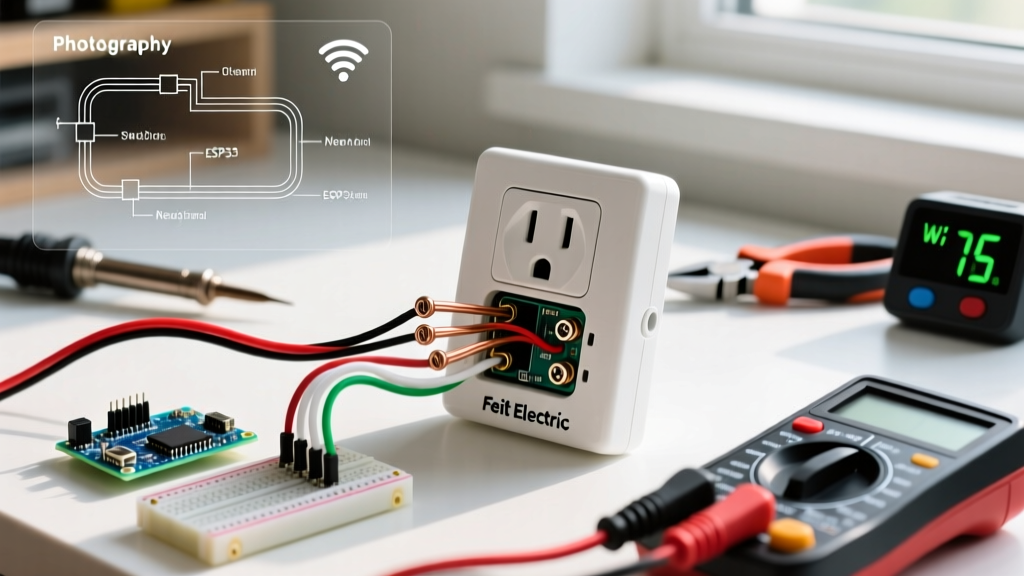
Is it legal to install a smart Wi-Fi outlet in Italy?
Yes, provided the smart outlet carries the CE mark and complies with CEI 64-8 regarding maximum leakage currents. Smart outlets with internal relays can introduce minor capacitive leakage; ensure your main 30mA RCD is not nuisance-tripping when multiple smart devices are deployed on the same circuit branch.