
The 220V vs 240V Reality Check
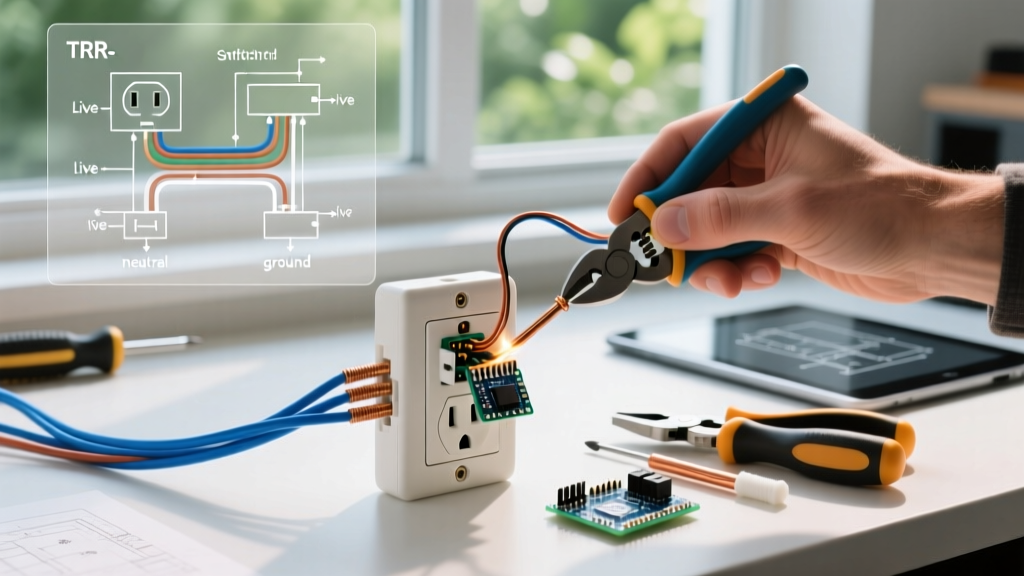
When homeowners and DIYers search for an electrical outlet 220 setup, they are typically looking to power heavy-duty appliances like EV chargers, welding machines, or large air compressors. However, from a technical and National Electrical Code (NEC) standpoint, modern residential split-phase systems deliver 240V, not 220V. While '220V' remains the colloquial search term, all materials, breakers, and safety protocols discussed in this guide are engineered for modern 240V circuits. Installing a high-amperage 240V receptacle is not a beginner project; it requires specific tools, precise torque applications, and a deep understanding of continuous versus non-continuous loads.
Essential Hand & Power Tools for High-Amperage Circuits
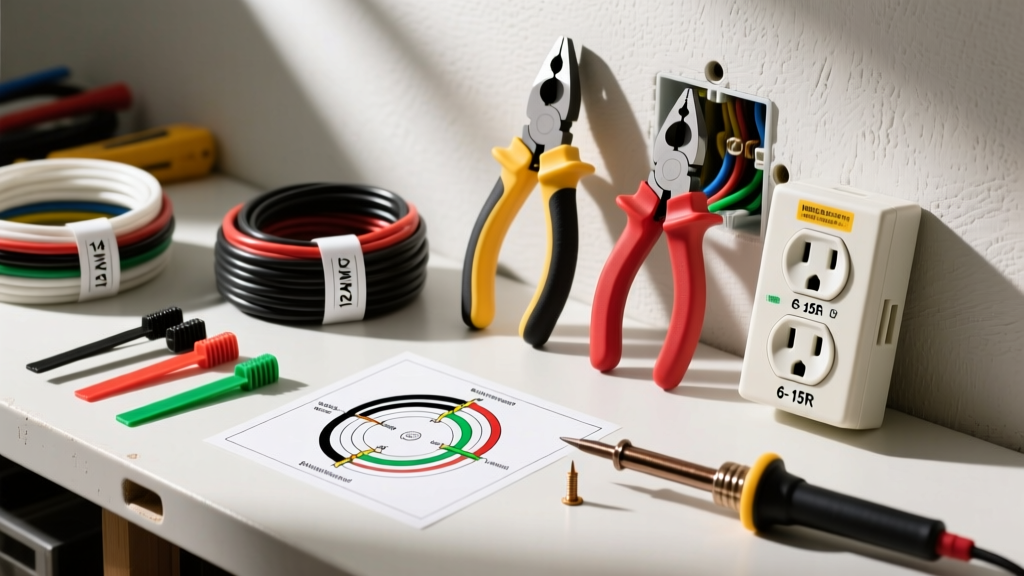
Wiring a 50-amp or 30-amp 240V circuit demands more than a standard homeowner toolkit. The physical thickness of the wire and the strict terminal torque requirements dictate your tool selection.
- Ratcheting Cable Cutters: Standard lineman pliers will crush 6 AWG copper. Use a ratcheting cutter like the Knipex TwinForce or Klein Tools 63027 (approx. $65) for clean, flush cuts that easily seat into breaker lugs.
- Heavy-Duty Wire Strippers: The Klein Tools 11063 (approx. $45) handles 8 to 22 AWG, but for 6 AWG THHN/THWN-2, a dedicated cable jacket ripper and a sharp utility knife to score the insulation longitudinally is the professional standard.
- Torque Screwdriver: This is non-negotiable. High-amperage 240V circuits generate significant heat. Loose connections cause thermal runaway. A calibrated torque screwdriver like the CDI 401SM (10-100 in-lbs range, approx. $140) ensures you meet the manufacturer's exact lug specifications (typically 25-45 in-lbs for NEMA 14-50 receptacles).
- True-RMS Multimeter: A Fluke 117 True-RMS (approx. $200) is required to verify the absence of voltage before touching conductors and to test the 240V potential across the two hot legs post-installation.
- Fish Tapes & Pulling Lubricant: Pulling three or four 6 AWG wires through conduit requires a heavy-duty steel fish tape (Greenlee 1804, approx. $45) and a generous application of Polywater J wire pulling lubricant to prevent insulation damage.
Material Breakdown: Wire, Breakers, and Receptacles
Material selection is governed by the amperage of the device you are powering and the distance from the main panel. As of 2026, copper prices remain volatile, but you should budget approximately $4.50 to $6.00 per foot for 6/3 NM-B (Romex) cable.
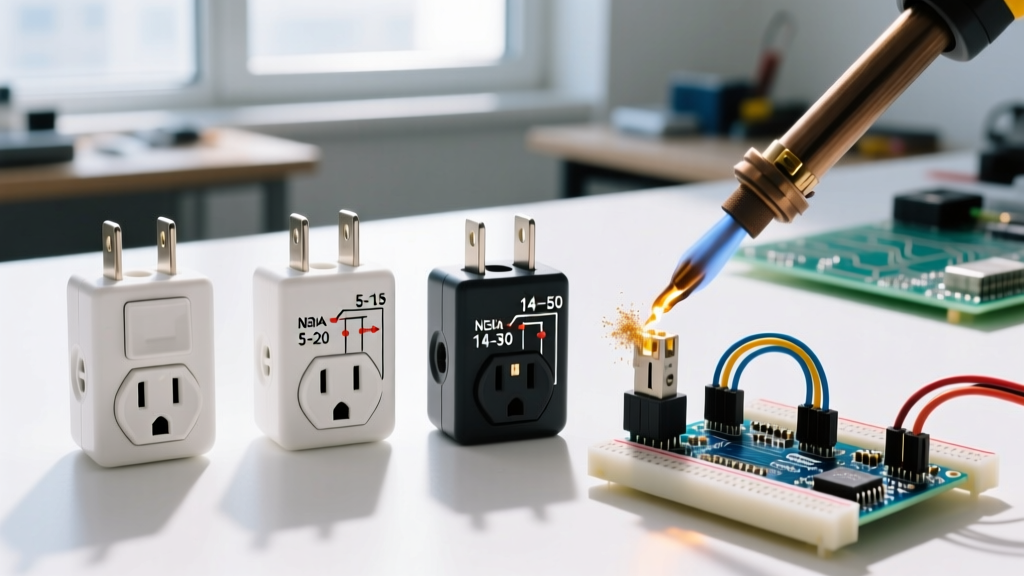
NEMA Receptacle Comparison Matrix
| NEMA Type | Amperage / Voltage | Configuration | Common Applications | Est. Cost (2026) |
|---|---|---|---|---|
| 14-50R | 50A / 250V | 4-Prong (2 Hot, 1 Neutral, 1 Ground) | EV Level 2 Chargers, Modern Electric Ranges | $15 - $25 |
| 6-50R | 50A / 250V | 3-Prong (2 Hot, 1 Ground) | Arc Welders, Heavy-Duty Air Compressors | $12 - $18 |
| 14-30R | 30A / 250V | 4-Prong (2 Hot, 1 Neutral, 1 Ground) | Modern Electric Dryers | $10 - $15 |
| 10-30R | 30A / 250V | 3-Prong (2 Hot, 1 Neutral - NO GROUND) | Legacy Dryers (Pre-1996) | $12 (Replacement only) |
Expert Note: The NEC strictly prohibits the installation of new NEMA 10-30 (ungrounded) receptacles. If you are wiring a new dryer circuit, you must use 10/3 NM-B wire and a NEMA 14-30R receptacle to provide an equipment grounding conductor.
The GFCI Trap: Modern NEC Requirements for 240V
One of the most common edge cases that traps DIYers and even seasoned electricians is the evolving Ground Fault Circuit Interrupter (GFCI) requirements for 240V receptacles. Recent NEC editions have expanded GFCI protection to include 240V receptacles located in garages, basements, crawlspaces, and outdoors.
If you are installing a NEMA 14-50 for an EV charger in a garage, a standard 50A double-pole breaker (approx. $25) will likely fail your local electrical inspection. You will need a 2-pole 50A GFCI breaker, such as the Square D QO250GFI or Siemens Q250GFI, which costs between $110 and $140. Furthermore, GFCI breakers require a neutral wire connection to the breaker's coiled pigtail, even if the appliance (like a welder on a 6-50) does not utilize a neutral. Failing to route and terminate the neutral at the panel will result in the GFCI breaker tripping instantly or failing to function.
Step-by-Step Material Sizing Framework
Sizing your materials correctly prevents voltage drop, nuisance tripping, and fire hazards. Follow this framework based on NFPA NEC guidelines:
- Identify the Load Type: Is it continuous (running for 3 hours or more, like an EV charger) or non-continuous (like a welder)?
- Apply the 125% Rule: For continuous loads, multiply the device's maximum draw by 1.25. A 40A continuous EV charger requires a 50A circuit (40 x 1.25 = 50).
- Select Wire Gauge: For a 50A circuit, 6 AWG copper is the standard. If the run exceeds 100 feet, you must upsize to 4 AWG copper to mitigate voltage drop below the recommended 3% threshold.
- Choose the Conduit or Cable: For exposed garage walls, individual THHN wires in EMT metallic conduit offer superior physical protection compared to exposed NM-B (Romex) cable, which is vulnerable to impact damage.
Common Failure Modes & Thermal Runaway
High-amperage 240V circuits are unforgiving of poor craftsmanship. According to OSHA electrical safety standards, improper terminations are a leading cause of electrical fires. Here are the specific failure modes to avoid:
- Strand Clipping: When stripping 6 AWG stranded THHN, DIYers often clip the outer copper strands to make the wire fit into the lug. This reduces the effective wire gauge, creating a high-resistance choke point that melts the insulation under load.
- Back-Wiring vs. Side-Wiring: Many cheap receptacles allow you to push the wire into a back-stab hole. Never use back-stabs for 240V circuits. Always use the side terminal screws or, preferably, a receptacle with clamp-style terminal plates that distribute pressure evenly across the wire.
- The 'Neutral-to-Ground' Bond: In a subpanel, the neutral and ground bars must be isolated. If you wire a 14-50 receptacle off a subpanel and the subpanel's neutral and ground are bonded, return current will travel on the equipment grounding conductor, energizing the chassis of your appliance and creating a lethal shock hazard.
Safety Callout: Always verify the main service panel's total capacity before adding a 50A 240V circuit. If you have a 100A main panel and are already running central AC and an electric oven, adding a 50A EV charger may exceed your panel's calculated load, requiring a heavy-up service upgrade to 200A.
Frequently Asked Questions
Can I use aluminum wire for a 240V outlet?
Yes, aluminum wire is a cost-effective alternative to copper, especially for long runs. For a 50A circuit, you would use 4 AWG aluminum (such as XHHW-2). However, you must apply an anti-oxidant compound like Noalox to the aluminum strands before terminating them at the breaker and receptacle to prevent galvanic corrosion and high-resistance arcing. Furthermore, ensure the receptacle terminals are explicitly rated for aluminum (AL/CU).
Why does my EV charger trip the breaker after 20 minutes?
This is a classic symptom of a loose terminal connection or an undersized breaker. As the wire heats up under a continuous 40A load, a loose lug expands, increasing resistance and generating excessive heat. The breaker's thermal trip mechanism detects this ambient heat inside the panel and shuts off the circuit. Turn off the main breaker, remove the panel cover, and verify all lugs are torqued to the manufacturer's specifications using a calibrated torque screwdriver. For more on residential EV infrastructure, consult the Department of Energy's Alternative Fuels Data Center.