
Diagnosing ARK Electrical Outlets: Marine, RV, and Heavy-Duty Applications
When DIYers and marine technicians search for an ARK electrical outlet, they are typically dealing with heavy-duty, weather-resistant receptacles designed for harsh environments. ARK-brand marine and RV outlets—ranging from 12V DC dual-USB cigarette-style sockets to IP67-rated 120V AC GFCI enclosures—are engineered to withstand UV exposure, saltwater ingress, and extreme thermal cycling. However, even the most robust marine-grade components fail when installation best practices are ignored or when environmental seals degrade over time.
As of 2026, the shift toward high-amperage USB-C PD (Power Delivery) integrations in ARK marine receptacles has introduced new diagnostic complexities. This guide provides a comprehensive, expert-level troubleshooting framework for ARK electrical outlets, complete with multimeter testing protocols, voltage drop calculations, and ABYC-compliant repair methodologies.
Crucial Intent Clarification: ARK vs. Arc Fault (AFCI)
Before proceeding, verify your diagnostic target. If you are troubleshooting a standard residential bedroom or living room receptacle that keeps tripping, you are likely dealing with an Arc Fault Circuit Interrupter (AFCI) outlet, not an ARK brand marine outlet. AFCI outlets detect dangerous electrical arcing and are mandated by the National Electrical Code (NEC) in living spaces. If your outlet is installed on a boat, RV, or outdoor kitchen and features a rubberized weather flap or 12V DC pins, proceed with the ARK marine troubleshooting guide below.
Primary Failure Modes in ARK Marine and RV Receptacles
Unlike standard indoor residential receptacles, ARK electrical outlets face a unique triad of environmental stressors:
- Galvanic and Electrolytic Corrosion: Saltwater environments accelerate oxidation on brass and nickel-plated contacts. If the installer used standard automotive spade connectors instead of marine-grade, adhesive-lined heat shrink crimps, moisture wicks into the wire strands via capillary action, turning the copper green and increasing resistance.
- UV and Thermal Degradation: While modern ARK faceplates utilize UV-stabilized polycarbonate, prolonged exposure to direct sunlight and temperature swings from 20°F to 110°F can cause the rubberized IP67 weather gaskets to dry-rot, flatten, and lose their compression seal.
- Vibration-Induced Terminal Loosening: In RVs and powerboats, constant engine and road vibration can back out standard screw-terminal connections. ARK mitigates this with push-in spring clamps or vibration-resistant set screws, but improper wire stripping (exposing too much bare wire or nicking the strands) compromises the grip.
Diagnostic Matrix: 12V DC vs. 120V AC ARK Outlets
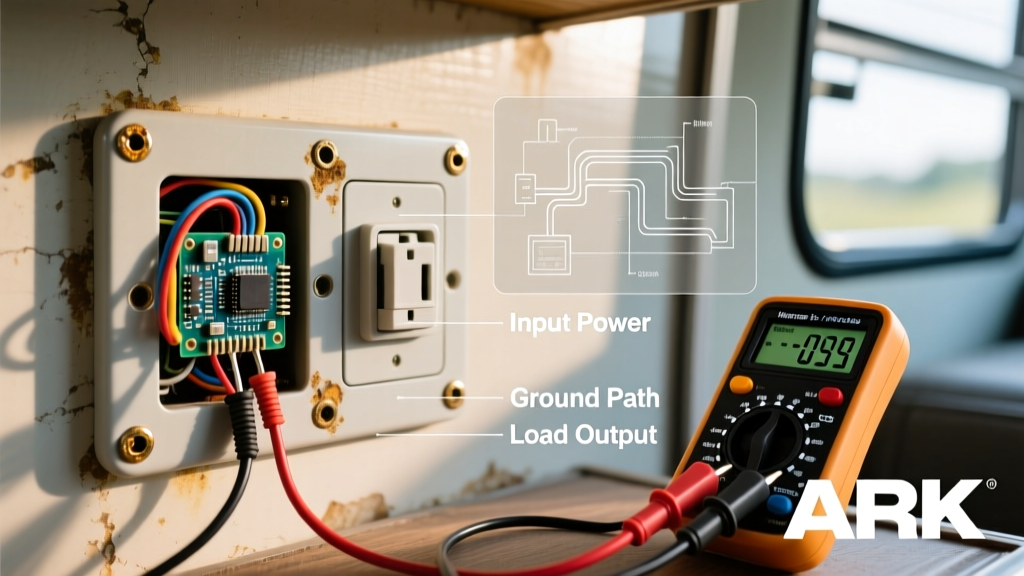
Use this matrix to isolate the fault based on your specific ARK receptacle configuration. Ensure your digital multimeter (DMM) is set to the correct voltage range (DC V for 12V systems, AC V for 120V systems).
| Symptom | Probable Cause | DMM Test & Expected Reading | Corrective Action |
|---|---|---|---|
| 12V Socket Dead, USB Ports Active | Blown inline glass fuse or corroded center-pin contact spring. | Test center pin to chassis ground. Expect 12.4V - 13.8V. If 0V, check inline fuse. | Replace AGC/ATO fuse. Clean center spring with contact cleaner and tension with a pick. |
| USB Ports Intermittent / Devices Disconnect | Voltage drop on the 12V DC supply line causing the internal buck converter to reset. | Measure voltage at the back terminals of the ARK outlet under load. If <11.5V, drop is excessive. | Upsize wire gauge (e.g., from 14 AWG to 10 AWG) or shorten the run from the distribution panel. |
| 120V AC GFCI Trips Instantly Upon Reset | Moisture ingress behind the weather flap or a ground fault in the downstream load wiring. | Disconnect LOAD wires. Measure resistance between Neutral and Ground. Should be infinite (OL). | Apply dielectric grease to wire entries. Replace degraded IP67 gasket. Ensure drip loop is present. |
| Burnt / Discolored Polycarbonate Faceplate | Thermal fatigue from continuous high-draw loads (e.g., 150W+ 12V inverters) exceeding contact rating. | Use an IR thermometer on the faceplate under load. Temps >140°F (60°C) indicate high resistance. | Replace the ARK receptacle. Upgrade to a heavy-duty 20A rated model with silver-plated contacts. |
Deep Dive: Troubleshooting 12V DC Voltage Drop in ARK USB Receptacles
The most common complaint with 12V ARK electrical outlets equipped with dual USB-A and USB-C ports is intermittent charging. This is rarely a defect in the ARK unit itself; rather, it is a symptom of undervoltage lockout (UVLO) triggered by excessive voltage drop in the DC wiring.
Marine and RV electrical systems operate on a nominal 12V, but actual system voltage fluctuates between 11.8V (resting AGM battery) and 14.4V (alternator charging). The internal buck converter inside an ARK USB receptacle requires a minimum input voltage (typically 11.0V to 11.5V) to step down the power to a stable 5V/3A output. If the wiring run is too long or the gauge is too thin, the resistance of the wire consumes the available voltage before it reaches the outlet.
The 3% Voltage Drop Rule
According to the American Boat & Yacht Council (ABYC) E-11 standards, critical navigation and communication circuits should not exceed a 3% voltage drop, while general accessory circuits (like a 12V ARK outlet) should not exceed 10%. However, for sensitive USB charging electronics, aiming for a 3% drop is highly recommended.
Example Calculation: If you are running a 15-foot circuit (30 feet total round-trip) to an ARK 12V outlet drawing 5 Amps (e.g., charging a laptop via USB-C PD and a phone via USB-A simultaneously):
- Using 14 AWG marine wire: Voltage drop = ~0.77V. (Acceptable, but borderline if battery is at 12.0V).
- Using 16 AWG wire: Voltage drop = ~1.22V. (Will trigger UVLO and cause charging to fail).
- Using 10 AWG wire: Voltage drop = ~0.30V. (Ideal for guaranteed USB-C PD negotiation).
Pro Tip: Always measure voltage at the battery, then measure again at the back of the ARK outlet while a load is plugged in. An open-circuit voltage test (no load) will falsely show 12.6V even on a severely corroded or undersized wire.
Step-by-Step Corrosion Repair and Weatherproofing
If your diagnostic matrix points to moisture ingress or corrosion, follow this ABYC-compliant repair protocol to restore your ARK electrical outlet:
- Isolate Power: Turn off the DC breaker or AC GFCI upstream. Verify zero voltage with a non-contact tester and a DMM.
- Extract the Receptacle: Remove the #8-32 stainless steel mounting screws. Gently pull the ARK unit out of the dash or bulkhead cutout.
- Inspect the Gasket: If the foam or rubber IP67 gasket is compressed, cracked, or crumbling, it must be replaced. Do not rely on silicone caulk to seal a failed gasket; silicone traps moisture against the metal contacts.
- Strip and Re-Terminate: Cut back the wire past any green/black oxidation. Use a precision wire stripper to avoid nicking the copper strands. Crimp on marine-grade, nylon-insulated ring or spade terminals using a ratcheting crimp tool.
- Seal with Adhesive Heat Shrink: Slide 3:1 ratio, dual-wall heat shrink tubing over the crimp. Apply heat until the inner adhesive melts and oozes slightly from the ends, creating a waterproof barrier against capillary action.
- Apply Dielectric Grease: Coat the exposed metal terminals and the back of the ARK receptacle with a marine-grade dielectric tune-up grease to prevent future galvanic corrosion.
Sourcing Replacements and 2026 Pricing Expectations
If the internal components of your ARK outlet are physically damaged (e.g., melted contacts or a failed USB PCB), replacement is the only safe option. As of 2026, pricing for ARK and equivalent marine-grade receptacles generally falls into these brackets:
- Basic 12V DC Cigarette-Style Socket (No USB): $12 - $18
- ARK Dual USB-A / 12V Combo Receptacle: $22 - $32
- ARK USB-C PD (30W) + 12V Marine Socket: $38 - $55
- 120V AC Weatherproof GFCI Enclosure (IP67): $45 - $75
Always verify the cutout diameter (typically 1.04 inches for standard 12V marine sockets) before ordering a replacement to ensure a flush fit against your fiberglass or wood dash.
Frequently Asked Questions
Can I wire an ARK 12V marine outlet directly to my boat battery?
Technically yes, but it violates ABYC safety standards. You must install an inline fuse or route the positive wire through a dedicated DC distribution panel breaker rated for the wire gauge (e.g., a 15A breaker for 14 AWG wire) to prevent a catastrophic fire in the event of a short circuit.
Why does my ARK USB outlet get warm to the touch?
The internal buck converter steps 12V down to 5V, generating waste heat as a byproduct. A slightly warm faceplate (up to 110°F) under heavy load (e.g., charging two tablets simultaneously) is normal. If it is too hot to comfortably touch, immediately disconnect the load and check for loose wiring or an undersized power supply.
Are ARK electrical outlets compatible with lithium (LiFePO4) battery banks?
Yes. LiFePO4 batteries typically rest at 13.2V - 13.6V, which is well within the 10V-16V input operating range of modern ARK USB receptacles. In fact, the higher resting voltage of lithium banks reduces the likelihood of USB undervoltage lockout compared to traditional lead-acid batteries.