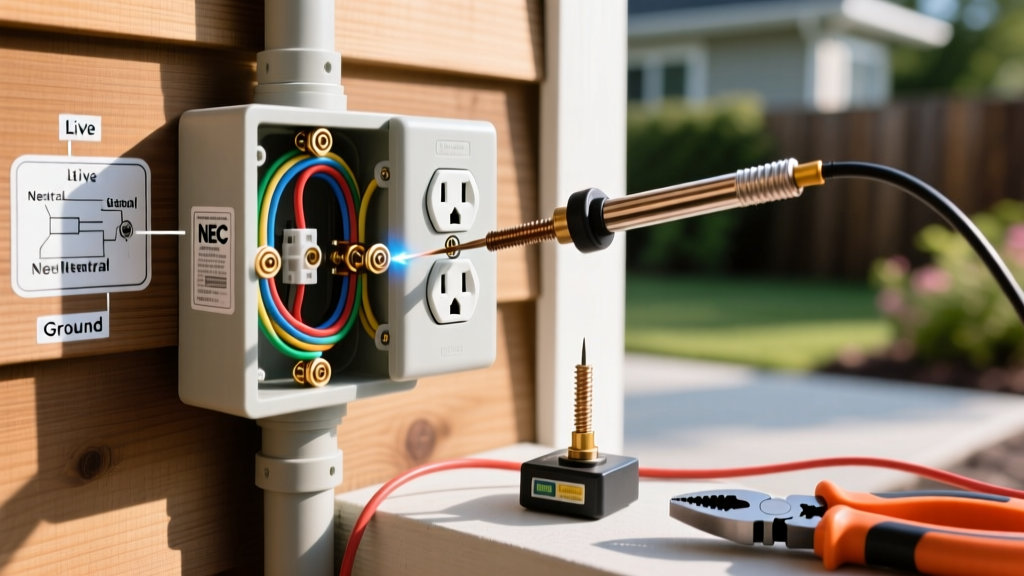

Navigating the NEC: How to Install an Outdoor Electrical Outlet Legally
Learning how to install an outdoor electrical outlet requires more than just connecting wires and mounting a box; it demands strict adherence to the National Electrical Code (NEC). Outdoor environments expose electrical components to moisture, UV radiation, and physical damage. As of the widespread adoption of the 2023 NEC and the rolling 2026 municipal updates, inspectors are cracking down on improper weatherproofing, missing GFCI protection, and incorrect burial depths. This guide serves as a code requirement explainer, breaking down the exact NEC articles you must follow to ensure your outdoor receptacle is safe, durable, and inspection-ready.
Core NEC Code Requirements for Outdoor Receptacles
Before purchasing materials, you must understand the three pillars of outdoor receptacle compliance: ground-fault protection, weatherproof enclosures, and proper placement.
1. GFCI Protection (NEC 210.8(A)(3))
The NEC mandates that all 15-amp and 20-amp, 125-volt and 250-volt receptacles installed outdoors must have Ground-Fault Circuit-Interrupter (GFCI) protection. This is non-negotiable. You have two code-compliant ways to achieve this:
- GFCI Receptacle: Installing a weather-resistant GFCI outlet (marked "WR" on the face and strap) in the outdoor box. The Leviton 16293-WMP is a popular, reliable 20-amp WR GFCI model.
- GFCI Circuit Breaker: Using a GFCI breaker in your main panel (e.g., Square D HOM120GFIC) and running a standard WR receptacle outside. This is often preferred for long wire runs to prevent nuisance tripping caused by voltage drop or moisture in the conduit.
Expert Note: While AFCI (Arc-Fault) protection is required for many indoor living spaces under NEC 210.12, outdoor receptacles generally only require GFCI protection unless the circuit also feeds indoor areas that mandate AFCI. Always verify with your local Authority Having Jurisdiction (AHJ).
2. Weatherproof Enclosures and "In-Use" Covers (NEC 406.9(B)(1))
NEC 406.9(B)(1) dictates that receptacles in damp or wet locations must be enclosed in a weatherproof box. Furthermore, if the outlet is in a wet location (exposed to rain), the cover must be weatherproof even when the attachment plug is inserted. This means standard flat flip-covers are illegal for exposed outdoor use. You must use an "in-use" or "bubble" cover, such as the TayMac MX1000 or Bell X-Tra Duty series, which allows a cord to exit downward while maintaining a watertight seal.
3. Placement and Spacing (NEC 210.52(E))
The code requires at least one outdoor receptacle at the front of the house and one at the back, accessible at grade level. If you have a detached garage or outbuilding, additional receptacles and lighting circuits are required under NEC 210.70(G).
Trenching and Conduit: Meeting NEC 300.5
When figuring out how to install an outdoor electrical outlet that is detached from the main structure or requires an underground run, trenching depth is where most DIYers fail inspection. NEC Table 300.5 outlines the minimum cover requirements for underground wiring.
| Wiring Method | Minimum Burial Depth | Application Notes & Code Constraints |
|---|---|---|
| Direct Burial UF-B Cable | 24 Inches | Must be protected by conduit where it emerges from the ground (NEC 300.5(D)(1)). Not ideal for high-traffic areas. |
| PVC Schedule 80 Conduit (with THWN-2) | 18 Inches | Standard for residential outdoor runs. Schedule 80 is required where subject to physical damage (e.g., near driveways). |
| Rigid Metal Conduit (RMC/IMC) | 6 Inches | Shallowest trench allowed. Excellent for rocky soil, but requires threading and is significantly more expensive. |
Moisture Management (NEC 300.5(G) & 300.7(A)): Underground conduit will inevitably collect condensation. You must use duct seal (a clay-like waterproof compound) to seal the conduit hubs where the wires enter the outdoor box and the indoor panel. This prevents moisture from migrating into your main electrical panel or the outdoor GFCI mechanism.
Step-by-Step Installation: Code-Compliant Execution
Follow this sequence to ensure every phase of your installation aligns with current electrical codes.
- De-energize and Verify: Turn off the breaker and use a non-contact voltage tester (like the Fluke 2AC-II) to confirm the circuit is dead. Lock out the panel if possible.
- Mount the Weatherproof Box: If mounting to masonry, use a masonry-rated non-metallic box (e.g., Carlon E989RW) with tapcon screws. Ensure the box is perfectly level; a tilted box compromises the in-use cover's gasket seal.
- Pull THWN-2 Conductors: Never run standard Romex (NM-B) through outdoor conduit, as the paper insulation wicks moisture and degrades. Use individual THWN-2 stranded wires (Black/Hot, White/Neutral, Green/Ground).
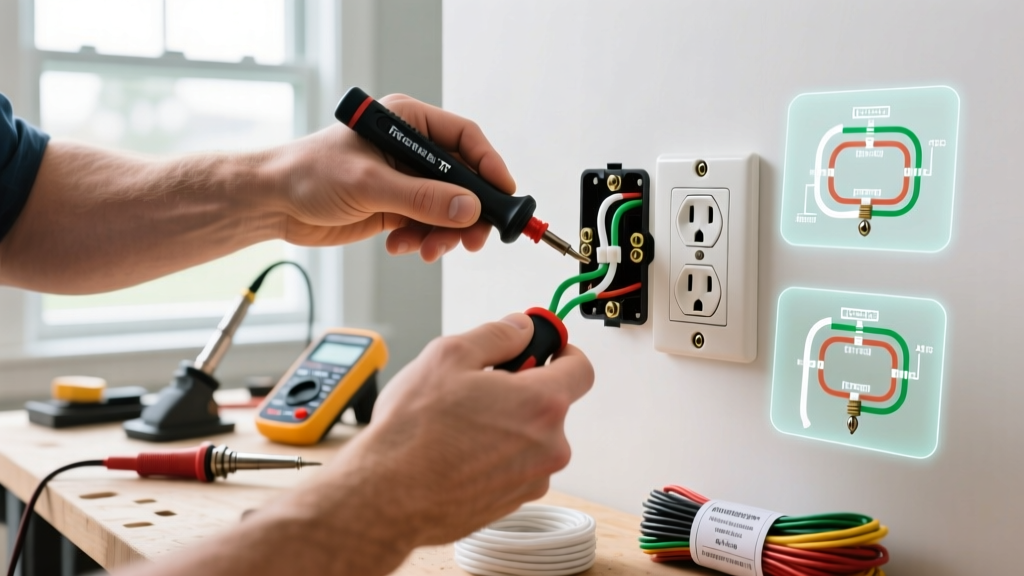
- Terminate with a Torque Screwdriver: Under NEC 110.14(D), all terminations must be torqued to the manufacturer's specifications. Using a standard screwdriver is now a failable offense in many jurisdictions. Use a calibrated torque screwdriver (e.g., Klein Tools 32500TORQ) set to the exact inch-pound rating printed on the GFCI receptacle's strap (usually 14-16 in-lbs).
- Install the In-Use Cover: Apply a bead of clear, exterior-grade silicone caulk along the top and sides of the cover's flange where it meets the siding or masonry. Do not caulk the bottom edge; this allows any trapped condensation to weep out, complying with best practices for moisture management.
Common Inspection Failures and Edge Cases
According to industry reports from Electrical Contractor Magazine, inspectors frequently red-tag outdoor outlet installations for the following easily avoidable violations:
- Missing Conduit Body Seals: Failing to pack conduit bodies (LBs) with duct seal to prevent water from traveling via capillary action into the junction box.
- Using Indoor-Rated GFCIs: Standard GFCIs lack the UV-resistant plastics and corrosion-resistant nickel-plated brass terminals required for outdoor use. Always look for the "WR" (Weather Resistant) stamp.
- Backstabbing Terminals: Push-in backstab connections are highly prone to failure in outdoor environments due to thermal expansion and contraction. Always use the screw terminals or the provided side-clamp plates.
- Improper Grounding: If using a metal weatherproof box, the box itself must be bonded to the equipment grounding conductor using a grounding pigtail, not just relying on the receptacle's mounting yoke.
2026 Material Cost Breakdown
Budgeting for a code-compliant outdoor outlet requires investing in specific weather-rated materials. Below is an estimated cost breakdown for a standard 50-foot underground PVC conduit run to a detached post or exterior wall.
| Component | Recommended Model / Type | Estimated 2026 Cost |
|---|---|---|
| WR GFCI Receptacle (20A) | Leviton 16293-WMP | $28.00 - $34.00 |
| In-Use Weatherproof Cover | TayMac MX1000 (1-Gang) | $14.00 - $18.00 |
| Non-Metallic Box | Carlon E989RW-UPC | $6.00 - $9.00 |
| PVC Sch. 40 Conduit (50ft) | Standard 3/4" PVC | $45.00 - $60.00 |
| THWN-2 Wire (3 spools) | 12 AWG (Black, White, Green) | $85.00 - $110.00 |
| Duct Seal & Silicone | Gardner Bender / GE Seal | $12.00 - $15.00 |
Note: Costs do not include specialized tools like a torque screwdriver or trenching equipment rental, nor do they include permit fees, which typically range from $50 to $150 depending on your municipality.
Expert FAQ
Can I daisy-chain an outdoor outlet from an indoor circuit?
Yes, but the indoor circuit must have adequate capacity (not exceeding 80% of the breaker's continuous load rating), and the indoor receptacle feeding the outdoor run must remain accessible. However, running a dedicated circuit from the main panel is highly recommended to prevent indoor nuisance tripping if the outdoor GFCI fails or detects a ground fault.
Do I need a permit to install an outdoor outlet?
Yes. The National Fire Protection Association (NFPA) and local building departments require permits for any new circuit extensions or exterior electrical modifications. An inspector will verify your trench depth, wire gauge, and GFCI compliance before you backfill the trench or energize the circuit.
What happens if my GFCI keeps tripping outside?
Frequent tripping usually indicates moisture ingress inside the conduit, a degraded weatherproof gasket, or a failing WR receptacle. Check that your in-use cover's hinge is intact, ensure the conduit hubs are sealed with duct seal, and verify that no landscaping sprinklers are directly hitting the outlet housing.