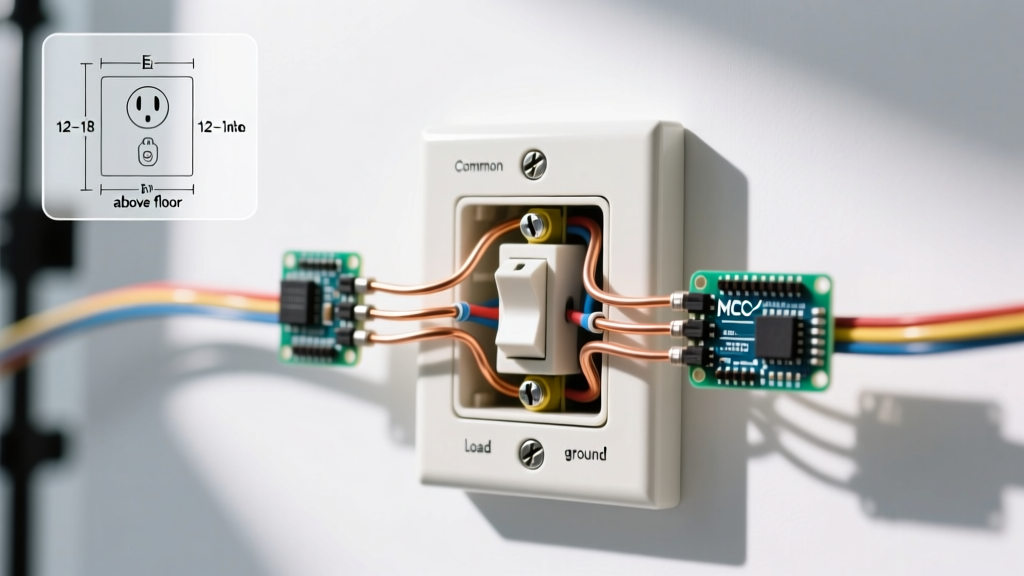

Introduction to NEC Outlet Compliance
Installing an electrical receptacle is not simply a matter of connecting black to brass and white to silver. The electrical outlet code, primarily governed by the National Electrical Code (NEC) published by the National Fire Protection Association (NFPA), dictates strict parameters for spacing, protection, box capacity, and termination torque. As we navigate the widespread adoption of the 2023 NEC and the emerging 2026 NEC cycle, local Authorities Having Jurisdiction (AHJ) are cracking down on outdated installation practices.
Whether you are adding a single receptacle to a living room wall or wiring a new kitchen countertop circuit, ignoring these codes can result in failed inspections, fire hazards, or fatal shock risks. This step-by-step guide breaks down the exact code requirements you must follow to install a safe, compliant, and inspection-ready electrical outlet.
Quick Reference: Core Electrical Outlet Code Articles
Before picking up a wire stripper, familiarize yourself with the foundational NEC articles that govern receptacle installations. The following table outlines the most frequently cited code sections during rough-in and final inspections.
| NEC Article | Subject | Key Requirement Summary |
|---|---|---|
| 210.52 | Receptacle Spacing | The 6-foot and 12-foot wall spacing rules for dwelling units. |
| 210.8 | GFCI Protection | Mandates Ground-Fault Circuit Interrupter protection in wet/damp locations and specific rooms. |
| 210.12 | AFCI Protection | Requires Arc-Fault Circuit Interrupter protection in most living spaces. |
| 314.16 | Box Fill Volume | Dictates the maximum number of conductors allowed in an electrical box based on wire gauge. |
| 110.14(D) | Termination Torque | Requires the use of a calibrated torque tool to tighten terminal screws to manufacturer specifications. |
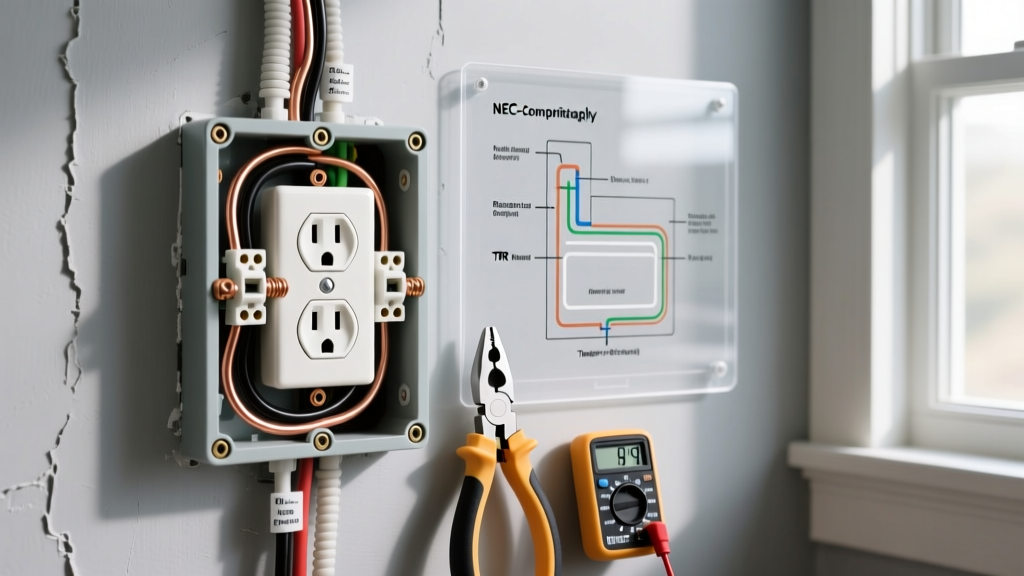
| 406.12 | Tamper Resistance | Requires Tamper-Resistant (TR) receptacles in all dwelling unit areas specified in 210.52. |
For comprehensive code documentation, always refer to the National Fire Protection Association (NFPA) or consult your local building department, as municipal amendments frequently supersede baseline national standards.
Step 1: Mapping Receptacle Spacing (The 6/12 Rule)
The most common planning error in DIY electrical work is improper receptacle placement. NEC Article 210.52 establishes the "6/12 Rule" to ensure that a standard 6-foot appliance cord can reach an outlet from any point along a wall without requiring an extension cord.
How to Measure Wall Space
- Identify Qualifying Wall Spaces: Any wall space that is 2 feet or more in width requires a receptacle. This includes walls interrupted by doorways, fireplaces, or similar openings.
- The 12-Foot Maximum: No point along the floor line in any wall space can be more than 6 feet from a receptacle. Therefore, receptacles must be spaced no more than 12 feet apart.
- The 6-Foot Edge Rule: You must have a receptacle within 6 feet of the edge of any doorway or opening.
2026 Code Context: Recent NEC updates have expanded the definition of "wall space" to include peninsular and island countertops, requiring at least one receptacle outlet for the first 9 square feet of countertop space, and an additional outlet for every 18 square feet thereafter.
Step 2: Selecting Code-Compliant Receptacles
You can no longer install standard, builder-grade duplex receptacles in most areas of a modern home. The electrical outlet code mandates specific physical and electrical safety features built directly into the device.
Tamper-Resistant (TR) Receptacles
Under NEC 406.12, all 15A and 20A, 125V and 250V non-locking receptacles installed in dwelling units must be Tamper-Resistant. TR receptacles feature internal spring-loaded shutters that only open when equal pressure is applied to both slots simultaneously (like a plug prong). Do not attempt to bypass this code by using standard receptacles with plastic insert caps; inspectors will fail this immediately. Standard TR models, such as the Leviton T52-A, cost between $2.50 and $4.00 each.
Weather-Resistant (WR) Receptacles
For any outdoor installation, NEC 406.9 requires Weather-Resistant (WR) receptacles. These devices are constructed with UV-resistant polycarbonate thermoplastics and nickel-plated brass terminal screws to prevent corrosion and degradation from sun and moisture exposure. They must always be paired with an "in-use" or "bubble" weatherproof cover.
Step 3: Calculating Box Fill Capacity
Stuffing too many wires into a single electrical box generates excessive heat, which can melt wire insulation and cause a short circuit. NEC Article 314.16 outlines strict box fill calculations based on the volume of the box (measured in cubic inches) and the gauge of the wire.
The Box Fill Formula
To calculate your box fill, assign a volume allowance to each item inside the box based on the largest conductor present. For standard 14 AWG wire, the multiplier is 2.0 cubic inches per unit. For 12 AWG wire, the multiplier is 2.25 cubic inches.
- Each Hot and Neutral Wire: Counts as 1 unit.
- All Ground Wires Combined: Counts as 1 unit total (not 1 per wire).
- Internal Cable Clamps: Counts as 1 unit total.
- The Receptacle Device Itself: Counts as 2 units.
Example Calculation: You are installing a single 15A receptacle on a 14/2 NM-B cable run, with a second 14/2 cable passing through to the next outlet. You have 4 hots/neutrals, 1 ground allowance, 0 clamps (using push-in Romex connectors), and 2 units for the device. Total = 7 units. 7 units x 2.0 cu in = 14 cubic inches required. A standard single-gang "old work" drywall box is typically 14 to 18 cubic inches, making it compliant. If you were using 12 AWG wire, you would need 15.75 cubic inches, meaning a standard 14 cu in box would be a code violation.
Step 4: Wiring and Torque Specifications
One of the most significant shifts in modern electrical codes is the enforcement of NEC 110.14(D), which mandates that all electrical connections be tightened to the manufacturer's specified torque using a calibrated instrument. Hand-tightening terminal screws with a standard screwdriver is no longer acceptable for new installations.
Why Torque Matters
Under-torqued connections create high-resistance joints that generate arcing and heat. Over-torqued connections can strip the screw threads or damage the conductor, leading to mechanical failure. According to the Electrical Safety Foundation International (ESFI), loose electrical connections are a leading cause of residential electrical fires.
Execution Steps
- Check the manufacturer's specification sheet or the stamp on the back of the receptacle. Most standard 15A and 20A Leviton and Hubbell receptacles require 14 in-lbs (inch-pounds) of torque for side-wiring terminal screws.
- Strip the wire insulation to the exact length indicated by the strip gauge on the back of the device (usually 3/4 inch).
- Form a proper J-hook if using side-wiring, ensuring the loop wraps clockwise around the screw so that tightening the screw pulls the loop closed rather than pushing it out.
- Use a calibrated torque screwdriver (such as the Klein Tools VDV110-095 or a dedicated electrical torque driver) set to 14 in-lbs to finalize the connection.
- Alternatively, use the push-in (back-wire) terminals if the device is rated for 14 AWG or 12 AWG solid copper, which eliminates the need for torque tools, though many professionals still prefer screw terminations for long-term reliability.
Step 5: Implementing GFCI and AFCI Protection
The electrical outlet code heavily emphasizes shock and fire prevention through advanced circuit protection. Understanding where Ground-Fault Circuit Interrupter (GFCI) and Arc-Fault Circuit Interrupter (AFCI) protections are required is critical for passing inspection.
GFCI Protection (NEC 210.8)
GFCI devices monitor the current balance between the hot and neutral wires, tripping in milliseconds if a ground fault (leakage to ground) of 4 to 6 milliamps is detected. GFCI protection is mandatory for outlets in:
- Bathrooms and Kitchens (countertop receptacles)
- Garages and accessory buildings
- Outdoors and crawl spaces
- Basements and unfinished areas
- Laundry and utility sinks (within 6 feet of the sink edge)
Pro-Tip for EV Chargers: If you are installing a NEMA 14-50 receptacle in a garage for Electric Vehicle charging, recent NEC cycles require this 240V outlet to be GFCI protected. Because 50A GFCI breakers are expensive ($100-$150) and prone to nuisance tripping, many electricians now hardwire EV chargers directly to bypass the receptacle GFCI requirement.
AFCI Protection (NEC 210.12)
AFCI breakers detect dangerous electrical arcs (sparking) that can ignite surrounding wood or insulation. Combination-type AFCI protection is required on 120V, single-phase, 15A and 20A branch circuits supplying outlets in virtually all living spaces, including bedrooms, living rooms, hallways, kitchens, and laundry rooms.
Top 5 Code Violations That Fail Inspections
Even experienced DIYers make mistakes. Avoid these common electrical outlet code violations to ensure a smooth final inspection:
- Missing Grounding Pigtails: When wiring a metal electrical box, you must ground the box itself using a grounding pigtail and a green grounding screw or clip. Grounding only the receptacle leaves the metal box energized if a loose hot wire touches it.
- Reversed Polarity: Connecting the white neutral wire to the brass (hot) terminal and the black hot wire to the silver (neutral) terminal. While the device might still power a lamp, it leaves the threaded shell of a connected light bulb energized, posing a severe shock hazard.
- Exposed Drywall Paper Inside the Box: The electrical box must be installed flush with the wall surface. If the drywall is cut too large, leaving a gap greater than 1/8 inch around the box, it violates NEC 314.20 and creates a fire pathway.
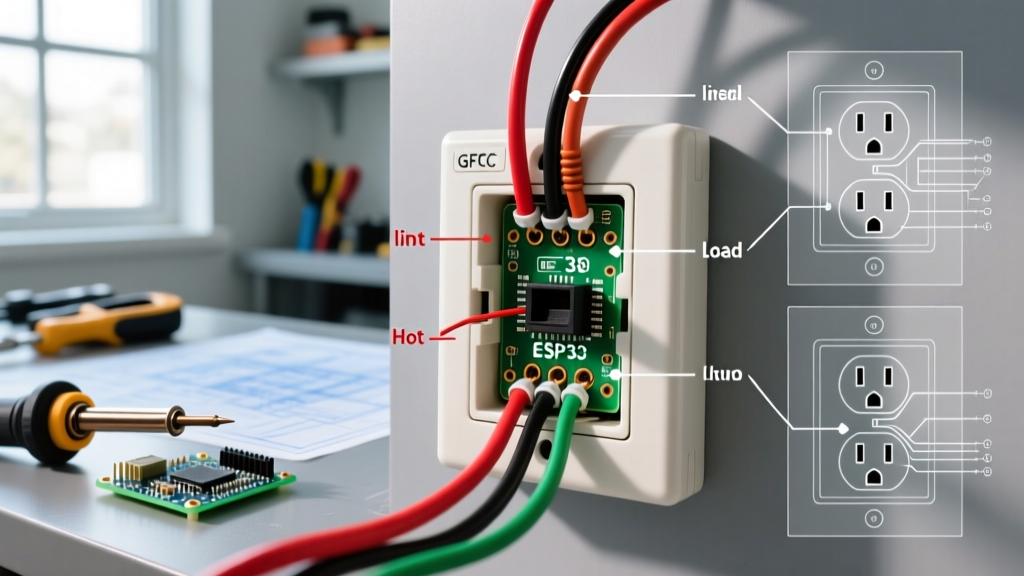
- Daisy-Chaining GFCIs: Wiring a GFCI receptacle to the "LOAD" terminals of another GFCI receptacle on the same circuit. This causes nuisance tripping and makes resetting the downstream outlet incredibly confusing. Always wire downstream standard receptacles to the LOAD terminals of a single, upstream GFCI.
- Using Push-In Connectors on Stranded Wire: Standard back-stab push-in terminals on receptacles are only listed for solid copper wire. Using stranded wire in these terminals will result in a loose connection and an immediate inspection failure.
Inspector's Note: The National Electrical Code is a baseline minimum standard. Your local Authority Having Jurisdiction (AHJ) may have municipal amendments that are stricter than the national code. Always pull a permit for new receptacle circuits and schedule a rough-in inspection before closing the drywall.
Final Thoughts on Outlet Compliance
Adhering to the electrical outlet code is non-negotiable for the safety of your home and its occupants. By meticulously planning your receptacle spacing, calculating box fill volumes, utilizing TR/WR devices, and applying precise torque to your terminations, you elevate your installation from a basic DIY project to a professional-grade, code-compliant electrical system. Always verify your local amendments and test every GFCI and AFCI device with a dedicated plug-in tester before finalizing your work.