
The Asian Voltage Mosaic: Why Installation Requires Precision
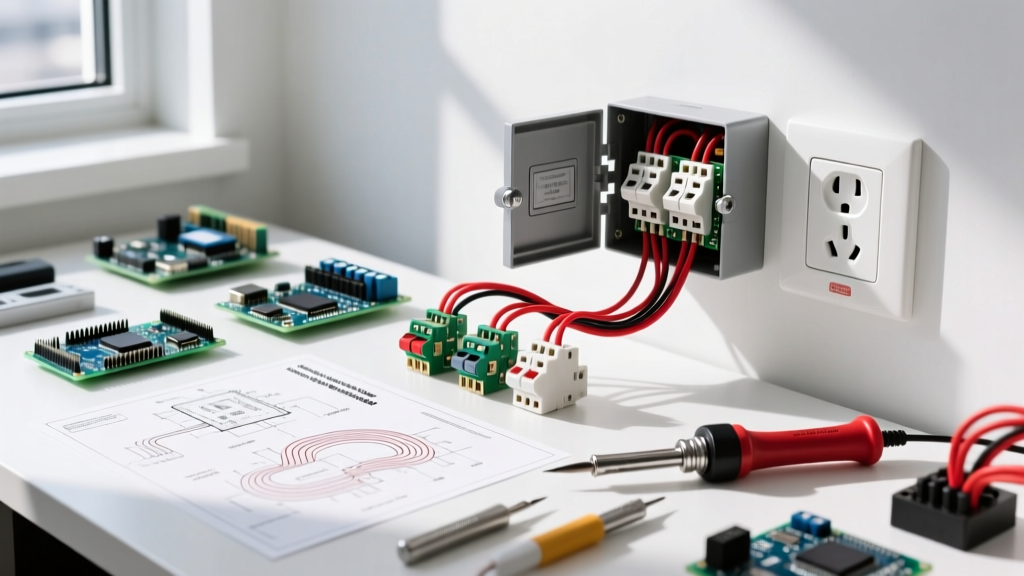
When homeowners, expats, or commercial facilities need to power imported appliances, installing an Asia electrical outlet is rarely a simple swap-and-go project. Unlike North America, which standardizes on 120V/60Hz, the Asian continent features a complex mosaic of plug types, voltages, and frequencies. From Japan’s 100V/50-60Hz Type A/B systems to Singapore’s 230V/50Hz Type G (BS 1363) and China’s 220V/50Hz Type I standards, miswiring an international receptacle can result in catastrophic appliance failure or severe electrical fires.
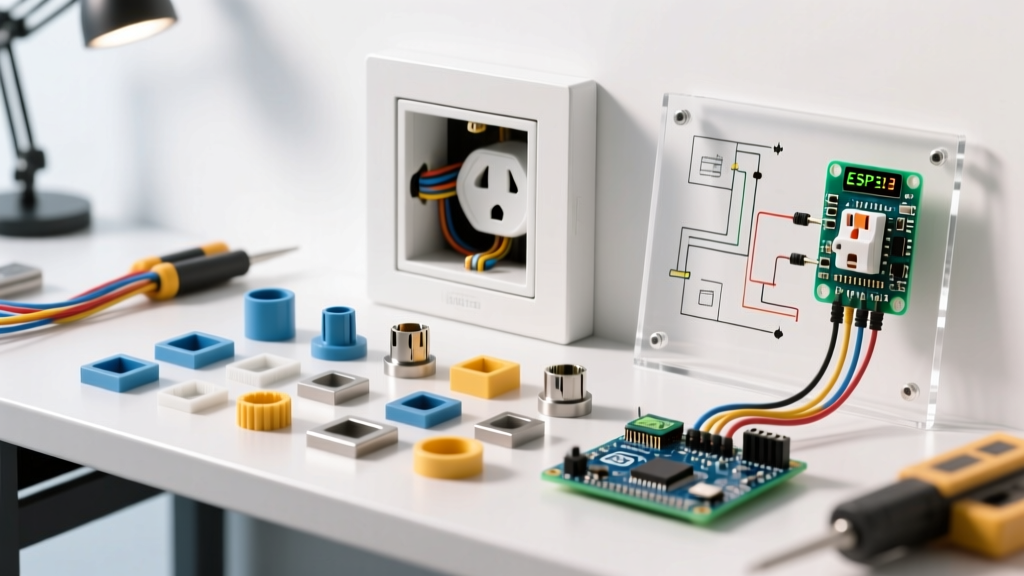
This guide provides a master-class, step-by-step installation protocol for wiring a high-amperage Type G (BS 1363) or Type I Asian-standard receptacle on a dedicated 220V-240V circuit. Whether you are setting up a dedicated line for an imported Asian CNC machine, a high-end rice cooker, or a medical device, this guide ensures compliance with modern safety standards.
Asian Receptacle Standards & Specifications Matrix
Before touching a wire, you must identify the exact regional standard of your appliance. According to the International Electrotechnical Commission (IEC), Asia utilizes several distinct plug profiles. Below is the critical data matrix for 2026 installations:
| Region | Plug Type | Nominal Voltage | Frequency | Common Receptacle Standard |
|---|---|---|---|---|
| Singapore, Malaysia, HK | Type G | 230V | 50Hz | BS 1363 (Fused, Shuttered) |
| China, Argentina | Type I | 220V | 50Hz | GB 2099.1 / AS/NZS 3112 |
| Japan | Type A / B | 100V | 50/60Hz | JIS C 8303 |
| India, Sri Lanka | Type D / M | 230V | 50Hz | BS 546 (Round Pin) |
Tools & Materials Required (2026 Pricing & Specs)
Do not use standard 15A North American receptacles or shallow backboxes for Asian standards. Type G receptacles, in particular, require significant depth due to integrated wiring compartments and shutter mechanisms.
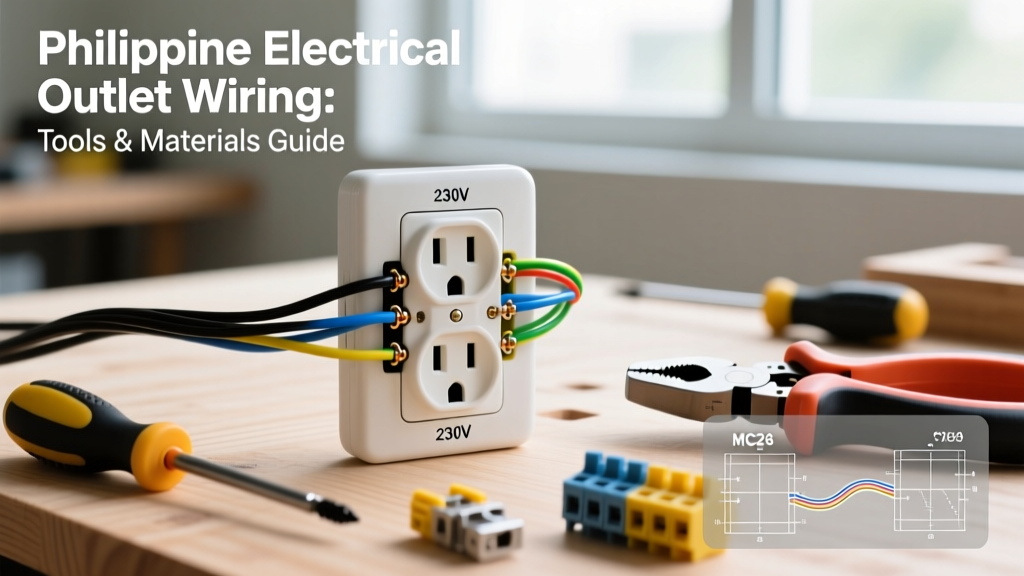
- Receptacle: Schneider Electric ClipSwitcher or MK Logic Plus Type G (Approx. $18 - $35 USD).
- Backbox: 47mm deep galvanized steel or PVC backbox (Standard 35mm is too shallow for BS 1363). ($4 - $8 USD).
- Wire: 2.5mm² (approx. 12 AWG) solid copper or Class 5 stranded with bootlace ferrules. Rated for 600V.
- Tools: Torque screwdriver (calibrated to 0.5 Nm), Klein Tools 11055 wire strippers, Fluke 117 True-RMS Multimeter, and an RCD/Earth Loop Impedance tester.
- Safety Gear: Class 00 insulated gloves and arc-flash safety glasses.
Step-by-Step Installation Guide
Step 1: Circuit Isolation and LOTO Protocol
Locate the dedicated 240V/220V double-pole breaker in your main distribution board. Switch it to the OFF position and apply a Lockout/Tagout (LOTO) device. As emphasized by OSHA electrical safety guidelines, verifying zero energy is non-negotiable. Use your Fluke multimeter to test Line-to-Neutral, Line-to-Earth, and Neutral-to-Earth. All readings must be 0.0V.
Step 2: Backbox Preparation and Cable Entry
Asian Type G and Type I receptacles generate more heat at the terminals than standard 120V outlets due to higher continuous loads (often 13A to 16A).
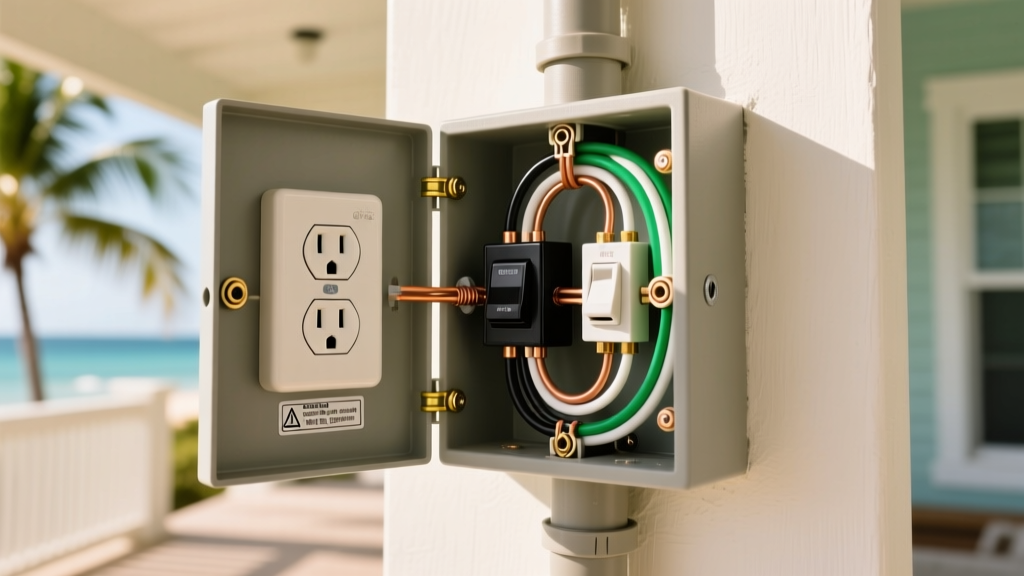
- Mount the 47mm deep backbox to the wall stud or masonry using appropriate anchors.
- Route the 2.5mm² (12 AWG) cable through the knockout. Use a rubber grommet to prevent the metal edge from shearing the wire insulation over time.
- Leave exactly 150mm (6 inches) of cable protruding into the box for stripping and termination.
Step 3: Wire Stripping and Ferrule Crimping
If using stranded wire (highly recommended for vibration-prone areas or commercial setups), you must use bootlace ferrules. Asian receptacle terminal screws are designed to clamp solid wire; clamping stranded wire directly causes strand fraying, increasing contact resistance and creating a fire hazard.
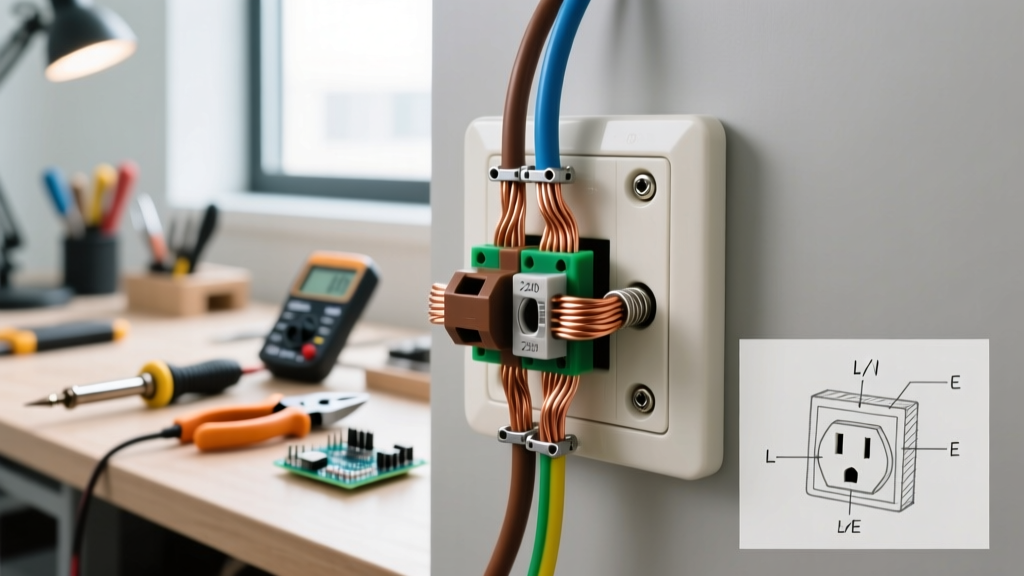
- Strip 12mm of insulation from the Line (Brown/Black), Neutral (Blue/White), and Earth (Green-Yellow/Green) conductors.
- Crimp a 2.5mm² insulated bootlace ferrule onto each stripped end using a ratcheting ferrule crimper.
Step 4: Termination and Torque Application
This is where most DIY failures occur. According to Electrical Safety First, loose terminal connections are a leading cause of residential electrical fires.
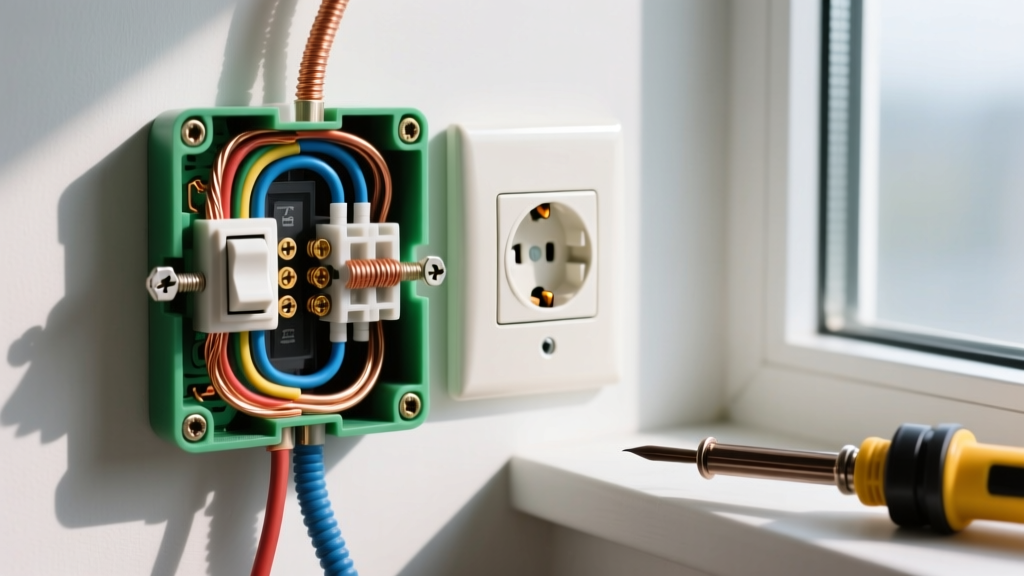
- Earth (E): Connect the Earth wire to the top center terminal. This must be terminated first to ensure the longest wire is Earth, providing a safety fail-safe if the cable is yanked.
- Neutral (N): Connect to the left terminal (marked N).
- Line (L): Connect to the right terminal (marked L).
- Torque: Use a calibrated torque screwdriver set to 0.5 Nm (Newton-meters) or the manufacturer's specified value. Overtightening strips the brass threads; undertightening causes arcing.
Step 5: Mounting and Faceplate Alignment
Carefully fold the wires into the 47mm backbox in a 'Z' or accordion pattern. Do not force them, as pinching the insulation against the backbox screws will cause a ground fault. Align the faceplate, insert the M3.5 mounting screws, and tighten evenly to prevent the plastic from warping or cracking.
The 50Hz vs 60Hz Frequency Trap (Critical Warning)
Expert Insight: Installing the correct physical Asia electrical outlet does not solve the frequency mismatch. If you are in North America (60Hz) and install a Type G outlet for a Singaporean (50Hz) appliance, the appliance will physically plug in and turn on, but AC motors will run 20% faster, overheat, and fail prematurely. Transformers change voltage, but they do not change frequency. For 50Hz Asian appliances in 60Hz regions, you must use a solid-state frequency converter (costing $400-$1,200+), not just a receptacle adapter.
Testing and Commissioning
Before plugging in your expensive imported appliance, perform these mandatory tests:
- Polarity Test: Use a receptacle tester to ensure Line and Neutral are not reversed.
- Earth Loop Impedance (Ze/Zs): Use an Earth Loop tester. For a 230V circuit protected by a 30mA RCD/GFCI, the maximum permissible earth loop impedance (Zs) is typically 1667 ohms, but practically, it should read below 1.5 ohms to ensure rapid fault clearing.
- RCD Trip Test: Inject a 1x IΔn (30mA) fault current. The breaker must trip within 300ms. Inject 5x IΔn (150mA); it must trip within 40ms.
Frequently Asked Questions (FAQ)
Can I wire a Type G Asian outlet to a standard US 120V circuit?
Physically, yes. Electrically, it is highly discouraged. If a guest or user plugs a 230V Asian appliance into your 120V-wired Type G outlet, the appliance will not function correctly (motors will stall, heaters will output 1/4th of their rated heat), and it creates a severe confusion hazard. Always wire international receptacles to their native voltage on a dedicated, clearly labeled circuit.
Do Type G receptacles require a fused circuit?
The BS 1363 standard dictates that the plug on the appliance cable contains a fuse (usually 3A or 13A). However, the wall receptacle itself must be protected by a circuit breaker (MCB) and a Residual Current Device (RCD) or GFCI at the distribution board. In 2026, AFCI/GFCI dual-function breakers are mandated in most living spaces.
Why is my Asian appliance humming loudly after installation?
A loud 60Hz hum from a 50Hz-rated appliance (or vice versa) indicates magnetic saturation in the appliance's internal transformers or motors due to the frequency mismatch. Disconnect it immediately. You must install a motor-generator set or a solid-state frequency converter to match the 50Hz requirement.