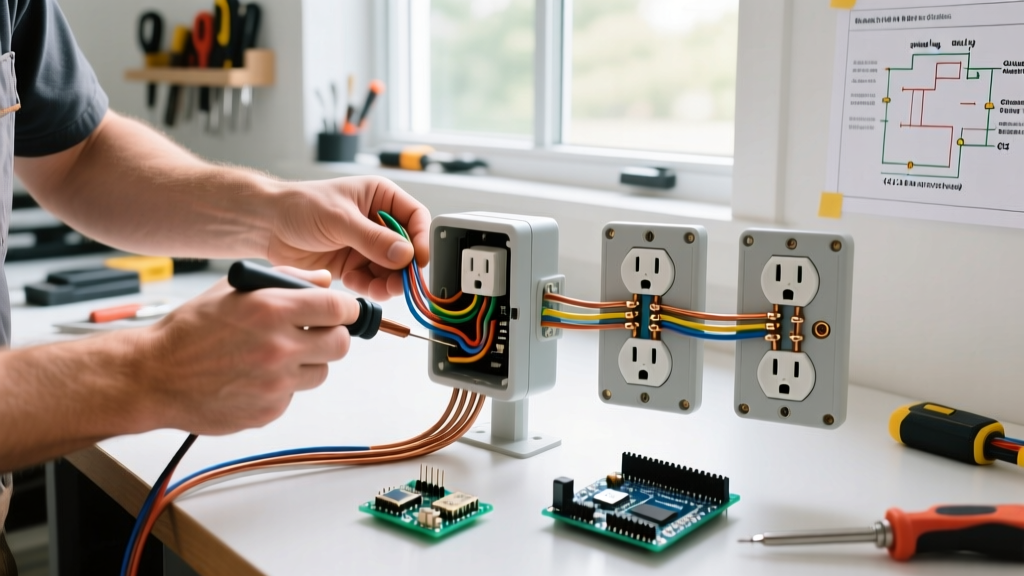

Defining Standard Electrical Outlet Size in Field Inspections
When electrical inspectors and testing professionals evaluate a residential or commercial wiring system, the phrase standard electrical outlet size extends far beyond the physical dimensions of the plastic faceplate. In the context of NEC (National Electrical Code) compliance and safety testing, 'size' encompasses three critical metrics: the NEMA configuration of the receptacle slots, the physical yoke dimensions of the device, and the cubic-inch volume of the junction box housing the wiring. Failing to verify any of these three dimensions is a leading cause of inspection red-tags, failed audits, and long-term electrical fire hazards.
This inspection guide breaks down the exact measurements, code requirements, and field-testing procedures required to verify standard electrical outlet sizing in 2026. Whether you are a master electrician performing a QA walkthrough or a home inspector evaluating a newly flipped property, understanding these dimensional tolerances is non-negotiable.
Physical Yoke and Faceplate Dimensions
The physical footprint of a standard duplex receptacle is governed by NEMA ANSI C73 dimensional standards. Inspectors must verify that the device yoke (the metal mounting strap) and the thermoplastic faceplate fit flush within the designated wall opening without forcing or gapping, which can cause internal strain on the termination screws.
| Receptacle Type | Standard Model Example | Yoke Height | Yoke Width | Faceplate Size (1-Gang) |
|---|---|---|---|---|
| Standard Duplex (NEMA 5-15R) | Leviton 5320-WMP | 3.281 inches | 1.312 inches | 2.93" x 4.68" |
| Decorator / Decora (NEMA 5-15R) | Leviton 5362-W | 3.281 inches | 1.312 inches | 2.93" x 4.68" |
| Industrial Spec Grade (5-15R) | Hubbell 5262-I | 3.281 inches | 1.312 inches | 2.93" x 4.68" |
Inspection Note: While the yoke dimensions remain identical across standard and Decora styles, the body depth varies. A standard Leviton 5320 has a body depth of roughly 1.05 inches from the yoke to the rear terminal screw. High-specification commercial outlets, like the Hubbell 5262-I, feature deeper bodies (up to 1.25 inches) to accommodate larger back-wire clamps. Inspectors must ensure the junction box has adequate depth to house these deeper bodies without crushing the Romex or THHN conductors against the back of the box.
NEMA Slot Sizing and Code Compliance
The most critical 'size' an inspector evaluates is the NEMA slot configuration, which dictates the amperage and voltage rating of the circuit. The standard household outlet is the NEMA 5-15R (15 Amp, 125 Volt). However, improper sizing of the receptacle relative to the breaker size is a frequent code violation.
Visual Inspection of 15A vs. 20A Slots
Under NEC Article 210.21(B), the receptacle rating must align with the circuit rating. Inspectors look for the physical difference in the neutral slot:
- NEMA 5-15R (15A): Features two parallel vertical slots. The neutral slot is 0.260 inches wide.
- NEMA 5-20R (20A): Features a T-shaped neutral slot (horizontal and vertical intersection) to accept both 15A and 20A plugs. The horizontal neutral opening is 0.375 inches wide.
The Single Receptacle Rule: If a 20-Amp circuit feeds a single receptacle on that yoke, NEC 210.21(B)(1) mandates it must be rated for 20 Amps (NEMA 5-20R). If the circuit feeds multiple receptacles (e.g., a standard duplex outlet, which counts as two), 15A receptacles (NEMA 5-15R) are permitted on a 20A circuit per NEC 210.21(B)(3). Inspectors frequently red-tag DIY installations where a single 15A outlet is placed on a dedicated 20A appliance circuit.
NEC Box Fill Calculations: The Hidden 'Size' Requirement
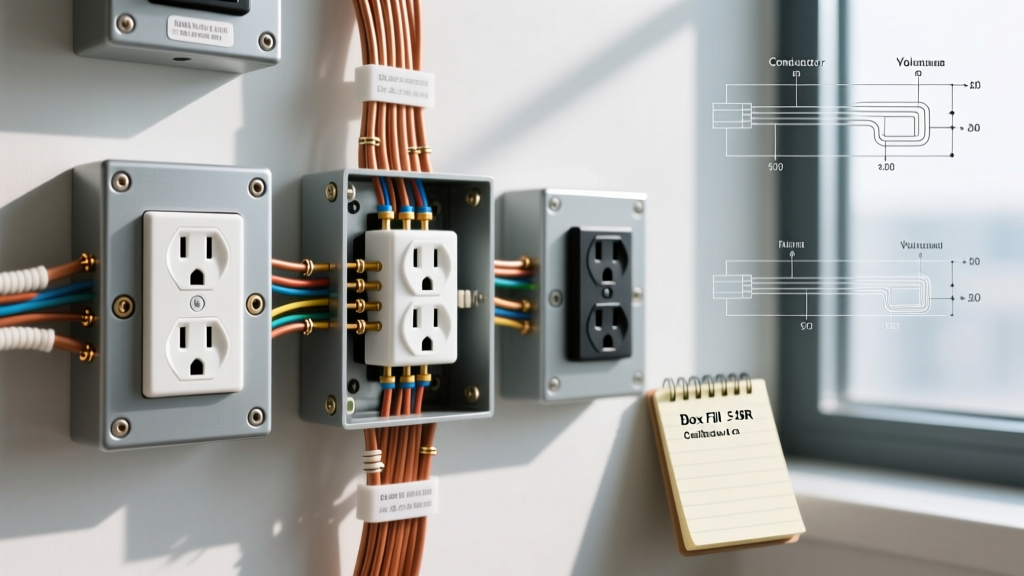
You cannot discuss standard electrical outlet size without addressing the enclosure that houses it. NFPA NEC Article 314.16 dictates strict box fill calculations to prevent wire crushing, insulation damage, and overheating. Inspectors use a mathematical formula to verify if the standard single-gang box is large enough for the installed components.
NEC 314.16(B) Volume Allowances: Each conductor counts as a specific volume based on its AWG size. 14 AWG requires 2.0 cubic inches per conductor. 12 AWG requires 2.25 cubic inches. 10 AWG requires 2.5 cubic inches.
Field Calculation Example: 12 AWG Standard Duplex
Consider an inspector evaluating a standard single-gang outlet wired with 12 AWG copper THHN. One 12/2 cable enters the box, and one 12/2 cable exits to the next device. The box contains internal clamps and a standard duplex receptacle.
| Component | Count | Multiplier (12 AWG) | Total Volume Required |
|---|---|---|---|
| Hot Conductors (Black) | 2 | 2.25 cu in | 4.50 cu in |
| Neutral Conductors (White) | 2 | 2.25 cu in | 4.50 cu in |
| Equipment Ground (Bare/Green) | 1 (All grounds count as 1) | 2.25 cu in | 2.25 cu in |
| Internal Clamps | 1 (All clamps count as 1) | 2.25 cu in | 2.25 cu in |
| Device Yoke (Receptacle) | 2 (Device counts as 2) | 2.25 cu in | 4.50 cu in |
| Total Box Fill Required | 18.00 cu in |
Inspector Verdict: A standard shallow 'old work' box like the Carlon B120A (20.0 cu in) passes this inspection. However, if the installer used a shallow 14.0 cu in ceiling pan or a low-profile 12.5 cu in remodel box, the installation is a severe code violation. The wires will be crushed, leading to nicked insulation and potential arc faults.
Field Testing Tools for Receptacle Inspection
Visual sizing is only half the inspection. The internal physical dimensions of the outlet slots degrade over time, leading to poor plug retention. Testing slot tension and wiring integrity is a mandatory part of a comprehensive electrical audit.
Slot Tension Testing (UL 498 Standards)
According to UL 498 Standards for Attachment Plugs and Receptacles, a standard 15A receptacle must maintain a minimum withdrawal force to ensure a secure connection. Loose slots cause micro-arcing, which melts the thermoplastic faceplate and starts fires. While laboratory testing requires calibrated pull-gauges, field inspectors use two methods:
- The Drop Test (Qualitative): Insert a standard, ungrounded 2-prong plug into the top receptacle. If the plug falls out under its own weight or with a slight vibration, the internal brass wipers have lost their spring tension and the outlet must be replaced.
- Receptacle Tension Gauges (Quantitative): Professional inspectors use calibrated insertion/withdrawal gauges (such as those manufactured by Pass & Seymour/Legrand) to measure the exact pound-force required to extract the test blade. Anything below 3 lbs of withdrawal force warrants immediate replacement.
Receptacle Analyzer Verification
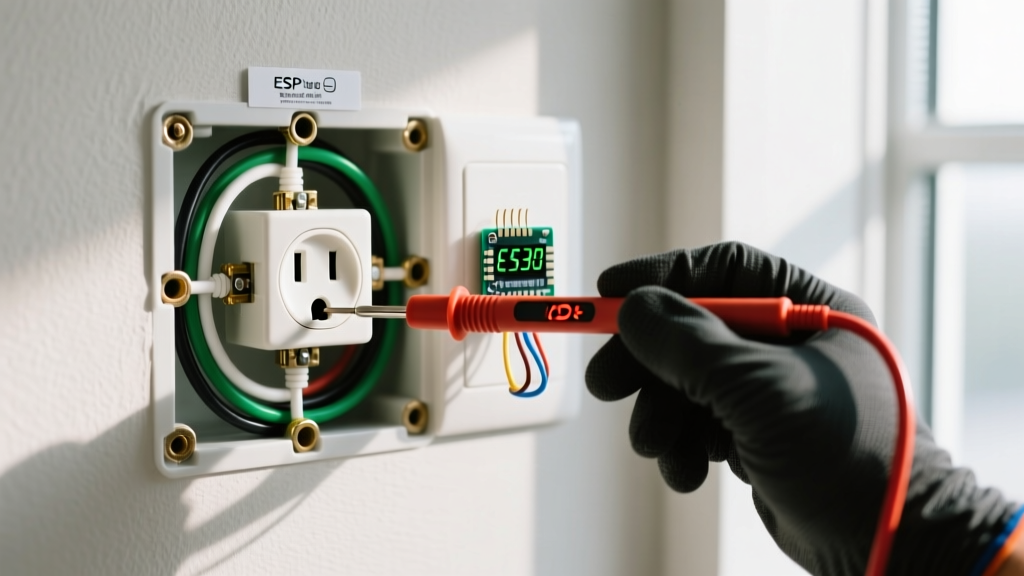
Inspectors use advanced circuit analyzers like the Ideal 61-055 SureTest (priced around $185 in 2026) to test the internal wiring dimensions and impedance. Unlike cheap $15 plug-in testers that only check for open grounds, the SureTest measures the actual impedance of the ground path and verifies if the hot/neutral slots are wired to the correct internal bus bars, ensuring the physical size of the internal contacts matches the circuit's capacity.
Common Inspection Failures Related to Outlet Sizing
Based on field data from municipal electrical inspections, the following are the most frequent failures related to standard electrical outlet sizing:
- Decora Devices in Shallow Boxes: Decorator outlets (like Leviton 5362) have a wider, deeper rear body than standard duplex outlets. Installers frequently force them into 12.5 cu in shallow boxes, causing the side terminal screws to ground out against the metal box wall or crack the drywall paper when the faceplate is tightened.
- Mixing 14 AWG and 12 AWG Box Fill Math: Inspectors often find 12 AWG wires on 20A breakers, but the installer used a box sized only for 14 AWG fill calculations (18 cu in instead of the required 20.25+ cu in), resulting in overcrowded enclosures.
- Oversized Faceplates Hiding Gaps: Using 'jumbo' or 'oversized' faceplates (measuring 3.5" x 5.25") to cover poorly cut drywall. While not strictly a wiring violation, commercial inspectors flag this as it prevents the standard yoke from seating flush against the drywall, violating the flush-mounting requirement of NEC 406.4.
Conclusion
Inspecting the standard electrical outlet size requires a multi-dimensional approach. It is not merely about ensuring a plug fits into a wall; it is about verifying that the NEMA configuration matches the breaker, the yoke fits the wall cavity without strain, and the junction box provides the exact cubic-inch volume required by NEC Article 314. By utilizing precise box fill calculations, checking slot tension against UL 498 standards, and verifying physical clearances, electrical professionals can ensure installations are safe, compliant, and built to last.