
The True Cost of Ignoring Receptacles in a Flip
When managing a 30-to-45-day renovation timeline, the decision to prioritize cosmetic updates over infrastructure is a common trap. However, mastering the house flipper repair electrical outlet workflow is one of the highest-ROI activities you can execute. According to the National Fire Protection Association (NFPA), electrical failures or malfunctions are a leading cause of home structure fires. Modern homebuyers and FHA appraisers are hyper-vigilant about these risks. A single ungrounded, painted-over, or backstabbed receptacle flagged during a municipal inspection can halt your closing process, forcing you to issue a $500 to $1,500 buyer credit or pay an electrician emergency rates to fix a $2 problem.
2026 NEC Code Red Flags Inspectors Hunt For
Flipping a property means bringing it up to current local codes, which are largely based on the 2023/2026 National Electrical Code (NEC). Inspectors are no longer just looking for bare wires; they are hunting for specific compliance failures that amateur flippers miss.
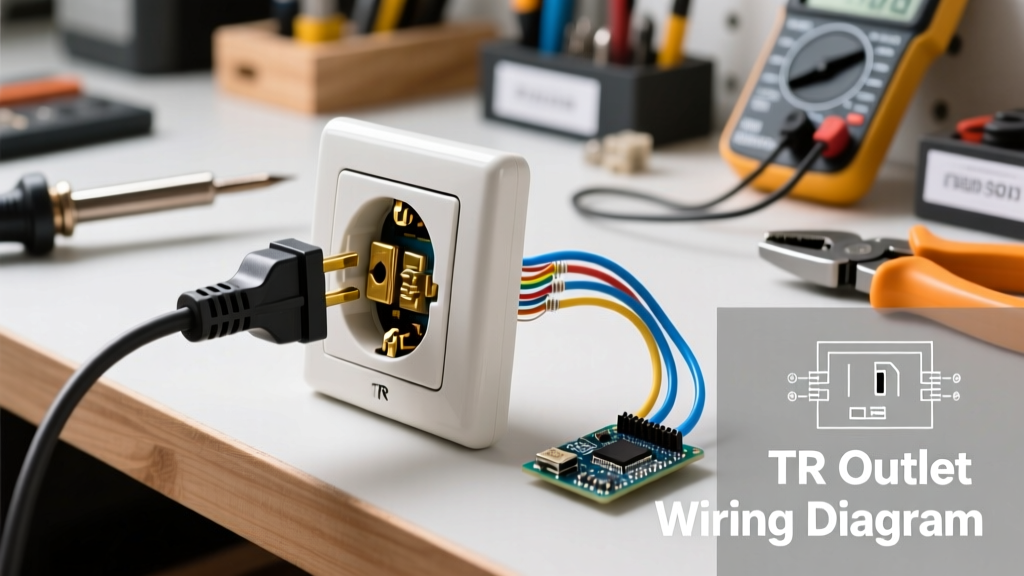
- Missing Tamper-Resistant (TR) Markings: The U.S. Consumer Product Safety Commission (CPSC) and the NEC mandate TR receptacles in all 15A and 20A, 125V residential areas. If you install standard duplex outlets in a bedroom, you will fail inspection.
- AFCI/GFCI Omissions: Kitchens, bathrooms, garages, and outdoor zones require GFCI protection. Furthermore, living areas, bedrooms, and kitchens now require Arc-Fault Circuit Interrupter (AFCI) protection. Upgrading a standard breaker to a Dual-Function (CAFCI/GFCI) breaker or using dual-function receptacles is mandatory.
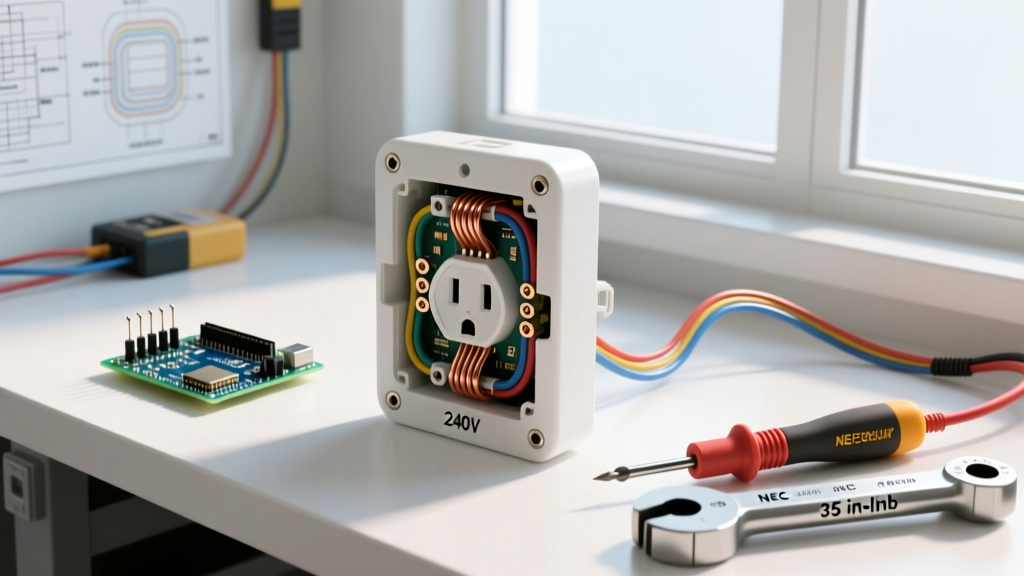
- Improper Torque: NEC 110.14(D) now strictly requires the use of a calibrated torque tool for terminations. Hand-tightening screws is no longer legally sufficient in many jurisdictions.
The Flipper's Outlet Sourcing & ROI Matrix
Buying retail at big-box stores destroys flip margins. Professional flippers open contractor accounts with electrical wholesalers (like Graybar or CED) or buy bulk lots online. Below is the 2026 sourcing matrix for high-volume flips.
| Receptacle Type | Recommended Model (Bulk) | Avg. Unit Cost | Best Application |
|---|---|---|---|
| Standard 15A TR Duplex | Leviton T5320-W | $1.45 - $1.80 | Bedrooms, Hallways, Living Rooms |
| 20A TR Duplex (Kitchen) | Leviton T5225-W | $2.10 - $2.50 | Kitchen small appliance circuits |
| Self-Test GFCI 15A | Leviton GFNT1-W | $14.50 - $16.50 | Bathrooms, Garages, Exteriors |
| USB-C/A TR Combo | Leviton T5635-W (20W PD) | $28.00 - $32.00 | Kitchen island, Master bedroom (Premium Flip) |
High-Volume Replacement Workflow (4-Minute Swap)
Speed and consistency are the lifeblood of a flip. Your electrical team should be able to swap a standard receptacle in under four minutes while maintaining code compliance. Here is the optimized field procedure:
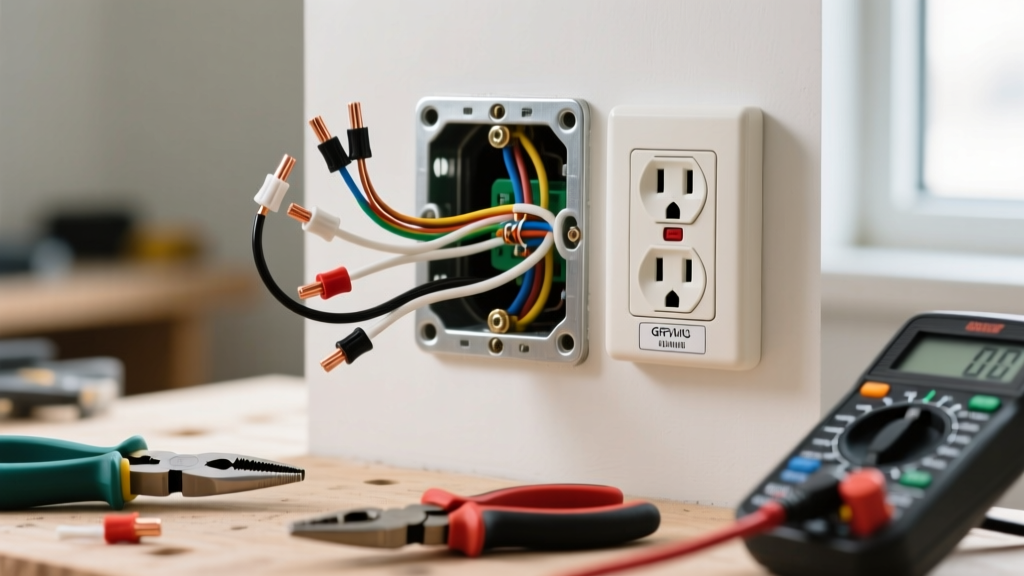
- De-energize and Verify: Trip the breaker. Use a Klein Tools NCVT-3 non-contact voltage tester, followed by a plug-in circuit analyzer to confirm zero potential.
- Extract and Inspect: Remove the faceplate and unscrew the yoke. Pull the device out. Critical Check: Look at the wire insulation. If it is brittle, cracked, or shows heat scorching, you must cut back the wire and strip a fresh 5/8-inch section.
- Reject Backstabbed Connections: If the existing outlet uses push-in backwire holes, discard it. Backstabbed connections rely on a small internal spring that loosens under thermal expansion from high-draw appliances (like space heaters), leading to arcing and melted yokes.
- Side-Wire and Torque: Loop the bare copper ground, white neutral, and black hot wires clockwise around the terminal screws. Use a Wiha 32050 torque screwdriver set to 0.5 Nm (or the manufacturer's specified inch-pound rating) to secure the screws. This satisfies NEC 110.14(D) and prevents loose connections.
- Wrap and Seat: Wrap the device with 3M Super 33+ vinyl electrical tape to cover the terminal screws (a pro habit that prevents accidental shorts in crowded metal boxes). Push the wires neatly into the box using a folded accordion method, not a wad, to avoid pinching.
Edge Cases & Failure Modes That Kill Deals
Appraisers and strict municipal inspectors use advanced testing equipment, such as the SureTest by Ideal Industries, which can detect deceptive wiring tricks that cheap flippers use to pass a basic visual inspection.
The 'Bootleg Ground' Trap
What it is: Installing a jumper wire between the neutral terminal and the ground screw on a 3-prong outlet in an older home that lacks a true equipment grounding conductor.
Why it fails: A standard $10 tester will show 'Correct'. However, an inspector's SureTest sends a micro-pulse down the ground pin. If it returns via the neutral, the tool flags a 'False Ground'. This is an immediate safety hazard and an automatic inspection failure.
The Fix: If no ground wire exists in the box, you must either run a new ground wire to the panel, or install a GFCI receptacle and label it 'No Equipment Ground' as permitted by NEC 406.4(D)(2)(c).
Painter's Overspray in the Slots
Lazy painters will tape over outlets or just spray right past them, filling the hot and neutral slots with latex paint. When a buyer plugs in a vacuum, the plug will not seat, or worse, it causes high resistance and melting. Do not pay a handyman $40/hour to scrape paint out of slots with a pick tool. At $1.50 per outlet, it is vastly more profitable to simply cut the wires, strip them, and install a brand-new TR receptacle.
Frequently Asked Questions by Flip Investors
Do I need to upgrade the entire panel if I replace outlets?
Not necessarily. However, if you are flipping a 1960s home with a Federal Pacific (FPE) or Zinsco panel, HUD Minimum Property Standards and most conventional mortgage underwriters will flag these panels as fire hazards. In those cases, a $2,500 panel upgrade is mandatory before you can sell to a financed buyer.
Are USB outlets worth the premium in a mid-tier flip?
For Class C or B- flips (under $350k ARV), standard Leviton TR duplex outlets are the most cost-effective choice. For Class A luxury flips, installing one or two Leviton USB-C Power Delivery (PD) outlets in the kitchen or master suite costs an extra $30 but serves as a highly visible 'smart home' selling point during walkthroughs.
What if the electrical box is too shallow for a new GFCI?
GFCI and AFCI receptacles have much deeper bodies than standard duplex outlets. If you encounter a shallow 1-gang metal box (under 2.5 inches deep), use a Goof Ring (extra-large faceplate) to cover the drywall gaps, and consider using an extension ring or replacing the box with an 'Old Work' deep box (like the Carlon B618R) to ensure the device fits without crushing the wires.