
The Unique Landscape of LA Electrical Systems
Performing an electrical outlet replacement Los Angeles CA homeowners and contractors undertake is rarely a simple plug-and-play task. Los Angeles boasts a highly diverse housing stock, ranging from pre-1940s Spanish Revival homes with original knob-and-tube wiring to 1970s multi-unit condos plagued by aluminum branch circuits. When you combine aging infrastructure with the strict enforcement of the California Electrical Code (CEC) and local Los Angeles Department of Building and Safety (LADBS) regulations, safety and compliance must dictate every step of the replacement process.
As of 2026, the CEC has fully integrated stringent arc-fault and ground-fault protection mandates that go beyond standard national baselines. Whether you are upgrading a damaged receptacle in a Mid-Wilshire bungalow or retrofitting a Silver Lake duplex, understanding the legal and safety thresholds is critical to avoid failed inspections, fire hazards, and costly fines.
Navigating LADBS Permit Requirements
One of the most common questions regarding electrical outlet replacement in Los Angeles, CA, is whether a permit is required. LADBS guidelines distinguish between 'like-for-like' maintenance and 'circuit alterations'.
- No Permit Required: Replacing an existing, properly grounded 15A or 20A receptacle with a new Tamper-Resistant (TR) model of the exact same rating and type, provided no wiring is extended or altered.
- Permit Required: Upgrading a 2-prong ungrounded outlet to a grounded receptacle by fishing new Romex (NM-B) cable from the panel; adding a new outlet to an existing circuit; or upgrading the main panel to accommodate new AFCI/GFCI breakers.
Even if a permit is not explicitly required for a simple swap, the new installation must still comply with the current 2026 California Electrical Code. Ignorance of the code does not exempt homeowners from liability in the event of an electrical fire.
California Electrical Code (CEC) Mandates for 2026
California adopts the National Electrical Code (NEC) with state-specific amendments aimed at enhanced fire and shock prevention. When replacing outlets in LA, you must adhere to the following CEC articles:
1. Tamper-Resistant (TR) Receptacles (CEC Article 406.12)
Every 15A and 20A, 125V and 250V non-locking receptacle installed in LA homes must be listed as Tamper-Resistant. TR receptacles feature internal shutters that prevent children from inserting foreign objects. Standard non-TR outlets are illegal for new installations and replacements in dwelling units.
2. AFCI and GFCI Dual Protection (CEC Articles 210.12 & 210.8)
Los Angeles enforces strict Arc-Fault Circuit Interrupter (AFCI) rules for living areas (bedrooms, living rooms, hallways) and Ground-Fault Circuit Interrupter (GFCI) rules for wet/damp locations (kitchens, bathrooms, garages, exteriors). If you are replacing an outlet in these zones and the circuit lacks protection at the breaker panel, you must install a dual-function AFCI/GFCI receptacle at the first outlet on the branch circuit to protect downstream loads. The Leviton AGFTR2-HLW (20-Amp Dual Function Receptacle) is an industry standard for these LA retrofit scenarios.
3. Title 24 Lighting Control Compliance
Under California's Title 24 energy standards, switched outlets in living rooms and bedrooms often require specific configurations to interface with vacancy sensors or smart lighting controls. Replacing a standard split-wired switched outlet with a standard smart plug or non-compliant receptacle can violate Title 24 building energy efficiency standards.
LA Outlet Replacement Cost & Compliance Matrix
Below is a realistic 2026 pricing and compliance matrix for electrical outlet replacement in the Greater Los Angeles area, factoring in local labor rates and material costs.
| Replacement Scenario | Typical LA Cost (2026) | LADBS Permit? | CEC Code Requirement |
|---|---|---|---|
| Like-for-Like TR Swap (Grounded) | $125 - $185 | No | Must use TR receptacle |
| GFCI Retrofit (Kitchen/Bath) | $175 - $250 | No | CEC 210.8 GFCI Protection |
| AFCI/GFCI Dual-Function Install | $225 - $350 | No* | CEC 210.12 AFCI Protection |
| 2-Prong to Grounded (Rewire) | $450 - $800+ | Yes | New NM-B cable to panel |
| Aluminum Wiring Remediation | $200 - $300 per drop | No | COPALUM or Alumiconn only |
*Note: While the receptacle swap itself may not require a permit, altering the breaker panel to add AFCI protection usually triggers an LADBS permit requirement.
Solving the Ungrounded 2-Prong Dilemma
Neighborhoods like Echo Park, Highland Park, and parts of the San Fernando Valley are filled with pre-1960s homes featuring ungrounded 2-prong outlets. Homeowners frequently request 3-prong grounded outlets for modern electronics. You cannot legally install a standard 3-prong receptacle on an ungrounded circuit. According to NFPA NEC Article 406.4(D), you have two legal paths:
Path A: The GFCI Protection Method (No Equipment Ground)
You may replace the 2-prong outlet with a GFCI receptacle (or protect it via an upstream GFCI/AFCI breaker). The GFCI monitors current imbalance and trips before a lethal shock can occur, even without a ground wire. Crucial Step: You must apply the 'No Equipment Ground' and 'GFCI Protected' UL stickers included with the device to the faceplate. Surge protectors will not function on this circuit, but shock protection is achieved.
Path B: Circuit Rewiring (True Ground)
To provide a true equipment grounding conductor (EGC), a licensed C-10 electrician must fish new 12/2 or 14/2 NM-B Romex cable from the main panel to the outlet box. This requires cutting drywall, obtaining an LADBS permit, and passing a rough/finish inspection. This is the only code-compliant way to support sensitive electronics requiring surge suppression.
Hidden Hazards: Aluminum Wiring & Knob-and-Tube
When opening an outlet box in an LA home built between 1965 and 1973, you may encounter aluminum branch wiring. Aluminum expands and contracts at a different rate than copper, leading to loose connections, arcing, and fires at the receptacle terminals.
Inspector's Warning: Never use standard copper-only receptacles or wire-nuts to pigtail aluminum wiring. LADBS inspectors will immediately red-tag the installation. You must use CO/ALR rated receptacles (increasingly rare and prone to failure) or, preferably, Ideal Industries Alumiconn (Model 95-1002P) lug connectors to safely pigtail a copper jumper to a modern TR receptacle. Torque the Alumiconn set screws to exactly 10 inch-pounds using a calibrated torque screwdriver like the Klein Tools 32500TS.
For homes with active Knob-and-Tube (K&T) wiring, LADBS requires complete abatement and rewiring if you are upgrading the electrical panel or performing a major remodel. Splicing into active K&T wiring to add or replace an outlet is strictly prohibited under Los Angeles municipal codes.
Step-by-Step: Installing a Dual-Function AFCI/GFCI Receptacle
When replacing an outlet in an LA bedroom or living area where the panel lacks AFCI breakers, follow this procedure to ensure CEC compliance:
- De-energize and Verify: Turn off the breaker and verify zero voltage using a non-contact tester and a multimeter.
- Identify Line vs. Load: Determine which cable brings power from the panel (Line) and which continues to downstream outlets (Load). Miswiring these will leave downstream outlets unprotected.
- Prepare the Wires: Strip 3/4 inch of insulation. If the box is metal, ensure the bare copper ground is bonded to the back of the metal box via a green grounding screw.
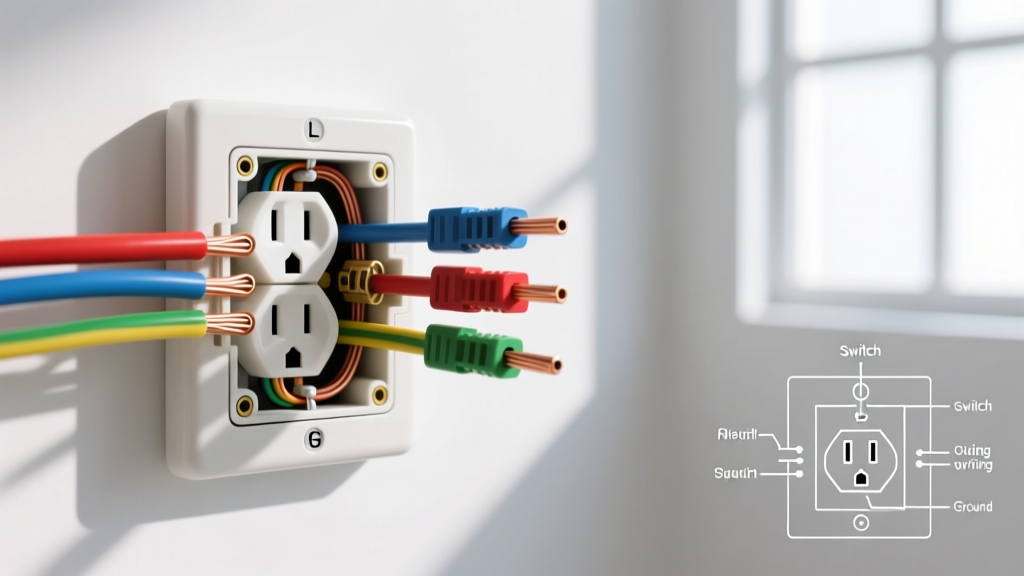
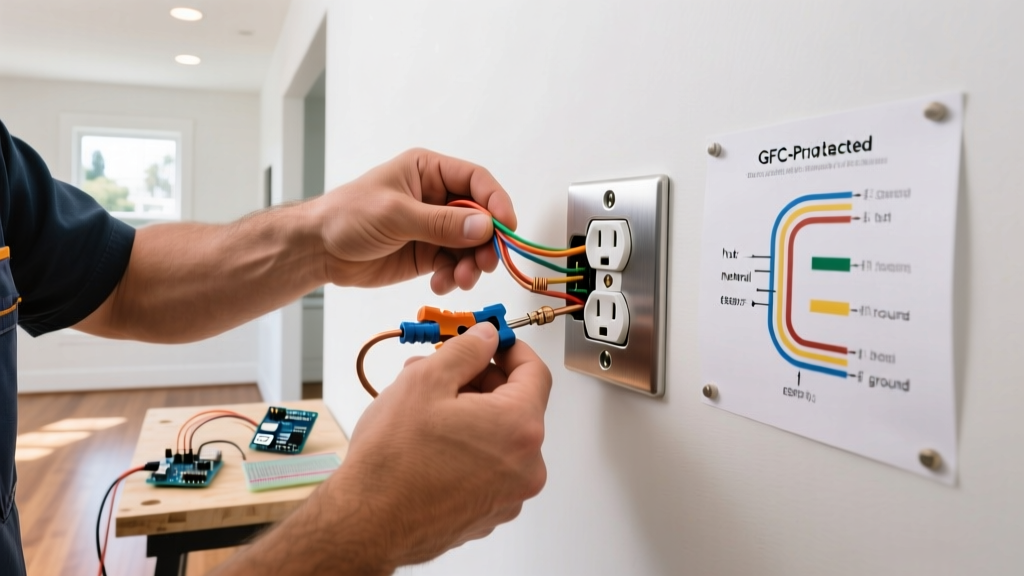
- Connect the Device: Attach the Line hot (black) and neutral (white) to the brass and silver LINE terminals. Attach the Load hot and neutral to the LOAD terminals. Connect the ground wire to the green terminal.
- Torque and Secure: Tighten terminal screws to the manufacturer's specified torque (usually 14-16 in-lbs). Fold the wires neatly into the back of the box to avoid pinching.
- Test and Label: Restore power, press the TEST button to ensure the device trips, and reset it.
Frequently Asked Questions (FAQ)
Can I replace an electrical outlet myself in Los Angeles?
Yes, homeowners can perform like-for-like receptacle replacements in their own primary residence without a permit, provided the circuit is already grounded and compliant. However, any work involving panel upgrades, new circuits, or ungrounded-to-grounded conversions requires an LADBS permit and must be performed or signed off by a licensed C-10 electrical contractor.
Do I need to replace all my outlets with AFCI/GFCI models?
No. The CEC requires AFCI/GFCI protection for the circuit. If your main electrical panel was upgraded recently and features dual-function CAFCI/GFCI breakers, you can install standard Tamper-Resistant receptacles at the wall. You only need the expensive dual-function receptacles if the breaker panel lacks this modern protection.
What happens if my outlet replacement fails an LADBS inspection?
Failed inspections result in a 'Correction Notice'. You will be required to fix the violation (e.g., improper wire stripping, missing TR shutters, or unapproved aluminum pigtailing) and pay a re-inspection fee, which currently ranges from $150 to $250 depending on the jurisdiction and number of failed attempts.
Final Thoughts on LA Electrical Safety
Electrical outlet replacement in Los Angeles, CA, demands a rigorous adherence to both local municipal codes and the broader California Electrical Code. By prioritizing Tamper-Resistant designs, properly addressing ungrounded circuits via GFCI protection, and utilizing specialized connectors for legacy aluminum wiring, you ensure the safety of your property and its occupants. When in doubt, always consult with a licensed, LADBS-registered electrical professional to guarantee your 2026 installations meet the highest standards of compliance and safety.