
The Reality of Level 1 EV Charging on Standard Circuits
When new electric vehicle (EV) owners ask, 'Can I plug my electric car into a regular outlet?' the short answer is yes. This method, known as Level 1 charging, utilizes a standard 120-volt, 15-amp or 20-amp NEMA 5-15R or 5-20R household receptacle. However, from an electrical diagnostic perspective, treating an EV like a standard household appliance is a recipe for melted faceplates, tripped breakers, and potential electrical fires.
Unlike a toaster or a vacuum cleaner that runs for a few minutes, an EV battery demands a continuous load. According to the Electrical Safety Foundation International (ESFI), EV charging places unprecedented, sustained thermal stress on residential wiring that was never designed for 12-hour continuous draws. Before you plug in your Electric Vehicle Supply Equipment (EVSE) into a standard bedroom or garage outlet, you must perform a rigorous circuit diagnosis.
The NEC 80% Rule: Why Your 15A Outlet Only Gives 12A
The National Electrical Code (NEC) Article 210.19(A)(1) dictates that continuous loads—defined as any load expected to run for three hours or more—must not exceed 80% of the circuit breaker's rating. Because charging an EV from 20% to 80% on a standard outlet can easily take 12 to 24 hours, it is strictly classified as a continuous load.
- 15-Amp Circuit (14 AWG wire): Maximum continuous draw is 12 Amps (1.44 kW).
- 20-Amp Circuit (12 AWG wire): Maximum continuous draw is 16 Amps (1.92 kW).
Most modern OEM mobile connectors (like the Tesla Mobile Connector or Ford Mobile Power Cord) feature an internal proximity pilot that detects the NEMA 5-15 adapter and automatically limits the vehicle's draw to 12A. However, if you use a third-party EVSE or an adapter that miscommunicates the circuit capacity, the EV may attempt to pull 15A or 16A, causing the breaker's thermal trip mechanism to engage after roughly 45 minutes of charging.
Diagnostic Table: Level 1 Charging Rates by Vehicle Class
Understanding your vehicle's acceptance rate helps diagnose whether a standard outlet is practically viable for your daily commute. The following data reflects real-world 120V/12A charging speeds for 2026 EV models:
| Vehicle Class | Example Models (2026) | Battery Capacity | Level 1 Speed (12A) | Time for 40-Mile Commute |
|---|---|---|---|---|
| Compact Sedan | Nissan LEAF, Chevy Bolt EV | 40 - 65 kWh | ~4.5 miles / hour | ~9 Hours |
| Crossover SUV | Tesla Model Y, Hyundai Ioniq 5 | 75 - 84 kWh | ~3.5 miles / hour | ~11.5 Hours |
| Heavy-Duty Truck | Ford F-150 Lightning, Chevy Silverado EV | 131 - 200 kWh | ~2.0 miles / hour | ~20 Hours |
Source: Alternative Fuels Data Center (AFDC)
4-Step Diagnostic Protocol for Standard 120V Receptacles
If you intend to use a standard outlet for overnight charging, you must verify the physical and electrical integrity of the receptacle and its upstream wiring. Follow this diagnostic sequence.
Step 1: Internal Wiring Topology Inspection
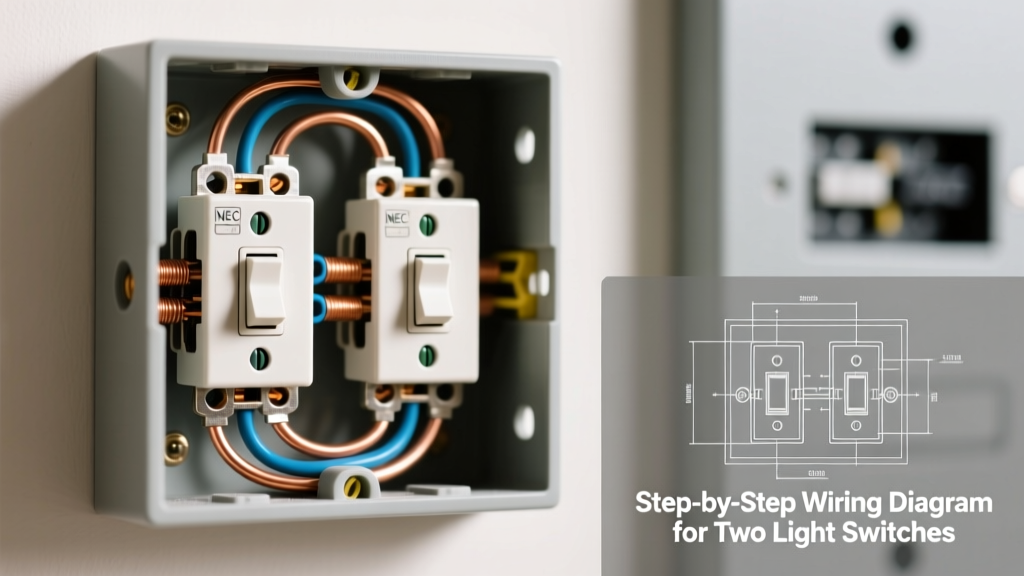
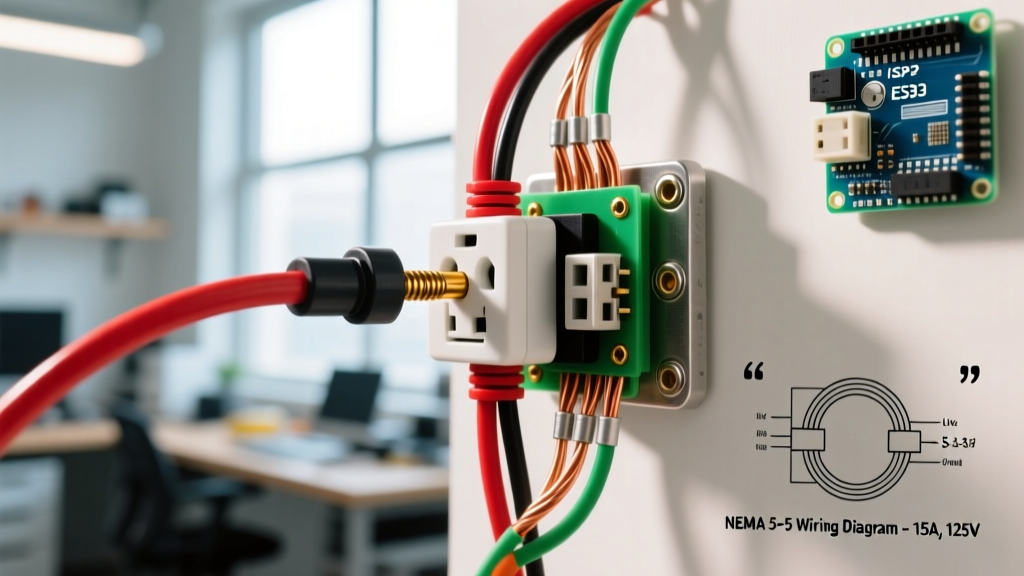
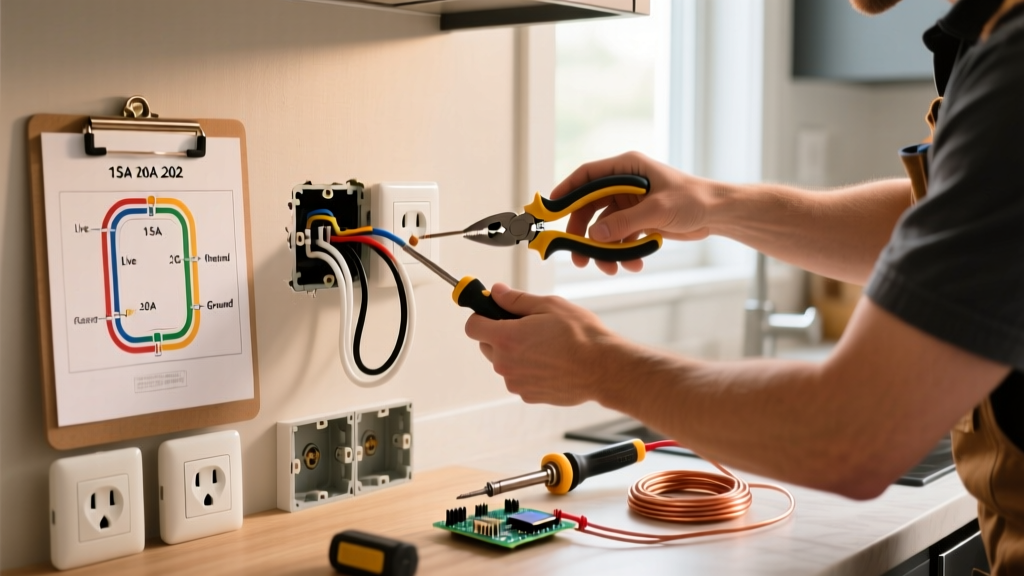
Turn off the breaker and remove the receptacle faceplate. Inspect how the 14 AWG or 12 AWG copper wires are terminated to the back of the 5-15R outlet.
- Backstabbed (Push-In) Connections: If the wires are pushed into the rear spring-loaded clips, halt immediately. Backstabbed connections have a tiny surface area of contact. Under a 12A continuous load, this high-resistance joint will generate excessive heat, eventually melting the plastic housing.
- Screw-Terminal (Side-Wired) Connections: If the wire is looped securely around the brass and silver screws and torqued down, the connection is mechanically sound for Level 1 charging.
Step 2: Voltage Drop Under Load Testing
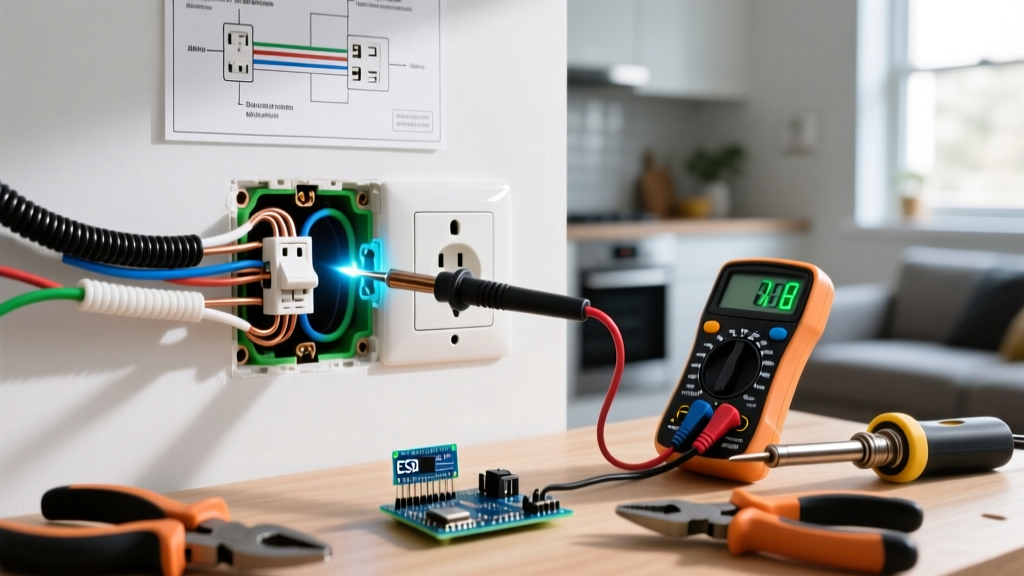
Use a digital multimeter to measure the voltage at the receptacle.
- No-Load Test: Measure the voltage with nothing plugged in. A healthy residential circuit should read between 118V and 124V.
- Under-Load Test: Plug in the EV and begin charging. After 10 minutes, measure the voltage again at an adjacent outlet on the same circuit (or use a pass-through voltage tester).
Diagnosis: If the voltage drops below 114V (a 5% drop per Department of Energy guidelines), the circuit is suffering from undersized wiring, an excessively long wire run from the panel, or corroded bus bars in the main service panel.
Step 3: Thermal Profiling
Purchase an infrared thermometer (such as the Klein Tools IR5). After the EV has been charging for 60 minutes, aim the IR sensor at the receptacle's faceplate and the plug head.
Thermal Thresholds:
• Ambient to 110°F (43°C): Normal operation.
• 110°F to 140°F (60°C): Warning zone. Receptacle wipers are losing tension.
• Above 140°F (60°C): Critical failure imminent. Stop charging and replace the receptacle immediately.
Step 4: GFCI and AFCI Nuisance Tripping
If your garage outlet is a GFCI (Ground Fault Circuit Interrupter) or protected by an AFCI breaker, you may experience 'nuisance tripping' mid-charge. EVs contain massive capacitor banks and power inverters that can generate minor, harmless DC leakage currents or high-frequency harmonics. Older GFCI receptacles (manufactured before 2015) often misinterpret these EV-specific electrical signatures as a ground fault to a human body. Fix: Upgrade to a modern, EV-tolerant GFCI receptacle or consult an electrician to install a dedicated non-GFCI circuit if local codes permit for dedicated EVSE lines.
Upgrading the Receptacle: Builder-Grade vs. Commercial-Grade
If your diagnostic tests reveal a weak receptacle, do not simply replace it with another $0.60 builder-grade outlet from a big-box store. Builder-grade receptacles use thin internal brass wipers that lose their grip on the EVSE's heavy 5-15 plug prongs over time, leading to arcing.
The Expert Solution: Replace the outlet with a Commercial-Grade or Industrial-Grade NEMA 5-15R (e.g., Hubbell 5262 or Leviton 5362). These cost between $4.00 and $8.00 but feature thick, high-tension phosphor bronze contacts and reinforced thermoplastic housings designed to withstand continuous 12A loads without thermal degradation. Ensure you wrap the side terminals with high-quality electrical tape or use a receptacle box extender to prevent accidental short circuits against the metal junction box.
Frequently Asked Questions (FAQ)
Can I use a heavy-duty extension cord for my EV?
No. The NEC and all EVSE manufacturers strictly prohibit the use of extension cords. Extension cords introduce additional points of high resistance and voltage drop. If an absolute emergency requires one, it must be a 10 AWG, 12-gauge, or heavier outdoor-rated cord no longer than 25 feet, but this is highly discouraged for fire safety reasons.
Will Level 1 charging degrade my EV battery?
Actually, Level 1 charging is incredibly gentle on lithium-ion battery chemistry. The slow 1.4 kW charge rate generates virtually zero thermal stress on the battery cells, which can promote long-term battery health compared to repeated DC Fast Charging. The primary drawback is purely the inconvenience of slow charging times.
When should I abandon the regular outlet and install a NEMA 14-50?
If your daily commute exceeds 40 miles, or if you frequently drive an electric truck towing heavy loads, a standard 120V outlet will not replenish your battery overnight. In these cases, you must hire a licensed electrician to install a dedicated 240V, 50-amp NEMA 14-50 receptacle (Level 2 charging), which typically costs between $500 and $1,200 depending on your panel's proximity to the garage, but will charge your vehicle up to 8 times faster.