
The Anatomy of a 2026-Compliant Level 2 EV Circuit
Installing an electric vehicle charging outlet is no longer a niche electrical project; it is a standard home upgrade. However, the continuous high-amperage draw of Level 2 EV chargers (EVSEs) pushes residential electrical components to their absolute limits. Unlike an electric oven or a dryer, which cycle on and off, an EV charger pulls a continuous 40-amp load for 8 to 12 hours straight. This sustained thermal stress demands industrial-grade materials and precision tools.
According to the U.S. Department of Energy, over 80% of EV charging occurs at home, making the reliability of your 240V NEMA 14-50 receptacle critical. This guide details the exact materials, wire gauges, and specialized tools required to execute a safe, code-compliant installation in 2026, avoiding the common thermal failures that plague amateur setups.
The Receptacle Debate: Industrial vs. Residential Grade
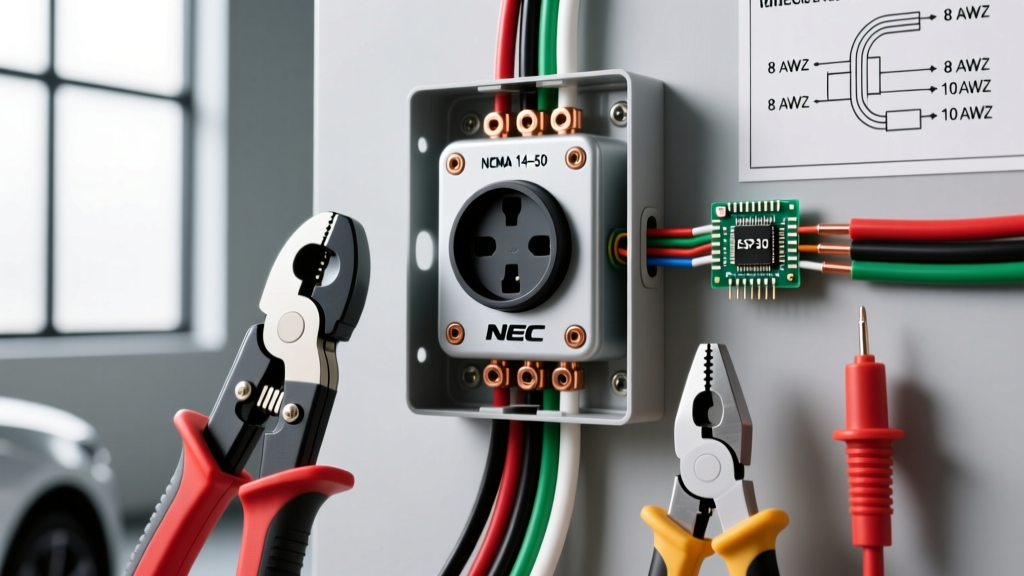
The most critical material decision in your build is the NEMA 14-50 receptacle itself. The marketplace is flooded with cheap, residential-grade outlets that are technically rated for 50 amps but are designed for intermittent loads (like RV hookups). When subjected to the continuous 3-hour+ loads defined by NEC Article 100, these residential outlets suffer from "thermal creep," where the internal brass contacts expand, lose tension, and eventually arc or melt.
2026 Receptacle Comparison Matrix
| Brand & Model | Grade | Price Range | Continuous Load Suitability | Expert Verdict |
|---|---|---|---|---|
| Hubbell HBL9450A | Industrial | $110 - $135 | Excellent | The gold standard. Massive thermal mass and tight grip tension. |
| Bryant 9450FR | Industrial/Res | $85 - $105 | Excellent | Best value. Manufactured in the same facility as the Hubbell. |
| Leviton 279-S00 | Residential | $20 - $30 | Poor / Hazardous | Avoid for EVs. High failure rate under continuous 40A loads. |
Expert Insight: Never use a standard residential Leviton 14-50 for an EV charger. The Electrical Safety Foundation International (ESFI) frequently flags melted receptacles in post-fire investigations. Always specify the Hubbell HBL9450A or Bryant 9450FR to ensure the internal contacts can handle sustained thermal expansion.
Essential Wiring and Breaker Materials
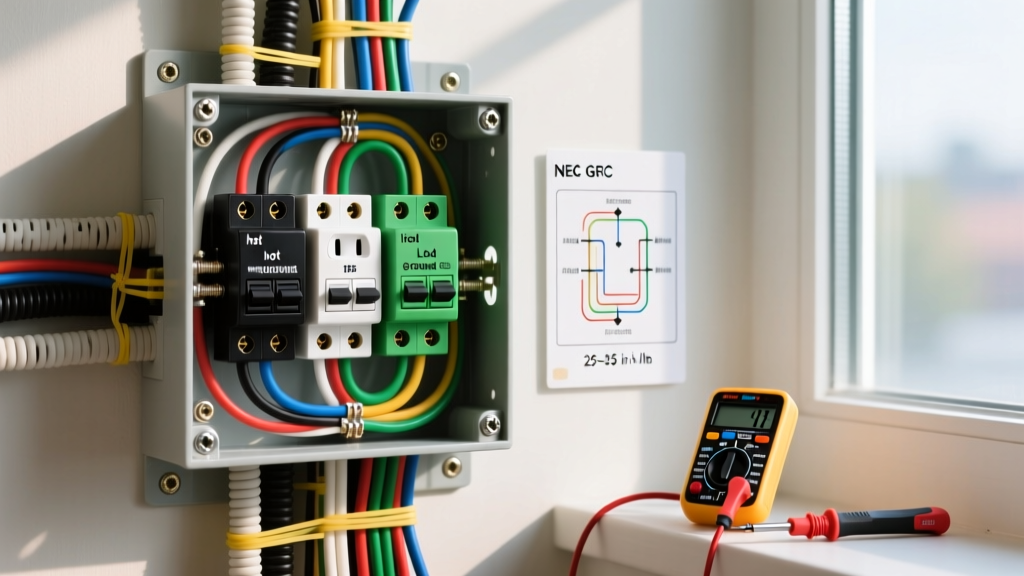
Sizing your wire and breaker correctly is non-negotiable. A standard Level 2 EVSE requires a 50-amp circuit, which dictates specific material choices to comply with the National Electrical Code (NEC).
- Wire Gauge: Use 6 AWG Copper THHN/THWN-2. You will need four conductors: two hots (Black, Red), one neutral (White), and one ground (Bare or Green). While the neutral is not used by most modern EVSEs, the NEC requires it to be present and terminated in a 14-50 receptacle.
- Voltage Drop Upsizing: If your conduit run from the main panel to the garage exceeds 50 feet, you must upsize to 4 AWG Copper to maintain a voltage drop below 3%. Voltage drop causes the EVSE to overheat and charge slower.
- The GFCI Breaker Dilemma: NEC 2023 (and adopted 2026 local codes) Section 625.54 mandates GFCI protection for all EV receptacles. You must purchase a 50-Amp GFCI Breaker (e.g., Square D HOM250GFIC for Homeline panels, approx. $165). Warning: Because EVSEs also have internal GFCI protection, stacking a GFCI breaker and a GFCI EVSE often causes "nuisance tripping." If your local inspector allows it, hardwiring the EVSE eliminates the need for the expensive GFCI breaker and the receptacle entirely.
- Conduit: Use 3/4-inch EMT (Electrical Metallic Tubing) for exposed indoor garage runs, or Schedule 80 PVC if the conduit is subject to physical damage or outdoor exposure.
Must-Have Tools for a Code-Compliant Installation
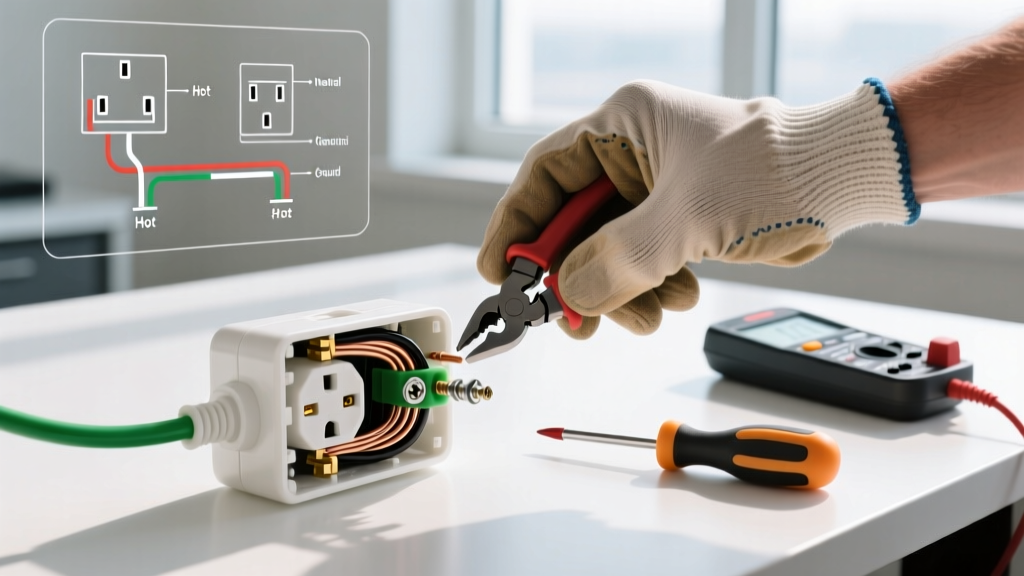
Beyond standard screwdrivers and pliers, a 2026-compliant EV outlet installation requires specialized tools to ensure mechanical integrity and electrical safety.
1. Calibrated Torque Screwdriver
NEC 110.14(D) requires that all electrical connections be torqued to the manufacturer's specifications. The Hubbell and Bryant 14-50 receptacles typically require 75 in-lbs of torque on the terminal screws. Hand-tightening leads to loose connections, which increases resistance and causes catastrophic melting.
Recommended Tool: CDI 401SM Torque Screwdriver or Wiha 401SM (Approx. $120). Do not use a standard inch-pound beam wrench; a click-type torque screwdriver ensures repeatable accuracy.
2. Heavy-Duty Wire Strippers
Stripping 6 AWG THHN without nicking the copper core is difficult with standard linework pliers. Nicked wire creates a hot spot under continuous load.
Recommended Tool: Klein Tools 11063W Heavy-Duty Wire Stripper (Approx. $35). This tool cleanly strips 6 AWG to 14 AWG solid and stranded wire without scoring the metal.
3. Thermal Imaging Camera (For Post-Install Verification)
The true test of an EV outlet installation happens 4 hours into the first charge cycle.
Recommended Tool: FLIR ONE Pro or Klein Tools CL800 Multimeter with Thermal Imaging. After the vehicle has been charging at 32A-40A for three hours, scan the receptacle face and the breaker. A temperature delta of more than 15°F above ambient room temperature indicates a failing connection or undersized wire.
Complete Material Cost Breakdown (2026 Estimates)
Budgeting for an EV outlet requires accounting for the premium safety components that cheap contractor bids often omit. Below is a realistic bill of materials for a standard 30-foot indoor garage run.
| Item Description | Quantity | Unit Cost | Total Cost |
|---|---|---|---|
| Bryant 9450FR NEMA 14-50 Receptacle | 1 | $95.00 | $95.00 |
| Square D 50A GFCI Breaker (HOM250GFIC) | 1 | $165.00 | $165.00 |
| 6 AWG THHN Copper Wire (Black, Red, White) | 120 ft | $1.60/ft | $192.00 |
| 8 AWG Bare Copper Ground Wire | 40 ft | $0.90/ft | $36.00 |
| 3/4" EMT Conduit & Fittings | 30 ft | $2.50/ft | $75.00 |
| Heavy Duty 1-Gang Mud Ring & Cover | 1 | $12.00 | $12.00 |
| CDI Torque Screwdriver (Tool Investment) | 1 | $125.00 | $125.00 |
| Estimated Total | $700.00 |
Edge Cases and Failure Modes to Avoid
Even with the right materials, specific installation errors will compromise your electric vehicle charging outlet. Watch out for these common failure modes:
- Back-Wiring the Receptacle: Never use the push-in back-wire holes on any 14-50 receptacle. The 6 AWG wire must be looped around the terminal screw or secured under the pressure plate, torqued to exactly 75 in-lbs.
- Overtightening the Conduit Fittings: When transitioning from EMT conduit into the back of the 14-50 receptacle box, overtightening the locknut can crack the plastic housing of the outlet, compromising its structural integrity and fire rating.
- Ignoring the Neutral Bus Bond: The white neutral wire must terminate on the neutral bus bar in your main panel, never on the ground bus bar. In a sub-panel, they must be strictly isolated. Bonding them in a sub-panel will send continuous return current through your grounding paths, creating a severe shock hazard.
- Using Aluminum Wire Without Anti-Oxidant: If you choose to use 4 AWG Aluminum SER cable to save money on long runs, you must apply Noalox anti-oxidant paste to the wire ends before termination, and ensure your receptacle and breaker are explicitly rated for aluminum (CO/ALR). Most modern EVSEs and industrial receptacles are rated for copper only; check the manufacturer spec sheet before purchasing aluminum wire.
By investing in industrial-grade receptacles, precision torque tools, and properly sized copper conductors, your Level 2 EV charging infrastructure will safely deliver years of reliable, high-speed charging without the thermal degradation common in budget installations.