
The Critical Intersection of Water and Electricity
Installing a hot tub electrical outlet is one of the most unforgiving tasks in residential wiring. Unlike standard indoor receptacles, a spa receptacle operates in a wet, highly conductive environment where a single grounding fault or code violation can be lethal. The National Electrical Code (NEC) addresses these extreme hazards under Article 680: Swimming Pools, Fountains, Spas, and Hot Tubs. As of the 2026 adoption cycles of the latest NEC standards, inspectors are enforcing stricter GFCI thresholds and equipotential bonding requirements than ever before.
This guide bypasses generic DIY advice to deliver the exact technical specifications, clearance matrices, and failure modes you need to ensure your hot tub electrical outlet installation is safe, legal, and inspection-ready.
⚠️ Professional Disclaimer: While this guide provides deep technical knowledge for advanced DIYers and electricians, the NEC mandates that permanent spa wiring often requires a licensed electrical contractor and local permitting. Always verify your local AHJ (Authority Having Jurisdiction) amendments before pulling wire.
GFCI Protection: The Non-Negotiable First Line of Defense
Ground Fault Circuit Interrupter (GFCI) protection is the cornerstone of hot tub safety. The human heart can be sent into fibrillation by as little as 30 milliamps of stray current. A standard breaker will not trip until 15,000 to 50,000 milliamps, which is long after a fatal shock has occurred.
Breaker vs. Receptacle GFCI
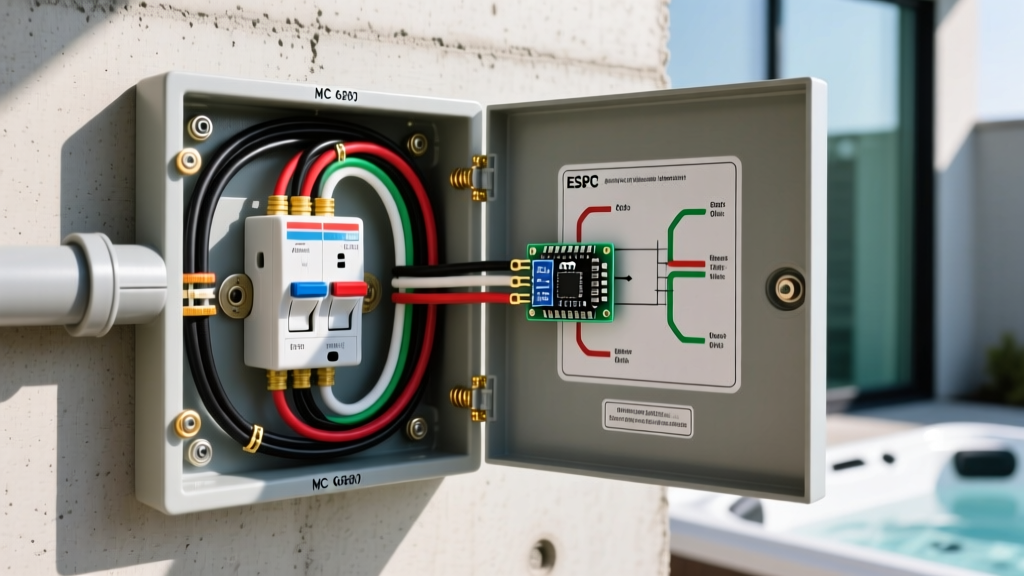
For 240V hot tubs (which require 30A to 60A circuits), you cannot use a standard GFCI wall receptacle. Instead, you must install a GFCI circuit breaker at the main service panel or subpanel.
- Recommended 50A Models: Square D QO250GFICP (for QO load centers) or Eaton CHFGFI250 (for CH load centers). Expect to pay between $110 and $160 per breaker in 2026.
- 120V Plug-and-Play Spas: If your spa uses a standard 120V 15A or 20A cord, the receptacle itself must be a weather-resistant (WR) GFCI outlet housed in an extra-duty while-in-use NEMA 3R or 4X cover.
According to the Electrical Safety Foundation International (ESFI), GFCIs have prevented thousands of electrocutions, but they degrade over time. Modern code requires the GFCI test button to be readily accessible, meaning you cannot bury the GFCI breaker behind a permanently sealed wall panel.
Clearance Distances and Placement Rules
Where you place the hot tub electrical outlet and the emergency disconnect switch is strictly governed by NEC 680.22. Water splashing and user reach dictate these minimums.
| Equipment Type | Minimum Distance from Inside Water Wall | Code Reference & Notes |
|---|---|---|
| 15A/20A Receptacles | 6 feet (1.83 m) | NEC 680.22(A)(2). Must be GFCI protected if within 20 feet. |
| Emergency Disconnect Switch | 5 feet (1.5 m) | NEC 680.12. Must be within sight of the tub, readily accessible. |
| Overhead Wiring (Service Drops) | 22.5 feet (6.9 m) vertically | NEC 680.8. Prevents accidental contact with skimmer poles or antennas. |
| Lighting Fixtures | 12 feet (3.66 m) horizontally | NEC 680.22(B). Unless installed 12 ft above the water level. |
Conduit, Wire Sizing, and Routing Specifications
Running cable to a hot tub electrical outlet requires wet-location ratings. Standard indoor NM-B (Romex) cable is strictly prohibited for outdoor spa runs, even if routed through conduit, because condensation inside the conduit will degrade the paper wrap and cause catastrophic insulation failure.
Wire Selection
You must use individual conductors rated for wet locations. THWN-2 or XHHW-2 are the industry standards. Furthermore, the NEC prohibits the use of aluminum wire for pool and spa feeders due to oxidation and thermal expansion issues at termination points. Copper only is permitted.
- 30A Spa (Typical 240V): #10 AWG THWN-2 Copper (3 conductors + ground).
- 40A Spa: #8 AWG THWN-2 Copper.
- 50A/60A Spa (High-Output Heaters): #6 AWG THWN-2 Copper.
Conduit Requirements
For underground runs, Schedule 80 PVC is required where the conduit emerges from the ground or is subject to physical damage (NEC 300.5). For above-ground runs leading to the disconnect or outlet, Liquidtight Flexible Metal Conduit (LFMC) or rigid PVC is standard. If using LFMC, you must pull a separate green insulated or bare copper grounding conductor inside; the metal jacket of the flex conduit cannot serve as the equipment grounding conductor for a spa.
The Equipotential Bonding Grid: The Most Common Failure Point
Inspectors fail hot tub electrical outlet installations most frequently due to improper equipotential bonding. Bonding is entirely different from grounding. Grounding provides a path for fault current to trip the breaker. Bonding connects all conductive metal parts together so that no voltage potential can exist between them, preventing a shock if a user touches the water and a metal handrail simultaneously.
What Must Be Bonded?
Per NEC 680.26, you must bond the following using a continuous #8 AWG bare solid copper wire:
- The metal shell of the hot tub (if applicable).
- All metal equipment within 5 feet of the tub (pumps, heaters, HVAC units).
- Metal railings, ladders, and diving boards within 5 feet.
- Any metal piping (gas, water) within 5 feet.
- The concrete shell of the tub deck (via a concrete-encased electrode or copper grid).
Use listed pressure connectors or brass/copper bonding lugs (such as the Burndy BGB series) rated for direct burial and concrete encasement. Never use standard zinc-plated steel clamps, which will corrode and break the bond within two years.
Common Code Violations to Avoid
When wiring a hot tub electrical outlet, avoid these frequent mistakes that result in failed inspections or hazardous conditions:
- Using an Indoor Disconnect: The emergency disconnect switch must be a NEMA 3R (rainproof) or NEMA 4X (watertight) rated enclosure. Standard indoor switches will short out during heavy rain.
- Missing the 'While-In-Use' Cover: If installing a 120V convenience receptacle near the tub, the weather cover must be rated 'extra-duty' and remain closed while a plug is inserted.
- Sharing the Neutral: If your spa requires a neutral for 120V controls, the neutral must be an insulated white wire, strictly isolated from the ground bar in the subpanel, and must pass through the GFCI breaker's neutral pigtail. Bypassing the GFCI neutral coil will cause nuisance tripping.
2026 Cost Breakdown for Compliant Spa Wiring
Budgeting for a safe, code-compliant installation requires accounting for premium wet-location materials and specialized labor.
| Component / Service | Estimated Cost (2026) | Notes |
|---|---|---|
| 50A GFCI Breaker (Square D / Eaton) | $120 - $160 | Price varies by bus bar type (Plug-on vs. Bolt-on). |
| 50A NEMA 3R Disconnect Switch | $60 - $95 | Must be fused or non-fused based on AHJ. |
| Wire (#6 AWG THWN-2 Copper, 100ft) | $180 - $250 | Copper prices fluctuate; buy in bulk. |
| Licensed Electrician Labor (8-12 hrs) | $1,200 - $2,400 | Includes trenching, pulling, and termination. |
| Permits & AHJ Inspections | $150 - $350 | Mandatory for insurance validity. |
Final Inspection and Testing Protocol
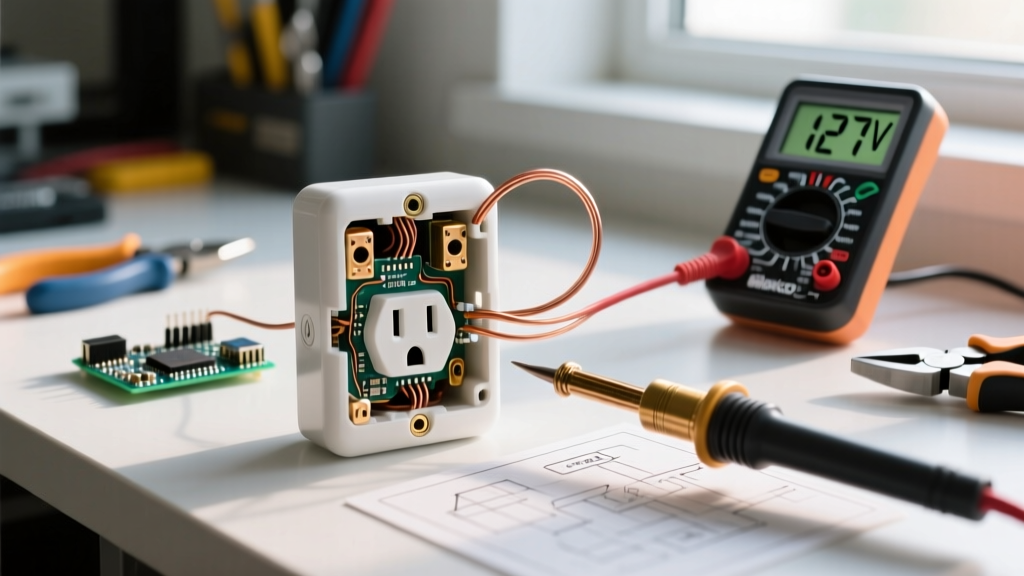
Before filling the tub with water, perform a rigorous dry-test. Use a digital multimeter to verify continuity between the equipotential bonding grid and the main panel's ground bus. Once powered, press the 'Test' button on the GFCI breaker to ensure it instantly drops power to the hot tub electrical outlet and control pack. For comprehensive safety standards and updates on electrical codes, always refer to the National Fire Protection Association (NFPA) NEC database.
By strictly adhering to Article 680, utilizing THWN-2 copper conductors, and executing a flawless equipotential bond, your hot tub installation will provide years of safe, compliant operation.