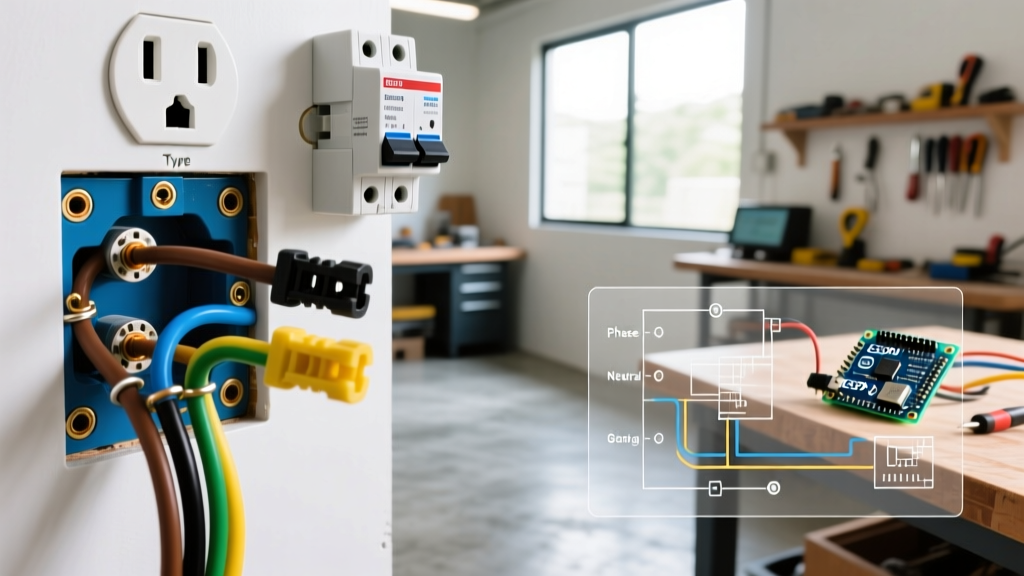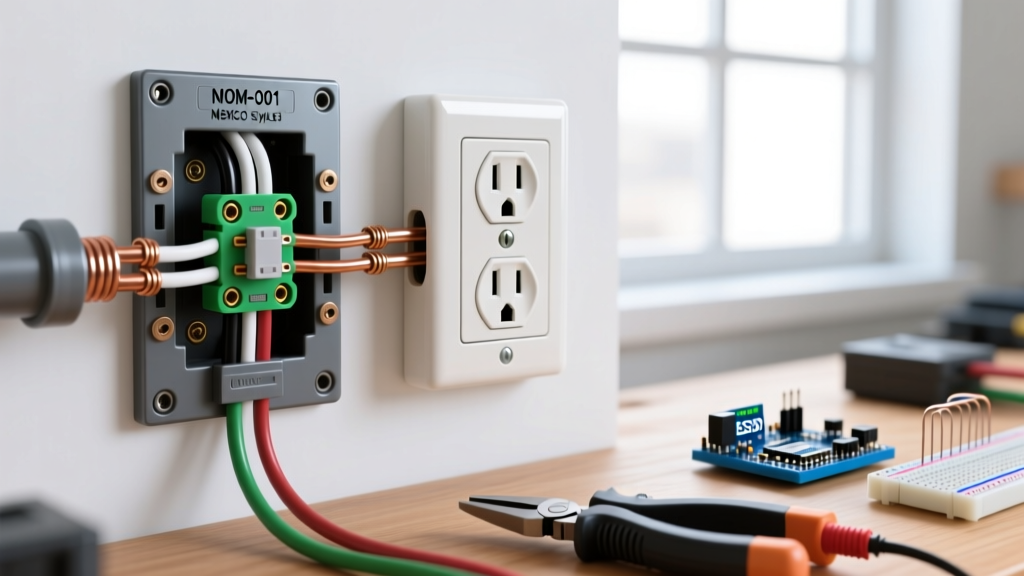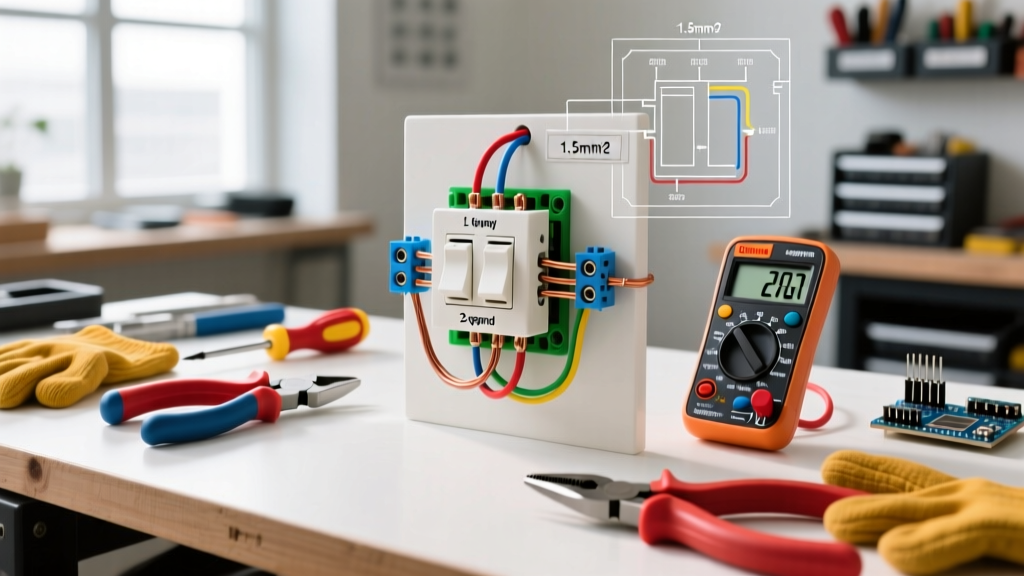

The Global Terminology Matrix: Defining the 2-Way Circuit
Before purchasing a single spool of wire or a single mechanism, we must address a critical terminology divide that causes countless DIY errors and returned materials. In the electrical trade, the phrase 2 way electrical switch wiring means entirely different things depending on your geographic location. In the UK, Australia, and India, a '2-way switch' refers to a circuit where a single light fixture is controlled from two separate locations (e.g., the top and bottom of a staircase). In North America, this exact same functionality is achieved using what is called a '3-way switch'. Conversely, in the US, a '2-way switch' is simply a standard single-pole switch controlling a light from one location.
This guide focuses on the complex, multi-location staircase/hallway circuit (UK 2-Way / US 3-Way), as this is where specialized materials, 3-core cabling, and precise tool usage are mandatory. Below is the definitive translation matrix to ensure you buy the correct components in 2026.
| Region | Term for 2-Location Control | Term for 1-Location Control | Required Cable (Multi-Location) |
|---|---|---|---|
| UK / Aus / India | 2-Way Switch | 1-Way Switch | 1.5mm² 3-Core & Earth |
| US / Canada | 3-Way Switch | Single-Pole (or 2-Way) | 14/3 NM-B (Romex) |
| Europe (IEC) | Wechselschalter (Changeover) | Ausschalter | 3x1.5mm² NYM-J |
Essential Materials: Cables, Switches, and Enclosures
A safe, code-compliant installation relies on materials that meet current regional standards. Do not compromise on cable quality or switch mechanism ratings.
1. The Cabling: Travelers and Strappers
The defining feature of 2 way electrical switch wiring is the 'traveler' (US) or 'strapper' (UK) cable that runs between the two switch locations. This cable carries the switched live current between the two mechanisms.
- UK/Aus Standard: 1.5mm² 3-Core and Earth PVC cable. The three cores are typically Brown (Live/Common), Black (Traveler 1), and Grey (Traveler 2). Pro Tip: You must use brown or red sleeving on the Grey and Black wires at the termination points to identify them as switched lives/strappers, per BS 7671 regulations. Expect to pay around £1.15 per meter for premium brands like Doncaster or Prysmian.
- US/Canada Standard: 14 AWG 3-Conductor with Ground NM-B (commonly known as 14/3 Romex). The conductors are Black (Common), Red (Traveler 1), White (Traveler 2), and Bare Copper (Ground). Current 2026 pricing for Southwire or Cerrowire 14/3 NM-B averages $0.85 to $0.95 per foot.
2. The Switch Mechanisms
Always select switches rated for the specific load. While standard lighting draws minimal current, inrush currents from modern LED drivers can cause premature contact welding in cheap switches.
- UK Recommendation: MK Logic Plus 10AX 2-Way Switch (Model K4872). The '10AX' rating means it is specifically tested and approved for fluorescent and LED inductive loads, unlike standard 10A resistive switches. Retails for £6.50 - £8.00.
- US Recommendation: Leviton Decora 15A 3-Way Switch (Model 5603). Features a robust internal toggle mechanism and back-wire clamps that accept up to 12 AWG wire. Retails for $4.50 - $5.50.
3. Backboxes and Pattress Boxes
Depth is the most frequently overlooked material spec. Standard 25mm backboxes are entirely insufficient for 2-way wiring due to the volume of 3-core cable and the depth of the switch mechanism.
Expert Rule of Thumb: Always use a minimum 35mm deep backbox for the master switch (where the permanent live and the 3-core strapper meet) to allow for safe bending radii and heat dissipation. Use 47mm boxes if you are integrating smart home modules behind the switch.
The Professional Tool Arsenal for 2026
Strippling wires with a pocket knife or testing for voltage with a multimeter on the wrong setting are relics of the past. Modern electrical codes demand precision and verified safety testing.
Verification and Safety Tools
- Non-Contact Voltage Tester (NCVT): Klein Tools NCVT-2 ($28). This dual-range tester detects both standard voltage (12-1000V AC) and low voltage (70-1000V AC), making it indispensable for tracing traveler wires inside walls.
- Two-Pole Voltage Indicator: Fluke T5-600 ($185) or Martindale VI-138 ($45). NCVTs can be fooled by induced 'ghost' voltages on long traveler runs. A hard-wired two-pole tester provides definitive proof of a dead circuit before you touch a bare conductor.
Termination and Stripping Tools
- Precision Wire Strippers: Knipex 12 62 180 ($65). Automatically adjusts to wire gauges from 0.2 to 6.0 mm² (24-10 AWG) without nicking the copper conductor. Nicked travelers are a primary cause of high-resistance hotspots.
- Insulated Torque Screwdriver: Wiha 32090 TorqueVario ($115). Modern codes, including NEC 110.14(D), mandate that terminations be torqued to the manufacturer's specifications. Most residential switches require 0.5 to 0.8 Nm (or 14-16 in-lbs). Hand-tightening leads to loose connections and arc faults over time.
Critical Installation Nuances and Failure Modes
Even with the right materials, 2 way electrical switch wiring presents unique edge cases that trip up novice installers. Here is how to avoid the most common 2026 field failures.
1. LED 'Ghosting' and Capacitive Coupling
The Problem: You wire the circuit perfectly, but when the switches are in the 'off' position, the LED bulbs emit a faint, eerie glow or flash periodically.
The Cause: In 2-way circuits, the traveler wires run parallel to each other over long distances inside the wall. This creates a parasitic capacitor, inducing a small AC voltage onto the 'dead' traveler. Modern LEDs require so little current that this induced voltage is enough to partially illuminate the diodes.
The Fix: Install an LED bypass capacitor (e.g., LEDvance Dummy Load or Shelly Bypass, approx. $8) directly across the Live and Neutral terminals at the light fixture itself. This provides a path for the induced micro-currents, preventing ghosting.
2. The 'Switched Earth' Catastrophe
The Problem: Using the bare earth wire as a traveler or neutral to save money on buying 3-core cable.
The Reality: This is a lethal code violation. If the earth wire is used to carry current, the metal faceplates and the appliance chassis lose their grounding protection. Furthermore, it will instantly trip an RCD/GFCI breaker. Never compromise on buying the correct 3-core + earth cable.
Safety Codes and Authoritative Standards
Electrical work is heavily regulated due to the inherent risks of fire and electrocution. Always cross-reference your material choices and wiring methods with your local authority having jurisdiction (AHJ). For comprehensive, up-to-date safety guidelines regarding wiring and cable selection, consult Electrical Safety First, the leading UK authority on domestic electrical safety. If you are operating in North America, familiarize yourself with the fire prevention and wiring standards published by the U.S. Consumer Product Safety Commission (CPSC). Finally, professional installers in the UK and Commonwealth nations must adhere strictly to the latest amendments of the IET Wiring Regulations, detailed extensively by The Institution of Engineering and Technology (IET).
By investing in the correct 3-core cabling, high-quality 10AX/15A rated mechanisms, and precision torque tools, your 2 way electrical switch wiring project will not only pass inspection but will provide decades of reliable, arc-free operation.