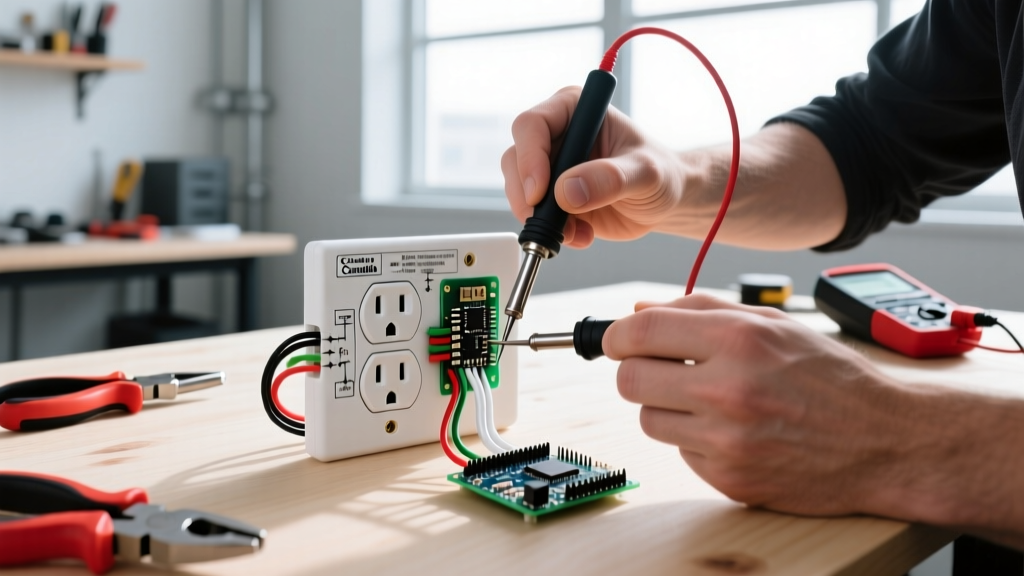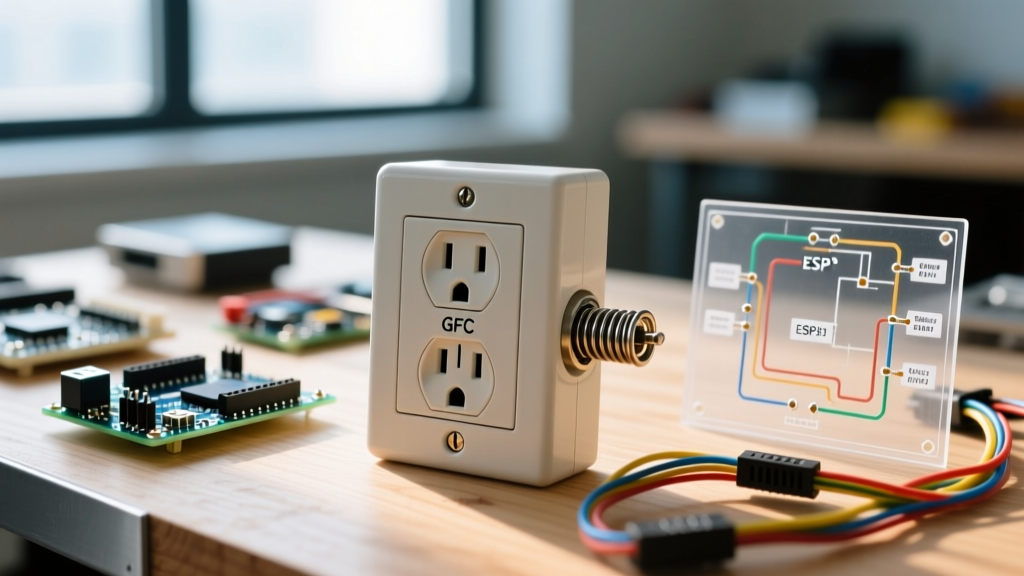

Understanding the GFCI Mechanism: Why the Reset Button Pops
When an electrical outlet reset button keeps popping out, it is rarely a random mechanical glitch. The reset button is a critical component of a Ground Fault Circuit Interrupter (GFCI) receptacle, a life-saving device mandated by the National Electrical Code (NEC) to prevent fatal electrocution. Unlike a standard circuit breaker that protects the wiring from overheating due to overcurrent, a GFCI monitors the current balance between the hot and neutral conductors. If it detects a leakage to ground as small as 4 to 6 milliamps (mA), it trips the internal relay, popping the reset button to cut power in milliseconds.
From a safety and code compliance perspective, a GFCI that refuses to stay reset is communicating a specific electrical anomaly. Bypassing this mechanism, forcing the button, or replacing it with a standard receptacle is a severe NEC violation and a lethal hazard. Below, we break down the exact failure modes, NEC requirements, and professional diagnostic protocols for resolving a persistently tripping GFCI.
The 4 Primary Causes of a Popping Reset Button
1. True Ground Faults (Downstream or Local)
The most common reason for a tripping GFCI is an actual ground fault. This occurs when electrical current escapes the intended circuit path and finds a route to the ground. In kitchens and bathrooms, this is frequently caused by moisture intrusion into an appliance cord, a damaged wire insulation inside a wall cavity, or a failing heating element in a dishwasher. Because GFCIs protect all downstream receptacles wired to their 'LOAD' terminals, a fault at a completely different outlet in the garage can cause the primary bathroom GFCI reset button to pop.
2. Miswiring and the UL 943 Lockout Feature
If you recently replaced an outlet and the reset button immediately pops back out or refuses to latch, you likely have a Line/Load reversal. Modern GFCIs (manufactured after 2015 to comply with UL 943 5th Edition standards) feature built-in miswire protection. If the incoming power (LINE) is connected to the LOAD terminals, the internal self-test circuit recognizes the error and physically prevents the reset button from engaging. This ensures the outlet cannot be energized without proper ground-fault protection.
3. Neutral-to-Ground Faults
A hidden and highly frustrating issue is a neutral-to-ground fault downstream. If a bare copper ground wire accidentally touches a white neutral wire in a downstream junction box or receptacle, it creates a parallel path for return current. The GFCI's sensing coil will interpret this diverted neutral current as a ground fault and trip the reset button, even if no appliances are plugged in.
4. End-of-Life (EOL) Internal Failure
GFCI receptacles contain complex solid-state circuitry that degrades over time due to heat, humidity, and voltage surges. According to the Electrical Safety Foundation International (ESFI), GFCIs have an average lifespan of 7 to 10 years. If the internal self-test circuit detects that the sensing coil or trip solenoid has failed, it will lock out the reset button permanently, often illuminating a red or amber LED indicator to signal that the device has reached its End-of-Life and must be replaced.
NEC Code Compliance: Where GFCIs Are Mandated
Understanding where GFCI protection is required helps you determine if a popping reset button is a localized issue or part of a larger code-compliant circuit. The NEC (specifically Article 210.8) has progressively expanded GFCI requirements over the last decade to enhance residential safety.
| Location / Application | NEC Article | GFCI Requirement Status (2023/2026 Cycle) |
|---|---|---|
| Bathrooms & Kitchens | 210.8(A)(1) | Mandatory for all 125V, 15A/20A receptacles |
| Garages & Grade-Level Accessory Buildings | 210.8(A)(2) | Mandatory (Exceptions for dedicated snow-melt equipment) |
| Crawlspaces & Unfinished Basements | 210.8(A)(4) | Mandatory for all 125V-250V receptacles up to 60A |
| Outdoor Receptacles | 210.8(F) | Mandatory for all outdoor outlets (Exceptions for de-icing) |
| Dishwashers (Kitchen) | 210.8(D) | Mandatory GFCI protection for hardwired or cord-connected |
For commercial and construction environments, the Occupational Safety and Health Administration (OSHA) strictly enforces GFCI usage on all 120V, single-phase, 15A and 20A receptacle outlets that are not part of the permanent wiring of the building, ensuring worker safety on active job sites.
Step-by-Step Diagnostic Protocol
Before replacing the receptacle, you must isolate the root cause. Follow this systematic diagnostic procedure to ensure code compliance and operational safety.
⚠️ SAFETY WARNING: Never attempt to diagnose a GFCI with the breaker energized unless you are using properly rated CAT III or CAT IV digital multimeters and insulated tools. Always verify the absence of voltage before touching bare terminals.
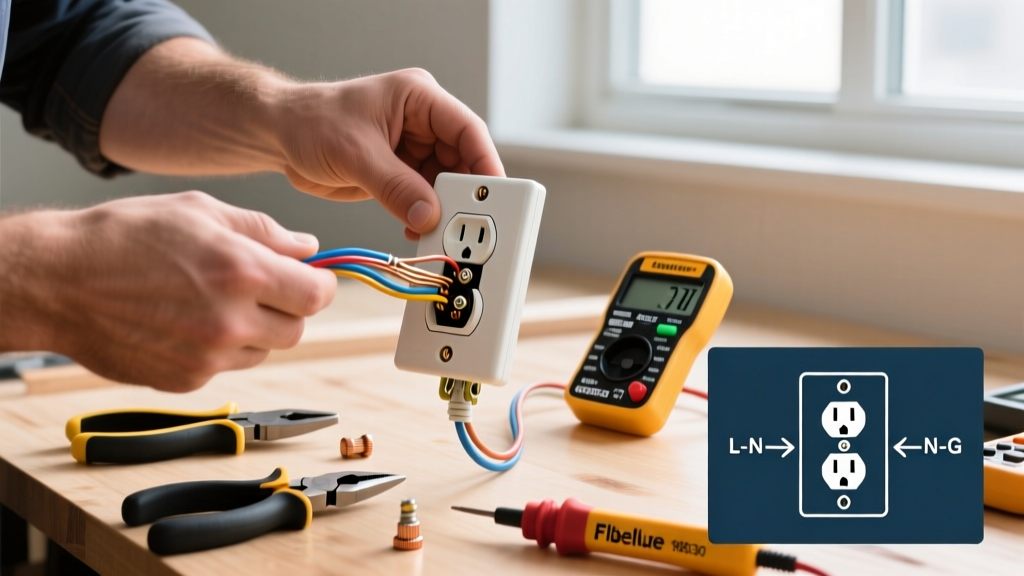
- Isolate the Downstream Circuit: Turn off the circuit breaker. Remove the GFCI faceplate and unscrew the receptacle. You will see two sets of wires: LINE (incoming power) and LOAD (downstream power). Disconnect the LOAD wires (both hot and neutral), cap them with wire nuts, and safely tuck them into the box. Turn the breaker back on and attempt to reset the GFCI.
- Evaluate the Result:
- If the reset button stays engaged: The GFCI is functioning correctly. The fault lies in the downstream wiring or a device plugged into a downstream outlet.
- If the reset button still pops: The fault is either a LINE-side issue (such as a shared neutral in the panel), a miswiring at the LINE terminals, or the GFCI itself has suffered an internal EOL failure.
- Check for Shared Neutrals: In older homes, electricians sometimes used a multi-wire branch circuit (MWBC) where two hot wires share a single neutral. If the GFCI is installed on one leg of an MWBC without a dedicated neutral, the returning current from the other leg will cause an immediate trip. This requires rewiring to provide a dedicated neutral to the GFCI, per NEC 210.4.
- Test Downstream Devices: If the fault was isolated to the LOAD side, systematically unplug all devices on the downstream circuit. If the GFCI resets with all devices unplugged, plug them in one by one to identify the faulty appliance. If it trips with nothing plugged in, you have a damaged wire or neutral-to-ground fault inside the walls.
Nuisance Tripping vs. Legitimate Faults
Not all trips indicate a lethal hazard; some are 'nuisance trips' caused by the physics of modern electronics. According to the National Fire Protection Association (NFPA), while GFCIs are essential, certain environments can cause cumulative leakage currents.
- Inductive Loads: Large motors (like older refrigerators or freezers) can generate voltage spikes upon startup that mimic a ground fault signature. Code Note: The NEC generally prohibits GFCIs on dedicated refrigerator circuits in kitchens to prevent food spoilage from nuisance trips, though local amendments vary.
- Capacitive Leakage in Long Runs: If a GFCI protects a long run of underground landscape lighting wire (exceeding 250 feet), the natural capacitance between the wire and the earth can generate a cumulative leakage current exceeding the 5mA threshold, causing the reset button to pop during rainstorms.
Recommended 2026 Replacements and Cost Breakdown
If your diagnostic protocol confirms the GFCI has reached its End-of-Life, replace it immediately with a UL-listed, tamper-resistant (TR) model. The NEC requires all 15A and 20A receptacles in dwelling units to be Tamper-Resistant to prevent children from inserting foreign objects.
| Brand & Model | Amperage / Features | Estimated Cost (2026) |
|---|---|---|
| Leviton SmartlockPro GFNT2-W | 20A, Self-Test, TR, Miswire Lockout | $18.00 - $22.00 |
| Hubbell GF5252W | 20A, Heavy-Duty, TR, Weather-Resistant (WR) | $24.00 - $28.00 |
| Pass & Seymour 2095-W | 20A, Self-Test, TR, Standard Duty | $16.00 - $20.00 |
Pro-Tip for Outdoor or Damp Locations: Always ensure the replacement GFCI is marked with 'WR' (Weather-Resistant). WR models feature UV-resistant face plastics and nickel-plated brass terminals that resist corrosion, which is a leading cause of premature GFCI failure in exterior environments.
Summary: Never Defeat the Safety Mechanism
An electrical outlet reset button that keeps popping is doing exactly what it was engineered to do: protecting you from unseen electrical faults. Whether the issue stems from a downstream neutral-to-ground short, a UL 943 miswire lockout, or an internal component failure, the solution requires methodical isolation and code-compliant replacement. Never install a standard receptacle in a location requiring GFCI protection, and always verify your work with a dedicated GFCI receptacle tester (such as the Klein Tools RT250) to ensure the circuit is safe, grounded, and fully compliant with the latest NEC standards.