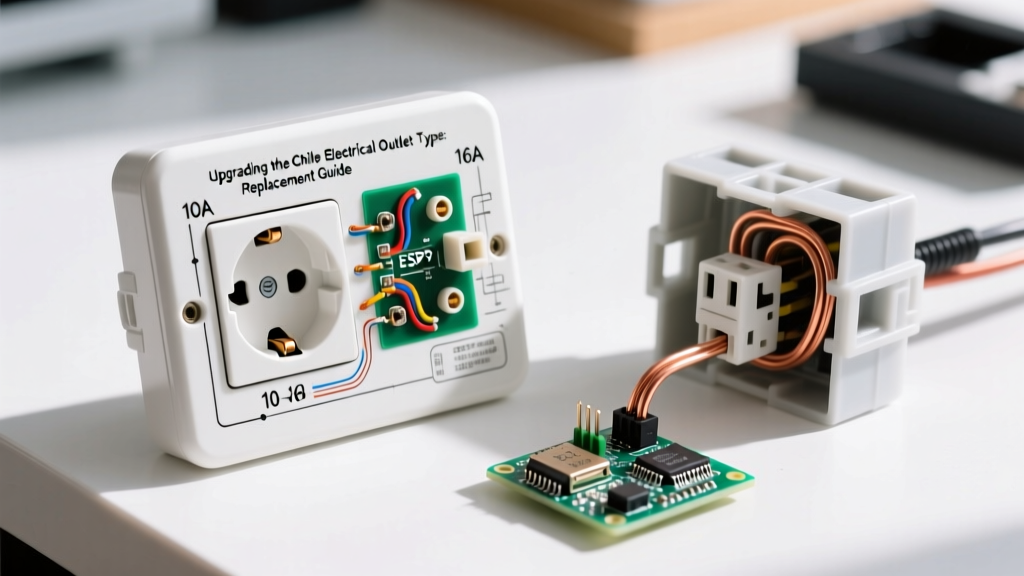

If you are renovating a property in Santiago, Valparaíso, or anywhere across the country, understanding the Chile electrical outlet type is critical for safety, compliance, and modern appliance compatibility. Unlike the standard North American NEMA configurations or the ubiquitous European Schuko plugs, Chile relies on the Type L receptacle (officially the CEI 23-50 standard). As of 2026, upgrading aging, ungrounded, or worn-out Type L receptacles is not just an aesthetic choice—it is a vital safety intervention governed by strict national codes.
This comprehensive upgrade and replacement guide will walk you through the exact specifications of the Chilean Type L system, the notorious 10A vs. 16A pin spacing dilemma, and the step-by-step process for replacing your outlets with modern, SEC-compliant alternatives.
The Anatomy of the Chile Electrical Outlet Type (Type L)
The Chile electrical outlet type is characterized by three round pins arranged in a straight, horizontal line. The central pin is the grounding (earth) connection, flanked by the phase (live) and neutral pins. According to the International Electrotechnical Commission (IEC), Type L is natively shared with Italy and a few other nations, but Chile operates on a 220V / 50Hz alternating current grid.
When planning an upgrade, the most critical factor to understand is that the Type L standard actually encompasses two distinct amperage variants that are physically incompatible without specialized universal sockets.
10A vs. 16A: The Pin Spacing Dilemma
One of the most common frustrations for DIYers and electricians in Chile is plugging a 10A appliance into a 16A socket (resulting in a loose, arcing connection) or trying to force a 16A plug into a 10A socket. When sourcing replacement receptacles from brands like Bticino, Schneider Electric, or Legrand, you must specify the amperage or opt for a 'Bipasso' (universal) socket.
| Specification | Type L (10 Amp) | Type L (16 Amp) |
|---|---|---|
| Pin Diameter | 4.0 mm | 5.0 mm |
| Pin Spacing (Center-to-Center) | 19.0 mm | 26.0 mm |
| Common Use Cases | Lighting, TVs, laptops, small kitchen appliances | Space heaters, AC units, washing machines, microwaves |
| Minimum Wire Gauge (SEC Code) | 2.5 mm² (AWG 14 equivalent) | 2.5 mm² to 4.0 mm² (depending on breaker size) |
When to Replace Your Chilean Receptacles
Outlets degrade over time. The internal brass or copper-alloy contacts lose their tension, leading to high-resistance connections that generate dangerous heat. You should immediately upgrade your Chile electrical outlet type receptacles if you observe any of the following failure modes:
- Plug Slippage: If a 10A plug falls out of the socket under the weight of its own cord, the internal contacts are compromised. This is a leading cause of electrical fires.
- Scorch Marks or Discoloration: Brown or black marks around the pin entry holes indicate previous arcing and overheating.
- Ungrounded 2-Pin Hybrids: Older homes (pre-1990s) often feature ungrounded 2-pin sockets or flat-prong adapters. The Superintendencia de Electricidad y Combustibles (SEC) strictly mandates grounding for all modern socket circuits.
- Cracked Faceplates: Bakelite or degraded PVC faceplates can expose live terminals, posing a severe shock hazard.
Step-by-Step Replacement Guide for Type L Outlets
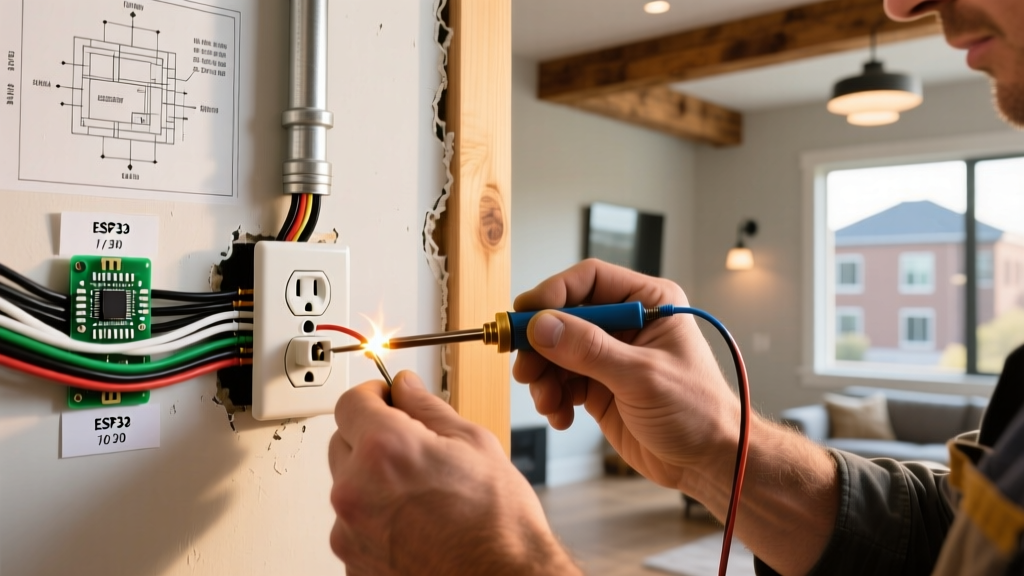
Replacing a standard Type L receptacle requires precision and adherence to local wiring color codes. While modern Chilean installations follow IEC color standards, older homes may feature legacy colors. Always verify with a multimeter.
Phase 1: Preparation and Safety
- Kill the Power: Locate your main distribution board and switch off the specific automático (circuit breaker) controlling the room. In Chile, socket circuits are typically protected by 16A or 20A C-curve breakers.
- Verify Zero Voltage: Insert a non-contact voltage tester or a multimeter into the socket. Test between Phase and Neutral, Phase and Ground, and Neutral and Ground to confirm the circuit is dead.
- Remove the Faceplate: Use a flathead screwdriver to gently pry off the decorative cover, then unscrew the mounting claws from the flush box (caja de derivación).
Phase 2: Wiring the New Receptacle
Modern Type L sockets from manufacturers like Bticino (LivingLight series) or Schneider (Opale series) feature screwless push-in terminals or traditional screw-clamp terminals.
- Identify the Wires:
- Modern SEC Standard: Brown (Phase/Live), Blue (Neutral), Green/Yellow (Ground).
- Legacy Chilean Standard: Red or Black (Phase), White (Neutral), Bare Copper or Green (Ground).
- Strip and Prep: Strip exactly 12mm of insulation from the wire ends. If using stranded wire, crimp on ferrule connectors to prevent fraying inside the terminal block.
- Connect the Ground First: Insert the Green/Yellow wire into the central terminal (marked with the earth symbol ⏚). This ensures the chassis is grounded before live connections are made.
- Connect Phase and Neutral: Insert the Phase wire into the 'L' terminal and the Neutral wire into the 'N' terminal. While Type L is technically reversible for AC, maintaining L/N consistency is best practice for smart home diagnostics.
- Tug Test: Gently pull each wire to ensure it is securely clamped.
Phase 3: Mounting and Testing
Carefully fold the wires back into the flush box. Use 3.5mm mounting screws to secure the receptacle claws to the box. Snap on the new polycarbonate faceplate, restore power at the breaker, and test with a receptacle tester to verify correct polarity and grounding continuity.
Modern 2026 Upgrades: Smart and USB Type L Receptacles
As smart home ecosystems expand in the South American market, the traditional Chile electrical outlet type has evolved. When upgrading, consider replacing standard passive sockets with active, integrated alternatives.
| Receptacle Type | Pros | Cons | Estimated Cost (CLP) |
|---|---|---|---|
| Standard Type L (10A/16A) | Reliable, inexpensive, universally compatible. | No device charging or smart monitoring. | $3,000 - $8,000 |
| USB-C / USB-A Type L | Frees up adapters; built-in 20W-30W PD charging. | Internal transformer generates mild heat; higher cost. | $18,000 - $35,000 |
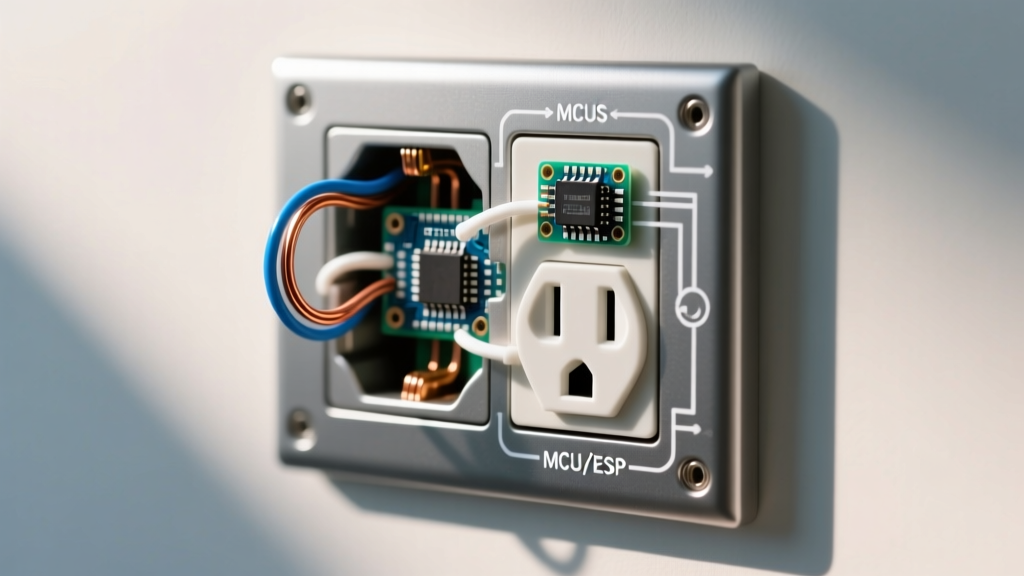
| Smart Wi-Fi Type L | Energy monitoring, voice control, scheduling. | Requires deep flush boxes (min 45mm); Wi-Fi dependency. | $25,000 - $45,000 |
Note: If installing USB or Smart receptacles, ensure your wall cavities have deep flush boxes. Standard Chilean drywall boxes are often only 35mm deep, which will crush the wiring behind a smart socket's bulky rear chassis. Upgrade to 45mm or 50mm deep boxes during the rough-in phase.
Navigating SEC Regulations and Safety Codes
Any electrical upgrade in Chile must comply with the regulations set forth by the SEC. The governing document is the Decreto Supremo 71, which outlines the safety conditions for electrical installations.
'All socket outlet circuits must be protected by a differential residual current device (RCD) with a maximum tripping current of 30mA, alongside the corresponding thermomagnetic breaker.' — SEC Regulatory Guidelines for Residential Installations
When upgrading your Chile electrical outlet type, ensure that the circuit feeding the new receptacles is protected by a 30mA diferencial (RCD/GFCI equivalent). If you are adding new sockets to an older home that lacks RCD protection at the breaker panel, you must either retrofit the main panel with an RCD or install specialized inline residual current protection. Failing to do so is a direct violation of Chilean safety codes and poses a lethal shock hazard in wet areas like kitchens and bathrooms.
Final Troubleshooting Tips
If you replace a socket and the breaker immediately trips upon resetting:
- Check for Ground Faults: A bare copper ground wire may be touching the Phase terminal or the metal chassis of the flush box.
- Verify Wire Gauge: Using 1.5mm² wire on a 20A socket circuit will cause the breaker to trip under load due to voltage drop and heat generation. Always match 2.5mm² wire to 16A/20A socket circuits.
- Inspect the Flush Box: Old plaster boxes may contain debris or moisture that creates a short circuit when the new socket is pushed into the wall.
By understanding the precise mechanical and regulatory nuances of the Chile electrical outlet type, you can execute upgrades that are not only aesthetically pleasing but fundamentally safe and compliant for decades to come. For further reading on international plug standards and safety metrics, refer to the World Standards Type L Guide.