
Discovering a wall receptacle that is unusually warm or outright hot to the touch is one of the most alarming scenarios for a homeowner. While a slight warmth is normal when running high-draw appliances like space heaters or vacuum cleaners, an electrical outlet hot enough to cause discomfort indicates excessive resistance in the circuit. According to the National Fire Protection Association (NFPA), electrical distribution and lighting equipment are consistently among the top causes of home structure fires, often originating from degraded outlet connections.
In this comprehensive diagnostic guide, we will break down the physics of receptacle heating, provide a professional troubleshooting matrix, and outline the exact steps to safely diagnose and resolve the issue using 2026 industry standards.
Diagnostic Matrix: Symptom vs. Probable Cause
Not all heat is created equal. Use the table below to triage your specific situation before opening up the electrical box.
| Symptom Profile | Probable Cause | Danger Level | Immediate Action |
|---|---|---|---|
| Slightly warm to touch | Normal high-draw appliance (e.g., 1500W space heater) | Low | Monitor; ensure load is <80% of circuit capacity |
| Hot to touch, no scorch marks | Loose terminal screw or backstabbed wire | High | Turn off breaker, inspect wiring terminations |
| Hot, buzzing sound, flickering lights | Arcing / Failing internal receptacle contacts | Critical | Kill power, replace receptacle immediately |
| Hot, accompanied by burning smell | Melting insulation / Active fire hazard | Extreme | Kill main power if breaker won't trip, call 911 |
The 4 Primary Culprits of Hot Receptacles
To understand why an outlet gets hot, we must look at Ohm's Law and Joule Heating ($P = I^2R$). When resistance ($R$) increases at a connection point, the heat generated ($P$) increases exponentially with the current ($I$). Here are the four main failure modes that introduce resistance into your wall receptacles.
1. Backstabbed (Push-In) Wiring Connections
Builder-grade receptacles often feature 'backstab' push-in terminals. These rely on a small internal brass leaf spring to grip the stripped 14 AWG copper wire. Over years of thermal cycling (heating up under load, cooling down when unplugged), this spring loses its metallurgical tension. The grip loosens, micro-arcing occurs, and resistance skyrockets. The Electrical Safety Foundation International (ESFI) strongly recommends against push-in connections for any high-draw circuits.
2. Loose Terminal Screws and Torque Failures
Even side-wired (screw terminal) connections can fail if not tightened to the manufacturer's specifications. The National Electrical Code (NEC) now strictly mandates the use of a calibrated torque screwdriver for terminations. A standard 15A or 20A receptacle typically requires 14 in-lbs of torque. Under-torquing leaves a microscopic air gap that causes arcing; over-torquing can strip the brass threads or shear the wire strands.
3. Worn Internal Brass Wipers
Inside the receptacle, brass wipers grip the prongs of your appliance plug. If you frequently plug and unplug heavy cords, or use plugs with slightly undersized prongs, these wipers stretch out. A loose plug-to-receptacle connection creates a high-resistance bottleneck right at the face of the outlet, generating intense localized heat.
4. Overloaded Circuits and the 80% Rule
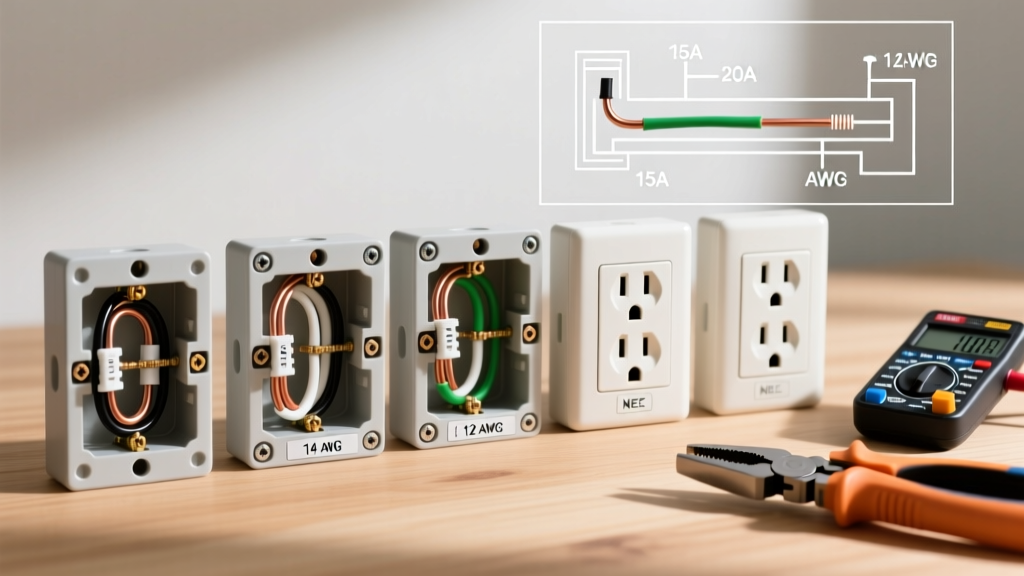
A 15-amp circuit using 14 AWG wire is rated for a maximum continuous load of 12 amps (80% of the breaker rating). Running a 13-amp vacuum cleaner and a 5-amp television on the same 15A circuit will not instantly trip a standard thermal-magnetic breaker, but it will cause the wires and receptacle contacts to run dangerously hot over time.
Step-by-Step Troubleshooting Protocol
If you suspect your outlet is dangerously hot, follow this diagnostic flow. You will need a non-contact voltage tester (e.g., Klein Tools NCVT-3, ~$35), a digital multimeter (e.g., Fluke 117 True-RMS, ~$200), and an insulated screwdriver set.
- Isolate the Load: Unplug all devices from the suspect outlet and any downstream outlets on the same circuit. Wait 30 minutes. If the outlet remains warm with zero load, you have a short circuit or a severe fault upstream—leave the breaker off and call an electrician.
- Verify Power Down: Turn off the circuit breaker at the main panel. Use your NCVT-3 to verify the absence of voltage at the receptacle face. Note: Always test the NCVT on a known live source before and after checking the dead outlet to ensure the tool's battery hasn't failed.
- Extract and Inspect: Remove the faceplate and unscrew the receptacle from the junction box. Carefully pull it out without bending the wires.
- Check for Thermal Damage: Look for melted thermoplastic around the terminal screws, black soot (carbon tracking), or copper wire that has turned dark purple/black (annealing from extreme heat).
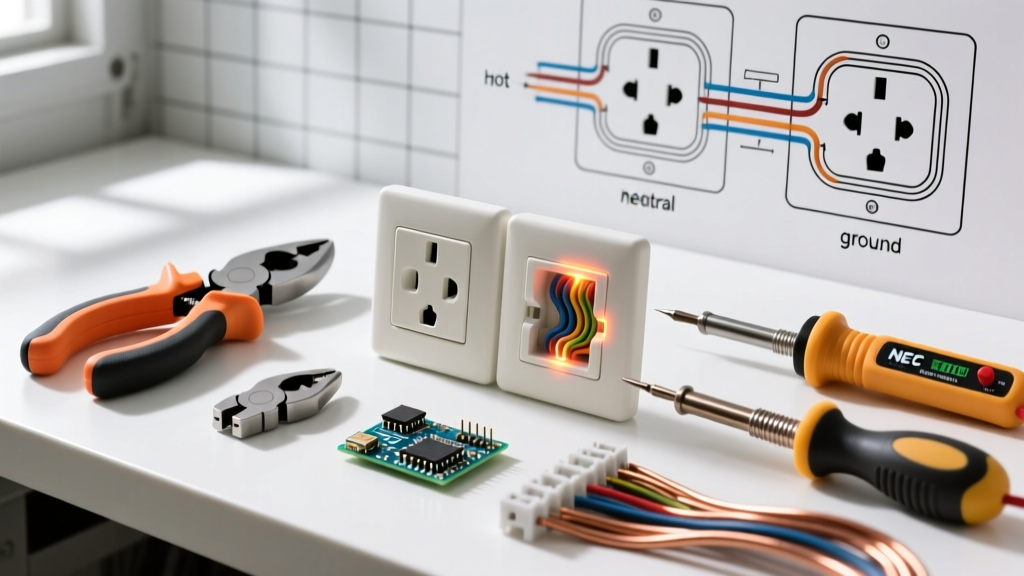
- Verify Torque and Termination: If backstabbed, release the wires using a small flathead screwdriver in the release slot. Strip the wires back to fresh, shiny copper using wire strippers, and hook them clockwise around the brass side-screws. Tighten to 14 in-lbs using a torque screwdriver.
2026 Receptacle Upgrade Guide: Builder vs. Spec-Grade
If your internal wipers are worn or the plastic housing is warped from heat, the receptacle must be replaced. Do not buy the cheapest option available. The Occupational Safety and Health Administration (OSHA) emphasizes using properly rated, heavy-duty components for environments subject to high electrical loads.
- Builder-Grade (e.g., Leviton T5262): Costs around $3.50. Features thinner brass contacts and a lower thermal tolerance. Acceptable for low-draw areas like bedrooms (lamps, phone chargers).
- Commercial Spec-Grade (e.g., Hubbell 5362 or Leviton 5362): Costs around $8.50. Features massive brass contact wipers, glass-filled nylon faces for higher heat resistance, and steel mounting straps. This is the mandatory choice for kitchens, living rooms, and areas with space heaters.
- Hospital Grade (e.g., Leviton 8300-I): Costs around $14.00. Features the tightest plug grip and highest impact resistance. Overkill for most homes, but excellent for critical medical equipment or heavy workshop tools.
When to Call a Professional: 2026 Cost Expectations
If you open the junction box and find melted wire nuts, scorched drywall, or aluminum wiring (identifiable by its silver color and 'AL' stamp), stop immediately. Aluminum wiring requires specialized CO/ALR receptacles and antioxidant paste, and improper handling is a massive fire risk.
2026 National Average Pricing for Outlet Repairs:
• Diagnostic Service Call: $150 – $250
• Standard Receptacle Replacement (Spec-Grade): $125 – $200
• Junction Box Wire Repair / Pigtailing: $250 – $400
• Full Circuit Rewiring (if insulation is compromised): $600 – $1,200+
Frequently Asked Questions
Can a bad breaker cause an outlet to get hot?
Yes, but indirectly. If a breaker's internal bus bar connection in the panel is loose, it can cause voltage drops and localized heating at the panel, which may manifest as poor performance or heat downstream. However, a hot outlet is almost always a localized issue at the receptacle itself.
Are GFCI outlets supposed to get warm?
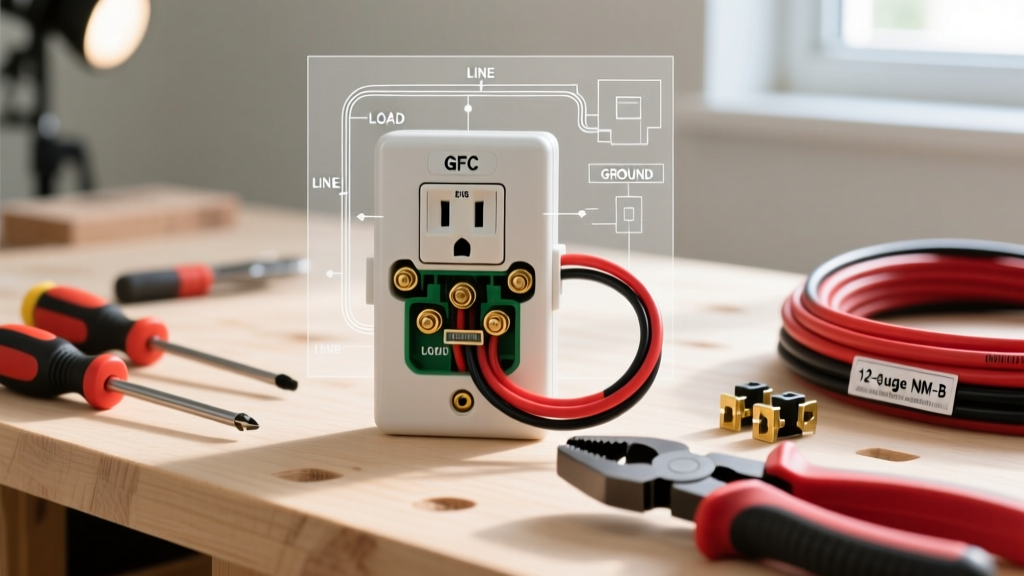
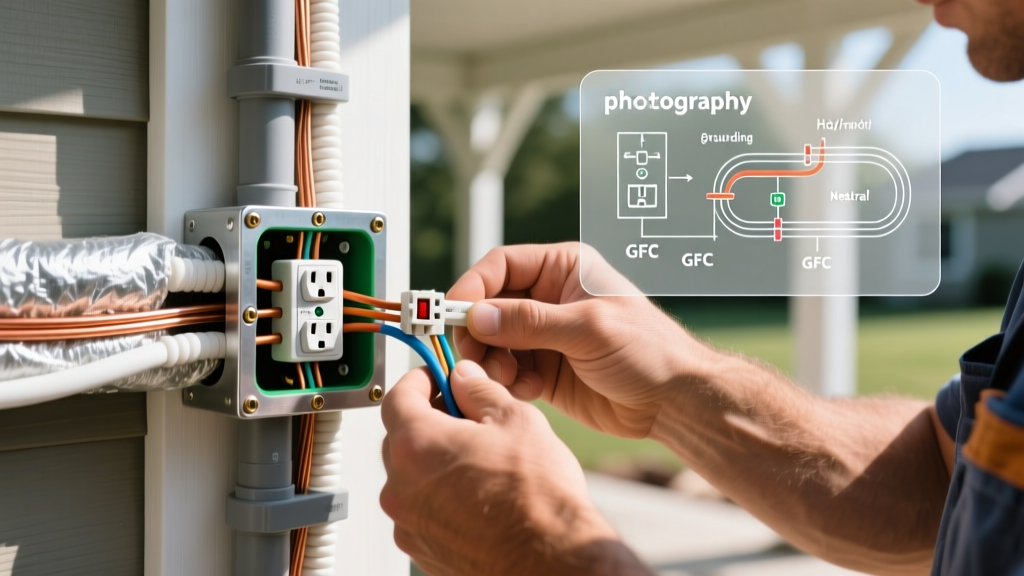
GFCI (Ground Fault Circuit Interrupter) receptacles contain internal solid-state circuitry and a small transformer. It is entirely normal for the face of a GFCI outlet to feel slightly warm to the touch, even with no load plugged in. However, it should never be 'hot' or uncomfortable to hold your hand against.
Does a smart plug cause the outlet to overheat?
Smart plugs (like Kasa or Wyze) draw a tiny amount of standby current (usually less than 0.5W) for their Wi-Fi radios. This will not overheat a healthy outlet. However, if you run a 1500W heater through a smart plug rated only for 10A or 15A, the smart plug itself can melt before the wall outlet does. Always check the amperage rating printed on the smart plug's casing.