
Deploying Feit Electric Triple Outlet Outdoor Smart Plugs: A 2026 Material & Installation Guide
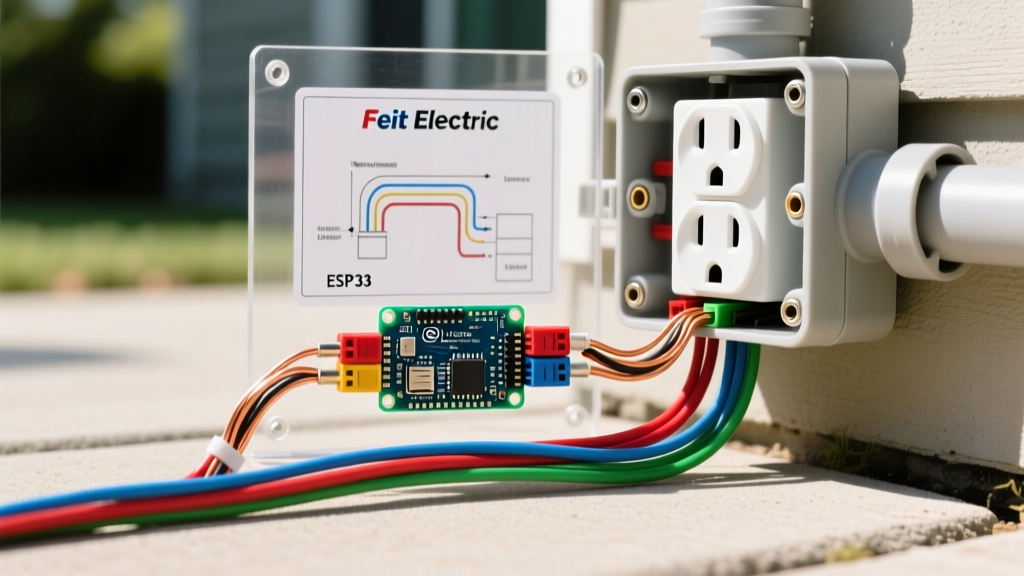
Transitioning from mechanical dial timers to intelligent Wi-Fi relays has fundamentally changed how we manage exterior lighting, water features, and holiday displays. Among the most popular solutions on the market are the Feit Electric triple outlet outdoor smart plugs (specifically model OM300/3/AG/WIFI). While these devices offer unparalleled convenience via the Feit Electric app and Tuya/Smart Life ecosystems, treating them as simple 'plug-and-play' gadgets is a common mistake that leads to tripped breakers, welded relays, and weather-damaged electronics.
This comprehensive tool and material guide dives deep into the electrical realities of deploying these smart plugs in exterior environments. We will cover National Electrical Code (NEC) compliance, inductive load limitations, 2.4GHz Wi-Fi penetration challenges, and the critical weatherproofing protocols required to ensure your outdoor automation survives the elements in 2026 and beyond.
Core Specifications & Electrical Limits
Before plugging any smart device into an exterior circuit, you must understand its hard electrical boundaries. The Feit OM300/3/AG/WIFI is built for standard North American residential circuits, but its internal relays have strict thermal and arc-suppression limits.
| Specification | Rating / Detail | Field Notes & Constraints |
|---|---|---|
| Model Number | OM300/3/AG/WIFI | Verify this exact model; older dual-outlet versions have different ampacity limits. |
| Voltage & Amperage | 125V AC / 15A Max | Requires a standard 15A or 20A NEMA 5-15R receptacle. |
| Max Wattage (Resistive) | 1875W | Applies to incandescent lighting and resistive heaters only. |
| Continuous Load Limit | 1500W (80% Rule) | NEC requires derating for loads running 3 hours or more. |
| Motor / Inductive Load | 1/2 HP (approx. 6A) | Do not exceed this for pond pumps, aerators, or compressors. |
| Wi-Fi Protocol | 2.4GHz 802.11 b/g/n | Will NOT connect to 5GHz or 6GHz (Wi-Fi 6E) networks. |
| Enclosure Rating | NEMA 3R Equivalent | Protects against falling rain and ice; not submersible. |
| Current Retail Pricing | $24.99 - $29.99 | Based on 2026 average pricing at major hardware retailers. |
Pre-Installation: The Host Receptacle Audit
The most critical point of failure when using Feit Electric triple outlet outdoor smart plugs is not the smart plug itself, but the host receptacle it plugs into. According to the National Fire Protection Association (NFPA), outdoor electrical safety relies heavily on proper GFCI protection and weatherproof enclosures.
1. GFCI Protection & Nuisance Tripping
All 15A and 20A, 125V outdoor receptacles must be GFCI (Ground Fault Circuit Interrupter) protected. However, smart plugs contain internal switching power supplies and EMI suppression capacitors (Y-capacitors) that intentionally leak a microscopic amount of current (typically <0.5mA) to the ground wire. If your host GFCI receptacle is older (pre-2015) or has degraded due to UV and moisture exposure, this normal leakage can cause 'nuisance tripping.' If your Feit plug randomly loses power, test the host GFCI with a dedicated tester and consider replacing the receptacle with a modern, self-testing GFCI model.
2. The 'In-Use' Cover Mandate
While the Feit smart plug features a weather-resistant rubberized housing, the connection point where its prongs meet the host outlet is highly vulnerable to driven rain and snow. NEC Article 406.9(B)(1) mandates that receptacles in wet locations must be equipped with an 'in-use' weatherproof cover (often called a bubble cover). This cover must accommodate the bulk of the triple smart plug while remaining fully closed. If your current flat or shallow bubble cover does not close over the Feit device, you must upgrade to an extra-deep, gasketed weatherproof cover before deployment.
Wi-Fi Signal Mapping for Exterior Walls
Smart plugs rely on a stable 2.4GHz Wi-Fi connection to receive commands from the cloud. Exterior walls are notoriously hostile to RF signals. Modern homes utilize Low-E (low-emissivity) glass windows, which contain microscopic metallic layers that block Wi-Fi. Furthermore, traditional stucco contains a metal wire lath mesh that acts as a Faraday cage, severely attenuating 2.4GHz signals.
- Wood Framing with Vinyl Siding: Generally allows adequate 2.4GHz penetration. Standard indoor routers usually suffice.
- Brick, Stone, or Stucco: Expect a 50% to 80% signal loss. You will likely need a Wi-Fi mesh node placed on an interior wall directly opposite the outdoor plug location.
- Signal Verification: Before mounting, use a smartphone Wi-Fi analyzer app at the exact receptacle location. You need a minimum RSSI (Received Signal Strength Indicator) of -65 dBm for reliable smart plug relay triggering.
Load Management: Resistive vs. Inductive Hazards
A frequent cause of catastrophic failure in outdoor smart plugs is 'relay welding.' This occurs when the internal mechanical relay attempts to switch off a high-inrush inductive load, creating an electrical arc that literally melts the metal contacts together, leaving the plug permanently stuck in the 'ON' position.
What You CAN Safely Plug In (Resistive Loads)
Resistive loads have no inrush current spike. You can safely load the Feit triple plug up to its 15A (1875W) maximum, provided you adhere to the 80% continuous load rule (1500W max for 3+ hours).
- Incandescent or LED patio string lights (Ensure transformers are rated for outdoor use).
- Resistive outdoor patio heaters (Check wattage carefully; many draw 1500W alone).
- Electric snow melting mats (Verify total amperage across all three outlets).
What Requires a Contactor (Inductive Loads)
Inductive loads, such as motors and compressors, draw 5 to 7 times their rated running current for a fraction of a second upon startup. The Electrical Safety Foundation International (ESFI) warns against overloading portable outdoor electrical devices with heavy machinery.
- Pond Pumps & Fountain Aerators: If the pump exceeds 1/2 HP, do not plug it directly into the smart plug. Instead, use the Feit plug to trigger a hardwired 30A outdoor contactor, which handles the heavy motor load.
- Air Compressors: Never use a smart plug to cycle an air compressor; the inrush current will degrade the smart plug's internal relay within weeks.
- Holiday Inflatables: Generally safe, as the internal blowers are typically fractional-horsepower, but ensure the combined startup surge of multiple inflatables does not exceed 12A.
Step-by-Step Installation & Weatherproofing Protocol
- Circuit Verification: Plug a standard lamp or voltage tester into the host outlet to confirm power and verify the GFCI trips correctly when the test button is pressed.
- Pre-Pairing Indoors: Do not attempt to pair the Feit plug while standing outside. Plug it into an indoor outlet near your router, download the Feit Electric app, connect it to your 2.4GHz network, and apply any pending firmware updates.
- Physical Placement: Insert the smart plug into the outdoor receptacle. Ensure the rubber gasket on the back of the Feit unit sits flush against the receptacle cover to seal out moisture.
- Creating a Drip Loop: This is a non-negotiable step for any corded outdoor device. When plugging extension cords or appliance cords into the bottom of the Feit triple outlet, ensure the cord dips below the level of the receptacle before rising to the appliance. This 'drip loop' ensures that rainwater running down the cord drips off the lowest point rather than traveling up into the smart plug's socket.
- Seal the Enclosure: Close the in-use bubble cover and latch it securely. If the cord prevents the latch from closing, use a bungee cord or replace the cover with a deeper model. Never leave the cover propped open.
Expert Tip: Apply a thin layer of dielectric grease to the prongs of the smart plug before inserting it into the host receptacle. This prevents galvanic corrosion between the brass prongs and the internal copper/bronze contacts of the outdoor outlet, which is a primary cause of voltage drop and overheating in exterior installations.
Troubleshooting Common Field Failures
Even with perfect installation, outdoor environments introduce variables that can disrupt smart home automation. Here is how to diagnose the most common issues:
Device Shows 'Offline' in App
If the plug loses connection, it is almost always a Wi-Fi handshake timeout caused by signal degradation through the exterior wall. Solution: Do not move the plug. Instead, add a Wi-Fi mesh satellite node to the nearest interior room. Alternatively, if your router supports it, create a dedicated 2.4GHz IoT SSID with reduced channel width (20MHz) to maximize wall penetration.
GFCI Trips Immediately Upon Plugging In
As discussed, this is usually due to Y-capacitor leakage in the smart plug interacting with an aging GFCI. Solution: Replace the host GFCI receptacle with a new, UL-listed 20A weather-resistant (WR) GFCI. Modern WR GFCIs feature superior internal shielding and more accurate trip thresholds that tolerate smart plug leakage.
Relay Clicks but Power Does Not Flow
This indicates internal relay contact degradation or a blown internal thermal fuse, usually caused by exceeding the 1/2 HP inductive load limit or a short circuit in a connected appliance. Solution: The OM300/3/AG/WIFI is a sealed unit and cannot be safely repaired. Discard it, identify the fault in the connected appliance, and replace the smart plug.
Advanced Automations for Exterior Environments
Once your Feit Electric triple outlet outdoor smart plugs are securely installed and weatherproofed, leverage the app's advanced logic features to reduce energy waste:
- Geofencing: Set the patio lights to turn on automatically when your smartphone crosses a 1-mile geofence boundary on your commute home.
- Solar Elevation Triggers: Instead of fixed timers that require seasonal adjustment, use the app's 'Sunset/Sunrise' feature, which pulls local astronomical data to turn on landscape lighting exactly at civil dusk.
- Temperature Interlocks: Pair the plug with an outdoor smart temperature sensor. Configure an automation to cut power to your outdoor water fountain if the ambient temperature drops below 34°F (1°C) to prevent ice damage to the pump impeller.
By treating the Feit Electric triple outlet outdoor smart plug not just as a gadget, but as a critical component of your exterior electrical infrastructure, you ensure safe, reliable, and code-compliant automation for years to come.