
The Hidden Dangers of Outdoor Receptacles
Installing an external electrical outlet is not simply a matter of mounting a standard indoor receptacle to an exterior wall and calling it a day. Outdoor environments subject electrical systems to extreme thermal cycling, ultraviolet (UV) radiation, driving rain, and corrosive atmospheric salts. According to the U.S. Consumer Product Safety Commission (CPSC), improper outdoor wiring is a leading cause of residential electrical fires and severe shock hazards. To ensure longevity and safety, every external electrical outlet must strictly adhere to the National Electrical Code (NEC) guidelines for damp and wet locations.
This guide provides a deep-dive into NEC code compliance, component selection, and advanced installation techniques required to build a fail-safe outdoor power system.
Core NEC Mandates for External Electrical Outlets
The National Fire Protection Association (NFPA 70) outlines stringent requirements for outdoor receptacles. Ignoring these articles will result in failed inspections and severe safety risks.
1. GFCI Protection and the 'WR' Designation
Under NEC Article 210.8(A)(3), all 125-volt through 250-volt receptacles supplied by single-phase branch circuits rated 150 volts or less to ground, and 50 amperes or less, installed outdoors must have Ground-Fault Circuit Interrupter (GFCI) protection. However, standard indoor GFCIs will fail outdoors within 12 to 18 months due to internal corrosion. You must use a GFCI receptacle specifically stamped with 'WR' (Weather-Resistant). WR models utilize UV-stabilized thermoplastics and nickel-plated brass contacts that resist galvanic corrosion.
2. 'Extra-Duty' In-Use Covers
NEC Article 406.9(B)(1) mandates that receptacles in wet locations must be enclosed in weatherproof enclosures. Crucially, the code requires an 'Extra-Duty' while-in-use cover. This means the enclosure must remain completely weatherproof even when a cord is plugged in and the cover is closed. Standard flat metal flap covers are illegal for new installations in wet locations.
3. Box Sealing and Condensation Management
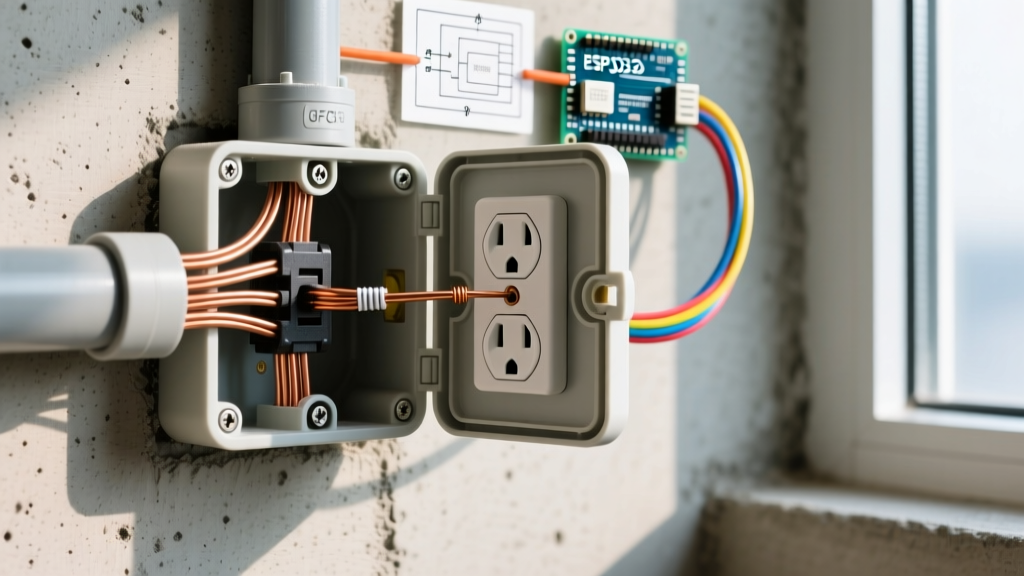
A common edge-case failure is water accumulation inside the junction box due to internal condensation, not external leaks. When mounting an external electrical outlet to siding or masonry, apply a bead of 100% silicone or polyurethane sealant (such as OSI Quad) to the top and sides of the mounting flange. Leave the bottom unsealed. This allows any internal condensation to weep out rather than pooling at the bottom of the box and submerging the terminal screws.
Component Selection Matrix: Standard vs. Code-Compliant
Choosing the correct hardware is critical. Below is a comparison of standard components versus the specific models required for a safe, code-compliant external electrical outlet.
| Component Type | Non-Compliant / Indoor Use | NEC-Compliant Outdoor Specification | Estimated Cost (2026) |
|---|---|---|---|
| GFCI Receptacle | Standard 15A GFCI (e.g., Leviton 7899) | 20A WR GFCI (e.g., Leviton GFWT2-000) | $24.00 - $29.00 |
| Enclosure Cover | Flat flip-cover or standard bubble cover | Extra-Duty In-Use (e.g., TayMac MX5400) | $18.00 - $35.00 |
| Junction Box | Standard indoor nail-on plastic box | Cast Aluminum or PVC with threaded hubs | $12.00 - $28.00 |
| Sealant | Acrylic Latex Caulk (painter's caulk) | Polyurethane or 100% Silicone (e.g., GE Advanced) | $8.00 - $12.00 |
Underground Feeder Rules and Burial Depths
If your external electrical outlet is mounted on a freestanding post, pergola, or detached structure, you must route power underground. NEC Article 300.5 and Table 300.5 dictate minimum cover requirements for underground services. Failing to bury conduit at the proper depth risks severing the line with a standard garden shovel or landscaping aerator.
Minimum Burial Depths by Wiring Method
- Rigid Metal Conduit (RMC) or Intermediate Metal Conduit (IMC): 6 inches minimum cover.
- PVC Conduit (Schedule 40/80): 18 inches minimum cover.
- Direct Burial UF-B Cable (Underground Feeder): 24 inches minimum cover.
- Residential Branch Circuits (120V, 20A max, GFCI protected): 12 inches minimum cover (when using approved direct-burial cable or conduit).
Pro-Tip for PVC Conduit: Always use Schedule 80 PVC where the conduit transitions from underground to above-ground and is subject to physical damage (e.g., near a driveway or lawn edge where weed whackers operate). Schedule 40 is only permitted above ground where it is protected from physical impact.
Common Failure Modes and Edge Cases
Even with code-compliant parts, environmental factors can compromise an external electrical outlet. Understanding these failure modes separates amateur DIYers from seasoned electrical professionals.
Capillary Action in Wire Insulation
When stripping UF-B or THWN-2 wire for outdoor termination, moisture can sometimes wick up between the copper strands and the insulation via capillary action, eventually reaching the receptacle terminals. To prevent this, strip the wire jacket back an extra 1/4 inch, apply a small amount of oxide-inhibiting compound (like Noalox), and ensure the conduit has a drip loop before entering the junction box.
Insect Infiltration
Mud daubers and carpenter ants are notorious for nesting inside empty conduit runs and junction boxes. An ant nest inside a GFCI receptacle can cause the internal sensing coil to short out, resulting in nuisance tripping. Always use threaded conduit hubs with proper sealing locknuts, and pack empty conduit voids with duct seal putty at the point of entry.
UV Degradation of Gaskets
The foam gaskets provided with cheap, big-box-store in-use covers often dry-rot and crumble after two summers of direct UV exposure. When the gasket fails, wind-driven rain bypasses the cover and hits the WR receptacle. Invest in heavy-duty polycarbonate covers with thick, replaceable silicone gaskets, such as the Hubbell Bell X-Treme series.
Pre-Inspection Compliance Checklist
Before energizing the circuit or calling your local AHJ (Authority Having Jurisdiction) for a final inspection, verify your external electrical outlet against this checklist:
- GFCI Verification: Is the receptacle a WR (Weather-Resistant) model? Press the 'Test' button to ensure it trips and cuts power.
- Enclosure Rating: Is the cover listed as 'Extra-Duty' and does it close fully over the largest plug you intend to use?
- Sealant Application: Are the top and sides of the mounting flange sealed to the siding, while the bottom is left open for weeping?
- Conduit Support: Is the PVC conduit strapped within 3 feet of the junction box, and at intervals no greater than 3 feet thereafter?
- Torque Specifications: Were the terminal screws tightened to the manufacturer's specified inch-pound rating? (Loose connections cause arcing and heat buildup, which is magnified in outdoor thermal swings).
- Box Fill Calculation: Does the junction box have adequate cubic inch volume for the number of conductors and the GFCI device? (Most standard outdoor boxes require a minimum of 18-22 cubic inches for a GFCI).
By strictly adhering to these NEC guidelines and utilizing heavy-duty, weather-rated components, your external electrical outlet will provide safe, reliable power for decades, easily surviving the harshest environmental conditions while maintaining absolute code compliance.