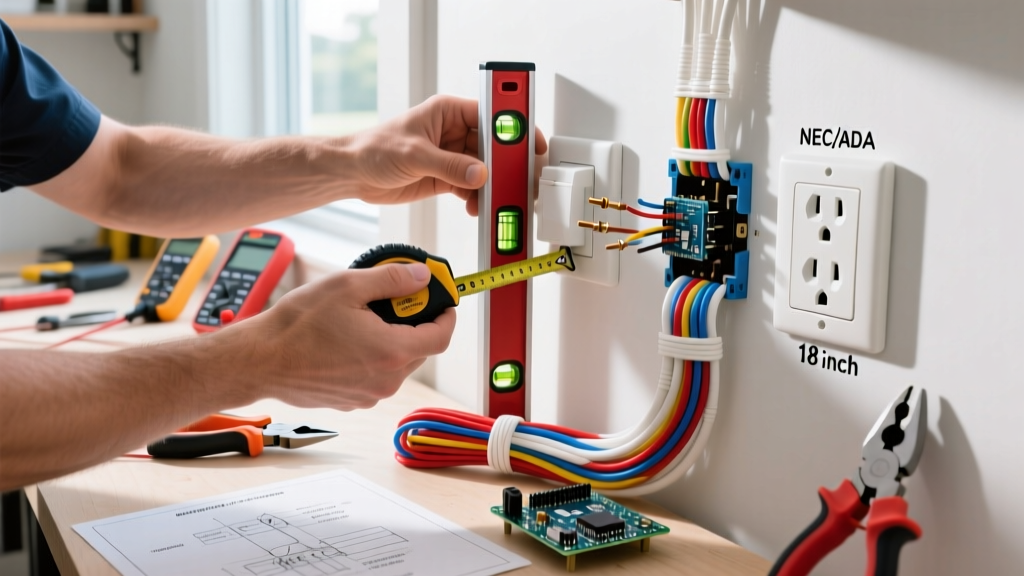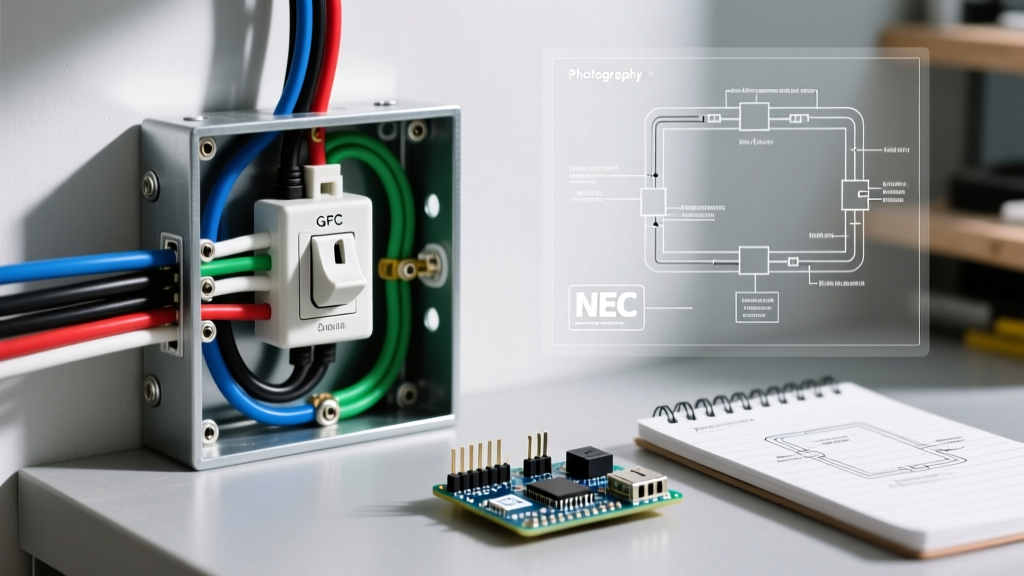

Decoding the Washing Machine Electrical Outlet Code
Installing a receptacle for a high-draw, high-vibration appliance like a modern washing machine requires strict adherence to the National Electrical Code (NEC). The washing machine electrical outlet code is not merely a suggestion; it is a critical safety framework designed to prevent electrical fires, shock hazards, and nuisance tripping caused by motor startup surges. Modern high-efficiency (HE) washing machines utilize complex inverter motors and sensitive PCBs that demand clean, stable power and robust fault protection.
2026 Safety Update: Under the latest NEC adoptions, the laundry area is classified as a high-risk zone due to the presence of water and heavy inductive loads. Dual-function protection (AFCI and GFCI) is now the undisputed standard for new installations and major renovations. Relying on older code cycles that only required GFCI within 6 feet of a sink is a severe compliance failure.
According to the National Fire Protection Association (NFPA), electrical failures or malfunctions are among the leading causes of home fires, with laundry rooms presenting unique risks due to lint accumulation, water proximity, and appliance vibration. This guide provides a master-class, step-by-step installation procedure that guarantees full code compliance and long-term reliability.
Core NEC Requirements for Laundry Receptacles
Before pulling any wire, you must understand the specific code sections that govern the washing machine electrical outlet code. The table below breaks down the mandatory requirements for 2026 installations.
| NEC Section | Requirement | Practical Application |
|---|---|---|
| 210.11(C)(2) | Dedicated 20-Amp Circuit | The laundry room must have at least one 20A branch circuit dedicated solely to laundry equipment. No lighting or other rooms can share this circuit. |
| 210.8(A)(10) | GFCI Protection | All 125V through 250V receptacles in the laundry area must have Ground-Fault Circuit-Interrupter protection, regardless of proximity to a sink. |
| 210.12(A) | AFCI Protection | Arc-Fault Circuit-Interrupter protection is required for all 120V, single-phase, 15- and 20-amp branch circuits supplying laundry areas in dwelling units. |
| 210.21(B)(2) | Receptacle Rating | A single receptacle on an individual 20A circuit must be rated 20A (NEMA 5-20R). If a duplex receptacle is used, 15A (NEMA 5-15R) is technically permitted, but 20A is best practice. |
Step-by-Step Installation: Wiring a Code-Compliant Laundry Outlet
Follow this exact sequence to ensure your installation meets the washing machine electrical outlet code while maximizing the lifespan of your electrical components.
Step 1: Panel Prep and Breaker Selection
To satisfy both the AFCI and GFCI requirements without installing bulky pigtail devices in the wall box, you must install a Dual-Function (DF) circuit breaker at the main panel. The Eaton BR220DF (20-Amp Dual Function CAFCI/GFCI) is the industry standard for this application, typically costing between $55 and $68 in 2026.
- De-energize the Panel: Shut off the main breaker. Use a non-contact voltage tester and a digital multimeter to verify zero voltage at the bus bars.
- Install the DF Breaker: Snap the Eaton BR220DF into the panel. Connect the white neutral pigtail directly to the neutral bar. Never land the breaker's neutral pigtail on the ground bar, as this will cause immediate nuisance tripping and violate NEC 250.24(A)(5).
- Terminate the Circuit Neutral: The white wire from your 12/2 NM-B cable must land on the breaker's designated neutral terminal, not the panel's neutral bar. The breaker needs to monitor the neutral current to detect ground faults.
Step 2: Cable Routing and Box Selection
Washing machines draw significant current during motor startup (Locked Rotor Amps can briefly spike to 15A-18A on a 20A circuit). Voltage drop and heat generation are real concerns.
- Wire Gauge: Use 12/2 NM-B (Romex) with a bare copper ground. Do not use 14 AWG wire on a 20A circuit; this is a severe fire hazard and an immediate code violation.
- Box Volume: Select a deep electrical box. A standard 18 cubic inch box is insufficient for 12 AWG wire and a commercial-grade receptacle. Use a Carlon B618R (22.5 cu. in.) or an extra-deep metal stud box to allow for proper wire bending radius as mandated by NEC 300.14 (minimum 3 inches of free wire extending past the box face).
Step 3: Selecting the Right Receptacle
Do not use a standard $1.50 residential-grade receptacle for a washing machine. The harmonic vibrations generated during a 1200 RPM spin cycle will loosen side-screw terminals over time, leading to high-resistance connections, arcing, and thermal melting. You must use a commercial-grade, back-wired receptacle. The Leviton 5362-W (20-Amp Commercial Duplex) or Hubbell HBL5362 features internal screw-clamp plates that secure the wire 360 degrees, making them immune to vibration-induced loosening.
Step 4: Precision Termination
According to OSHA electrical safety guidelines, proper torque on electrical connections is vital to prevent overheating. Most modern commercial receptacles specify a torque value on the back of the yoke.
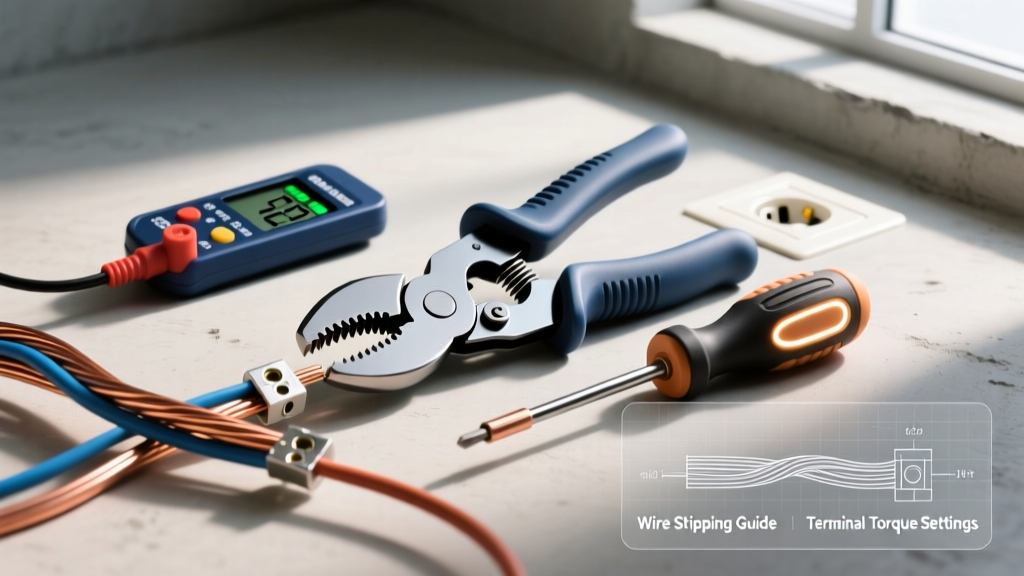
- Strip the Wire: Remove exactly 5/8 inch of insulation from the 12 AWG conductors. Use a wire stripping gauge to avoid nicking the copper, which creates a weak point prone to snapping under vibration.
- Back-Wire the Conductors: Insert the black (hot) and white (neutral) wires into the back-wire clamps of the Leviton 5362-W. Tighten the terminal screws using a calibrated torque screwdriver set to 14 in-lbs. This specific torque ensures the clamp bites into the copper without crushing it.
- Grounding: Attach the bare copper ground to the green grounding screw. If using a metal box, you must also pigtail the ground to the box itself using a 10-32 green grounding screw.
- Yoke Alignment: Snap the plaster ears off the receptacle yoke if installing in a drywall cutout, ensuring the device sits flush against the gypsum board to prevent the faceplate from cracking when the washing machine is pushed against the wall.
Common Code Violations and Troubleshooting Edge Cases
Even experienced DIYers make mistakes when interpreting the washing machine electrical outlet code. Avoid these critical failure modes:
- The Shared Circuit Trap: Wiring the laundry outlet on the same 20A circuit as a bathroom GFCI or a sump pump. If the washing machine trips the breaker, you lose power to critical home infrastructure. The laundry circuit must be entirely isolated.
- The GFCI Receptacle Mistake: Installing a GFCI receptacle in the wall box instead of using a DF breaker. While technically legal in some jurisdictions if AFCI is also provided upstream, GFCI receptacles are highly susceptible to failing when exposed to the micro-vibrations and humidity of a laundry room. A DF breaker at the panel is the superior, code-preferred method.
- Bootleg Grounds on Older Homes: In pre-1960s homes with Knob & Tube or ungrounded Romex, replacing a 2-prong outlet with a 3-prong GFCI receptacle without an Equipment Grounding Conductor (EGC). While NEC 406.4(D)(2) allows this with a "No Equipment Ground" sticker, modern washing machines with EMI filters will leak voltage to the chassis without a true ground, posing a shock hazard. You must run a new 12/2 grounded cable.
2026 Material and Labor Cost Matrix
Budgeting for a code-compliant installation requires accurate 2026 pricing. The U.S. Consumer Product Safety Commission (CPSC) strongly advises against cutting corners on electrical materials. Below is the expected cost breakdown for a standard 50-foot run from the main panel to the laundry room.
| Component / Service | Specification | Estimated Cost (2026) |
|---|---|---|
| Dual-Function Breaker | Eaton BR220DF (20A CAFCI/GFCI) | $58.00 - $68.00 |
| Cable | 50 ft. 12/2 NM-B (Southwire) | $22.00 - $28.00 |
| Receptacle | Leviton 5362-W (20A Commercial) | $6.50 - $9.00 |
| Box & Trim | 22.5 cu in Box + Lutron Claro Plate | $8.00 - $12.00 |
| Professional Labor | Licensed Electrician (2-3 hours) | $250.00 - $450.00 |
| Total DIY Cost | Materials Only | $94.50 - $117.00 |
| Total Pro Cost | Materials + Labor | $344.50 - $567.00 |
Expert FAQ on Laundry Circuit Codes
Can I use a 15-Amp receptacle on a 20-Amp laundry circuit?
Yes. Under NEC 210.21(B)(3), a 15-Amp (NEMA 5-15R) duplex receptacle is legally permitted on a 20-Amp circuit because the circuit supplies multiple potential loads (even if only one appliance is plugged in). However, because washing machine plugs often feature a horizontal blade (NEMA 5-20P) for high-draw commercial models, installing a 20-Amp (NEMA 5-20R) receptacle is the safest, most future-proof choice.
Does the washing machine outlet need to be at a specific height?
The NEC does not mandate a specific height for laundry receptacles. However, standard best practice and appliance manufacturer guidelines dictate placing the outlet between 36 and 48 inches above the finished floor. This keeps the plug above potential water leak zones and ensures it is accessible without moving the heavy appliance. Ensure the outlet is not placed directly behind the washer's water inlet valves to prevent crushing the power cord against the drywall.
What happens if my washing machine trips the new DF breaker repeatedly?
If a brand-new Eaton or Square D DF breaker trips immediately upon the washer's spin cycle, you likely have a ground fault in the appliance's internal heating element or water inlet valve solenoid. Modern DF breakers are incredibly sensitive (tripping at 4mA to 6mA of leakage). Do not downgrade the breaker or remove the GFCI protection to "solve" the issue; this masks a lethal shock hazard. Have the appliance serviced by a certified technician.