
The Anatomy of a Taipei Electrical Outlet: Beyond the Physical Shape
If you are an expatriate, a traveling electrical engineer, or a DIY enthusiast relocating to Taiwan, looking at a Taipei electrical outlet might give you a false sense of familiarity. Physically, the standard wall receptacles in Taipei utilize the exact same NEMA 1-15 (Type A, ungrounded) and NEMA 5-15 (Type B, grounded) configurations found in the United States and Canada. However, assuming that the underlying electrical code, wiring standards, and safety mechanisms are identical to the US National Electrical Code (NEC) is a critical mistake that can lead to equipment failure or severe shock hazards.
Taiwan’s electrical infrastructure is governed by the User Electrical Equipment Installation Regulations (屋內線路裝置規則), enforced by the Bureau of Energy and inspected via the Bureau of Standards, Metrology and Inspection (BSMI). While the physical plug shape is American, the wire sizing metrics, grounding mandates, and leakage protection protocols are distinctly Taiwanese. In this comprehensive code explainer, we break down the exact technical requirements for wiring, grounding, and installing electrical outlets in Taipei in 2026.
Core Specifications: Voltage, Frequency, and Receptacle Types
Taiwan operates on a 110V/220V split-phase system at 60Hz, closely mirroring the North American grid. Standard wall outlets provide 110V, while heavy appliances like air conditioners and commercial kitchen equipment utilize 220V dedicated circuits. According to the International Electrotechnical Commission (IEC), Taiwan officially classifies its plug types as Type A and Type B.
| Feature | Standard Taipei Outlet (110V) | Heavy Appliance Outlet (220V) |
|---|---|---|
| IEC Plug Type | Type A (NEMA 1-15) & Type B (NEMA 5-15) | Proprietary Taiwanese 220V or NEMA 6-15 |
| Nominal Voltage | 110V (±5%) | 220V (±5%) |
| Frequency | 60 Hz | 60 Hz |
| Standard Breaker Size | 15A or 20A | 20A, 30A, or 50A |
| BSMI Certification | Mandatory Commodity Inspection Mark | Mandatory Commodity Inspection Mark |
Wire Sizing: The Metric Cross-Section vs. AWG Divide
One of the most jarring differences for North American electricians working in Taipei is the wire sizing standard. The US NEC relies on the American Wire Gauge (AWG) system. In contrast, Taiwan’s BSMI standards dictate that electrical conductors be measured by their exact metric diameter (for solid core wire) or cross-sectional area in square millimeters (for stranded wire).
When pulling wire for a new 110V Taipei electrical outlet branch circuit, you will not ask for '12 AWG' or '14 AWG' at the local hardware store in Neihu or Zhongshan. You will request metric equivalents:
- 1.6mm Diameter (Solid): Roughly equivalent to 14 AWG. Used for 15A lighting and standard receptacle circuits.
- 2.0mm Diameter (Solid): Roughly equivalent to 12 AWG. The standard for 20A kitchen and bathroom outlet circuits.
- 3.5mm² (Stranded): Roughly equivalent to 12 AWG. Used in flexible conduit runs for 20A circuits.
- 5.5mm² (Stranded): Roughly equivalent to 10 AWG. Used for 30A circuits and long-distance voltage drop mitigation.
Expert Insight: Never mix AWG and metric wire sizing assumptions when calculating voltage drop. A 2.0mm solid copper wire has a cross-sectional area of roughly 3.14mm², which actually gives it a slightly higher ampacity than standard 12 AWG (3.31mm²), but BSMI code strictly limits the overcurrent protection for a 2.0mm wire to 20A to account for local ambient temperature derating in Taipei's humid, subtropical climate.
Grounding and the ELB Mandate: How Taipei Handles Shock Protection
In the United States, the NEC mandates Ground Fault Circuit Interrupter (GFCI) receptacles at the point of use in wet locations (bathrooms, kitchens, outdoors). Taipei’s electrical code approaches this differently, relying heavily on Earth Leakage Breakers (ELB), known locally as 漏電斷路器, installed directly at the main distribution board or sub-panel.
The 30mA Sensitivity Rule
Under Taiwan's User Electrical Equipment Installation Regulations, circuits supplying outlets in wet areas, outdoor spaces, and construction sites must be protected by an ELB with a rated sensitivity of 30mA and a trip time of 0.1 seconds or less. While point-of-use GFCI receptacles (which look identical to US models) are available and increasingly used in high-end 2026 smart-home builds in Xinyi and Da'an districts, the primary code-compliant method remains the panel-mounted ELB.
If you are retrofitting an older Taipei apartment and adding a bathroom outlet, you must ensure the dedicated circuit is tied to a 30mA ELB in the breaker box. Simply swapping a standard receptacle for a US-style GFCI outlet without verifying the panel's grounding busbar integrity can result in the GFCI failing to trip during a line-to-ground fault, as many older Taipei buildings suffer from high-impedance ground paths.
Wiring Color Codes in Taipei
Color coding in Taiwan is generally consistent with North American standards, but strict adherence is required for BSMI compliance and passing municipal inspections. According to the Bureau of Standards, Metrology and Inspection (BSMI), the following color codes apply to single-phase 110V/220V systems:
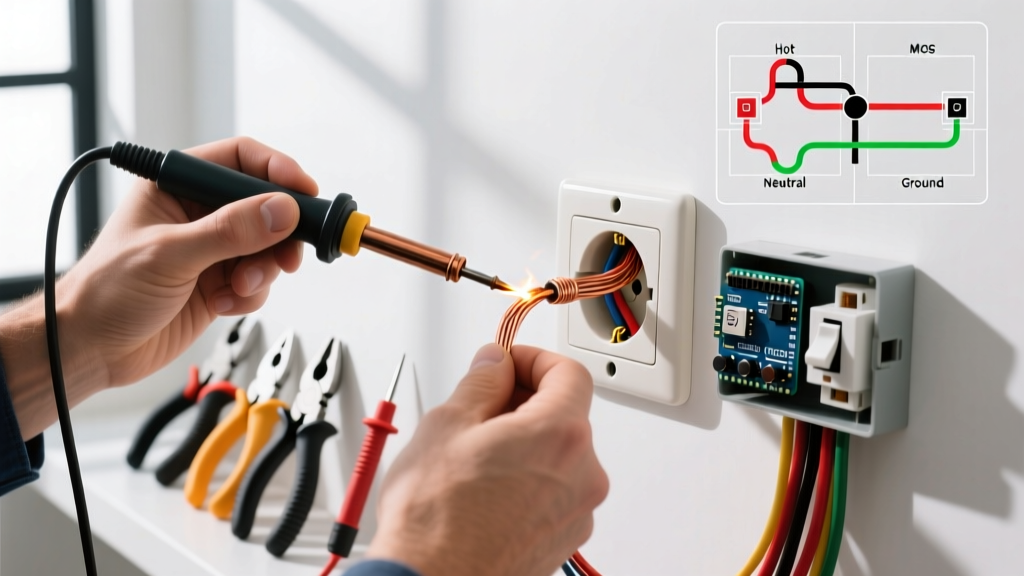
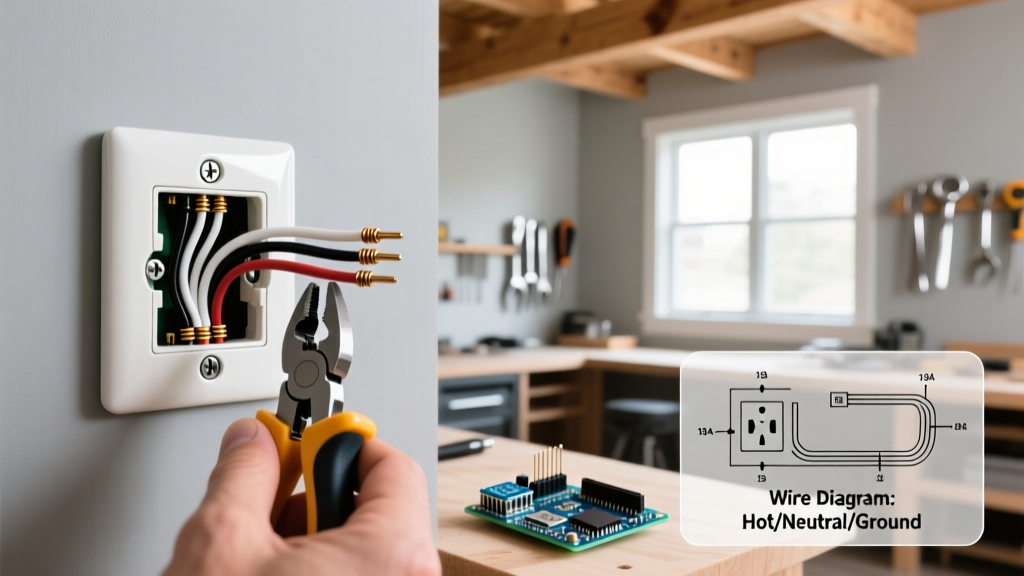
- Hot (Live) Wires: Black or Red. (For 220V split-phase, Black is Line 1, Red is Line 2).
- Neutral Wire: White or Light Gray. Must be tied to the grounded busbar.
- Grounding Wire: Green, Green with a Yellow Stripe, or Bare Copper. This is non-negotiable for equipment grounding.
Warning: In buildings constructed before the 1990s, it is common to find non-standard colors (like yellow or blue) used for hot wires due to historical Japanese wiring influences or material shortages. Always use a digital multimeter and a non-contact voltage tester to verify conductor identity before terminating a Taipei electrical outlet.
The 'Ungrounded Type A' Problem in Older Taipei Apartments
A massive challenge for DIYers and expats in Taipei is the prevalence of ungrounded Type A (2-prong) outlets in older walk-up apartments (華廈 or 公寓). While the physical slots accept modern polarized plugs, the absence of a ground pin means there is no equipment grounding conductor (EGC) in the wall.
Actionable Troubleshooting for Ungrounded Circuits
- Test for Bootleg Grounds: Some unethical contractors wire the neutral terminal to the ground terminal inside the receptacle to trick standard 3-light testers. Use a receptacle tester with an impedance check or measure the voltage between Neutral and Ground under load. If it reads 0V exactly, or if the ground slot shows continuity to the neutral slot with the power off, you have a dangerous bootleg ground.
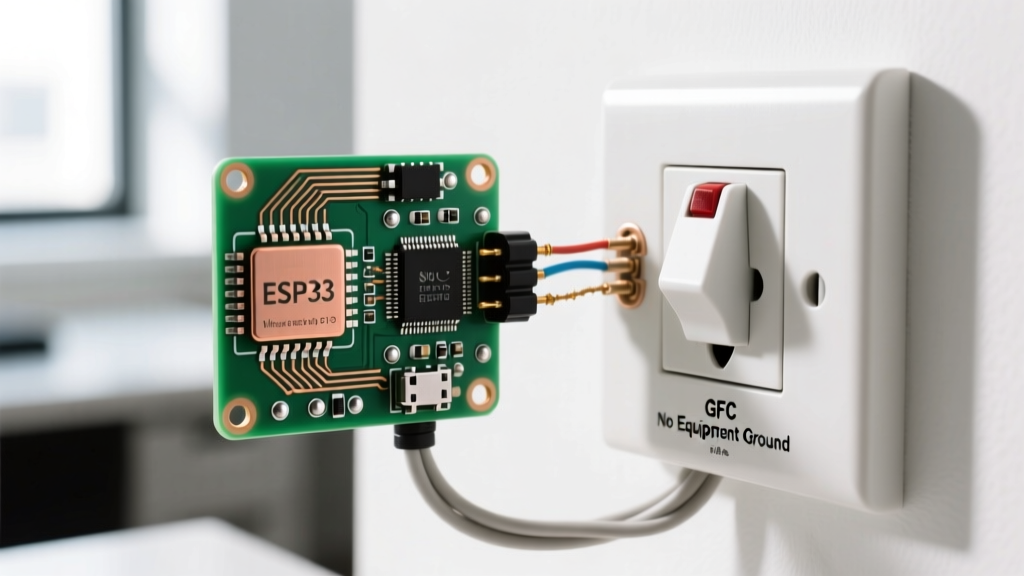
- The ELB Workaround: If you cannot pull a new ground wire through the concrete walls (a common issue in Taipei's reinforced concrete construction), the code allows you to install a 3-prong Type B outlet only if the circuit is protected by a 30mA ELB, and the faceplate is clearly labeled 'No Equipment Ground' (無設備接地). This provides shock protection but does not provide a clean ground for sensitive audio/visual equipment or surge protectors.
- Isolation Transformers: For expensive imported 110V electronics that require a true, low-impedance ground to function without hum or logic errors, use a localized 1:1 isolation transformer with a separately derived grounding system tied to a local grounding rod, if ground floor access permits.
220V Air Conditioner Outlets: Dedicated Circuit Requirements
Taipei's sweltering summers mean air conditioning is not a luxury; it is a life-support system. Window units and split-system compressors require 220V. The Taipei electrical outlet used for these units is typically a specialized 220V receptacle that physically prevents the insertion of a standard 110V plug.
Code requires that every 220V AC unit be on a dedicated circuit. For a standard 3.5kW to 5.0kW split system, electricians will pull 5.5mm² stranded copper wire protected by a 30A double-pole breaker. The grounding conductor for 220V circuits must be sized according to Table 250.122 equivalents in the local code, typically requiring a minimum of 3.5mm² green wire. Furthermore, the outdoor compressor unit must be bonded to the building's structural steel or a dedicated grounding electrode system to mitigate lightning strike risks, which are frequent during Taipei's intense summer typhoon season.
Smart Home Integration and 2026 Code Updates
As of 2026, Taipei has seen a massive surge in smart home retrofits. When replacing standard outlets with smart Wi-Fi or Zigbee receptacles (like those from local brands or imported Tuya-based devices), you must ensure the smart outlet's internal relay is rated for the specific inductive loads of the Taiwanese grid. Furthermore, many smart outlets require a neutral wire to power their internal radios. In older Taipei lighting circuits where only a hot and a switched-hot were pulled (no neutral), installing neutral-required smart outlets will result in flickering or failure. Always verify the presence of the white neutral wire in the backbox before purchasing smart receptacles for your Taipei home.
Summary: Respecting the Local Grid
While the Taipei electrical outlet may look like an old friend from North America, the regulatory environment, metric wire sizing, and ELB-centric safety codes demand a localized approach. Whether you are wiring a new commercial space in Nangang or troubleshooting a leaky 2-prong receptacle in an old Da'an apartment, always default to the BSMI regulations and the User Electrical Equipment Installation Regulations. For the most current US-side comparative standards, you can always reference the NFPA National Electrical Code, but remember: when in Taipei, local metric code is the law of the land.