
Understanding the Euro Electrical Outlet Landscape
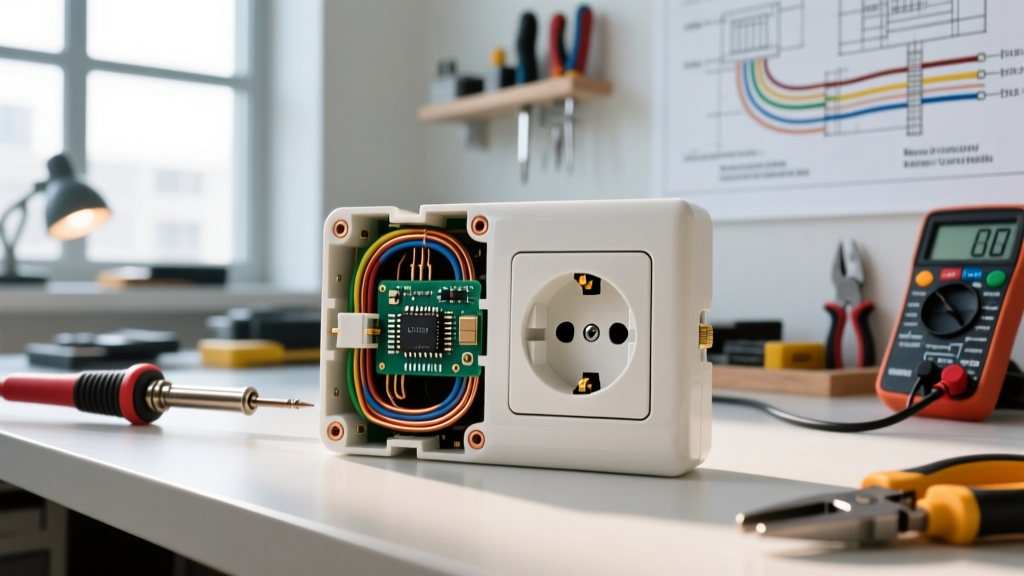
When professionals and DIYers refer to a euro electrical outlet, they are typically discussing the 230V/50Hz receptacle standards dominant across continental Europe. Unlike the NEMA 1-15 or 5-15R standards in North America, European sockets are designed to handle higher voltages and utilize unique grounding mechanisms. As of 2026, rigorous adherence to updated IEC 60884-1 safety standards makes proper inspection and testing of these receptacles critical for preventing electrical fires and shock hazards.
A common misconception is that the "Europlug" (Type C) is a socket. In reality, the Type C is an ungrounded, 2.5A plug. The actual wall receptacles that accept it—and provide grounding for higher-current appliances—are the Type E and Type F outlets. Testing these requires specialized knowledge of their mechanical retention systems and earthing topologies.
Anatomy of European Receptacles: Type E vs. Type F
Before connecting a receptacle tester, you must identify the specific outlet variant. The physical grounding mechanisms differ drastically between regions, which directly impacts how you test for earth continuity and polarity.
| Standard | Common Name | Grounding Mechanism | Primary Regions | Polarity |
|---|---|---|---|---|
| Type F | Schuko (CEE 7/3) | Dual side-grounding clips | Germany, Austria, Netherlands, Eastern Europe | Unpolarized (Reversible) |
| Type E | French (CEE 7/5) | Male protruding earth pin | France, Belgium, Poland, Czech Republic | Polarized (Fixed L/N) |
| Type J | Swiss (SEV 1011) | Offset hexagonal earth pin | Switzerland, Liechtenstein | Polarized |
According to the comprehensive plug and socket database maintained by World Standards, the Schuko system's unpolarized nature means Line and Neutral can be reversed depending on how the plug is inserted. However, the wall receptacle itself must still be wired with consistent Line/Neutral orientation to ensure downstream safety devices function correctly.
2026 Compliance and Material Standards
Modern inspection protocols must account for the latest iterations of the IEC 60884-1 standard. As of 2026, all newly installed euro electrical outlets in the EU must feature integrated child-proof safety shutters and pass the 850°C glow-wire test.
Expert Insight: When inspecting older installations, look for the material stamp on the receptacle faceplate. High-quality outlets use V0-rated Polyamide (PA66), which self-extinguishes. Cheaper, non-compliant imports often use ABS or standard Polycarbonate (PC), which can melt and sustain combustion if a loose connection generates an arc fault.
Essential Testing Equipment for 230V Systems
Standard North American solenoid testers or basic plug-in receptacle testers will not fit or function correctly on Type E/F sockets. You need specialized European testing gear:
- Multimeter: Fluke T6-1000 (approx. $280) with OpenJaw technology for non-intrusive voltage and current checks.
- Receptacle Tester: Beha-Amprobe R2D-I (approx. $250) or similar CAT III 230V tester to verify wiring sequence and RCD trip.
- Installation Tester: Fluke 1664 FC (approx. $1,250) for advanced Earth Loop Impedance (Zs) and precise RCD ramp testing.
Step-by-Step Visual and Mechanical Inspection
Electrical testing begins before any probes touch the contacts. Follow this mechanical inspection sequence:
- Shutter Mechanism Check: Insert a standard Type F plug. The shutters should open smoothly with equal pressure on both pins. If one side sticks, the internal spring mechanism is failing—a major shock hazard for children.
- Schuko Clip Tension (Type F): Insert and remove a plug several times. The side grounding clips must exert firm, symmetrical lateral pressure. "Clip fatigue" is a leading cause of high-resistance grounding in German-standard outlets, leading to thermal runaway at 16A loads.
- Earth Pin Integrity (Type E): Inspect the male earth pin for scoring, bending, or oxidation. A bent pin will misalign the Live and Neutral holes, causing severe arcing upon insertion.
- Faceplate Discoloration: Check for yellowing or brown scorch marks around the pin entry holes. This indicates historical overloading or loose terminal screws behind the wall.
Electrical Testing Procedures
For deep electrical diagnostics, we rely on the methodologies outlined in the RS Components Socket Testing Guide. Ensure your PPE is rated for CAT III 230V environments.
1. Voltage and Frequency Verification
Using your multimeter, measure Line-to-Neutral (L-N), Line-to-Earth (L-PE), and Neutral-to-Earth (N-PE). The European harmonized voltage is 230V with a tolerance of +10% / -6%. Your L-N and L-PE readings must fall strictly between 216.2V and 253.0V. The N-PE voltage should be near 0V (typically < 2V). A high N-PE voltage indicates a compromised neutral return path or shared neutral overload.
2. Earth Loop Impedance (Zs) Testing
Earth loop impedance dictates how quickly a breaker will trip during a fault. Using an installation tester, measure the external earth fault loop impedance (Ze) at the distribution board, and the total loop impedance (Zs) at the outlet.
- TN-C-S (PME) Systems: Zs should typically be < 0.35 Ω.
- TT Systems (Earth Rod): Zs will be higher, often between 10 Ω and 200 Ω, relying entirely on an RCD for fault clearing.
If Zs is excessively high on a TN system, check for loose bonding connections in the distribution board or corrosion at the main earth terminal.
3. RCD (Residual Current Device) Trip Testing
Most modern euro electrical outlets are protected by a 30mA RCD (or RCBO). Using your tester, inject a fault current to verify trip times. According to Electrical Safety First guidelines, the RCD must disconnect the circuit within specific timeframes to prevent ventricular fibrillation:
- At 1x IΔn (30mA): Must trip in < 300 milliseconds.
- At 5x IΔn (150mA): Must trip in < 40 milliseconds.
Test at both 0° and 180° phase angles. If the RCD fails to trip at 150mA within 40ms, the device is mechanically seized and must be replaced immediately.
Troubleshooting Matrix: Common Euro Outlet Failures
| Symptom | Potential Cause | Diagnostic Action | Corrective Measure |
|---|---|---|---|
| Appliance plug feels hot to touch after 10 mins | Schuko side-clip fatigue or loose internal screw terminals | Measure voltage drop across L and N under load; check for >0.5V drop | Replace receptacle with V0-rated PA66 model; torque terminals to 1.2 Nm |
| RCD trips randomly when plugging in switch-mode power supplies | Nuisance tripping due to cumulative earth leakage or Type AC RCD incompatibility | Use a milliamp clamp meter to measure baseline PE leakage current | Upgrade distribution board RCD to Type A or Type B for DC-pulse tolerance |
| N-PE voltage reads > 5V | Overloaded neutral conductor or high-resistance neutral bus bar connection | Perform Zs test and inspect neutral bar torque in consumer unit | Re-torque neutral connections; balance single-phase loads across 3 phases |
| Safety shutters remain jammed on one side | Broken internal POM plastic shutter spring or debris ingress | Visual inspection with flashlight; attempt simultaneous pin insertion | Replace entire receptacle; do not attempt to field-repair shutter springs |
Final Safety Directives
Inspecting a euro electrical outlet demands respect for 230V arc flash potentials. Never attempt to measure Earth Loop Impedance on an active circuit without a properly rated, fused CAT III or CAT IV testing instrument. If you encounter melted thermoplastic, a distinct ozone smell, or Zs readings that exceed the manufacturer's maximum allowable limits, isolate the circuit at the main breaker immediately and consult a certified electrician. Proper testing not only ensures compliance with European electrical codes but fundamentally protects human life from the unforgiving nature of high-voltage AC systems.