
The Physics and Code Behind Electrical Outlet Buzzing
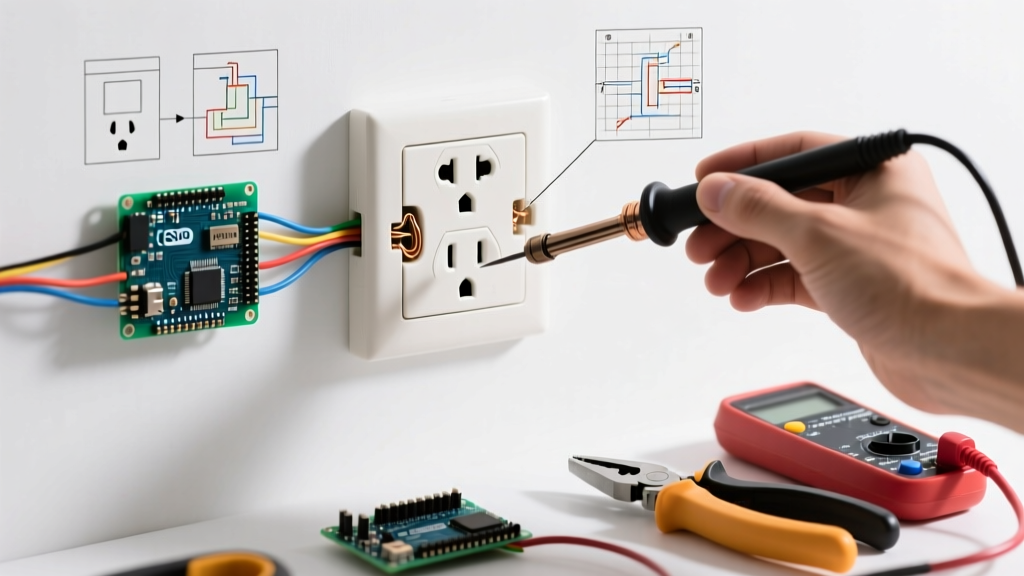
An electrical outlet buzzing is never a normal operating characteristic of a standard residential receptacle. While transformers and dimmer switches may emit a faint 60Hz hum due to magnetostriction, a standard NEMA 5-15 or 5-20 duplex outlet contains no magnetic coils or laminations. Therefore, if you hear a buzz, hum, or crackle from a standard receptacle, you are listening to the audible signature of electrical resistance, micro-arcing, or failing internal components.
From a code compliance perspective, a buzzing outlet almost always indicates a violation of the National Electrical Code (NEC), specifically regarding termination integrity and circuit loading. In 2026, with the widespread adoption and enforcement of the 2023 NEC cycle, inspectors and electricians are cracking down on the loose connections and improper torque values that cause these dangerous auditory warnings. The U.S. Consumer Product Safety Commission (CPSC) notes that loose electrical connections are a primary precursor to residential arc faults and thermal fires.
Top 3 NEC Code Violations Causing Receptacle Buzz
1. Backstabbing (Push-In Terminals) vs. Side Wiring
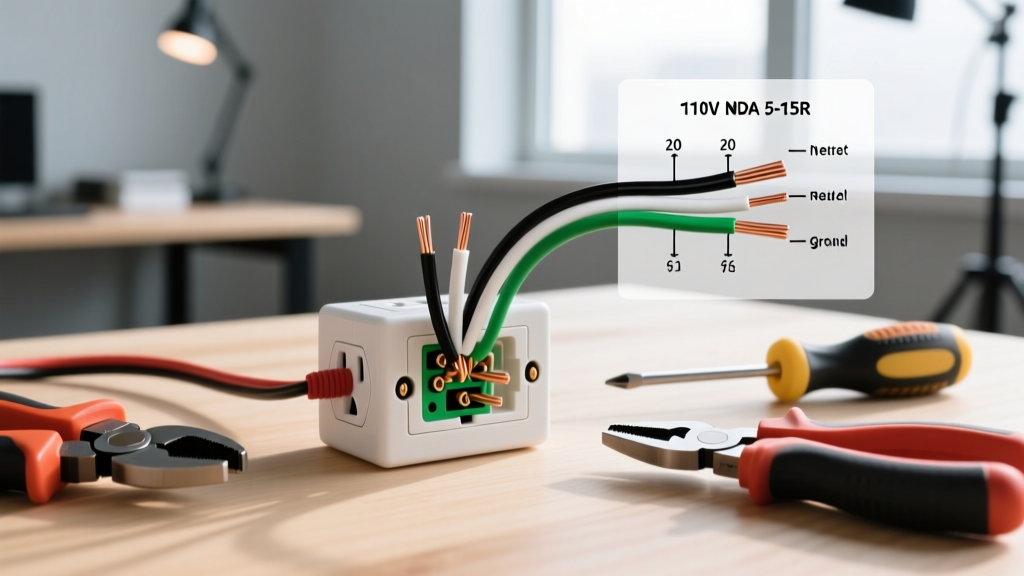
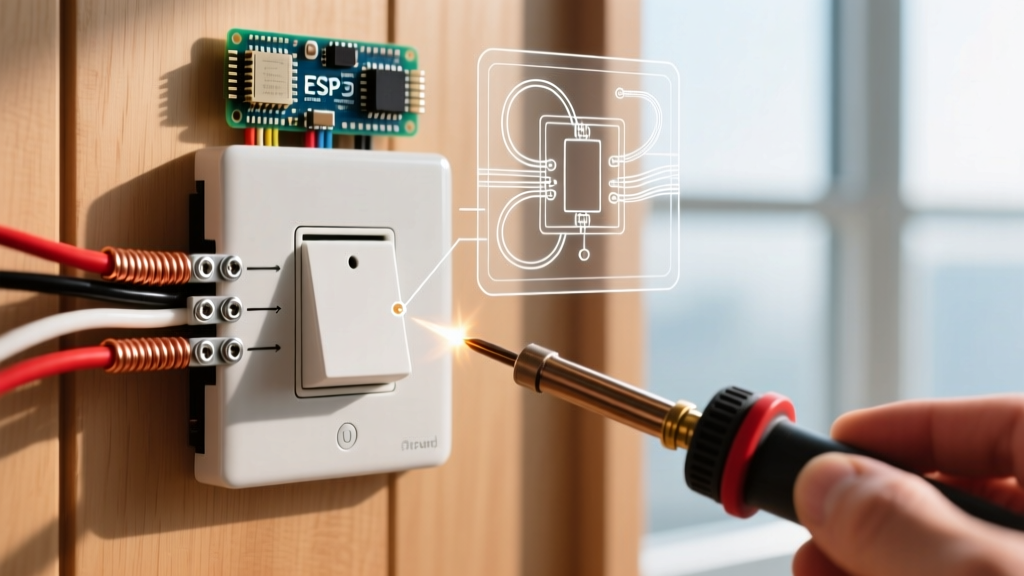
Many older homes and rushed DIY renovations feature wires pushed into the back of the receptacle. These push-in terminals rely on a tiny internal brass spring clip to grip the wire. Over years of thermal expansion and contraction caused by normal circuit loading, the spring loses tension. This creates a microscopic gap where electricity must 'jump' to the wire, resulting in micro-arcing and a distinct crackling buzz.
Code Reality: While UL 498 permits push-in connectors for 14 AWG solid copper wire, NEC 110.14(A) requires connections to be mechanically secure. Many local jurisdictions have amended the code to ban backstabbing entirely. Furthermore, 12 AWG wire (used on 20-amp circuits) must never be backstabbed; it must be side-wired to the terminal screws or terminated via a pigtail.
2. Improper Torque on Terminal Screws
If a wire is wrapped around the terminal screw but not tightened to the manufacturer's exact specification, the connection will vibrate at 120Hz (the ripple frequency of full-wave AC power). This vibration loosens the screw further over time, increasing resistance and generating extreme heat.
Code Reality: NEC 110.14(D) mandates that all electrical connections be tightened to the manufacturer's published torque values. For standard 15A and 20A commercial-grade receptacles (like the Leviton T5262 or Hubbell 5262), the required torque is typically between 12 and 14 inch-pounds. Hand-tightening with a standard screwdriver is no longer code-compliant for new work or major repairs.
3. Overloaded Circuits and Thermal Degradation
When a circuit is continuously loaded near its 80% threshold (e.g., drawing 12 amps on a 15-amp circuit for hours), the receptacle's internal brass contacts heat up. If the receptacle is a cheap, builder-grade model, the brass contacts can soften and lose their gripping force on the plug blades, causing a buzz at the plug interface itself.
Code Reality: NEC 210.23 dictates permissible loads on branch circuits. Continuous loads (those operating for 3 hours or more) cannot exceed 80% of the branch circuit rating. If your outlet buzzes only when a space heater or window AC unit is running, the circuit is likely overloaded, and the receptacle contacts are thermally degraded.
Diagnostic Matrix: Identifying the Buzz
| Auditory Symptom | Underlying Physics | NEC Code Reference | Risk Level |
|---|---|---|---|
| Low 60Hz Hum | Magnetic vibration in GFCI/AFCI internal sense transformers | NEC 210.8 / 210.12 | Moderate |
| Sharp 120Hz Buzz | Micro-arcing across loose terminal screws or bus bars | NEC 110.14(D) | Critical |
| Intermittent Crackling | Backstabbed push-in connector losing spring tension | NEC 110.14(A) / UL 498 | Critical |
| Buzzing at Plug Blades | Worn internal brass contacts failing to grip the plug | NEMA WD-6 Standards | High |
AFCI/GFCI Requirements and Breaker Buzzing
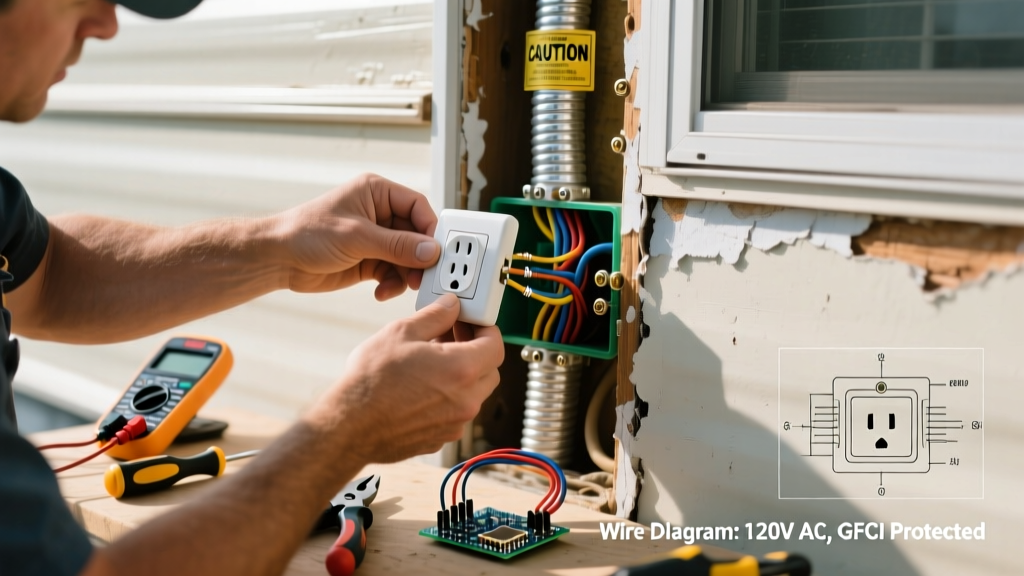
Sometimes, the buzzing is not originating from the outlet itself, but from the breaker panel protecting it. Modern code requires Arc-Fault Circuit Interrupters (AFCI) in almost all living spaces (NEC 210.12) and Ground-Fault Circuit Interrupters (GFCI) in wet locations (NEC 210.8).
Both AFCI breakers and GFCI receptacles contain internal electronics and small sense transformers. If an AFCI breaker is failing, or if it is experiencing a 'nuisance trip' condition due to a loose neutral on the breaker's pigtail, the internal transformer can emit a loud, distinct hum. If you unplug everything from the room's outlets and the buzzing persists, trace the sound to your electrical panel. A buzzing breaker requires immediate replacement by a licensed professional, as it indicates internal component failure or a loose bus bar stab connection.
Step-by-Step Code-Compliant Troubleshooting and Repair
To eliminate electrical outlet buzzing safely and in compliance with the 2023 NEC, follow this precise procedure. You will need a non-contact voltage tester (e.g., Fluke 2AC-II), wire strippers (e.g., Klein 11055), and a calibrated torque screwdriver (e.g., Wiha 28501 or Klein 32550, typically retailing between $90 and $120 in 2026).
- De-energize and Verify: Turn off the corresponding breaker. Test the receptacle with your non-contact voltage tester and a plug-in circuit tester to confirm zero voltage.
- Extract and Inspect: Remove the cover plate and the mounting screws. Gently pull the receptacle from the box. Inspect the thermoplastic housing for any brown or black scorch marks. If the plastic is melted or discolored, the receptacle is thermally compromised and must be discarded.
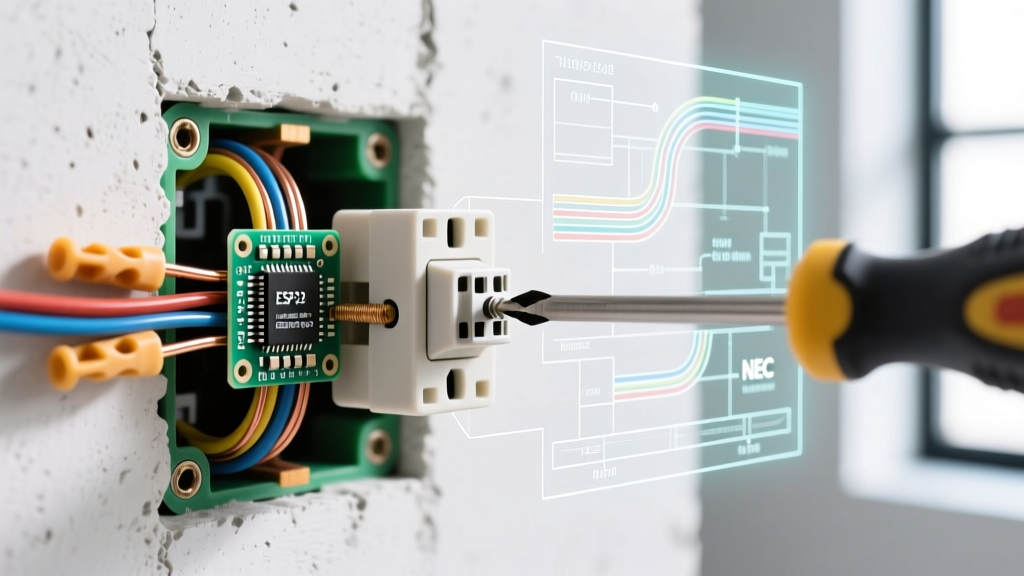
- Eliminate Backstabbed Wires: If wires are pushed into the back, release them using a small flathead screwdriver in the release slot. Do not reuse the push-in terminals.
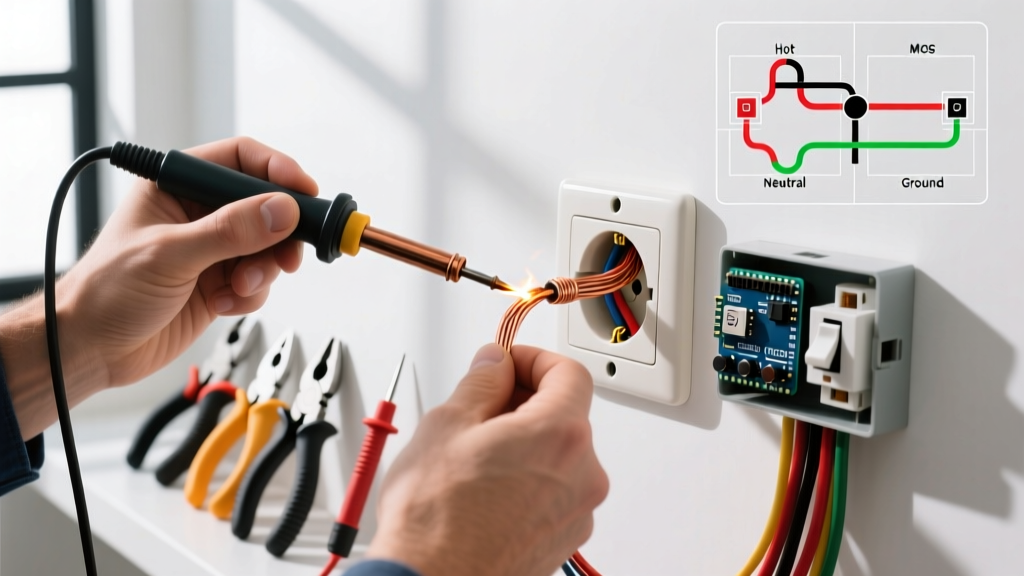
- Re-prep the Conductors: Use your wire strippers to cut off any damaged or arced copper at the end of the wire. Strip exactly 5/8 inch of insulation to ensure no bare wire is exposed outside the terminal, and no insulation is trapped under the screw plate.
- Form the Shepherd's Hook: Using needle-nose pliers, bend the bare wire into a tight 'J' hook. Loop it around the terminal screw clockwise. This ensures that as the screw tightens, it pulls the wire loop closed rather than pushing it out.
- Apply Code-Mandated Torque: Set your torque screwdriver to the manufacturer's specification (usually 14 in-lbs for standard commercial receptacles). Tighten the screw until the driver clicks, ensuring a permanent, vibration-proof connection.
- Pigtail if Necessary: If multiple cables enter the box, do not daisy-chain the wires on the receptacle screws. Use a wire nut or WAGO 221 lever connector to pigtail the hot and neutral wires to a single conductor feeding the receptacle, preserving the continuity of the circuit.
CRITICAL WARNING: Aluminum Wiring
If you discover aluminum branch circuit wiring (common in homes built between 1965 and 1973), standard copper-rated receptacles are illegal and highly dangerous to use. Aluminum expands and contracts at a different rate than copper, leading to severe loosening and fire hazards. Per OSHA and NEC 310.14, you must use receptacles specifically marked CO/ALR (Copper-Aluminum Revised) and apply an approved antioxidant compound like Noalox to prevent galvanic corrosion and subsequent buzzing/arcing.
Frequently Asked Questions
Is a slightly buzzing GFCI outlet dangerous?
A very faint hum from a GFCI outlet can be normal, as it contains an internal sense coil and electronic monitoring board. However, if the buzz is loud, changes pitch when you plug in a device, or is accompanied by a warm faceplate, the internal electronics are failing. Replace the GFCI immediately.
Can a bad appliance cause the outlet to buzz?
Yes. If an appliance has a failing motor, a shorted capacitor, or a damaged power cord, it can draw erratic current that causes the receptacle's internal contacts to vibrate. Test the outlet with a simple resistive load (like an incandescent lamp). If the lamp works silently, the appliance is the culprit.
Why did my outlet start buzzing after I painted the room?
Painters often remove cover plates and accidentally bump or bend the wires inside the box, loosening a backstabbed connection or a poorly torqued terminal screw. Additionally, if paint seeps into the receptacle slots, it can interfere with the plug blade connection, causing resistance and buzzing.
Conclusion
An electrical outlet buzzing is a vital auditory warning system provided by the laws of physics. It tells you that mechanical integrity has failed and electrical resistance is generating heat. By understanding the NEC requirements for torque, termination, and circuit loading, you can transition from simply 'fixing a noise' to engineering a safe, code-compliant electrical connection that will remain silent and secure for decades.