
Understanding the Ireland Electric Outlet Standard (BS 1363)
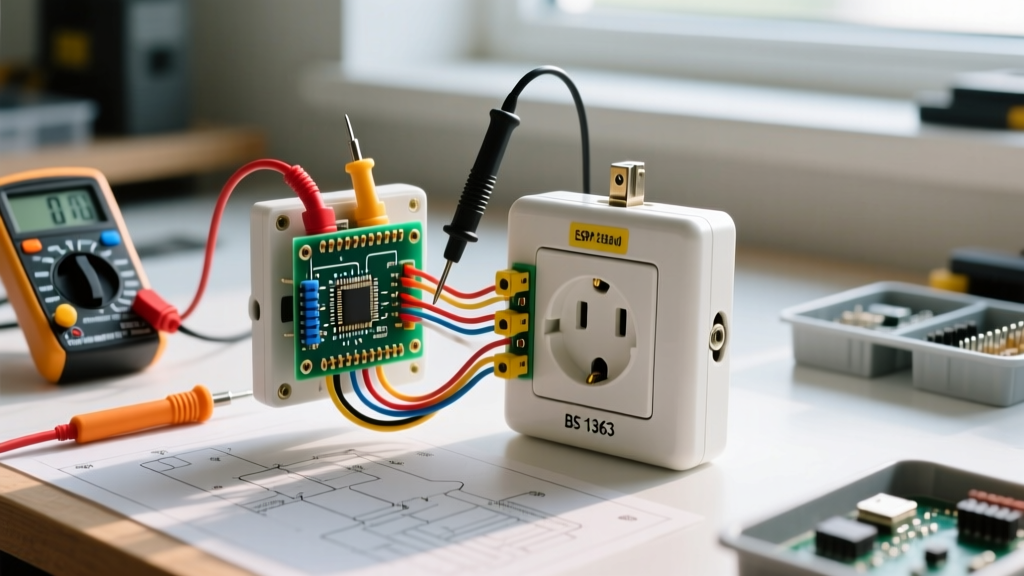
When inspecting or testing an Ireland electric outlet, it is critical to recognize that the Republic of Ireland operates on a 230V (±10%), 50Hz AC supply and utilizes the BS 1363 standard (commonly known as Type G). Unlike many European and North American systems, the BS 1363 socket does not contain an internal fuse. Instead, overcurrent protection for the appliance flex is handled by a fuse located within the plug itself (typically rated at 3A, 5A, or 13A). The socket is rated for 13A continuous draw and features integrated safety shutters that are mechanically operated only when the longer earth pin is inserted.
As of 2026, all electrical testing and inspection in Ireland is governed by I.S. 10101:2020 (The National Rules for Electrical Installations), published by the National Standards Authority of Ireland (NSAI). Any inspection of an Ireland electric outlet must verify compliance with these rules, ensuring protection against electric shock, thermal effects, and overcurrent.
Essential Testing Equipment for Irish Installations
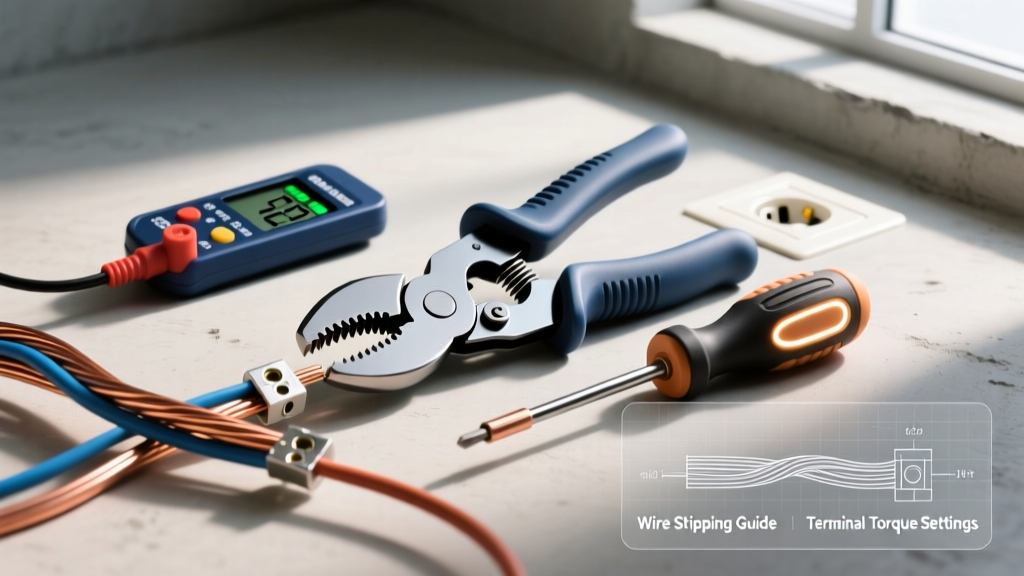
A proper inspection requires more than a simple visual check. Depending on your certification level and the depth of the audit, you will need specific diagnostic tools. Below is a comparison of the standard equipment used by registered electrical contractors (RECs) in Ireland.
| Tool Category | Recommended Model | Primary Function | Approx. Cost (EUR) |
|---|---|---|---|
| Basic Socket Tester | Martindale EZ150 | Polarity check, basic earth presence, RCD trip (1x) | €35 - €50 |
| Multi-Function Tester (MFT) | Megger MFT1845 | Earth loop impedance (Ze/Zs), RCD ramp test, continuity | €1,100 - €1,400 |
| Insulation Resistance Tester | Kyoritsu KEW 3125A | Testing cable insulation integrity at 250V/500V/1000V | €300 - €450 |
| Thermal Imaging Camera | FLIR C5 | Detecting loose connections and thermal runaway at terminals | €600 - €750 |
Phase 1: Visual and Mechanical Inspection
Before applying any live voltage tests, a rigorous dead-test and visual inspection must be conducted. According to the Health and Safety Authority (HSA), visual inspection catches over 60% of electrical faults before testing even begins.
- Shutter Mechanism Integrity: Use a BS 1363 plug pin gauge or a dedicated shutter test tool. The live and neutral shutters must remain closed when only the earth aperture is probed with an unauthorized object. They should open smoothly only when the earth pin is fully engaged.
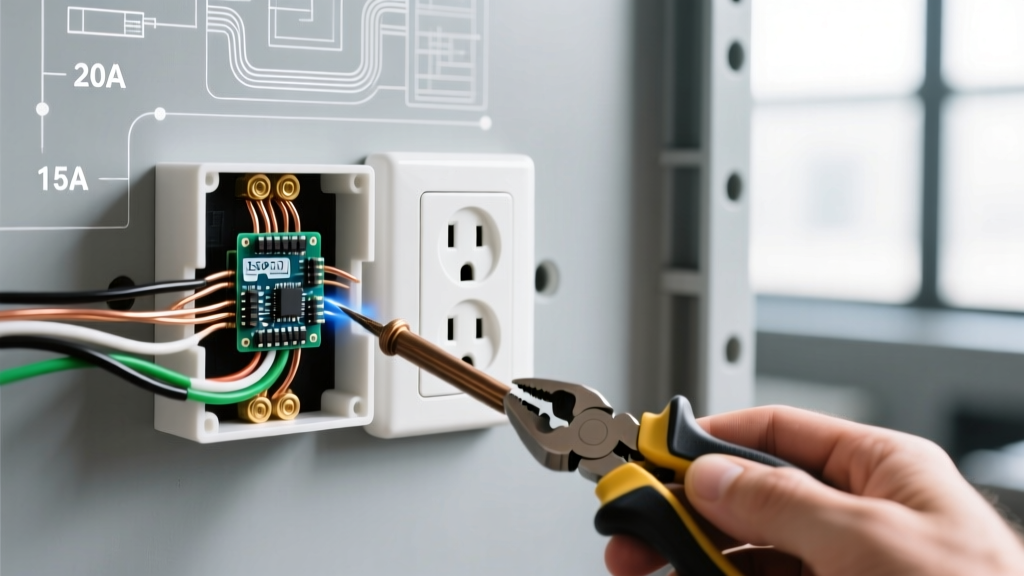
- Terminal Torque and Thermal Damage: Isolate the circuit at the distribution board (DB). Remove the outlet faceplate and inspect the brass terminals. Look for brown or black scorch marks on the PVC insulation, which indicates high-resistance connections. Verify that the live (brown), neutral (blue), and earth (green/yellow) conductors are tightly secured. In 2026, many contractors use calibrated torque screwdrivers set to the manufacturer's specification (typically 0.8Nm to 1.2Nm for standard 13A accessory terminals) to prevent cold-flow loosening.
- Cable Entry and Grommets: If the outlet is mounted on a metal backbox or a surface-mounted steel enclosure, ensure a rubber or nylon grommet is protecting the cable sheath from sharp metal edges.
Phase 2: I.S. 10101:2020 Electrical Testing Sequence
Once the visual inspection is passed and the circuit is re-energized, proceed with live testing. The sequence of testing an Ireland electric outlet is strictly defined to prevent false readings and ensure safety.
1. Polarity and Earth Continuity
Insert your socket tester or MFT probe. The earth pin must be at the top (12 o'clock), the neutral at the bottom left (9 o'clock), and the live at the bottom right (3 o'clock). Reversed polarity (Live/Neutral swap) is a critical fail, as it leaves the appliance's internal switch isolating only the neutral, leaving the device internally live even when turned off.
2. Earth Loop Impedance (Ze and Zs)
Earth loop impedance testing verifies that, in the event of a live-to-earth fault, enough current will flow to trip the protective device (MCB or fuse) within the required disconnection time (usually 0.4 seconds for socket outlets).
- External Earth Loop Impedance (Ze): Measured at the origin of the installation (the ESB Networks meter). For a standard TN-C-S (PME) supply in Ireland, the maximum acceptable Ze is typically 0.35Ω.
- Total Earth Loop Impedance (Zs): Measured at the furthest Ireland electric outlet on the circuit. Zs = Ze + (R1 + R2). For a 32A ring final circuit protected by a Type B MCB, the maximum Zs limit at 20°C is 1.37Ω. If your MFT reads 1.50Ω, the circuit fails, and the MCB may not trip fast enough during a fault.
3. RCD (Residual Current Device) Verification
Under I.S. 10101:2020, almost all Ireland electric outlets require additional protection by a 30mA RCD or RCBO. Testing the RCD ensures it trips before a lethal current passes through a human body.
- 1/2 IΔn Test (15mA): The RCD must not trip. This prevents nuisance tripping from minor, harmless background leakage.
- 1x IΔn Test (30mA): The RCD must trip within 300 milliseconds (ms).
- 5x IΔn Test (150mA): The RCD must trip within 40 milliseconds (ms). This is the critical life-safety threshold.
Pro Tip: Always perform RCD tests at both 0° and 180° phase angles. Some older electromagnetic RCDs can exhibit mechanical sticking on one half of the AC waveform, which a digital MFT will catch by testing both DC offsets.
Troubleshooting Common Ireland Electric Outlet Faults
When an outlet fails testing, use the matrix below to diagnose the root cause based on your MFT or socket tester readings.
| Tester Indication / Reading | Probable Fault | Corrective Action |
|---|---|---|
| Earth/Neutral Reversed LED | Blue and Green/Yellow wires swapped at terminals | Isolate power, swap wires to correct BS 1363 pinout. |
| Zs > 1.37Ω (on 32A Type B) | High resistance joint, long cable run, or loose earth | Check all splice joints, tighten DB earth bar, verify ring continuity. |
| RCD fails to trip at 150mA | Faulty RCD module or neutral-earth short downstream | Replace RCBO/RCD. Check for neutral-earth insulation breakdown. |
| Open Earth (No Earth LED) | Disconnected CPC (Circuit Protective Conductor) | Trace earth wire back to DB. Check for broken conductor in wall. |
Regulatory Compliance and Certification
In the Republic of Ireland, any new installation, alteration, or extension involving an Ireland electric outlet must be certified. Upon completing the inspection and testing sequence, a registered electrical contractor must issue a Completion Certificate (Form TC1) or a Periodic Inspection Report (PIR).
Only contractors registered with Safe Electric Ireland (the regulatory scheme operated by RECI) are legally authorized to sign off on these documents and submit them to the relevant building control authorities or ESB Networks. Homeowners attempting DIY testing should strictly limit themselves to visual inspections and basic plug-in socket testers; live Earth Loop Impedance and RCD ramp testing must be left to certified professionals equipped with calibrated, annually verified MFTs.
By adhering strictly to the I.S. 10101:2020 parameters outlined above, you ensure that every Ireland electric outlet inspected is not only functional but fundamentally safe against the severe risks of electrocution and electrical fire.