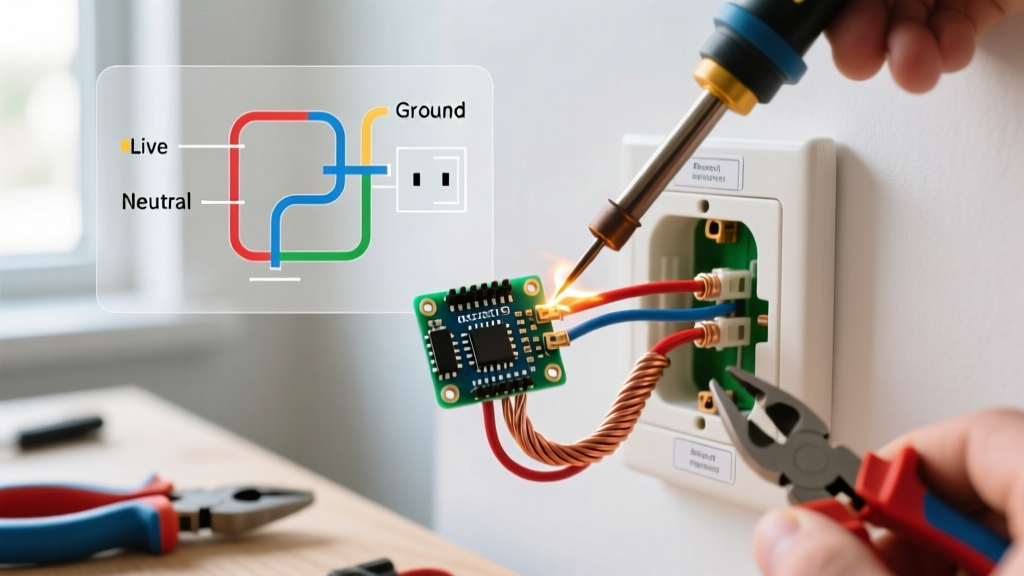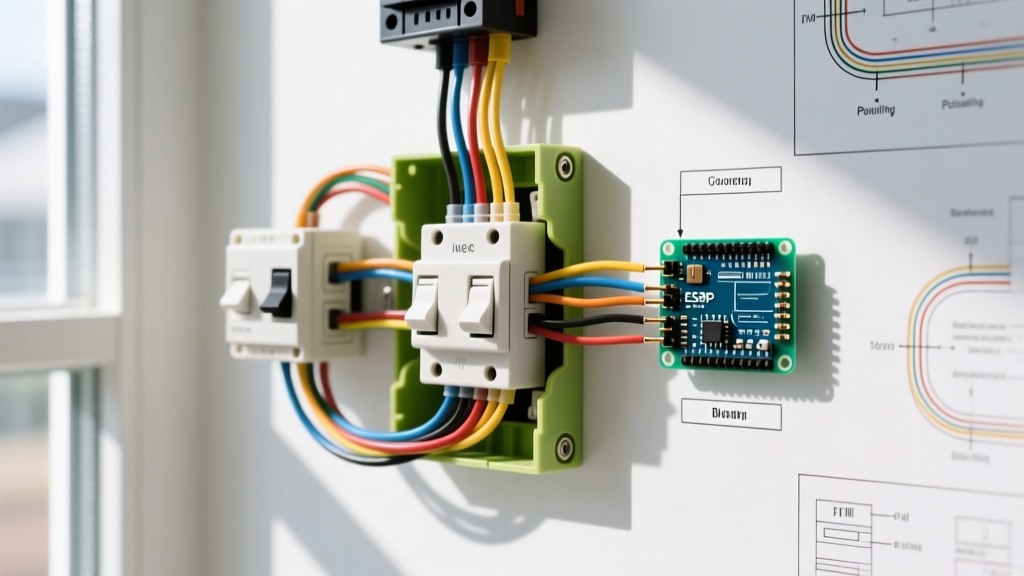

Diagnosing Electrical Outlet Problems Through the Lens of the NEC
When homeowners experience flickering lights, warm faceplates, or tripping breakers, they often dismiss these symptoms as aging infrastructure. However, the most persistent electrical outlet problems are rarely just wear-and-tear; they are frequently direct manifestations of National Electrical Code (NEC) violations. As jurisdictions adopt the 2023 NEC and prepare for the 2026 updates, the margin for error in residential wiring has narrowed significantly. According to the National Fire Protection Association (NFPA), electrical distribution and lighting equipment remains a leading cause of home structure fires. Understanding the code requirements behind these failures is the first step toward safe, compliant troubleshooting.
Quick Diagnostic Matrix: Symptoms vs. Code Violations
| Observed Problem | Physical Symptom | NEC Code Reference | Code-Compliant Fix |
|---|---|---|---|
| Receptacle feels warm | Heat radiating from faceplate | NEC 110.14(D) | Re-terminate using a calibrated torque screwdriver (12-14 in-lbs). |
| Breaker trips randomly | AFCI/GFCI nuisance tripping | NEC 210.8 & 210.12 | Separate shared neutrals on MWBCs; replace damaged CAFCI breakers. |
| Plugs fall out easily | Loss of mechanical tension | NEC 406.4(F) | Replace worn receptacle with a new Tamper-Resistant (TR) model. |
| Tester shows 'Open Ground' | 3-light tester indicates fault | NEC 250.148 & 406.4 | Pull new EGC or install GFCI with 'No Equipment Ground' label. |
GFCI and AFCI Protection Failures (NEC 210.8 & 210.12)
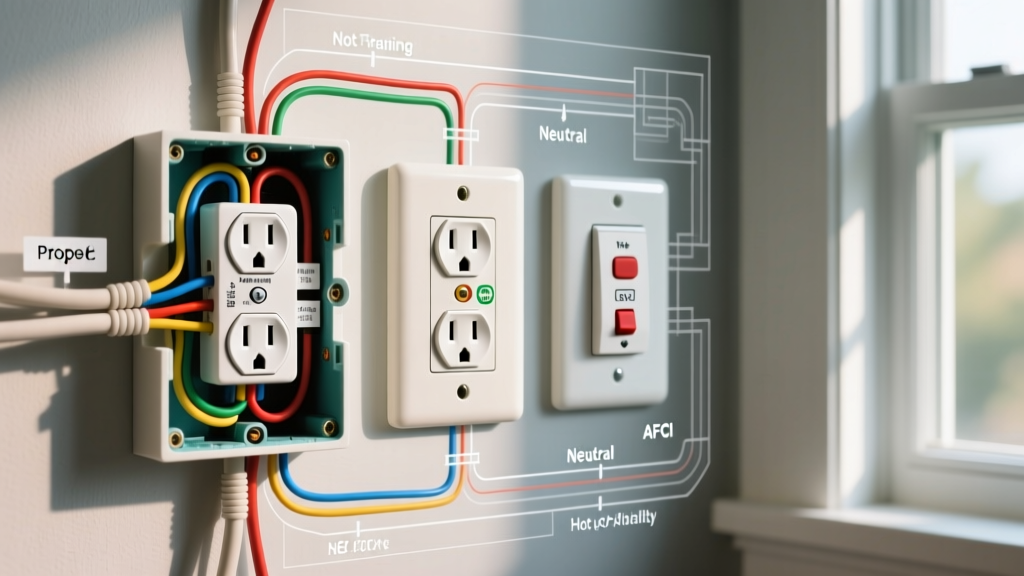
One of the most frequently reported electrical outlet problems in modern homes is the 'nuisance trip' of Ground Fault Circuit Interrupter (GFCI) or Arc Fault Circuit Interrupter (AFCI) receptacles. While homeowners often blame the device, the root cause is usually a wiring topology that violates NEC 210.8 (GFCI protection) or 210.12 (AFCI protection).
The Multi-Wire Branch Circuit (MWBC) Edge Case
If an AFCI breaker trips immediately upon resetting, check for a shared neutral. In older homes, electricians frequently used Multi-Wire Branch Circuits (two hot wires sharing one neutral) to save wire. Modern AFCI breakers monitor the current differential between the hot and neutral. If the neutral is shared with another circuit not on the same AFCI breaker, the breaker reads the imbalance as a ground fault or arc fault and trips. The NEC-compliant fix is to install a 2-pole dual-function (CAFCI/GFCI) breaker that monitors both hot legs and the shared neutral simultaneously, or to rewire the circuit with dedicated neutrals.
Receptacle Spacing and the '6-Foot Rule' (NEC 210.52)
Extension cord reliance is a massive fire hazard, which is why NEC 210.52 dictates strict spacing for receptacles in dwelling units. A common code violation found during inspections—and a frequent source of homeowner complaints regarding 'not enough outlets'—is improper spacing.
- The 6/12 Rule: No point along the floor line in any wall space can be more than 6 feet from a receptacle. This effectively means receptacles must be spaced no more than 12 feet apart.
- Wall Space Definition: A wall space is defined as any unbroken space 2 feet or more in width, measured at the floor line. This includes space measured around corners.
- Countertop Spaces (NEC 210.52(C)): In kitchens, no point along the wall line can be more than 24 inches from a receptacle. Furthermore, receptacles cannot be mounted more than 20 inches above the countertop surface.
Expert Insight: When measuring for compliance, measure from the edge of the wall, not the edge of the baseboard. Baseboards do not count toward the unbroken wall space measurement.
Tamper-Resistant (TR) Receptacle Mandates (NEC 406.12)
If you are replacing a broken outlet in a home built before 2008, you might be tempted to buy standard receptacles to save money. This is a direct violation of NEC 406.12, which mandates that all 15A and 20A, 125V and 250V receptacles in dwelling units must be Tamper-Resistant (TR).
'In all areas specified in 210.52, all 125-volt, 15- and 20-ampere receptacles shall be listed tamper-resistant receptacles.' — NEC 406.12
TR receptacles feature internal spring-loaded shutters that require simultaneous, equal pressure (approximately 4 to 5 pounds) on both slots to open. This prevents children from inserting single objects like hairpins or keys. According to the Consumer Product Safety Commission (CPSC), thousands of children are injured annually by inserting objects into standard receptacles. Upgrading to a TR model, such as the Leviton T5320-W (typically retailing around $1.50 to $2.00 per unit), is a non-negotiable code requirement for any replacement work.
Polarity, Grounding Faults, and the 'Bootleg Ground' Danger
When testing an outlet with a standard 3-light tester (like the Klein Tools RT210), a reading of 'Correct' doesn't always mean the outlet is safe. One of the most dangerous electrical outlet problems is the 'bootleg ground'—a fraudulent wiring method where a previous DIYer connected a jumper wire between the neutral terminal and the ground screw to trick a home inspector's tester into showing a 'correct' ground.
How to Verify and Fix Ungrounded Boxes
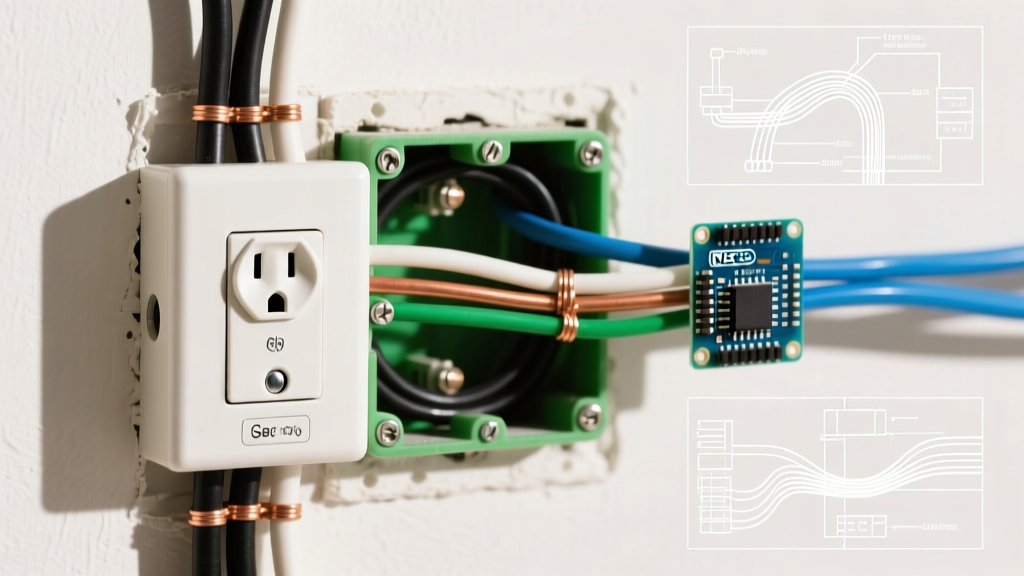
- Test for Bootlegs: Turn off the breaker. If the tester still shows 'Correct' with the power off, or if you open the box and see a jumper wire between the silver (neutral) and green (ground) screws, you have a bootleg ground. Remove the jumper immediately.
- The GFCI Workaround (NEC 406.4(D)(2)(c)): If you are dealing with an older home with 2-prong, ungrounded wiring (no equipment grounding conductor in the cable), you cannot legally install a standard 3-prong receptacle. However, the NEC allows you to install a GFCI receptacle. The GFCI will protect against shock hazards by monitoring current imbalance, even without a ground wire.
- Mandatory Labeling: When using the GFCI workaround, you must apply the 'GFCI Protected' and 'No Equipment Ground' stickers provided in the GFCI box to the faceplate. Note: This setup will not protect sensitive electronics from power surges, as surge protectors require a true equipment ground to divert transient voltage.
Termination Torque: The Overlooked NEC 110.14(D) Requirement
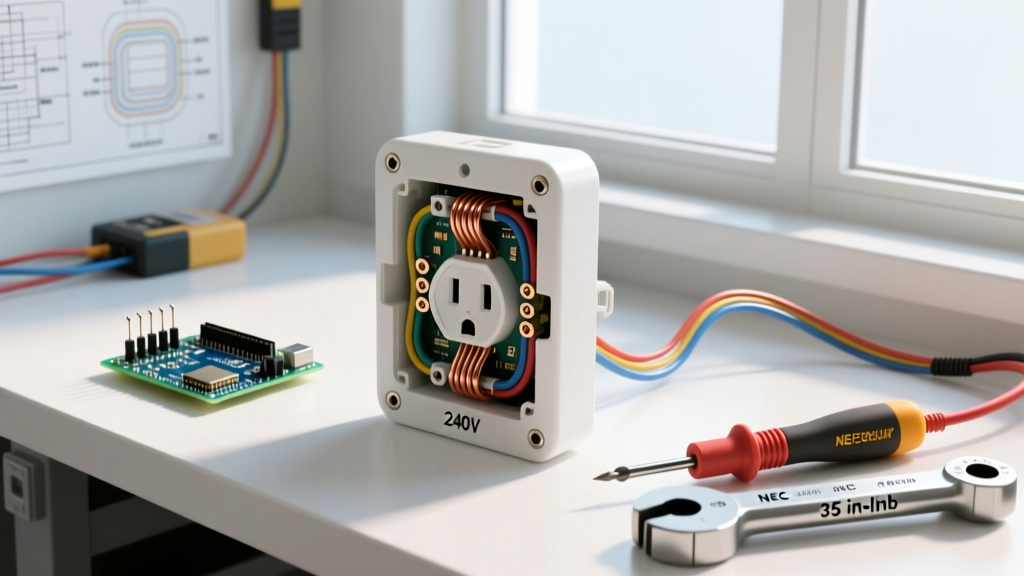
Perhaps the most common cause of thermal failure at the receptacle is loose terminal connections. Since the 2017 NEC, and reinforced in the 2023 and upcoming 2026 editions, NEC 110.14(D) requires that electrical connections be tightened to the manufacturer's published torque values using a calibrated instrument.
For a standard 15A or 20A residential receptacle, the manufacturer (e.g., Leviton, Hubbell, Pass & Seymour) typically specifies a torque value between 12 and 14 inch-pounds. Hand-tightening with a standard screwdriver often results in either under-torquing (leading to arcing, heat buildup, and melted faceplates) or over-torquing (stripping the brass terminal threads). Professional electricians now use insulated torque screwdrivers, such as the Klein Tools 69010, set precisely to 14 in-lbs, to ensure every termination meets code and eliminates thermal expansion/contraction failures over time.
Push-In Backstab Connections vs. Screw Terminals
While the NEC does not explicitly ban push-in 'backstab' wiring connections on 15A receptacles, Underwriters Laboratories (UL) listings and long-term reliability data heavily favor screw terminations. Backstab connections rely on a small internal spring clip to grip the 14 AWG wire. Over years of thermal cycling (heating up under load and cooling down), these springs can lose tension, resulting in high-resistance connections.
Actionable Rule: Never use backstab connections for 20A circuits (which require 12 AWG wire, as 12 AWG physically will not fit into most 15A backstab holes anyway). For maximum reliability and to prevent downstream voltage drop issues, strip the wire to the exact gauge marked on the back of the receptacle and loop it clockwise around the brass screw terminal.
Final Verification Checklist
Before energizing any repaired or newly installed receptacle, run through this final NEC compliance checklist:
- Verify the breaker is correctly sized for the wire gauge (15A for 14 AWG, 20A for 12 AWG) per NEC 240.4(D).
- Ensure the receptacle is rated for the circuit (a 15A receptacle is allowed on a 20A circuit, but a 20A receptacle is strictly prohibited on a 15A circuit per NEC 210.21(B)(3)).
- Confirm the wall plate sits flush against the wall; NEC 406.5 requires that receptacles not be recessed more than 1/4 inch in non-combustible surfaces.
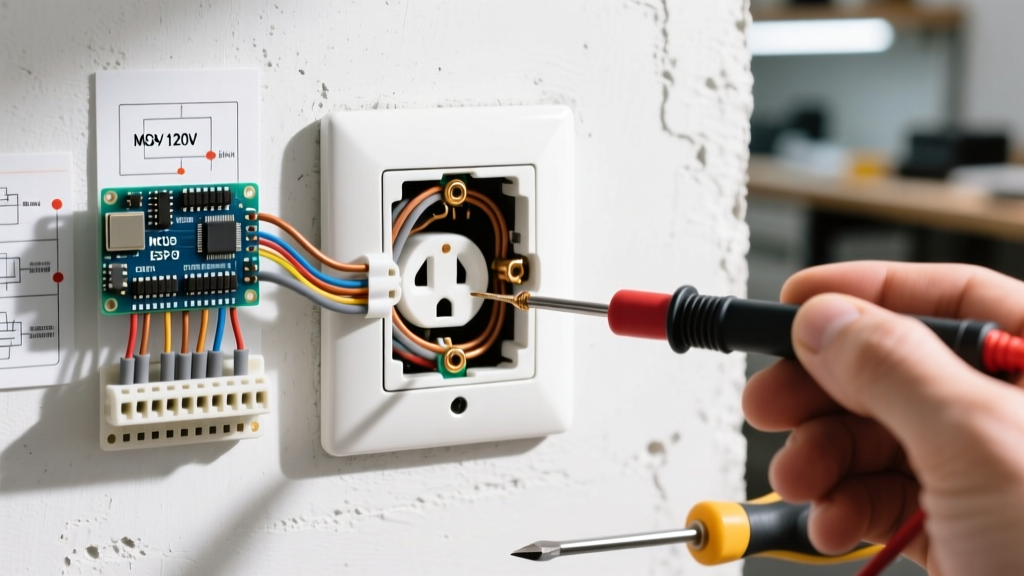
- Use a digital multimeter to verify voltage reads between 115V and 125V from hot to neutral, and hot to ground.