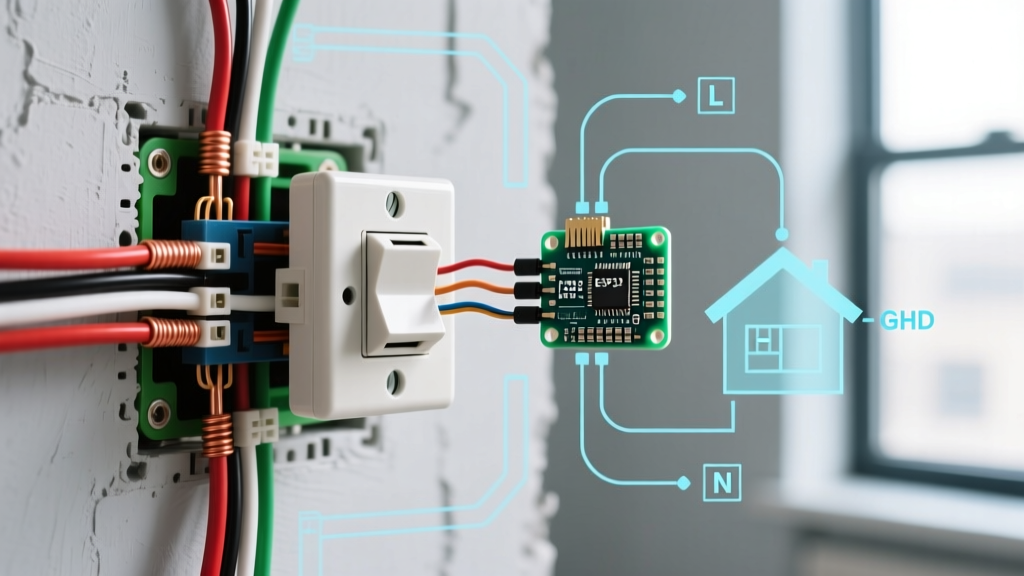

When homeowners and apprentice electricians ask, "what is electrical outlet", they are usually pointing to the plastic faceplate on the wall where they plug in a lamp or television. However, from a strict National Electrical Code (NEC) perspective, the terminology and the legal requirements governing these devices are highly specific. As we navigate the widespread adoption of the 2023 NEC and the emerging 2026 local amendments, understanding the precise code requirements for outlets and receptacles is critical for passing inspections, ensuring functionality, and preventing electrical fires.
The Technical Distinction: Outlet vs. Receptacle
To understand code requirements, you must first speak the language of the National Fire Protection Association (NFPA), which publishes the NEC. The code draws a hard line between an "outlet" and a "receptacle."
NEC Article 100 Definitions:
Outlet: A point on the wiring system at which current is taken to supply utilization equipment.
Receptacle: A contact device installed at the outlet for the connection of an attachment plug.
In plain English: A hardwired dishwasher, a ceiling light fixture, and a wall plug are all outlets because they are points where current is drawn. However, only the wall plug with slots for a cord is a receptacle. When the NEC dictates "receptacle spacing," it is referring specifically to plug-in devices, not hardwired appliances or lighting outlets.
The "6/12 Rule" for General Living Spaces (NEC 210.52)
The most frequently cited code requirement for residential receptacles is the 6/12 rule, found in NEC 210.52(A). This rule was designed based on the standard length of a lamp cord (6 feet) to prevent the use of dangerous extension cords.
- The 6-Foot Rule: No point along the floor line in any wall space can be more than 6 feet from a receptacle outlet. This means you should be able to walk along any wall and never be more than 6 feet from a plug.
- The 12-Foot Rule: Receptacles must be spaced no more than 12 feet apart along the wall.
- The 2-Foot Wall Rule: Any wall space that is 2 feet or wider (including space measured around corners) requires a receptacle.
Exceptions to the Spacing Rule
The 6/12 rule does not apply to walls occupied by doorways, fireplaces, or fixed cabinets. Furthermore, floor receptacles can count toward this requirement if they are located within 18 inches of the wall, and countertops have their own entirely separate set of rules.
Kitchen and Countertop Receptacle Mandates (NEC 210.52(C))
Kitchens are high-demand electrical environments. The NEC requires a minimum of two 20-amp Small-Appliance Branch Circuits (SABCs) to serve all countertop receptacles. These circuits cannot supply lighting or other non-countertop appliances.
For countertop spacing, the code enforces a strict 24-inch rule. No point along the wall line at the countertop can be more than 24 inches from a receptacle. Additionally, any countertop backsplash wider than 12 inches requires a receptacle, and if a countertop is divided by a sink or range, each separate section must be evaluated independently for the 24-inch requirement. Receptacles cannot be installed face-up on horizontal countertop surfaces due to the risk of liquid intrusion.
Bathroom Receptacle Requirements (NEC 210.52(D))
Bathrooms require at least one receptacle located within 3 feet of the outside edge of the sink basin. This receptacle must be installed on a wall or partition, or on the side or face of the basin cabinet. It cannot be installed more than 12 inches below the top of the basin. Furthermore, bathroom receptacles must be on a dedicated 20-amp circuit that serves no other outlets outside the bathroom, with the exception of lighting and exhaust fans within the same bathroom.
GFCI and AFCI Protection Requirements
Modern code requirements heavily emphasize shock and fire prevention through Ground Fault Circuit Interrupter (GFCI) and Arc Fault Circuit Interrupter (AFCI) technologies. While older homes may be "grandfathered" in, any new installation, renovation, or receptacle replacement must adhere to current mandates.
| Protection Type | Primary Hazard Mitigated | Required Locations (NEC 210.8 & 210.12) | Typical Device Cost (2026) |
|---|---|---|---|
| GFCI | Electrical Shock (Water/Ground Faults) | Bathrooms, Kitchens, Garages, Outdoors, Crawlspaces, Basements, Laundry areas, within 6 ft of sinks. | $18.00 - $28.00 |
| AFCI | Electrical Fire (Arcing/Sparking) | Bedrooms, Living Rooms, Hallways, Kitchens, Laundry Rooms, Family Rooms, Dining Rooms. | $25.00 - $35.00 (Breaker) / $30+ (Combo Receptacle) |
| Dual Function | Both Shock and Fire | Kitchens and Laundry Rooms (where both codes intersect). | $35.00 - $45.00 |
Note: A highly recommended dual-function device for modern kitchens is the Leviton GFTNL-W, which combines Class A 5mA GFCI and combination-type AFCI protection in a single 20A tamper-resistant receptacle, retailing around $38.
Tamper-Resistant (TR) Mandates (NEC 406.12)
According to the U.S. Consumer Product Safety Commission (CPSC), thousands of children are injured annually by inserting objects into standard receptacles. To combat this, NEC 406.12 requires all 15-amp and 20-amp, 125-volt and 250-volt non-locking receptacles in dwelling units to be Tamper-Resistant (TR).
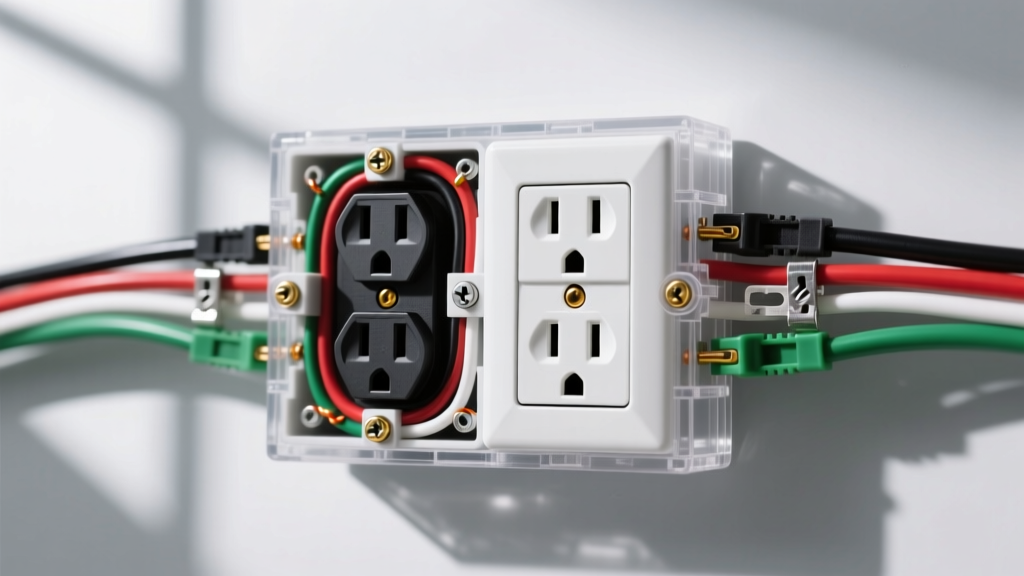
TR receptacles feature internal spring-loaded shutters that only open when equal pressure is applied to both slots simultaneously (as happens when inserting a standard 2-prong or 3-prong plug). A standard 15A TR receptacle, such as the Leviton T5320-W, costs roughly $2.50 compared to $0.85 for a non-TR builder-grade equivalent. This minor material cost increase is a non-negotiable code requirement for passing final inspections.
Outdoor and Weather-Resistant (WR) Requirements (NEC 406.9)
Receptacles installed in damp or wet locations must be listed as Weather-Resistant (WR). These devices are manufactured with UV-resistant thermoplastic and nickel-plated brass contacts to prevent corrosion and degradation from sunlight and moisture. Furthermore, outdoor receptacles in wet locations must be protected by an "extra-duty" or "in-use" bubble cover that remains weatherproof even when a cord is plugged in.
Expert Troubleshooting: Failure Modes and Edge Cases
Even when the correct receptacle is selected, installation errors frequently cause failures. Here are three critical edge cases to avoid:
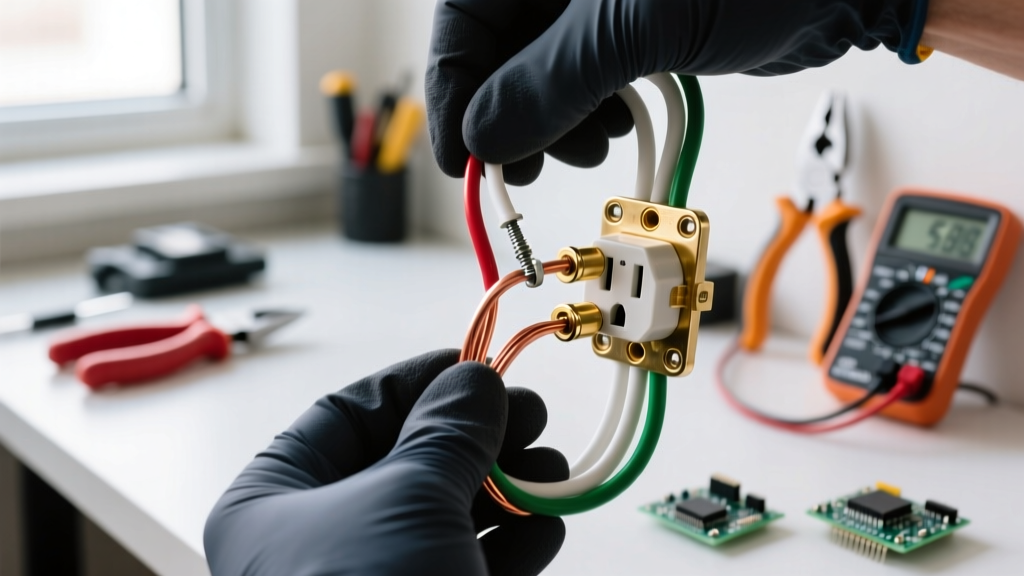
- The "Backstab" Push-In Violation: Many standard 15A receptacles feature push-in wire holes on the back. NEC 110.14 strictly limits these push-in connections to 14 AWG solid copper wire. If you are wiring a 20-amp circuit using 12 AWG wire, you cannot use the push-in holes. You must use the screw terminals or a pigtail. Thermal expansion and contraction will eventually cause push-in connections to loosen, leading to arcing and melted device housings.
- Bootleg Grounds on Replacements: When replacing an old 2-prong ungrounded receptacle with a modern 3-prong GFCI receptacle (which is permitted by NEC 406.4(D)(2) if no equipment grounding conductor exists), you must apply the included "GFCI Protected / No Equipment Ground" sticker. You cannot connect the green ground screw to the neutral terminal to "fake" a ground; this creates a lethal shock hazard if the neutral wire breaks upstream.
- Yoke Grounding Reliance: Relying on the metal yoke of the receptacle to ground a metal electrical box via the mounting screws is a common failure point. If the box is not perfectly flush, or if layers of drywall mud interfere with the metal-to-metal contact, the ground path is compromised. Always use a dedicated green grounding pigtail from the box to the receptacle's green ground screw.
Summary Checklist for Code Compliance
Whether you are a DIYer tackling a basement finish or a journeyman pulling permits, use this quick checklist to ensure your receptacle layout meets modern NEC standards:
- Verify 6/12 spacing on all general living area walls wider than 2 feet.
- Confirm kitchen countertops adhere to the 24-inch rule and are served by at least two 20A SABCs.
- Ensure bathroom receptacles are within 3 feet of the basin and on a dedicated 20A circuit.
- Install TR (Tamper-Resistant) receptacles in all dwelling unit areas.
- Deploy GFCI protection in all wet/damp locations and within 6 feet of sinks.
- Use WR (Weather-Resistant) rated devices and in-use covers for all exterior plugs.
Understanding exactly what an electrical outlet is—and the rigorous code framework that governs it—transforms a simple wall plate from a mere convenience into a heavily engineered life-safety device. Always consult your local Authority Having Jurisdiction (AHJ), as local municipalities frequently amend the base NEC to address regional environmental and safety concerns.