
Navigating the Italian Electrical Landscape
For expats, international DIYers, and electrical engineers working on European properties, the electrical outlet in Italy presents a unique set of challenges and historical quirks. Unlike the standardized Type E/F dominance seen in France or Germany, Italy operates on a dual-standard legacy system that has only recently been unified under modern wall plates. Understanding the current code requirements is not just a matter of convenience; it is a strict legal and safety necessity governed by the Comitato Elettrotecnico Italiano (CEI), specifically the CEI 64-8 standard.
Whether you are retrofitting a 1970s apartment in Rome or designing a smart-home-ready villa in Milan, this guide breaks down the exact wiring codes, receptacle types, and protection requirements you must follow in 2026 to ensure compliance and safety.
Code Alert: The CEI 64-8 standard is the Italian equivalent of the NEC in the United States or the IET Wiring Regulations (BS 7671) in the UK. All residential electrical installations must comply with the latest CEI 64-8 variants to pass the mandatory Dichiarazione di Conformità (Declaration of Conformity) issued by a licensed electrician upon project completion.
Receptacle Types: Type L, Schuko, and the Bipasso Evolution
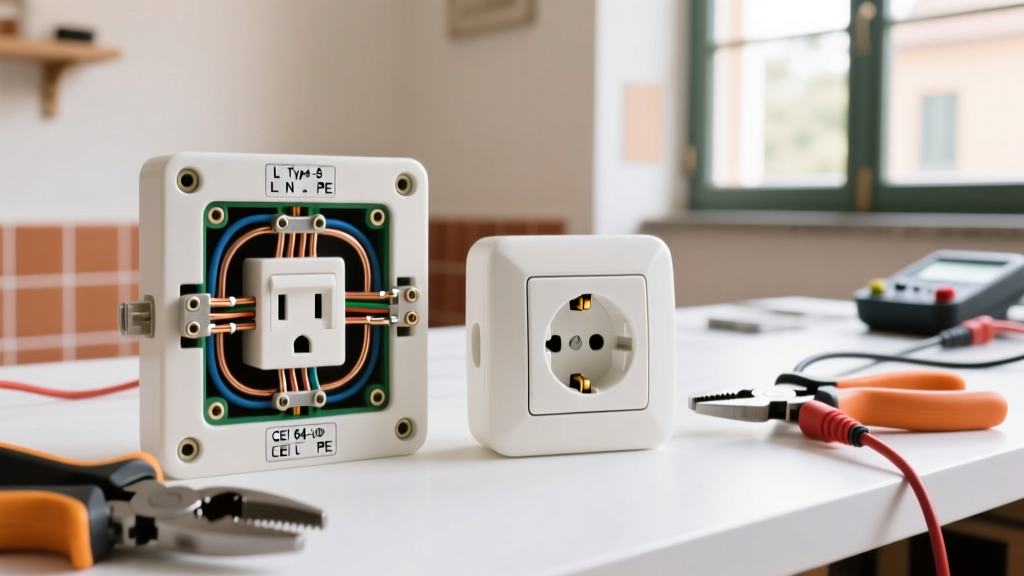
Historically, Italy utilized the Type L plug and socket (CEI 23-50), which comes in two incompatible amperage sizes. To resolve the chaos of needing different sockets for lamps versus heavy appliances, the Italian market developed the Bipasso (dual-pass) socket, and eventually the modern Italian/Schuko hybrid.
| Receptacle Type | Standard / Name | Pin Diameter & Spacing | Max Load | Current Usage Status |
|---|---|---|---|---|
| Type L (10A) | CEI 23-50 / Small Italian | 4mm pins, 19mm spacing | ~2300W | Legacy; found in older builds |
| Type L (16A) | CEI 23-50 / Large Italian | 5mm pins, 26mm spacing | ~3680W | Legacy; dedicated appliance lines |
| Bipasso (10/16A) | Italian Hybrid | Accepts both 4mm and 5mm pins | ~3680W | Common in 1990s-2010s builds |
| Type F (Schuko) | CEE 7/3 / German Standard | 4.8mm pins, 19mm spacing | ~3680W | Standard for high-draw appliances |
| Combo (Schuko/Bipasso) | Italian/Schuko Hybrid | Accepts Schuko, 10A, and 16A | ~3680W | 2026 Mandatory Standard for new builds |
Actionable Advice: If you are replacing wall plates today, exclusively purchase the Combo (Schuko/Bipasso) receptacles. Brands like BTicino (Living Now series) and Vimar (Arké series) design their faceplates to seamlessly integrate these hybrid sockets, ensuring that both standard European Schuko plugs (used on most modern electronics and power tools) and legacy Italian 10A plugs can be used safely.
CEI 64-8 Wiring Color Codes & Conductor Sizing
Italy strictly adheres to the harmonized European HD 308 S2 standard for cable color identification. Miswiring a receptacle using American or older British color codes will result in an immediate code violation and a severe shock hazard.
- Phase (Line): Brown (preferred for single-phase residential). Black or Grey may be used in multi-phase or specific switched setups, but Brown is the standard for socket spurs.
- Neutral: Light Blue. Never use blue for a switched live or traveler wire.
- Earth (Ground): Green/Yellow bi-color stripe. This must be continuous and unbroken to every single receptacle.
Minimum Wire Gauge Requirements
Under CEI 64-8, conductor sizing is dictated by the circuit breaker rating and the installation method (e.g., conduit in masonry vs. under-plaster). For standard residential copper wiring (N07V-K or FG7OM1 cables):
- 1.5 mm²: Strictly reserved for lighting circuits (protected by 10A or 16A MCBs).
- 2.5 mm²: The absolute minimum for all general-purpose socket outlet circuits (protected by 16A MCBs).
- 4.0 mm² or 6.0 mm²: Required for dedicated high-load receptacles, such as electric ovens, induction cooktops, or Level 2 EV charging stations.
Circuit Protection: MCBs and RCD Mandates
The Italian electrical code places a heavy emphasis on human protection via Residual Current Devices (RCDs), known locally as salvavita (life-saver).
The 30mA Rule and Type A RCDs
Every circuit supplying an electrical outlet in Italy must be protected by an RCD with a maximum residual operating current of 30mA. However, the type of RCD has evolved. Historically, Type AC (detecting only pure AC fault currents) was standard. As of the latest CEI 64-8 updates, Type A or Type F RCDs are heavily mandated for socket circuits. Modern appliances—such as inverter-driven washing machines, LED drivers, and smart home power supplies—produce pulsating DC fault currents that a standard Type AC RCD will fail to detect, leaving the user unprotected.
Circuit Splitting Requirements
To prevent a single fault from plunging an entire home into darkness, CEI 64-8 requires residential socket circuits to be split. A standard apartment (up to 400 square meters) must have:
- At least two independent 30mA RCDs protecting different zones or functions (e.g., one for general sockets, one for lighting and climate control).
- A minimum of three separate socket circuits distributed logically (e.g., Kitchen/Dedicated Appliances, Living/Bedrooms, Bathrooms/Utility).
2026 Code Updates: Smart Outlets and USB-C Integration
The modern Italian electrical landscape is heavily focused on energy monitoring and smart home integration, driven by the Superbonus energy efficiency incentives of recent years and ongoing EU smart-grid directives.
Integrated USB-C Receptacles
Wall-mounted USB charging is now governed by specific safety modules to prevent overheating in standard 503 wall boxes (the standard Italian rectangular backbox). When installing USB-C outlets, you must use certified modules like the BTicino Living Now USB-C Power Delivery (PD) 30W module. These modules feature internal thermal cutoffs and are designed to dissipate heat within the confined space of an Italian 3-module faceplate. Never wire a third-party, uncertified USB step-down transformer directly behind a standard faceplate, as it violates CEI fire enclosure rules.
Smart Socket Actuators
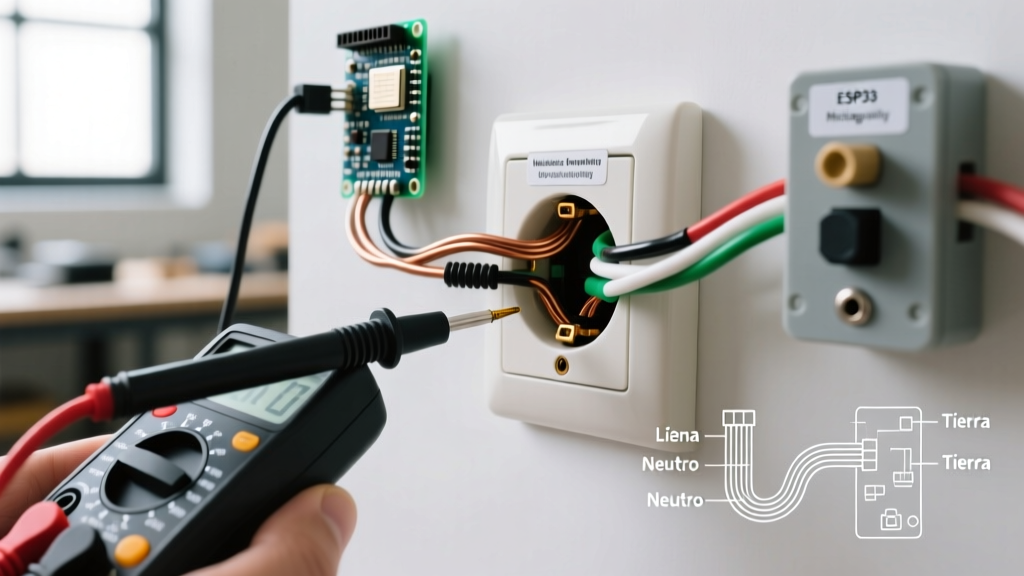
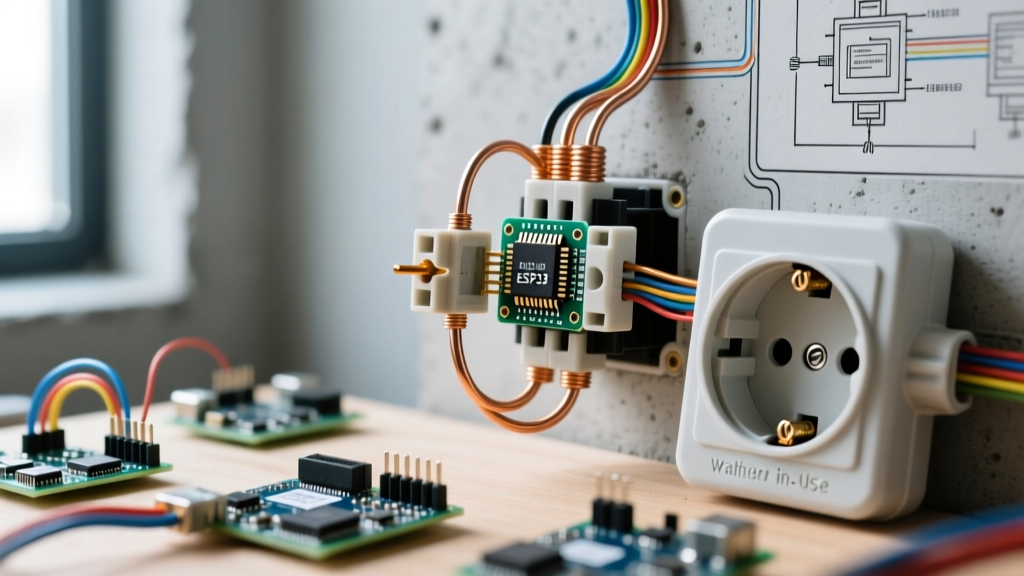
For energy monitoring, the code allows the installation of smart relay actuators (like the Vimar Arké Zigbee/Matter smart socket modules) directly behind the receptacle faceplate. These devices must maintain the integrity of the Green/Yellow earth pass-through. If the smart module requires a neutral wire to operate its internal Wi-Fi/Zigbee radio, you must ensure the 2.5mm² Light Blue neutral is properly branched in the backbox using certified WAGO lever-nuts or equivalent crimp connectors; twisting and taping wires is strictly prohibited under CEI 64-8.
Step-by-Step: Replacing a Legacy 10A Socket with a Modern Combo
If you are upgrading an older 1980s Italian 10A socket to a modern Schuko/Bipasso combo, follow this safety-compliant workflow:
- Isolate and Verify: Turn off the main breaker. Use a CAT III or CAT IV non-contact voltage tester and a multimeter to confirm 0V between Phase, Neutral, and Earth.
- Inspect the Backbox: Older Italian homes often use rectangular 503 backboxes. Check if the existing wiring is 1.5mm² (a code violation for sockets). If it is, you must pull new 2.5mm² wires using a fish tape.
- Verify Earth Continuity: Many pre-1990s Italian apartments lack a true earth ground, relying instead on metal water pipes (which is now illegal). Test the earth pin impedance. If no earth is present, you cannot install a Schuko/Combo socket. You must either run a new earth wire to the main distribution board or install a specialized isolation transformer setup, which requires a licensed engineer.
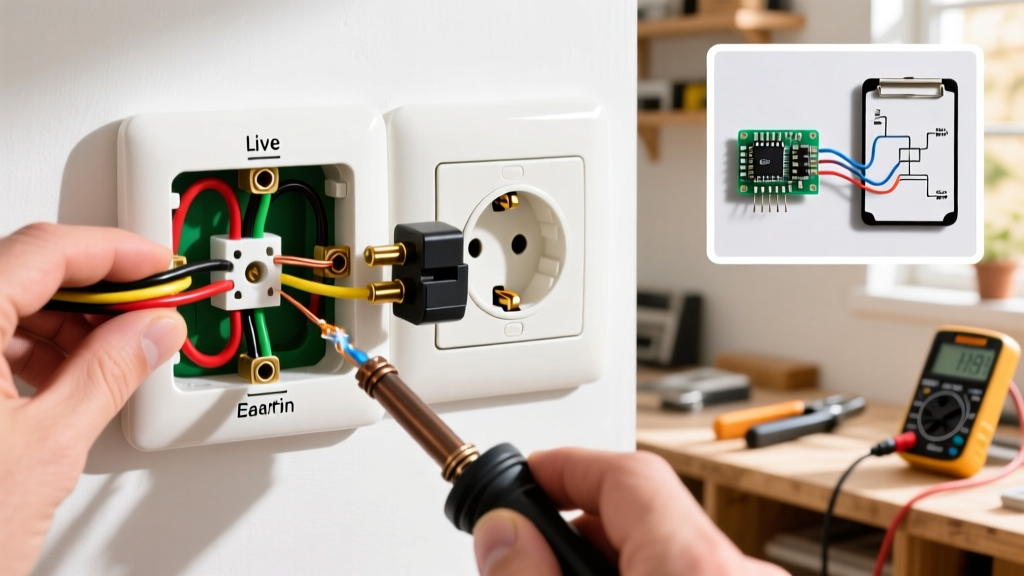
- Strip and Terminate: Strip exactly 12mm of insulation. Insert the Brown (Phase) to the right, Light Blue (Neutral) to the left, and Green/Yellow (Earth) to the center pin of the Combo receptacle.
- Torque and Mount: Tighten the terminal screws to the manufacturer's specified torque (usually 0.5 Nm to 0.8 Nm for standard receptacles) to prevent arc faults. Mount the faceplate using the provided expansion screws, ensuring the masonry is solid.
Frequently Asked Questions (FAQ)
Can I use a UK or US receptacle in an Italian property?
No. Aside from the obvious physical incompatibility, US receptacles are rated for 120V and lack the necessary insulation clearances for Italy's 230V system. Using them poses a severe fire and electrocution risk and will void any home insurance policies.
What is the standard voltage and frequency in Italy?
Italy operates on a nominal 230V AC supply at 50Hz, harmonized with the rest of the European Union. Tolerances of +10% to -10% are standard.
Do bathrooms require special outlet protection?
Yes. CEI 64-8 defines strict 'zones' in bathrooms. Standard sockets are generally prohibited within 2.4 meters of a shower or bathtub (Zones 0, 1, and 2). A dedicated shaver socket with an isolation transformer, or a receptacle placed outside the restricted zones on a dedicated 30mA RCD circuit, is required.