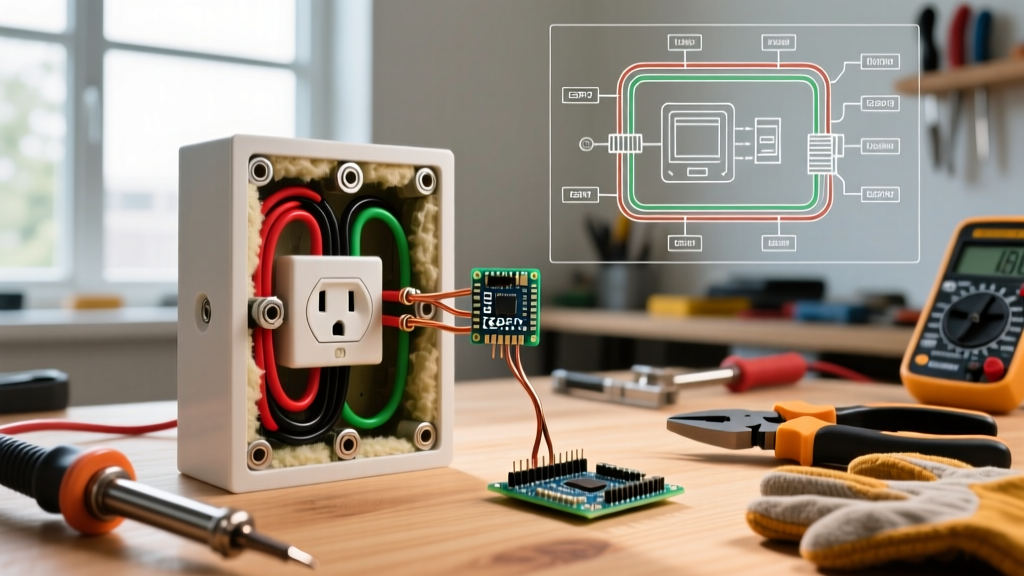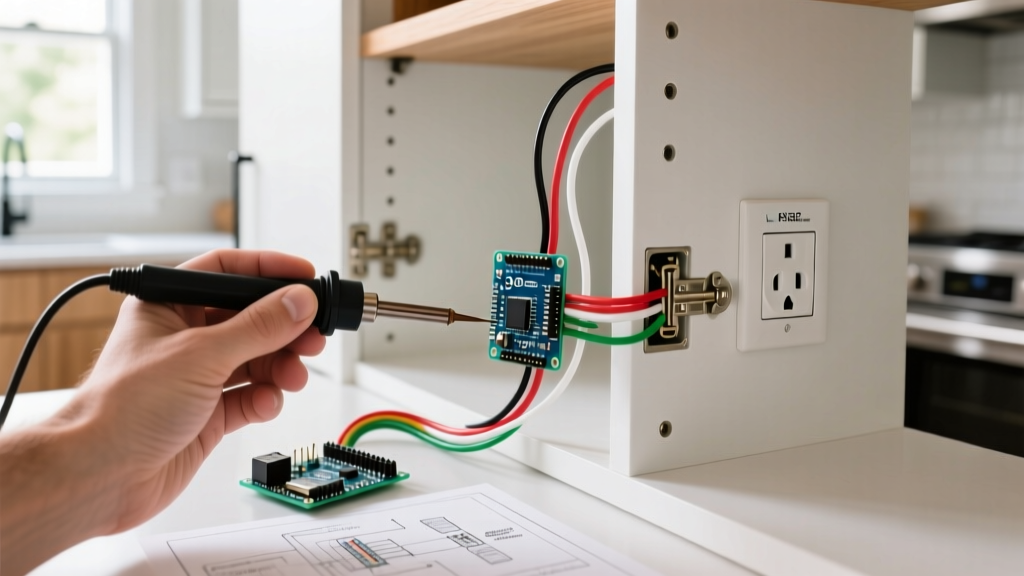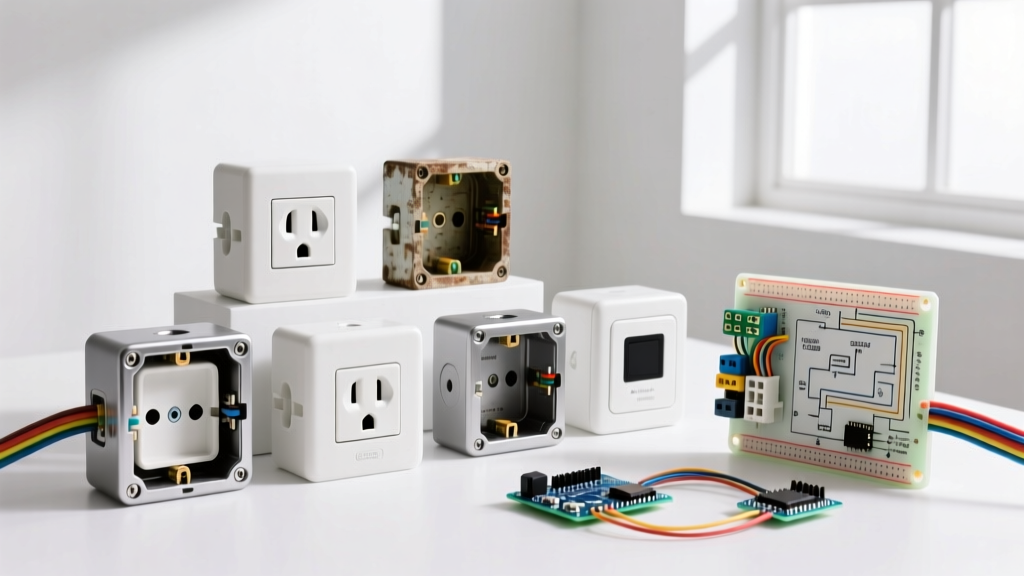

The Unsung Hero of Electrical Safety and Functionality
When planning a wiring project, most DIYers and junior electricians obsess over wire gauge, breaker sizing, and receptacle quality. Yet, the foundation of the entire assembly—the electrical outlet box—is often an afterthought. Choosing the wrong box doesn't just make installation frustrating; it can lead to severe heat buildup, arc faults, and direct violations of the National Electrical Code (NEC).
As of 2026, the proliferation of Matter-over-Thread smart switches, Wi-Fi-enabled dimmers, and AFCI/GFCI combination devices means that standard 18-cubic-inch boxes are frequently inadequate. This comprehensive tool and material guide will break down exactly how to select, size, and install the correct electrical outlet box for any residential or commercial scenario.
The 4 Primary Electrical Outlet Box Types
Electrical boxes are categorized primarily by their installation method and the environment they are designed to withstand. Selecting the correct form factor is step one.
1. New Work (Nail-On) Boxes
Designed for open-stud construction before drywall is laid. These boxes feature integral nail brackets that secure directly to the side of a wooden stud.
- Top Pick: Carlon B520R (PVC, 22 cu in).
- Average Cost: $0.90 - $1.50 per unit.
- Best For: New builds, full-gut renovations, and open basement ceilings.
2. Old Work (Retrofit) Boxes
Also known as 'cut-in' boxes, these are engineered for closed walls. You cut a hole in the drywall, insert the box, and tighten screws that deploy 'flip-out' wings behind the drywall to clamp it securely in place.
- Top Pick: Madison Electric Smart Box (B520A) or Arlington Industries BE1 adjustable bracket box.
- Average Cost: $2.50 - $4.50 per unit.
- Best For: Adding receptacles to finished rooms, smart home retrofits.
3. Masonry & Concrete Boxes
Constructed from heavy-duty galvanized steel or die-cast zinc, these boxes are designed to be embedded in concrete, cinder block, or brick. They feature deep hubs for conduit integration and knockouts that resist the pressure of wet concrete.
- Top Pick: Raco 690 Masonry Box (4-11/16 inch square).
- Average Cost: $4.00 - $6.50 per unit.
- Best For: Basement foundation walls, commercial retail spaces, garage slabs.
4. Weatherproof & Outdoor Boxes
Outdoor electrical outlet boxes must be rated for damp or wet locations. They feature threaded conduit hubs, rubber gaskets, and are typically paired with 'in-use' bubble covers to protect cords from rain while plugged in.
- Top Pick: TayMac MX1000 Metal Weatherproof Box.
- Average Cost: $12.00 - $18.00 per unit.
- Best For: Exterior patio receptacles, landscape lighting hubs, RV hookups.
Material Matrix: PVC vs. Steel vs. Fiberglass
The material of your electrical outlet box dictates its durability, grounding requirements, and fire resistance. Below is a comparison matrix to guide your material selection.
| Material | Pros | Cons | Grounding Requirement | Primary Use Case |
|---|---|---|---|---|
| PVC (Plastic) | Cheap, lightweight, non-corrosive, easy to cut. | Brittle in extreme cold, melts in high-heat fires. | Must run a separate equipment ground wire to the device. | Standard interior residential walls. |
| Galvanized Steel | Crush-proof, fire-resistant, can act as ground path (with proper fittings). | Heavier, requires locknuts/bushings, can rust outdoors. | Box itself can be grounded via metallic conduit; internal ground screw required for NM cable. | Commercial, exposed basement, garage, conduit runs. |
| Fiberglass | Highly heat resistant, rigid, non-conductive. | More expensive than PVC, harder to cut cleanly. | Requires separate equipment ground wire. | High-end residential, fire-rated assemblies. |
| Cast Aluminum | Weatherproof, dissipates heat well, extremely durable. | Expensive, requires threaded conduit fittings. | Grounded via metallic conduit or internal bonding jumper. | Outdoor wet locations, industrial exteriors. |
Mastering NEC Box Fill Calculations (Article 314.16)
The most common code violation regarding the electrical outlet box is 'box fill overcrowding.' According to NFPA 70 (NEC Article 314.16), every box has a maximum cubic inch (cu in) capacity. You must calculate the volume of all conductors, clamps, devices, and grounding wires entering the box.
⚠️ Pro-Tip for 2026 Smart Home Retrofits: Modern Wi-Fi and Zigbee smart switches require a neutral wire and possess bulky internal power supplies. A standard 18 cu in box is almost always insufficient for a 3-way smart switch setup. Always upgrade to a 22 cu in or 24 cu in 'deep' box when installing smart home gear.
Volume Allowance per Conductor (Based on Wire Gauge)
- 14 AWG Wire: 2.0 cubic inches per conductor.
- 12 AWG Wire: 2.25 cubic inches per conductor.
- 10 AWG Wire: 2.5 cubic inches per conductor.
- 8 AWG Wire: 3.0 cubic inches per conductor.
The Calculation Rules
- Current-Carrying Conductors: Count every hot and neutral wire that enters and terminates in the box. (Wires that pass straight through without a splice count as 1 volume allowance each).
- Equipment Grounding Wires: Count all bare/green ground wires combined as one single volume allowance based on the largest ground wire in the box.
- Internal Clamps: Count as one volume allowance based on the largest wire. (PVC boxes with integral tabs do not count).
- Device Yokes (Switches/Receptacles): Count as two volume allowances based on the largest wire connected to the device.
Real-World Calculation Example
You are installing a standard duplex receptacle using 12/2 NM-B cable (one line entering, one load leaving). The box has internal clamps.
- 4 Conductors (2 Hots, 2 Neutrals): 4 x 2.25 = 9.0 cu in.
- 1 Grounding Allowance: 1 x 2.25 = 2.25 cu in.
- 1 Clamp Allowance: 1 x 2.25 = 2.25 cu in.
- 1 Device Yoke: 2 x 2.25 = 4.5 cu in.
- Total Required Volume: 18.0 cubic inches.
Result: A standard 18 cu in single-gang box is exactly at the legal limit. If you add a second 12/2 cable to daisy-chain further down the line, you will jump to 24.75 cu in, requiring a deep junction box like the Eaton 24 cu in deep switch box.
Common Failure Modes & Edge Cases
Even with the right box, improper installation leads to critical failures. Watch out for these specific edge cases:
1. The 'Plaster Ear' Gap Problem
When cutting drywall for an old work electrical outlet box, it is easy to cut the hole slightly too large. This leaves the drywall unsupported around the device yoke, causing the receptacle to push into the wall when plugging in a cord. Solution: Keep a pack of steel 'plaster ears' (Caddy PR1) or plastic shims (Caterpillar Shims) in your tool pouch to bridge gaps up to 1/4 inch.
2. Missing Knockouts and Fire Drafts
Steel boxes feature multiple pre-punched knockouts. If you open a knockout for a cable but do not use it, or if a cable is removed and the hole is left open, the box loses its fire-containment integrity. In a fire, the open hole acts as a chimney, drafting flames into the wall cavity. Solution: Always seal unused knockouts with steel knockout seals (e.g., Arlington Industries KOSE1).
3. Grounding to Plastic Boxes
A frequent DIY mistake is attempting to bond the bare copper ground wire to the plastic electrical outlet box itself using a self-tapping screw. PVC and fiberglass are non-conductive. The ground wire must terminate directly to the green grounding screw on the receptacle or switch yoke, or be spliced via a wire nut to a pigtail that connects to the device.
Frequently Asked Questions
Can I use a metal electrical outlet box with non-metallic (Romex) cable?
Yes, but you must use a proper NM cable connector (like a Halex 3/8" NM connector) to secure the cable to the knockout. You cannot simply run the raw Romex through the sharp metal edge of the knockout, as the steel will eventually slice through the PVC jacket and cause a ground fault or short circuit. Furthermore, you must bond the metal box to the circuit's equipment grounding conductor using a green grounding screw threaded into the back of the box.
What is the difference between a 'gang' and a 'gangable' box?
'Gang' refers to the number of single-width devices the box can hold side-by-side. A 2-gang box holds two switches. A 'gangable' steel box has removable side panels. You can bolt two single-gang steel boxes together to create a custom 2-gang or 3-gang assembly on the fly, which is highly useful in commercial conduit applications. PVC boxes are molded and cannot be ganged.
How do I fish an electrical outlet box into an insulated exterior wall?
Exterior walls are packed with fiberglass or mineral wool insulation, making it difficult to route new NM cable. Use a specialized retrofit box like the Arlington Industries BE1, which features a sliding bracket that mounts to the stud first. You can fish the wire, connect it, and then slide the box onto the bracket, compressing the insulation safely behind it without crushing the wires against the back of the box.