
The Foundation of Portable Power: Selecting the Right Electrical Wiring Plug
When tackling any portable power project, generator hookup, or heavy-duty extension cord build, the reliability of your connection hinges entirely on the quality of your electrical wiring plug and the precision of your termination. A poorly terminated plug is not just an inconvenience; it is a severe fire hazard. According to the National Electrical Code (NEC), flexible cords and their attachment plugs must be installed so that no strain is transmitted to joints or terminal screws. Yet, countless DIYers and even junior technicians fail to match the correct plug NEMA configuration, wire gauge, and strain relief materials to their specific application.
This comprehensive tool and material guide cuts through the guesswork. We will dissect the exact hand tools required for professional-grade terminations, break down the most common NEMA plug configurations available in 2026, and detail the critical materials needed to ensure your electrical wiring plug survives harsh environments without voltage drop or thermal failure.
Decoding NEMA Configurations: The Material Foundation
The National Electrical Manufacturers Association (NEMA) sets the dimensional standards for plugs and receptacles in North America. Understanding these codes is the first step in purchasing the correct materials. You must never attempt to adapt a plug to a circuit it was not rated for by modifying the prongs. The NEMA WD 6 standards strictly dictate blade width, angle, and grounding pin placement to prevent catastrophic miswiring.
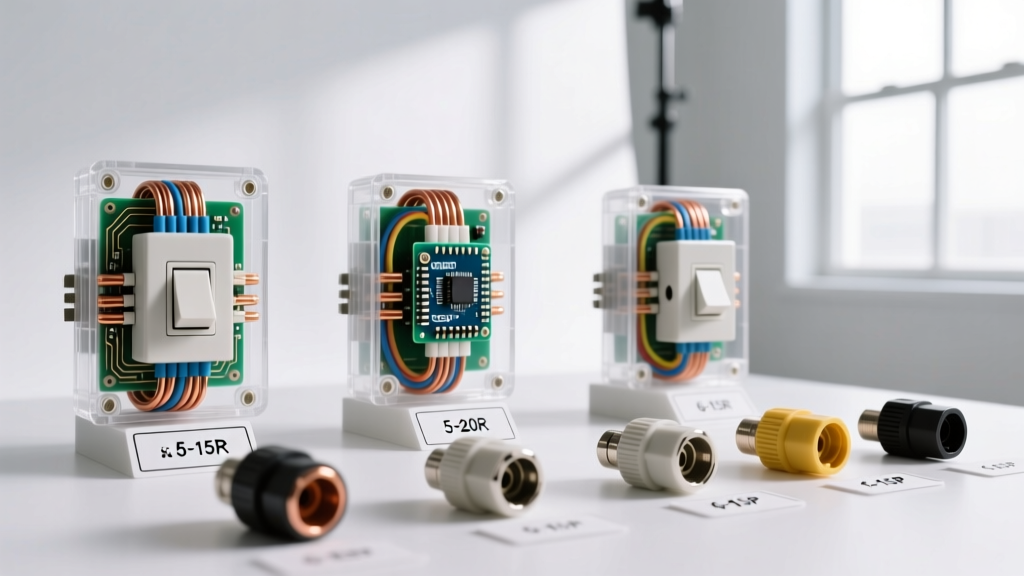
| NEMA Code | Rating & Specs | Common Application | 2026 Avg. Material Cost |
|---|---|---|---|
| 1-15P | 15A, 125V (Ungrounded) | Legacy double-insulated appliances, basic lighting. | $1.50 - $2.50 |
| 5-15P | 15A, 125V (Grounded) | Standard household extension cords, power tools, IT equipment. | $3.50 - $6.00 |
| 5-20P | 20A, 125V (Grounded, T-Slot) | Heavy-duty shop vacs, commercial kitchen appliances, window AC units. | $6.50 - $9.00 |
| L14-30P | 30A, 125/250V (Twist-Lock) | Portable generators, transfer switches, RV power pedestals. | $24.00 - $32.00 |
| L6-30P | 30A, 250V (Twist-Lock, No Neutral) | Welders, heavy compressors, commercial server racks. | $22.00 - $28.00 |
Pro Tip: For any outdoor or wet-location application, standard straight-blade plugs are insufficient. Always upgrade to a Twist-Lock (denoted by the 'L' prefix) or utilize a weather-sealed plug housing like the Hubbell PRO series to prevent moisture ingress and accidental disconnects under load.
Essential Hand Tools for Professional Plug Termination
You cannot achieve a reliable, low-resistance connection with dull or improperly sized tools. The right tools prevent conductor nicking, which reduces the ampacity of the wire and creates localized hot spots.
1. Precision Wire Strippers
Avoid automatic wire strippers for heavy-gauge flexible cords (10 AWG to 12 AWG). The jaw pressure often crushes the fine stranded copper, reducing conductivity. Instead, invest in manual, gauge-specific strippers.
- Klein Tools 11055: The industry standard for 10-20 AWG solid and stranded wire. The precision-machined stripping holes ensure clean insulation removal without scoring the copper.
- Knipex 13 72 8 (8-inch): A premium multi-function tool that strips, cuts, and crimps. Its laser-cut stripping holes are exceptionally accurate for high-strand-count flexible cords like SOOW or SJOOW.
2. Insulated Screwdrivers and Nut Drivers
Even when working on de-energized cords, using 1000V-rated insulated tools builds safe muscle memory and provides an extra layer of protection if a cord is accidentally tested while partially assembled.
- Wiha 32090 Insulated Set: Features slim-profile blades that easily reach into the deep, recessed terminal cavities of modern twist-lock plugs without damaging the surrounding nylon housing.
- Klein Tools 630-8 Hollow Shaft Nut Driver: Essential for tightening the external cord grip assembly on heavy-duty Leviton and Hubbell plugs.
3. Torque Screwdriver (The Overlooked Necessity)
Over-tightening terminal screws is a leading cause of plug failure. It strips the brass threads or shears the screw head, while under-tightening leads to high resistance and arcing. A torque screwdriver, such as the CDI 401SM (set to 14-16 inch-pounds, the standard recommendation for most 15A/20A wiring devices), ensures perfect clamping force every time.
Critical Materials Beyond the Plug Head
The plug housing is only half the battle. The longevity of your electrical wiring plug depends on the auxiliary materials used to secure and protect the termination.
Cord Grips and Strain Reliefs
A cord grip (or strain relief) clamps onto the outer jacket of the flexible cord, ensuring that any pulling force is absorbed by the jacket, not the internal terminal screws. You must match the cord grip to the exact Outer Diameter (OD) of your cable.
- Hubbell 4764 Cord Grip: Fits standard 10/3 and 12/3 SOOW cords (OD 0.425' to 0.625'). Priced around $3.50 in 2026, this neoprene-lined grip provides superior weather sealing.
- Leviton 500-W Cord Ring: An internal fiber or rubber ring used in older or commercial-grade plugs to wedge the cord jacket against the housing. Ensure you use the correct thickness; a loose ring will allow the cord to pivot, eventually fatiguing the copper strands.
Dielectric Grease and Heat Shrink
For marine, RV, or outdoor generator plugs, oxidation on the brass terminals will cause voltage drop over time. Applying a thin layer of NO-OX-ID A-Special dielectric grease to the prongs and internal terminal connections prevents galvanic corrosion. Additionally, slipping a piece of 3M FP-301 adhesive-lined heat shrink over the cord jacket before assembly, and shrinking it over the rear cord grip, creates a secondary waterproof seal that blocks capillary action from drawing water into the plug housing.
Step-by-Step Termination: Avoiding Common Failure Modes
Follow this exact sequence to ensure your electrical wiring plug passes professional inspection standards and complies with OSHA flexible cord regulations regarding strain relief and termination integrity.
- Jacket Removal: Measure the depth of the plug housing. Score the outer jacket of the SOOW/SJOOW cord with a cable skinner or careful utility knife cuts. Never cut circumferentially with excessive force, as you will sever the underlying ground wire. Peel the jacket back and trim it cleanly.
- Conductor Stripping: Strip exactly 5/8-inch to 3/4-inch of insulation from the individual conductors. If the plug manufacturer specifies a strip gauge on the back of the housing, use it. Exposed copper outside the terminal cavity is a shock hazard; too little copper inside the cavity results in a weak mechanical connection.
- The Shepherd's Hook: For screw-terminal plugs (non-captive plate), twist the stranded wire tightly clockwise. Form a 'shepherd's hook' loop. The loop must be oriented clockwise so that tightening the screw pulls the loop closed rather than pushing it out.
- Terminal Seating: Ensure the wire loop sits flat under the screw head and the washer. No stray 'whiskers' of copper should protrude from the sides, which could short against the adjacent neutral or ground terminal.
- Torque and Secure: Tighten the terminal screws to 14-16 inch-pounds. Assemble the cord grip, ensuring it bites firmly into the outer jacket. Tug the cord vigorously; the jacket should not slip, and the internal wires should not move.
Troubleshooting & Edge Cases: The 'Tinning' Myth
Critical Warning: Never solder (tin) the tips of stranded wires before placing them under a screw terminal in an electrical wiring plug. While it seems like a good way to keep strands together, solder is a soft metal subject to 'cold flow' and thermal expansion. As the plug heats up under load and cools down, the solder compresses and deforms. Over a few thermal cycles, the screw will lose its clamping force, leading to a loose connection, arcing, and ultimately, a melted plug housing. Always use bare, tightly twisted stranded copper under terminal screws, or use crimped ferrules if the plug design specifically accommodates them.
Dealing with High-Strand Count Silicone Cables
Modern high-end extension cords and EV charging cables often use silicone-jacketed, high-strand-count copper (sometimes over 100 strands per conductor). These strands are incredibly fragile and easily shear under standard screw pressure. If you are wiring a plug to a high-strand silicone cable, you must use a plug with captive terminal plates (like the Hubbell HBL5266C) rather than direct screw-on-wire terminations. The flat steel plate distributes the clamping force evenly, preventing the fine strands from being cut or crushed.
Final Thoughts on Material Selection
Building a safe, durable portable power connection requires respecting the physics of electricity and the mechanical limits of your materials. By selecting the correct NEMA-rated electrical wiring plug, utilizing precision stripping tools, enforcing proper torque specifications, and strictly adhering to strain relief protocols, you eliminate the vast majority of field failures. Whether you are wiring a 15-amp shop vacuum cord or a 30-amp generator inlet, the discipline applied to the termination process is what separates a hazardous hack-job from a professional-grade installation.