
Understanding the French Electrical Landscape: Type E and NF C 15-100
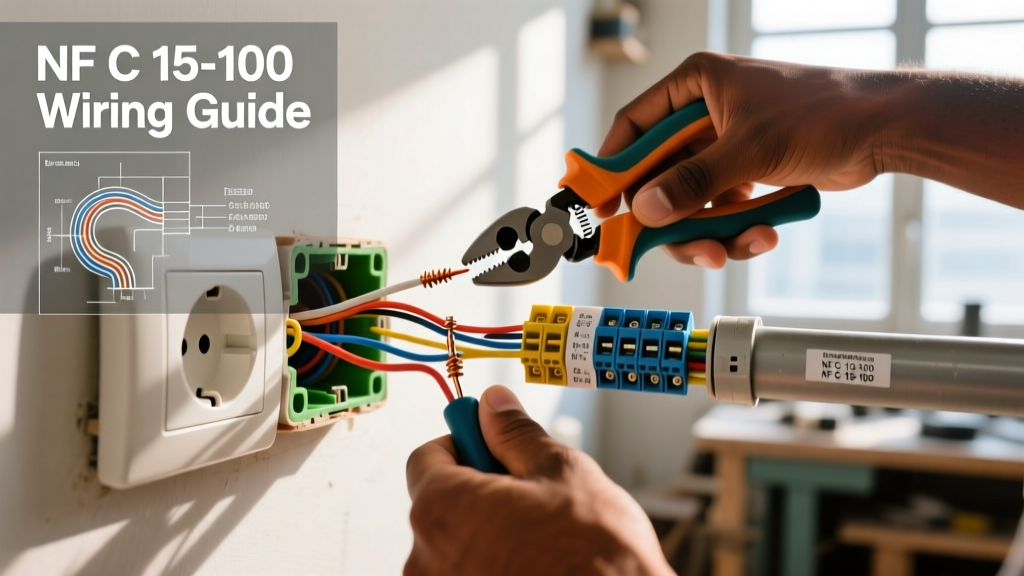
Installing an electrical outlet in France requires strict adherence to the national electrical standard, officially known as NF C 15-100. Unlike the US or UK systems, France utilizes the Type E (CEE 7/5) socket. The most distinguishing feature of the Type E system is that the earth (ground) pin is male and protrudes directly from the socket itself, while the plug features a corresponding female hole. This design ensures that the ground connection is always established before the live pins make contact.
For DIYers and expats, attempting to wire a French socket using Anglo-American conventions will result in failed inspections, potential insurance invalidation, and severe shock hazards. This guide provides a comprehensive, step-by-step installation process aligned with 2026 compliance standards, ensuring your installation is safe, legal, and fully functional.
⚠️ CRITICAL SAFETY WARNING: In France, the earth connection is not optional. Bypassing or leaving the earth wire disconnected on a Type E socket is a direct violation of NF C 15-100 and poses a lethal risk in the event of an appliance fault.Tools and Materials Required (2026 Pricing)
Before beginning, ensure you have the correct components. French electrical hardware is dominated by a few key manufacturers, primarily Legrand and Schneider Electric. Prices below reflect average 2026 retail costs in France.
- Type E Socket Mechanism: Legrand Céliane or Schneider Odace (€9.00 - €14.50 per unit).
- Flush-Mount Box (Boîte d'encastrement): Legrand Batibox 40mm depth, 67mm diameter (€1.20 - €1.80). Use 50mm depth if installing smart sockets or USB-integrated outlets.
- Wire: Rigid copper wire (H07V-U). 2.5 mm² for standard socket circuits (€0.45 per meter).
- Voltage Tester (VAT): Chauvin Arnoux C.A 740N or Fluke 2AC-II (€35.00 - €60.00). Never rely on non-contact 'pen' testers for final verification.
- Wire Strippers: Knipex 12 62 180 (calibrated for 1.5mm² and 2.5mm² rigid wire).
- Insulated Screwdrivers: Phillips #1 and Flathead, rated for 1000V.
NF C 15-100 Circuit Specifications
The French standard strictly dictates the relationship between wire gauge, circuit breaker size, and the maximum number of sockets permitted on a single circuit. Exceeding these limits is a primary cause of failed Consuel inspections (the mandatory certification body for new electrical installations in France).
| Wire Cross-Section | Max Circuit Breaker | Max Sockets per Circuit | Min. Box Depth |
|---|---|---|---|
| 1.5 mm² | 16 A | 8 | 40 mm |
| 2.5 mm² | 20 A | 12 | 40 mm (50 mm recommended) |
Note: A standard 2.5 mm² circuit protected by a 20A breaker can handle a maximum continuous load of roughly 4,600W. For high-draw areas like kitchens, dedicated circuits are required for appliances exceeding 2,000W.
Step-by-Step Installation Process
Step 1: Isolate and Verify Power
Navigate to your main electrical panel (Tableau Électrique). Identify the branch breaker (disjoncteur divisionnaire) controlling the room you are working in and switch it to the OFF (0) position. Do not rely on the main disconnect switch unless absolutely necessary, as this cuts power to critical systems like refrigerators and alarms.
Remove the existing outlet cover. Use your calibrated Voltage Absence Tester (VAT) to test between Phase and Neutral, Phase and Earth, and Neutral and Earth. The VAT must read 0V on all combinations before proceeding. According to official French government safety guidelines, working on live circuits is strictly prohibited for non-certified individuals.
Step 2: Prepare the Flush-Mount Box
If you are installing a new box, ensure the 67mm diameter Batibox is seated flush with the plaster or drywall. Use a spirit level to ensure the box is perfectly horizontal. The mounting screws inside the box must be aligned vertically. If the box is tilted, your final faceplate will be crooked, which is an immediate visual red flag during property inspections.
Clean out any plaster dust or debris from the box. Ensure the cables enter the box with at least 15 cm of slack. If the wires are too short, you must replace the entire run; splicing wires inside a flush-mount box using Wago connectors is permitted for repairs but frowned upon for new socket drops due to space constraints with 2.5 mm² rigid wire.
Step 3: Strip and Connect the Wires
French color codes are strictly enforced. Identify your wires:
- Phase (Live): Red, Brown, or Black.
- Neutral: Light Blue.
- Earth (Ground): Green/Yellow striped.
Using your precision wire strippers, strip exactly 12 mm of insulation from each wire. Stripping too little will result in the screw biting into the insulation (causing a high-resistance joint and eventual fire). Stripping too much will expose bare copper outside the terminal, creating a shock hazard.
Connect the wires to the back of the Type E mechanism in the following order:
- Earth (Green/Yellow): Connect to the central terminal marked with the earth symbol (⏚). This connects to the protruding male pin.
- Neutral (Blue): Connect to the left terminal (marked 'N').
- Phase (Red/Brown/Black): Connect to the right terminal (marked 'L' or 'P').
Pro Tip: When looking at the front of the socket with the earth pin at the top, Phase is on the right and Neutral is on the left. Reversing Phase and Neutral will not trip the breaker, but it violates NF C 15-100 and can cause single-pole switches on appliances to leave internal components energized.
Step 4: Secure the Mechanism and Test
Gently fold the 2.5 mm² wires into the back of the box using a slight 'S' curve to prevent stress on the terminals. Insert the mechanism into the box. Use the provided M3.5 mounting screws to secure the mechanism to the box's screw lugs. Tighten evenly, alternating sides, until the mechanism is flush and level.
Attach the faceplate (it will click into place on modern Legrand/Schneider models). Restore power at the breaker panel. Use a dedicated French socket tester (a plug with three LED indicators) to verify correct wiring. The tester will confirm the presence of Earth and correct Phase/Neutral polarity.
Common Failure Modes and Troubleshooting
1. Breaker Trips Immediately Upon Reset
Cause: A dead short between Phase and Earth, or Phase and Neutral. This usually happens if the wire insulation was nicked during stripping, or if a bare copper strand is touching the metal flush-mount box (common in older masonry walls with metal boxes).
Solution: Turn off power, remove the socket, and inspect the terminals. Ensure no copper is exposed outside the terminal block. Wrap the mechanism in electrical tape if it is sitting too close to a metal box edge.
2. Socket Tester Shows 'No Earth'
Cause: The Green/Yellow wire is either disconnected at the socket, broken inside the wall, or not connected to the earth busbar in the main panel.
Solution: Verify the connection at the socket terminal first. If secure, the fault lies upstream. You must trace the circuit back to the Tableau Électrique and ensure the earth wire is tightly secured under the main earth terminal block.
3. Intermittent Power or Flickering Appliances
Cause: Loose terminal screws causing arcing and voltage drop. This is highly dangerous and a leading cause of electrical fires.
Solution: Ensure you are using the correct size screwdriver. The terminal screws on a 16A/20A socket require a torque of roughly 0.5 Nm. If the wire pulls out with a firm tug, the connection is insufficient. Re-strip the wire and reconnect.
Legal and Certification Considerations (The Consuel)
If you are installing outlets as part of a new build, a complete home rewiring, or adding a new extension in France, your work must be inspected and certified by the Consuel (Comité National pour la Sécurité des Usagers de l'Électricité). Without a valid Consuel certificate, Enedis (the national grid operator) will refuse to connect your property to the main power grid, and your home insurance policy will be void in the event of an electrical fire.
Expert Insight: Even for minor DIY replacements where a Consuel is not legally required, adhering strictly to NF C 15-100 is vital. French home insurance adjusters routinely request electrical compliance documentation following a fire claim. Non-compliant DIY work, such as missing earth connections or incorrect breaker sizing, gives insurers grounds to deny coverage.
By following these precise measurements, utilizing the correct Type E hardware, and respecting the NF C 15-100 color codes, you ensure your electrical outlet installation is safe, durable, and fully compliant with French regulations.