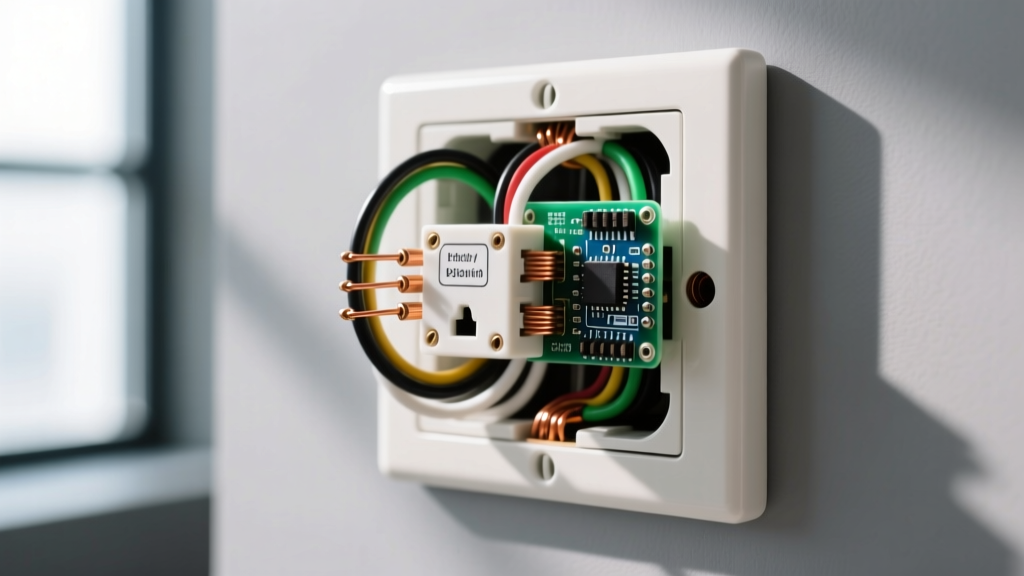

Understanding the Saudi Arabia Electrical Outlet Standard
When planning residential or commercial electrical installations in the Kingdom, understanding the specific requirements for a Saudi Arabia electrical outlet is critical for both safety and legal compliance. Historically, the region operated on a fragmented dual-voltage system (127V and 220V). However, the Saudi Electricity Company (SEC) has fully transitioned the national grid to a unified 230V / 60Hz standard. This harmonization aligns the Kingdom with international norms and requires strict adherence to modern wiring practices.
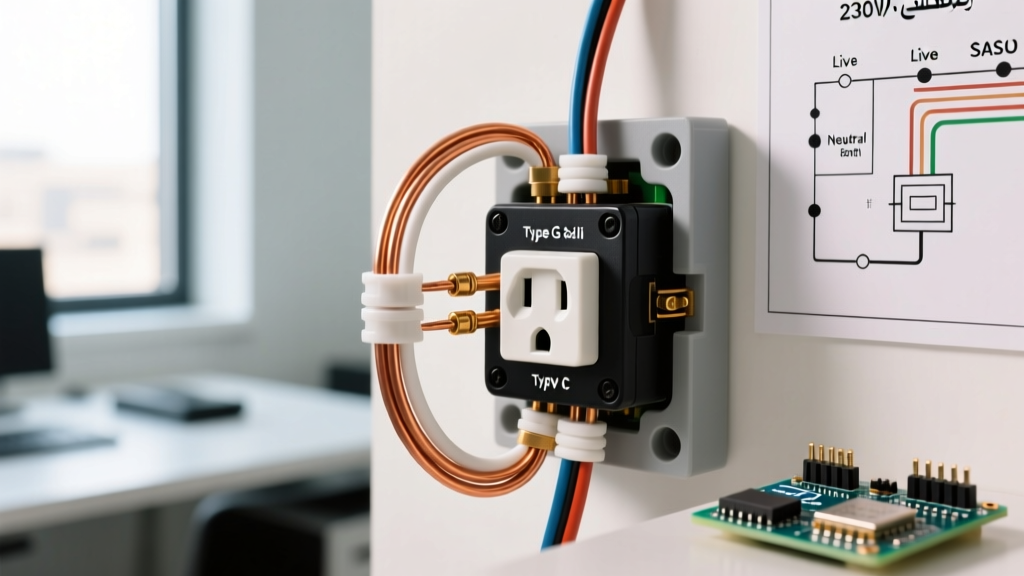
The standard receptacle used across Saudi Arabia is the Type G (BS 1363) outlet, featuring three rectangular pins in a triangular pattern. This design, inherited from British standards, incorporates built-in safety shutters and requires fused plugs. For electricians, contractors, and DIY enthusiasts, installing these outlets requires strict compliance with the Saudi Standards, Metrology and Quality Organization (SASO) and the localized adaptations of the IEC 60364 wiring regulations.
Anatomy of the Type G Receptacle & SASO Requirements
Unlike standard North American NEMA 5-15R outlets, the Type G outlet demands specific physical and electrical considerations. The earth pin is intentionally longer than the live and neutral pins; it acts as a mechanical key to open the internal safety shutters, preventing foreign object insertion. Under SASO regulations, all imported and locally manufactured sockets must pass rigorous thermal and mechanical stress tests, often verified via the SABER certification platform.
Key Physical Specifications
- Rated Current: 13A (standard socket) or 20A (for heavy-duty radial circuits)
- Voltage Rating: 250V AC maximum
- Pin Configuration: Earth (top, 22.2mm), Live and Neutral (bottom, 17.7mm)
- Shutter Mechanism: Mandatory interlocked shutters operated exclusively by the earth pin
SASO Wiring Color Codes & Conductor Sizing
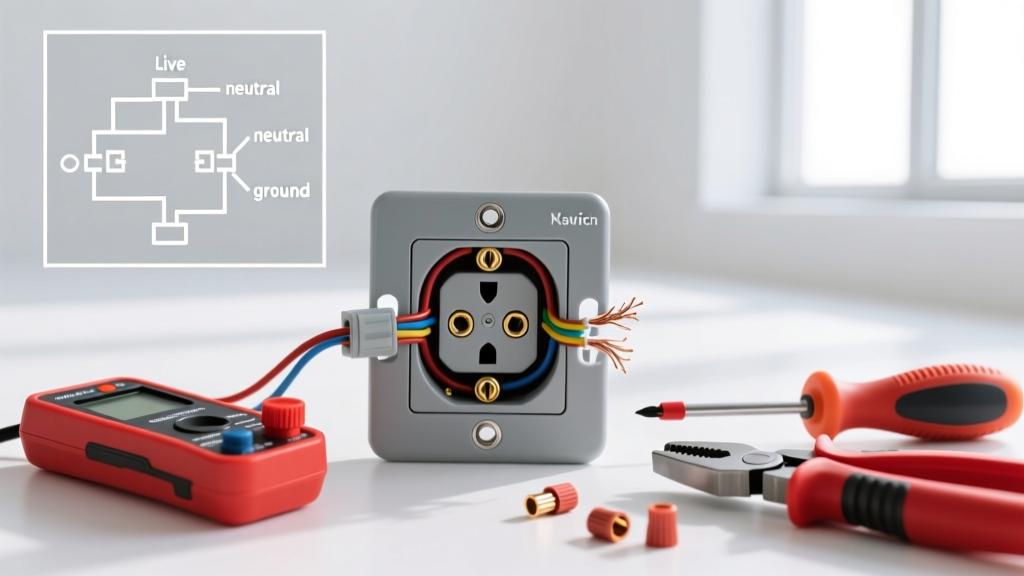
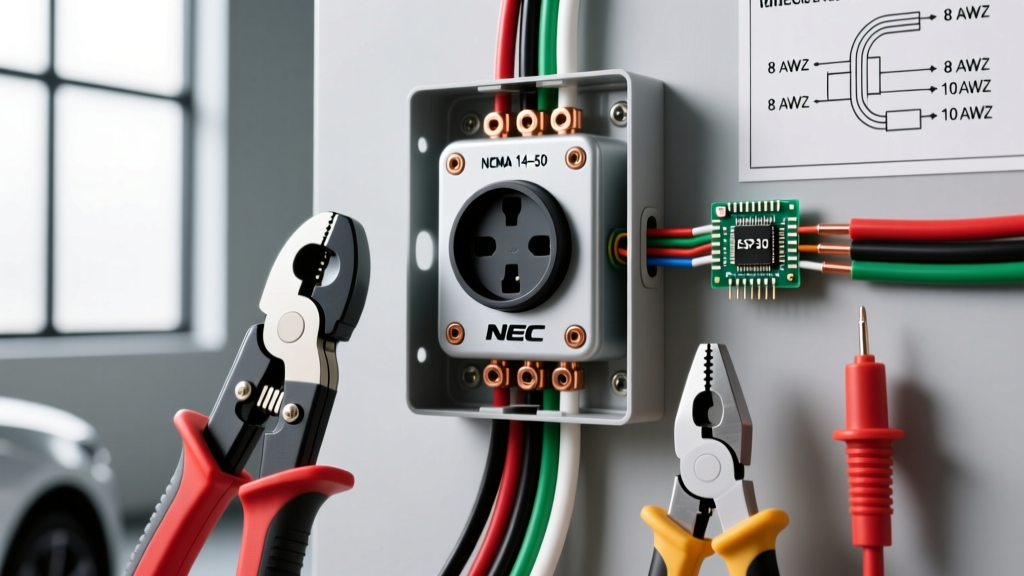
Modern SASO codes mandate the use of IEC-harmonized cable color codes. If you are working in older buildings in districts like Al Olaya (Riyadh) or Al Rawdah (Jeddah), you may encounter legacy Red/Black/Green wiring. Always test with a multimeter before terminating. For all new installations and rewiring projects, the following color standards and cross-sectional areas apply:
| Function | IEC/SASO Color Code | Minimum Cable Size (Copper) | MCB Rating |
|---|---|---|---|
| Phase (Live) | Brown | 2.5 mm² | 16A or 20A |
| Neutral | Blue | 2.5 mm² | N/A (Switched via MCB) |
| Earth (Ground) | Green/Yellow | 2.5 mm² (or 1.5 mm² if mechanically protected) | N/A |
Expert Note: Unlike the UK, which heavily utilizes 32A ring main circuits, Saudi Arabia predominantly uses 20A radial circuits for socket outlets. A 2.5 mm² cable protected by a 20A Type C Miniature Circuit Breaker (MCB) is the standard configuration for general-purpose receptacle loops.
Step-by-Step Type G Outlet Installation Guide
Proper termination of a Saudi Arabia electrical outlet prevents arcing, thermal runaway, and voltage drops. Follow these precise steps for a code-compliant installation:
- Isolate and Verify: Turn off the 20A MCB at the distribution board. Use a CAT III or CAT IV non-contact voltage tester and a digital multimeter to confirm 0V across Phase-Neutral, Phase-Earth, and Neutral-Earth.
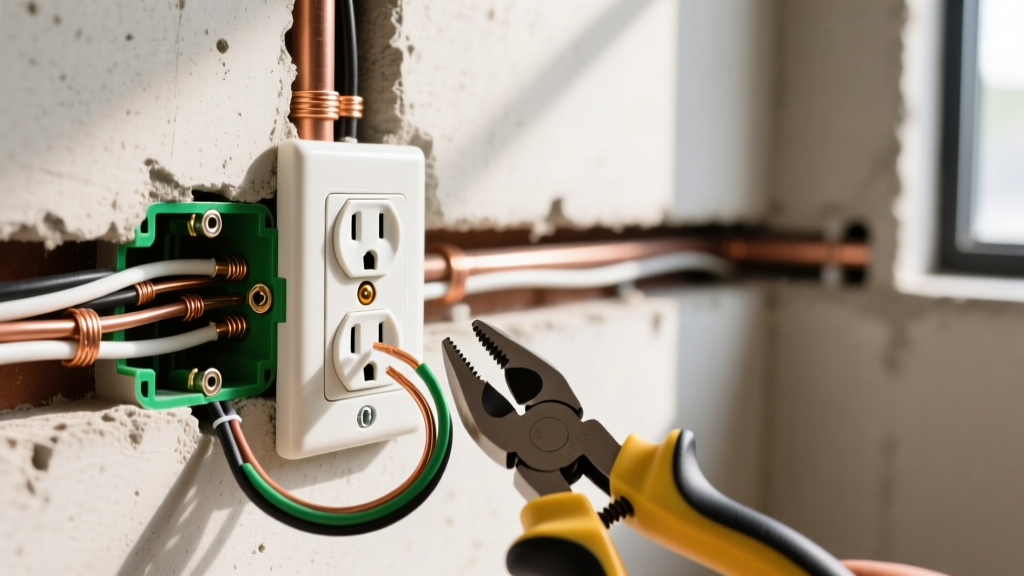
- Prepare the Conductors: Strip the outer PVC sheath of the 2.5 mm² cable, leaving at least 150mm of slack in the backbox. Strip exactly 12mm to 14mm of insulation from the individual copper conductors. Do not nick the copper strands, as this creates a weak point prone to snapping under torque.
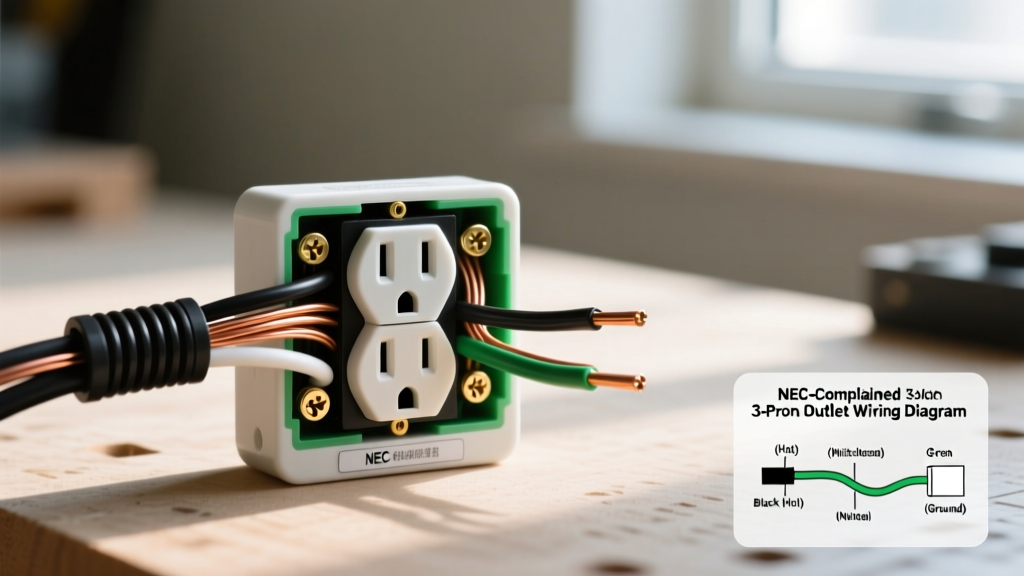
- Terminate the Earth First: Insert the Green/Yellow wire into the top earth terminal. Tighten the screw to a torque of 1.2 Nm to 1.5 Nm. This ensures a gas-tight connection without causing cold flow (creep) of the copper.
- Connect Live and Neutral: Insert the Brown wire into the Live terminal (usually marked 'L' or colored red on the brass) and the Blue wire into the Neutral terminal (marked 'N'). Torque to 1.2 Nm.
- Secure the Faceplate: Fold the wires neatly using a 'Z' or 'S' bend to avoid pinching the insulation against the backbox screws. Secure the faceplate with M3.5 machine screws, ensuring the built-in spirit level (if equipped) is perfectly horizontal.
Mandatory RCD Protection & Wet Zone Compliance
Safety codes in Saudi Arabia strictly enforce Residual Current Device (RCD) protection, particularly in areas where water and electricity intersect. According to localized IEC 60364 standards referenced by the International Electrotechnical Commission, specific zones require enhanced protection.
RCD Requirements by Zone
- Bathrooms & Washrooms: All outlets (e.g., for shavers or hairdryers) must be protected by a 30mA RCD. Furthermore, standard 13A sockets are generally prohibited within 3 meters of a shower or bathtub unless they are specific IP67-rated, RCD-protected fused connection units.
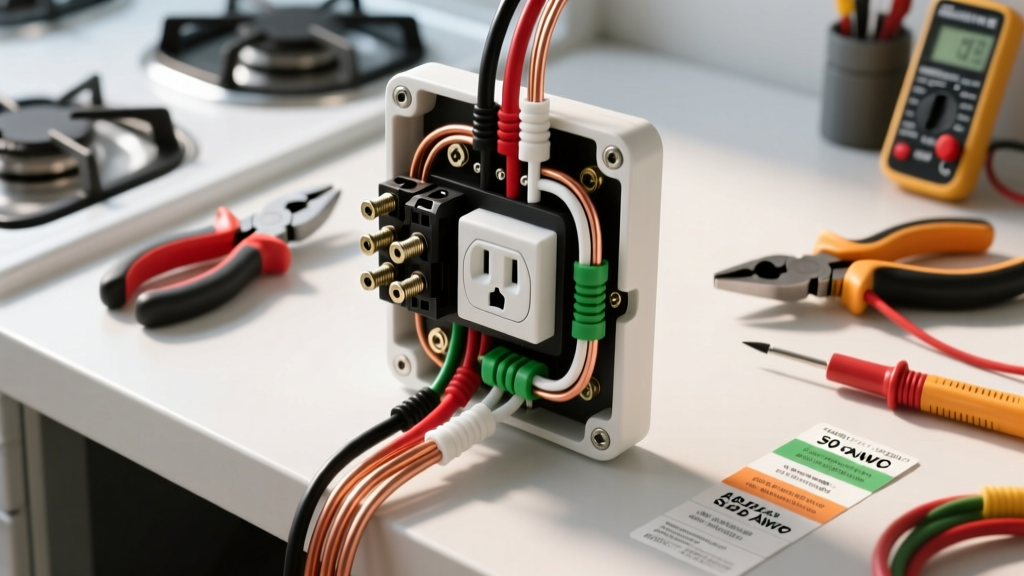
- Kitchens: Sockets located within 1.5 meters of a sink must be on a 30mA RCD protected circuit. Given the high use of heavy appliances (microwaves, air fryers), splitting kitchen receptacles across two separate 20A radial circuits is highly recommended to prevent nuisance tripping.
- Outdoor Receptacles: Any exterior Saudi Arabia electrical outlet must be IP66 weather-rated and protected by a 30mA RCD. Additionally, a local double-pole isolator switch inside the building is required for maintenance safety.
Navigating the SABER Certification for Contractors
If you are a contractor sourcing electrical outlets for a large-scale project in the Kingdom, you cannot simply purchase standard BS 1363 sockets from international suppliers without verification. The Saudi government mandates that all electrical components be registered on the SABER platform.
Before procurement, verify that the manufacturer holds a valid SASO IECEE Recognition Certificate (SIRC). This certifies that the specific model of the outlet has been tested against Saudi deviations to international standards, particularly regarding thermal resistance at 60Hz (which causes slightly higher eddy current losses in magnetic components compared to 50Hz systems). Attempting to clear customs with non-SABER registered outlets will result in shipment confiscation and heavy fines.
Troubleshooting Edge Cases & Legacy Systems
Despite the national grid transition to 230V, electricians frequently encounter anomalies in older structures. Here is how to handle common edge cases:
The 127V Legacy Trap
In some older villas built prior to 2010, you may find a mix of 127V and 220V wiring. The SEC transition involved replacing transformers and upgrading service panels, but internal wiring was the homeowner's responsibility. Never assume a socket is 230V. Always measure Phase-to-Neutral voltage. If you read ~127V, the circuit is likely tied to an old, un-upgraded step-down transformer or a legacy phase tap. Upgrading this requires pulling new 230V feed lines from the modernized distribution board.
Neutral-Earth Voltage Anomalies
If you measure more than 2V to 3V between Neutral and Earth at a receptacle, it indicates a high-resistance neutral connection upstream or an overloaded neutral busbar. In a 60Hz system, harmonic distortion from modern inverter-based air conditioners can exacerbate neutral heating. If this voltage is detected, immediately inspect the MCB termination points and the main neutral link in the consumer unit for signs of thermal discoloration or loose torque.
Final Safety Inspections
Before energizing any newly installed Saudi Arabia electrical outlet, perform a loop impedance test. The external earth fault loop impedance (Ze) combined with the circuit impedance (R1 + R2) must yield a total Zs value low enough to guarantee the 20A MCB will trip within 0.4 seconds under fault conditions. For a 20A Type C MCB, the maximum permissible Zs is typically around 1.15 Ohms (factoring in 80% safety margins as per standard testing protocols). Document these test results, as municipal inspectors from the local Baladiya may require them before issuing the final occupancy certificate.