
The Evolution of Kitchen Island Power: Why Lew Electric?
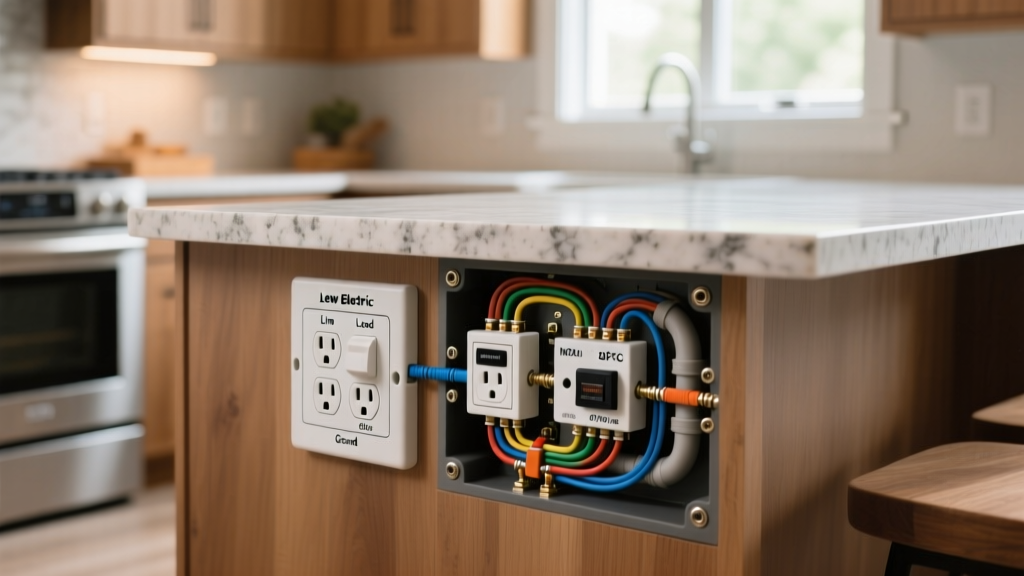
In modern kitchen design, the island has transitioned from a simple prep space to a multi-functional hub for dining, working, and entertaining. This shift demands accessible, code-compliant power. The Lew Electric Pure Power series has emerged as the gold standard for concealed island power, offering a flush, motorized, or manual pop-up solution that preserves countertop aesthetics while delivering robust 20-amp service. Unlike cheap, generic plastic knock-offs found on big-box marketplaces, Lew Electric units feature heavy-duty brass and stainless steel construction, IP44 water resistance ratings, and UL listings that satisfy the strictest electrical inspectors.
Wiring a Lew Electric pop up outlet requires more than just routing a Romex cable through a cabinet. It demands a thorough understanding of National Electrical Code (NEC) mandates regarding island receptacles, precise countertop fabrication, and proper upstream GFCI protection. This guide details the exact wiring scenarios, edge cases, and installation protocols required for a flawless 2026 kitchen island installation.
NEC Code Compliance: The 2023/2026 Island Receptacle Shift
Before pulling any wire, you must understand the current code landscape. Historically, the NEC mandated that all kitchen islands have at least one receptacle. However, recent code cycles introduced a massive paradigm shift. According to NFPA NEC Code 70, specifically Article 210.52(C)(2), receptacles are no longer strictly required to be installed in island countertops unless the designer or homeowner specifically requests them. However, if you do install a Lew Electric pop up outlet, it must adhere to strict placement and protection rules.
- GFCI Protection: NEC 210.8(A)(6) mandates that all 125-volt through 250-volt receptacles installed in kitchen island countertops must have ground-fault circuit-interrupter (GFCI) protection.
- Face-Up Prohibition: Receptacles cannot be installed in a face-up horizontal position unless they are specifically listed for such use. The Lew Electric Pure Power unit is UL-listed for countertop installation, satisfying this requirement when fully extended and locked.
- Circuit Sizing: Kitchen island receptacles must be on a minimum 20-amp small-appliance branch circuit (SABC). You must use 12 AWG copper conductors.
Pre-Wiring Checklist & Tool Manifest
Improper tools lead to cracked quartz and loose neutrals. Gather the following before beginning the rough-in:
- Wiring: 12/2 NM-B (Romex) for inside-cabinet runs, or 12 AWG THHN/THWN stranded wire inside 3/4-inch Liquid-Tight Flexible Metal Conduit (LFMC) for under-floor or concrete slab transitions.
- Countertop Cutting: 3-3/4-inch (3.75") diamond-tipped core bit (mandatory for quartz/granite; standard bi-metal hole saws will shatter engineered stone).
- Termination: Calibrated torque screwdriver. NEC 110.14(D) requires terminations to be torqued to the manufacturer's specifications (typically 14 in-lbs for 12 AWG wire on 20A devices).
- Protection: 20-Amp GFCI circuit breaker or an upstream 20-Amp GFCI receptacle located in an adjacent vertical backsplash.
Step-by-Step Wiring Scenario: Standard 20A Kitchen Island
This scenario assumes you are installing the popular Lew Electric Pure Power 2-Circuit (PP2) model into a newly fabricated quartz island countertop.
Step 1: The Conduit Rough-In and Cabinet Penetration
Power must be routed from the main panel or an upstream junction box to the island. If crossing an unfinished basement floor, run 3/4-inch EMT conduit up into the island's toe-kick area. Transition to LFMC inside the cabinet to allow for minor shifting and to protect the wires from stored pots and pans. Secure the LFMC with proper strain-relief fittings; do not simply push the wires through a drilled hole in the cabinet floor.
Step 2: Precision Countertop Coring
The standard Lew Electric Pure Power unit requires a 3-3/4-inch cutout. When cutting quartz or granite, thermal shock is your biggest enemy. You must use a diamond core bit attached to a variable-speed drill, operating at a low RPM (around 300-500 RPM) while continuously applying water to the cut zone. Pro Tip: Build a small dam out of plumber's putty around the cut zone to hold the cooling water. Once the core is 90% cut, stop and support the plug from underneath to prevent it from snapping and chipping the visible surface.
Step 3: Upstream GFCI Configuration
The Lew Electric unit itself does not contain an internal GFCI mechanism. You have two code-compliant options:
- GFCI Breaker: Install a 20A GFCI breaker in the main panel. This protects the entire run. The wires connecting directly to the pop-up will be standard Line/Neutral/Ground.
- Upstream GFCI Receptacle: Wire a standard 20A GFCI receptacle on the vertical backsplash. Connect the feed to the pop-up unit to the LOAD terminals of the backsplash GFCI. This provides downstream protection.
Step 4: Terminating the Lew Electric Unit
Feed the 12 AWG wires through the base of the pop-up housing. Strip exactly 5/8-inch of insulation. Connect the black (hot) to the brass terminal, the white (neutral) to the silver terminal, and the bare/green (ground) to the green grounding screw. Use your torque screwdriver set to 14 in-lbs to secure the connections. Loose neutrals in high-draw kitchen environments cause arcing and are a leading cause of island electrical fires.
Lew Electric Model Comparison Matrix
Choosing the right model depends on the island's intended use. Below is a breakdown of the current Pure Power lineup and their specific wiring requirements.
| Model Number | Circuits | Max Amperage | Est. Price (2026) | Ideal Scenario |
|---|---|---|---|---|
| PP2 (2-Circuit) | 2 (4 Plugs) | 20A Total | $420 - $480 | Standard food prep, phone charging, small blenders. |
| PP3 (3-Circuit) | 3 (6 Plugs) | 20A per circuit | $550 - $620 | Island dining, laptops, multiple high-draw appliances simultaneously. |
| PP4 (4-Circuit) | 4 (8 Plugs) | 20A per circuit | $680 - $750 | Commercial spaces, large multi-chef islands, heavy catering setups. |
Note: Multi-circuit models (PP3/PP4) require multiple dedicated 20A home runs from the panel. You cannot daisy-chain multiple 20A circuits through a single 12/2 feed wire.
Advanced Wiring Scenarios & Edge Cases
Scenario A: Daisy-Chaining Multiple Islands
If you have a multi-tier island or a secondary peninsula, you might be tempted to daisy-chain a second Lew Electric unit. This is permissible only if the total calculated load does not exceed the 20A circuit limit, and the upstream GFCI is rated for multi-location downstream protection. However, voltage drop becomes a factor if the wire run exceeds 50 feet. In long runs, upsize to 10 AWG wire for the main feed, then pigtail down to 12 AWG at the final device termination.
Scenario B: The Motorized vs. Manual Debate
Lew Electric offers both manual push-pop and motorized versions. If wiring a motorized unit, the internal low-voltage DC motor draws power from the integrated transformer. Ensure the 20A circuit has enough headroom. While the motor draws less than 1 amp, the startup surge combined with a 1500W microwave plugged into the same circuit can cause nuisance tripping on older, overly sensitive GFCI breakers. Always use a modern, high-inrush-tolerance GFCI breaker (such as the Square D QO220GFIC or equivalent) to prevent false trips.
Scenario C: Waterproofing the Countertop Seam
Even with an IP44 rating, water intrusion between the pop-up flange and the quartz can delaminate the particleboard substrate underneath. After dropping the unit into the 3-3/4" hole, apply a continuous bead of 100% silicone sealant (not acrylic caulk) around the underside of the brass flange before tightening the mounting collar. Wipe away excess silicone immediately with denatured alcohol to prevent staining the quartz.
Troubleshooting Common Installation Failures
Expert Insight: According to industry data tracked by the EC&M National Electrical Code Hub, over 60% of kitchen island receptacle failures are traced back to improper neutral handling and shared-neutral GFCI conflicts.
- Issue: GFCI trips immediately when the pop-up is plugged into or an appliance is turned on.
Fix: You likely have a shared neutral. If the island lighting (e.g., pendant lights) shares the same neutral wire as the pop-up receptacle circuit, the GFCI will detect an imbalance and trip. Island receptacles must have a dedicated, isolated neutral all the way back to the panel or the upstream GFCI LOAD terminal. - Issue: The unit binds and fails to retract smoothly.
Fix: The 3-3/4" hole was cut slightly out of plumb, or the mounting collar was over-tightened, warping the cylindrical housing. Loosen the collar, ensure the unit is perfectly vertical using a torpedo level, and re-tighten evenly. Do not exceed 25 in-lbs of torque on the plastic mounting ring. - Issue: LED indicator blinks red continuously.
Fix: On models equipped with ground-fault or surge monitoring LEDs, a blinking red light indicates a lost ground or an upstream surge event. Verify the equipment grounding conductor is securely bonded to the metal housing of the pop-up and the main panel's ground bar.
Final Inspection and Commissioning
Before signing off on the project, perform a comprehensive commissioning test. Plug a UL-listed GFCI tester into the Lew Electric pop up outlet. Verify that the tester trips the upstream GFCI breaker or receptacle. Next, use a digital multimeter to verify line-to-neutral voltage (should read 120V +/- 5%). Finally, test the mechanical retraction mechanism 20 times to ensure the internal springs or motorized gears are seated correctly and the countertop seal remains unbroken. By adhering to these precise wiring scenarios and respecting the latest NEC mandates, your Lew Electric installation will provide safe, reliable, and hidden power for decades.